MindMap Gallery STP production tree
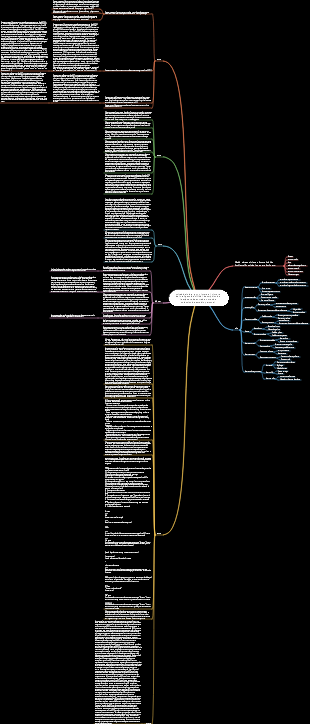
This is a mind map about the STP production tree. The main contents include: others, topology changes, port status, BPDU: bridge protocol data unit, calculation process (smaller than), and causes.
Edited at 2024-04-19 10:31:05This is a mind map about bacteria, and its main contents include: overview, morphology, types, structure, reproduction, distribution, application, and expansion. The summary is comprehensive and meticulous, suitable as review materials.
This is a mind map about plant asexual reproduction, and its main contents include: concept, spore reproduction, vegetative reproduction, tissue culture, and buds. The summary is comprehensive and meticulous, suitable as review materials.
This is a mind map about the reproductive development of animals, and its main contents include: insects, frogs, birds, sexual reproduction, and asexual reproduction. The summary is comprehensive and meticulous, suitable as review materials.
This is a mind map about bacteria, and its main contents include: overview, morphology, types, structure, reproduction, distribution, application, and expansion. The summary is comprehensive and meticulous, suitable as review materials.
This is a mind map about plant asexual reproduction, and its main contents include: concept, spore reproduction, vegetative reproduction, tissue culture, and buds. The summary is comprehensive and meticulous, suitable as review materials.
This is a mind map about the reproductive development of animals, and its main contents include: insects, frogs, birds, sexual reproduction, and asexual reproduction. The summary is comprehensive and meticulous, suitable as review materials.
STP production tree
cause
Network redundancy creates loops
Loop problem
broadcast storm
mac address table oscillation
Duplicate data frame
Calculation process (smaller than)
three steps
Elect root switch among all switches Compare root bridge ID (less than)
priority
Default:32768
Step size: 4096
MAC address
Elect a root port (RP) on a non-root switch and compare root path cost (RPC)
Elect a designated port (DP) in each network segment (collision domain) Sender Bridge ID
Block non-root designated ports (preparatory port AP)
four elements
Root Bridge ID (RID)
Bridge priority Bridge MAC, the priority default is 32768. Bridge mac is the motherboard mac
Root path cost (RPC)
Calculate the COST value to reach the root bridge, and the link cost is accumulated. Huawei's Gigabit default cost value is 20000, and the 100M interface cost value is 200000.
Sender's Bridge ID (BID)
Peer port ID (PID)
Priority: Default 128
Port number: Port number, for example, port number: g0/0/24, port ID is 24
Local port ID
BPDU: Bridge Protocol Data Unit
PID: Default=0x0000 (spanning tree)
PVI: spanning tree version
STP (802.1D)
RSTP (802.1W): Rapid Spanning Tree
MSTP (802.1S): Multiple spanning tree (default for Huawei switches)
Flags
Highest bit TAC
zlowest bit TC
Classification
TCN BPDU: Topology change BPDU
Configuration BPDU: sent when calculation is generated
constitute
RID: root bridge ID
RPC: root path cost
BID: Sender's bridge ID
Hello time=2s: The period for the root bridge to send BPDUs
Forward Delay=15s: Indicates the time the switch remains in the listening and learning state before sending data after the topology changes.
Message Age=forwarded through switch 1
Max Age=20s: The aging time of the current BPDU, that is, the maximum time for the port to save the BPDU.
port status
Disabled: This layer 2 port does not participate in spanning tree and does not forward data frames.
Blocking: The Layer 2 port is a non-designated port and will not participate in the forwarding of data frames.
Listening 15S (listening state): Spanning tree will determine that this port should participate in the forwarding of data frames based on the BPDU received by the switch.
Learning 15S (learning state): This layer 2 port is ready to participate in the forwarding of data frames and begins to fill in the MAC table. By default, the port will stay in this state for 15S.
Forwarding: This Layer 2 port has become an integral part of the active topology. It will forward data frames and send and receive BPDUs at the same time.
topological change
Root bridge failure
If the non-root switch cannot receive the BPDU from the original root bridge after waiting for the Max Age time, it will recalculate the spanning tree.
Blocking ports for forwarding requires: MaxAge 2*FordDelay=20 15*2=50s
Direct port failure
The original blocked port becomes the root port to calculate the spanning tree. Requires 2 forwarding delays (30s)
Indirect link failure
It takes 50 seconds for a blocked port to enter the forwarding state. MaxAge 2*FordDelay=20 15*2=50s
Topology changes lead to changes in the MAC address table TCNBPDU
The aging time of the interface MAC address of all received TC insulation messages sent by the root bridge becomes 15S.
other
For stp packets: the target mac is always: 01:80:c2:00:00:00, which belongs to the multicast mac address Unmanaged switches: (such as TP, H3C1224, etc.) will send floods in bulk. The same processing method as 01-00-5e multicast insulation; at this time, the unmanaged switch functions like a HUB
Configuration
stp enable
stp mode stp (stp mode rstp)
stp root primear or stp pri 0
stp root secondary (set as backup root)
[g0/0/1]stp cost 2000
Inspection
dis stp
dis stp brief
Focus on checking the port status