MindMap Gallery Platform economy
This is a mind map about the platform economy, telling stories related to the platform economy. If you are interested in the story of the platform economy, you are welcome to collect and like this mind map~
Edited at 2020-10-02 02:17:22This is a mind map about bacteria, and its main contents include: overview, morphology, types, structure, reproduction, distribution, application, and expansion. The summary is comprehensive and meticulous, suitable as review materials.

This is a mind map about plant asexual reproduction, and its main contents include: concept, spore reproduction, vegetative reproduction, tissue culture, and buds. The summary is comprehensive and meticulous, suitable as review materials.
This is a mind map about the reproductive development of animals, and its main contents include: insects, frogs, birds, sexual reproduction, and asexual reproduction. The summary is comprehensive and meticulous, suitable as review materials.
This is a mind map about bacteria, and its main contents include: overview, morphology, types, structure, reproduction, distribution, application, and expansion. The summary is comprehensive and meticulous, suitable as review materials.
This is a mind map about plant asexual reproduction, and its main contents include: concept, spore reproduction, vegetative reproduction, tissue culture, and buds. The summary is comprehensive and meticulous, suitable as review materials.
This is a mind map about the reproductive development of animals, and its main contents include: insects, frogs, birds, sexual reproduction, and asexual reproduction. The summary is comprehensive and meticulous, suitable as review materials.
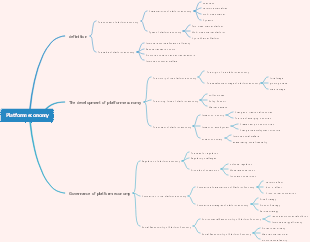
Platform economy
Platform economy refers to an economic model that uses the Internet or other technical means to establish a platform that connects supply and demand parties to promote resource sharing and transactions.
The platform economy has reshaped the traditional economic model by making full use of information technology and networks, providing an efficient and convenient communication and transaction environment for both supply and demand parties.
The core advantage of the platform economy is that it provides more choices and more flexible services, which can bring higher benefits and better experience to users.
Characteristics of platform economy
Cut leeks
Platform economy operators use Internet technology to collect massive user data, analyze user behavior, and formulate personalized marketing strategies to achieve precise marketing and pricing and increase profit margins.
The high degree of informatization and intelligence of the platform economy allows operators to more accurately predict supply and demand relationships, optimize resource allocation, improve efficiency, and reduce costs.
efficiency improvements
The platform economy provides a more efficient transaction and distribution system by integrating resources and services from both supply and demand sides.
The platform economy provides convenient online payment, evaluation and complaint mechanisms, increases the trust and security of transactions, promotes interaction and reciprocity, and promotes economic development and innovation.
flexibility
Participants in the platform economy can freely choose projects of interest based on the resources and services provided by the platform and conduct transactions as needed.
The platform economy provides more opportunities and broader market space for freelancers and entrepreneurs, reduces the risks and costs of entrepreneurship, and promotes innovation and employment.
Application areas of platform economy
online shopping
The platform economy provides consumers with a rich selection of goods and services through e-commerce platforms, enabling off-site shopping and global consumption.
The platform economy provides a convenient shopping experience through online payment and logistics distribution, stimulates consumer demand, and promotes the development of online retail.
sharing economy
The platform economy uses shared platforms to reuse personal idle resources (such as vehicles, housing, skills, etc.), providing a more flexible and economical way of consumption.
Through the sharing economic model, the platform economy improves resource utilization, reduces waste, reduces environmental pollution, and promotes sustainable development.
Fintech
The platform economy provides convenient online payment, loans, investment and financial management services through financial technology platforms, promoting financial inclusion and innovation.
The application of platform economy in the financial field reduces the cost of financial transactions, improves the efficiency of financial services, and promotes the development of the financial industry and the stability of the financial system.
human Resources
The platform economy provides employers and job seekers with broader and more flexible employment opportunities and recruitment channels through online human resources platforms, promoting the flow and matching of the labor market.
The application of platform economy in human resources management has improved recruitment efficiency, reduced labor costs, and improved employment and labor relations.
Challenges and Impact of Platform Economy
Data privacy and security
When participants in the platform economy use platform services, they will generate a large amount of personal data and face the risk of data leakage and abuse.
The platform economy needs to strengthen user data protection measures, establish sound privacy policies and security mechanisms, and protect users’ personal privacy and rights.
Market monopoly and inequality
Some large platforms in the platform economy have formed monopoly positions in certain areas, inhibiting competition and leading to market inequality and unfair resource distribution.
The platform economy needs to strengthen supervision, promote fair competition and market transparency, and protect the development space of small and medium-sized enterprises and the rights and interests of consumers.
Employment and income distribution
The platform economy has had an impact on some traditional industries, leading to the loss of some jobs and having a certain impact on social stability and the employment situation.
The platform economy needs to actively respond to employment challenges, strengthen skills training and job transfer placement, and ensure the employment and income stability of the labor force.