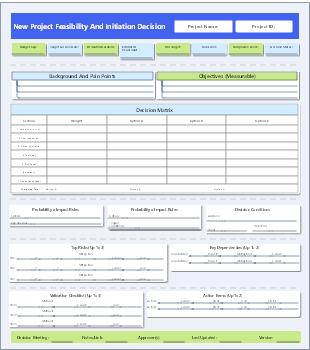
MindMap Gallery decision matrix
A decision matrix is a decision-making tool that has advantages and disadvantages. In use, it is suitable for various application scenarios and can be implemented through specific construction methods and usage steps.
Edited at 2021-10-15 10:32:37This is a mind map about bacteria, and its main contents include: overview, morphology, types, structure, reproduction, distribution, application, and expansion. The summary is comprehensive and meticulous, suitable as review materials.

This is a mind map about plant asexual reproduction, and its main contents include: concept, spore reproduction, vegetative reproduction, tissue culture, and buds. The summary is comprehensive and meticulous, suitable as review materials.
This is a mind map about the reproductive development of animals, and its main contents include: insects, frogs, birds, sexual reproduction, and asexual reproduction. The summary is comprehensive and meticulous, suitable as review materials.
This is a mind map about bacteria, and its main contents include: overview, morphology, types, structure, reproduction, distribution, application, and expansion. The summary is comprehensive and meticulous, suitable as review materials.
This is a mind map about plant asexual reproduction, and its main contents include: concept, spore reproduction, vegetative reproduction, tissue culture, and buds. The summary is comprehensive and meticulous, suitable as review materials.
This is a mind map about the reproductive development of animals, and its main contents include: insects, frogs, birds, sexual reproduction, and asexual reproduction. The summary is comprehensive and meticulous, suitable as review materials.
decision matrix
advantage
Provide systematic decision-making basis
The decision matrix can quantify and compare various factors and provide an objective basis.
Through the setting of weights and scores, the importance, advantages and disadvantages of various options can be accurately evaluated.
Improve decision-making efficiency
The decision matrix can help decision-makers quickly analyze various options and avoid blindness in subjective judgments.
Can reduce risks and errors in the decision-making process
Improve the scientificity and accuracy of decision-making
The decision matrix can clarify decision-making objectives and evaluation criteria, making decision-making more scientific.
Analyze the advantages and disadvantages of various options to ensure the accuracy and rationality of decisions
shortcoming
Rely on data and accuracy
The decision matrix relies on input data and evaluation criteria. Inaccurate data will lead to inaccurate decision results.
For some problems that cannot be quantified or whose subjective factors are difficult to measure, the application of the decision matrix may be limited.
There may be cognitive biases
Decision makers may be affected by subjective factors when setting weights and scores, leading to biased decision-making results.
Decision makers may pay too much attention to certain factors or ignore some important factors, affecting the objectivity of decision-making.
Difficulty coping with complex decision-making problems
In decision-making problems involving multiple factors and more complex relationships, the application of decision matrices may become difficult.
Decision matrices may make the decision-making process too complex and time-consuming when faced with large-scale and high-dimensional data
Application scenarios
Product selection decisions
The characteristics and performance of different products can be compared through the decision matrix to select the most suitable product.
Can evaluate the advantages and disadvantages of different products in terms of price, quality, function, etc., and guide purchasing decisions
Project manager decision
Evaluate the feasibility, risks, resource requirements and other factors of the project through the decision matrix and make decisions
You can consider the cost, time limit, quality and other factors of different projects to choose the most suitable project
Personnel selection and team formation
Evaluate the candidate's ability, experience, teamwork ability, etc. through a decision matrix to select the most suitable person
You can compare the advantages and disadvantages of different team combinations and find the most suitable team combination plan.
Investment decision
The risk, return, payback period and other factors of different investment projects can be evaluated through the decision matrix to make investment decisions.
You can consider the prospects of different investment directions, market demand, competition and other factors to choose the best investment plan
Build method
Determine decision-making objectives and evaluation criteria
Clarify the goals of the decision and the factors that need to be evaluated, as well as the weights and measurement indicators of each factor
Determine the importance, advantages and disadvantages of each factor for decision-making, and set corresponding weights and scoring standards
Data collection and organization
Collect relevant data and information to quantify and compare options
Organize data according to evaluation criteria for use in decision matrices
Build a decision matrix
Construct a tabular model of a decision matrix based on evaluation criteria and weights on paper or in a spreadsheet
Fill in the table with data for each option and calculate the score based on the weight and rating
Analyze and compare options
Compare and analyze based on the scores of the decision matrix to find options with obvious advantages and disadvantages
Can be combined with other decision-making methods and judgments to comprehensively evaluate and compare options
Steps for usage
Determine decision-making goals and scope
Determine the decisions to be made, factors to be considered, and acceptable ranges
Clarify the goals and concerns of the decision as a basis for subsequent steps
Collect and organize relevant data
Collect and organize data and information related to decision-making, including relevant indicators and data for each option
Organize data to make it suitable for construction and analysis of decision matrices
Build a decision matrix
Construct a tabular model of the decision matrix based on the decision objectives and evaluation factors
Fill in the relevant data into the table and calculate the score based on the weighting and scoring criteria
Analyze and compare options
Compare and analyze based on the scores of the decision matrix to find options with higher scores or that meet the requirements
Comprehensive evaluation and comparison of options based on actual situation and other factors
Make decisions and track execution
Based on the results of analysis and comparison, make final decisions and formulate corresponding execution plans
During the execution process, continue to track and monitor decision-making results, and make necessary adjustments and optimizations