MindMap Gallery IELTS Reading
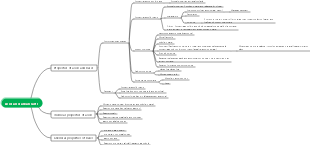
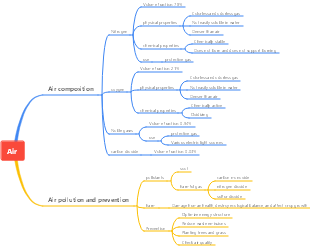
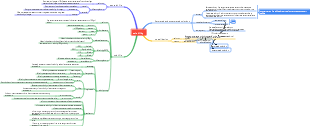
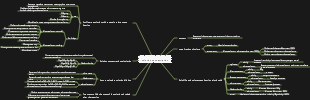
IELTS Reading question-solving steps: determine the part of speech and meaning of the blank, locate the original text, and determine the answer. This picture also summarizes the question-solving logic, question-setting ideas and strategies, etc.
Edited at 2022-07-20 08:42:23This is a mind map about bacteria, and its main contents include: overview, morphology, types, structure, reproduction, distribution, application, and expansion. The summary is comprehensive and meticulous, suitable as review materials.
This is a mind map about plant asexual reproduction, and its main contents include: concept, spore reproduction, vegetative reproduction, tissue culture, and buds. The summary is comprehensive and meticulous, suitable as review materials.
This is a mind map about the reproductive development of animals, and its main contents include: insects, frogs, birds, sexual reproduction, and asexual reproduction. The summary is comprehensive and meticulous, suitable as review materials.
This is a mind map about bacteria, and its main contents include: overview, morphology, types, structure, reproduction, distribution, application, and expansion. The summary is comprehensive and meticulous, suitable as review materials.
This is a mind map about plant asexual reproduction, and its main contents include: concept, spore reproduction, vegetative reproduction, tissue culture, and buds. The summary is comprehensive and meticulous, suitable as review materials.
This is a mind map about the reproductive development of animals, and its main contents include: insects, frogs, birds, sexual reproduction, and asexual reproduction. The summary is comprehensive and meticulous, suitable as review materials.
Read and answer questions
Fill in the blanks
feature
Basic order of questions
sentence/notes/flow-chart 100%
short answer 99%
summary (no options) There will be out-of-order questions for every five articles.
table/diagram/summary (optional) Each time you do 3 articles, several questions are out of order.
Fill in the blanks with original words
Problem-solving steps (three steps)
Determine the part of speech and meaning of this empty space
Read the entire question again. Read it all before and after.
When encountering pronouns: he or she, look forward
summary
Paragraph fill in the blanks
A pronoun appears in the question stem. Go back to the original text to see who the pronoun refers to.
Confirm that the options have the same part-of-speech (option summary is available)
If the part of speech is the same, there is no need to judge the part of speech.
Locate the original text
positioning words
Capitalization/numbers/turns but and other special words > common N > V > ADJ/ ADV, concrete > abstract, exclude high-frequency words (words that often appear in titles, subtitles, and question stems)
There is no cap on more than two positioning words per question
Nouns may be synonymously substituted
The position of adjacent questions (especially chart fill-in-the-blank questions)
Look at the next question
Go to the stuck position to help speed up. Read more questions.
Confirm the answer
The grammar is correct and the logic is consistent. The words you fill in do not repeat the existing information.
The word count meets the requirements
Singular and plural agree
Problem solving logic
After scanning the question stem once, you need to find more than 2 positioning words and determine the part of speech. You need to read the entire sentence completely regardless of whether there is space or not.
When you see the expression of the year in the question, it may be replaced with a number synonymously in the original text, eg: in recent years = over the past 40 years
Use adjacent sentence slots
Pay attention to the parallel relationship in the original text. If it is a parallel relationship, do not generalize.
Tips for solving problems
Must check if you have NB (summary option is available)
Memorize two questions at the same time to prevent missing or out-of-order reading.
Do the questions that are easy to locate first, and then use the sequential principle to locate other questions.
question strategy
First the details, then the main idea, from easy to difficult
Fill in the blanks and judge (both order and details)
Special word matching/End of sentence and beginning of sentence matching/Details single selection/Classification/Multiple selection
Paragraph information matching /LOH / radio selection (subject)
Ideas for formulating questions
Judge the difficulty level in one minute
Question type distribution
background knowledge
Do questions from easy to difficult
Strictly timed ⌛️ (20-40-55-60)
Exercises focused on speed and technique
Make summary and reflection