MindMap Gallery Detailed explanation of GRE reading types
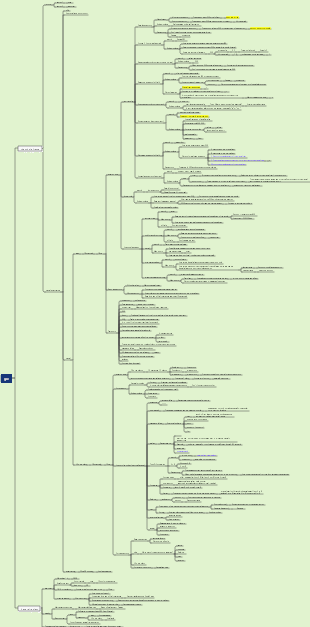
Detailed explanation of the various types of GRE reading comprehension and their countermeasures, including: main topic questions, five incorrect option characteristics of GRE reading, factual information questions, inference questions, sentence function questions, multiple-choice questions, and information purpose questions.
Edited at 2022-05-15 16:48:39This is a mind map about bacteria, and its main contents include: overview, morphology, types, structure, reproduction, distribution, application, and expansion. The summary is comprehensive and meticulous, suitable as review materials.

This is a mind map about plant asexual reproduction, and its main contents include: concept, spore reproduction, vegetative reproduction, tissue culture, and buds. The summary is comprehensive and meticulous, suitable as review materials.
This is a mind map about the reproductive development of animals, and its main contents include: insects, frogs, birds, sexual reproduction, and asexual reproduction. The summary is comprehensive and meticulous, suitable as review materials.
This is a mind map about bacteria, and its main contents include: overview, morphology, types, structure, reproduction, distribution, application, and expansion. The summary is comprehensive and meticulous, suitable as review materials.
This is a mind map about plant asexual reproduction, and its main contents include: concept, spore reproduction, vegetative reproduction, tissue culture, and buds. The summary is comprehensive and meticulous, suitable as review materials.
This is a mind map about the reproductive development of animals, and its main contents include: insects, frogs, birds, sexual reproduction, and asexual reproduction. The summary is comprehensive and meticulous, suitable as review materials.
GRE Reading
Subject matter
theme title
Title: The primary purpose of the passage is to… the passage is primarily concerned with…
Option features: incomplete sentences starting with verbs
Test point: Analyze the structure of the article in the article
Main content questions
Title: which of the following best states the central idea of the passage
Where to look: Beginning and ending, middle transition
Option features: complete sentence, subject, predicate and object, subject list
Test points: positioning of the subject sentence, synonymous rewriting
Characteristics of 3 wrong options in subject questions
contradictory
Making an argument is just to support or demonstrate a point of view. If the words challenge, undermine, and correct appear, it will be wrong.
Refutation, refutation, old and new views, if these words support, suggest, explain, advocate appear, it is wrong
Facts and opinions reversed
Facts: Confirmed theory; Established theory; Universally accepted theory; Results/research/study Facts must happen, the probability of occurrence is 1, and cannot be refuted
Point of view: Theory; Scientific theory; Widely held theory The point of view is that the probability P is 0-1 and can be refuted
generalize from partial to complete
Use the details of the article as the gist
When reading the article, you only need to read the main body, subject, predicate and object, no modification is required.
Paragraph topic:
If an article has two or more paragraphs and has a topic question, the test will be on the relationship between the paragraphs.
For the follower type, the second paragraph continues to describe the first paragraph, and the main point is the first paragraph.
For the transition type in the second paragraph, the main point is the second paragraph
So first read the first sentence of the second paragraph and determine what the relationship is.
5 common mistakes in GRE reading
Logical error: cause and effect relationship result in result from is easy to be wrong, cause and effect are reversed, and the cause and effect relationship is made out of nothing.
Making something out of nothing: The original text did not mention it. 90% of the related words making something out of nothing are more than, the best, as well as extend and largely.
non-answer interval
Expand or reduce scope
Commonly used words in expository texts are generally wrong: trace, chronicling; qualify limit corrections and modifications are generally correct
factual information questions
Question stem characteristics
according to the passage,…?
the passage mentions/states which of the following as …?
based on the passage,…?
Test points
Positioning Agree to replace Find noun positioning
Inference questions
Question stem features: infer suggest indicate imply
Test points: Positioning and inference logic
Inference logic: forward inference and reverse inference (inversion)
A and B are two opposing intervals. A has a and B does not have a.
1. Negation of opposite information. Marker word: only. Only A has a, and then the answer is B does not.
2. Quantity negation. Marker word: quantity. The original text is that most students have a characteristic, negation. A few students do not have this characteristic.
3. Time inversion Sign word: Time Until 2010, China’s GDP growth rate was greater than 7%. The answer is that the growth rate in 2011 was less than 7%. Until these appear
In attitude questions, unconcerned and insensitive to are generally wrong.
Sentence function questions
Question stem characteristics
which of the following best describes the function of the highlighted sentence
In the context of the passage,the highlighted sentence serves to
intra-sentence relationship
reverse
The previous sentence is opposite to its transition in fact however but yet nevertheless
The previous sentence is in sharp contrast to a departure from b
In the same direction
The previous sentence and its explanation in other words
The previous sentence and its examples for example
The previous sentence is analogous to it similarly
The previous sentence and its metaphor are like
Final steps
1. Use the same-direction and reverse relationship between the highlighted sentence and the previous sentence to exclude verbs from consideration, reverse words: challenge || refute || call into question || undermine || cast doubt If there is no transition word, it must be a positive relationship. There is a turning point, not necessarily the reverse direction
2. Prioritize options containing the following words
made in the preceding sentence
cited in the opening sentence
expressed in the following sentence
NB: mentioned earlier in the passage don’t think about it yet
3. Read the highlighted sentence, find the key words, correspond to the options, and read the main body of the highlighted sentence.
Multiple choice questions available
Question stem characteristics
consider each of the choice separately and select all that apply
information purpose question
Test point: Relationships within sentences and between sentences
Macroscopically speaking, the pinch theorem, look at the sentence before and after, the colon since due to Micro-viewing subject object in order to explain borrowing verb
Analogy questions
Question stem characteristics
1.which of the following is most similar to..?
2.which of the following most closely parallels..?
problem solving strategies
What is examined is the similarity of trends (up, down, fluctuations, etc.), which is a fuzzy correspondence, not a synonymous rewrite.
Attitude questions
question mark
assert or which of the following best describes the author’s attitude
three attitudes
1.Positive attitude: having a positive and affirmative attitude towards a certain object
appreciation; exciting; convincing; delighted; respected; supportive
2. Negative attitude
irony; sarcastic; disdain; contempt; annoyed; anger; baffled
3. Rigorous and objective attitude: The author uses warnings to explain how to be cautious when dealing with things and not to generalize.
cavalier fashion cautious attitude
answer range
The beginning and end of the article
correct attitude words
qualified=limited limited modification
wrong attitude words
The tone is too bad, attacking and abusive words
condemnation; indignant; envious; offensive; insincere; callous; defiance; derision; scornful; cynical; spiteful
Overly enthusiastic, even flattering words
fervert; educational; fanatical
Words that are too strong and leave no room for anything
completely; entirely; totally; absolutely; unrestrained; unmitigated; unchecked; unguarded
Too cold, an understatement
indifferent; nonchalant; light-hearted; jocular; facetious; resigned; ambivalence
logical unit
Three elements
Premise
causal reasoning
conclusion conclusion subjective point of view
Wrong option characteristics of logical units
Dosage-increasing option—an optional nonsense
The original article said that Teacher L Xiaoke is 17 years old, so he is very cute
Increasing dosage option Teacher Xiao Ke was born in 2003
Most of the adding options are repetitions and supplements of known details from the original text.
Prompt word: only 99% wrong
Irrelevant options---something out of nothing
The original article said that Teacher L Xiaoke is 17 years old, so he is very cute.
Like Teacher Xiaoke, Brother Bo is also 17 years old this year.
Analogy error: changing objects is not allowed
reverse option
In line with the requirements of the question, strengthening becomes weakening, weakening becomes strengthening
Correct option: Unknown relevant details
question type
Strengthen the topic
Title logo: strength or support
two-cause question
For one thing, two explanations are proposed, and one is supported in the end. The answer is generally to criticize the other party.
Weakening question
Reverse the conclusion, make it stronger, and look at the corresponding options
Logical unit of fill-in-the-blank type == enhanced question
Interpreted logical unit == Verify one by one, substitute one by one
Inductive type of logical unit == inference based on the original text. The question stem has support.
The difference between strengthening questions and induction questions
Strengthening question: Which of the following options can strengthen the meaning of the original text?
Induction question: Which of the following options can be strengthened by the description in the text?
Sentence function questions of logical units
Question characteristics: argument
Make choices based on the process of full-text argumentation
Negative factual information questions
question mark
except
The author’s description of X mentions all of the following except..
all of the following are mentioned in the passage except..
all of the following are examples of x except
not
according to the passage, which of the following is not true of x?
which of the following is not mentioned as..?
which of the following is not given as a reason for…?
Final steps
1. Read the question, determine the question type, determine the question stem mark of the negative fact information question, and determine the positioning word
2. Based on the positioning words, return to the original text positioning
3. Use the correct answer logic and elimination method for negative fact information questions to solve the questions
Specific operations
Correct answer for type except
1. Did not appear in the original text (made out of nothing)
2. Contradicts the information appearing in the original text (logical error)
Correct answer of type not
1. Directly add not to the options to determine whether it is correct.
Hypothetical question
Title logo: assume/assumption
disintegration strategy
Negate the options and the one that weakens the conclusion is the correct answer.
There is a process of P->C in the original text, but in fact this process also requires an assumption A
That is P A->C. So when the option is inverted P-A, we should not be able to deduce conclusion C, which weakens C.
Long article reading questions
Question-solving strategies
Do it last, the first paragraph must be read, only the main part, not the details
1. Main purpose question:
3 common erroneous options for subject questions:
4 common GRE option characteristics, as well as relationship options between paragraphs