MindMap Gallery PMP seventh edition outline
The purpose of the seventh edition of the PMP syllabus is to cultivate talents with professional project management knowledge and skills so that they can be qualified for various positions in the field of project management, thereby providing efficient and professional project management services to enterprises and organizations.
Edited at 2023-12-29 19:03:17This is a mind map about bacteria, and its main contents include: overview, morphology, types, structure, reproduction, distribution, application, and expansion. The summary is comprehensive and meticulous, suitable as review materials.
This is a mind map about plant asexual reproduction, and its main contents include: concept, spore reproduction, vegetative reproduction, tissue culture, and buds. The summary is comprehensive and meticulous, suitable as review materials.
This is a mind map about the reproductive development of animals, and its main contents include: insects, frogs, birds, sexual reproduction, and asexual reproduction. The summary is comprehensive and meticulous, suitable as review materials.
This is a mind map about bacteria, and its main contents include: overview, morphology, types, structure, reproduction, distribution, application, and expansion. The summary is comprehensive and meticulous, suitable as review materials.
This is a mind map about plant asexual reproduction, and its main contents include: concept, spore reproduction, vegetative reproduction, tissue culture, and buds. The summary is comprehensive and meticulous, suitable as review materials.
This is a mind map about the reproductive development of animals, and its main contents include: insects, frogs, birds, sexual reproduction, and asexual reproduction. The summary is comprehensive and meticulous, suitable as review materials.
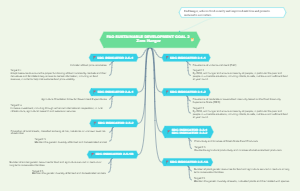
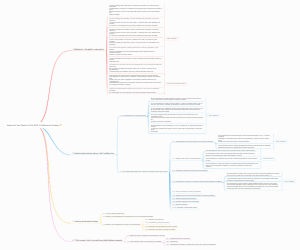
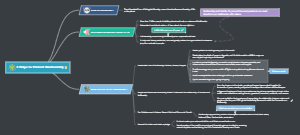
PMP Seventh Edition Outline
People – 14 tasks 42%Task 2
Task One: Manage Conflict
Describe sources and stages of conflict
Analyze the background to the conflict
Assess/recommend/coordinate appropriate conflict resolution
Task Two: Lead the Team
Set a clear vision and mission
Support diversity and inclusion (e.g. behavioral patterns, thought processes)
Emphasis on servant leadership (e.g. implementing servant leadership principles within the team)
Determine appropriate leadership style (e.g., directive, collaborative)
Motivate, encourage and influence team members/stakeholders (e.g. team contract, social contract, rewards uniform)
Analyze impact on team members and stakeholders
Differentiate different approaches to leading various team members and stakeholders
Task 3: Support team performance
Evaluate team member performance against key performance indicators
Support and recognize team member development and growth
Determine appropriate feedback channels
Verify performance improvements
Task 4: Empower team members and stakeholders
Organize around team strengths
Support Team Mission Responsibilities
Description of assessment task responsibilities
Decide and delegate different levels of decision-making authority
Task 5: Ensure team members/stakeholders are adequately trained
Determine the competencies and elements required for training
Determine training plan based on training needs
Allocate resources for training
Measure training effectiveness
Task 6: Build a team
Assess stakeholder skills
Infer project resource requirements
Continuously assess and update team skills to meet project needs
Maintain teams and knowledge transfer
Task 7: Address and remove difficulties, obstacles and obstacles faced by the team
Identify the team’s important roadblocks, roadblocks, and impediments
Prioritize your team's roadblocks, roadblocks, and roadblocks
Use your network to implement solutions to remove roadblocks, roadblocks, and roadblocks for your team
Continuously assess to ensure team roadblocks, roadblocks and blockers are addressed
Task 8: Negotiate Project Agreement
Analyze the negotiation boundaries of the agreement
Evaluate priorities and determine ultimate goals
Verify that the goals of the project agreement are achieved
Participate in agreement negotiation
Determine negotiation strategy
Task 9: Cooperate with relevant parties
Assess stakeholder engagement needs
Optimize alignment of stakeholder needs, expectations and project goals
Recommended to trust and influence stakeholders to achieve project goals
Task 10: Build consensus
Analyze forms and identify root causes of misunderstandings
Investigate all necessary parties to reach consensus
Support outcomes agreed upon by all parties
Investigate potential misunderstandings
Task 11: Engage and support virtual teams
Examine virtual team member needs (e.g. environment, geography, culture, globality, etc.)
Research options for virtual team member engagement (such as communication tools and centralized offices)
Ways to Implement Virtual Team Member Engagement
Continuously assess the effectiveness of virtual team member engagement
Task 12: Define team basic rules
Communicate the organization’s principles to the team and external stakeholders
Establish an environment that promotes compliance with ground rules
Manage and correct violations of ground rules
Task 13: Guidance to relevant stakeholders
Allocate time for coaching
Identify and use coachable opportunities
Task 14: Use emotional intelligence to improve team performance
Assess behavior by using a personality index
Analyze personality indices to adapt to the emotional needs of key project stakeholders
Business environment – 4 tasks 8%
Task One: Plan and Manage Project Compliance
Confirm project compliance requirements (e.g. protective measures, health and safety, regulatory compliance)
Classify compliance categories
Identify potential threats to compliance
Use methods to support compliance
Analyze the consequences of non-compliance
Determine necessary methods and actions to meet compliance (e.g. risk, legal)
Measuring the degree of program compliance
Task 2: Evaluate and deliver project benefits and value
Investigate identified benefits
Document ownership agreements to continue realizing benefits
Verify that measurement systems are in place to track benefits
Evaluate delivery options to demonstrate value
Assess stakeholder value capture processes
Task 3: Assess and deal with the impact of changes in the external business environment on scope
Investigate changes in the external business environment (e.g. regulations, technology, geopolitics, markets)
Assess and prioritize impact on project scope/backlog based on external business environment
Recommend options for scope/backlog changes (e.g. schedule, cost changes)
Continuously review the impact of changes in the external business environment on the project scope/backlog
Task 4: Support organizational change
Assess organizational culture
Assess the impact of organizational changes on projects and determine required actions
Assess the impact of the project on the organization and determine required actions
Process - 17 tasks 50%
Mission One: Execute projects with the urgency required to deliver business value
Assess opportunities to incrementally deliver value
Check the business value of the project from start to finish
The support team breaks down project tasks as needed to find the minimum usable product
Task 2: Manage communication
Analyze the communication needs of all relevant parties
Determine communication methods, channels, frequency and level of detail for all relevant parties
Effectively communicate project information and updates
Confirm communication is understood and feedback received
Task Three: Assess and Manage Risks
Determine risk management approach
Iteratively assess and prioritize risks
Task 4: Mobilize relevant parties to participate
Analyze relevant parties (such as rights and interests grid, dominance, influence)
Stakeholder classification
Mobilize stakeholder participation based on stakeholder classification
Develop, implement and validate strategies for stakeholder engagement
Task 5: Plan and manage budget and resources
Estimate required budget based on project scope and lessons learned from previous projects
Anticipating future budget challenges
Monitor budget deviations and make adjustments as needed in conjunction with the governance process
Plan and manage resources
Task 6: Plan and manage progress
Evaluate project tasks (milestones, dependencies, story points)
Utilize benchmarking and historical data
Prepare schedule based on methodology
Measuring continuous progress based on methodology
Modify schedule as needed based on methodology
Coordinate other projects and operations
Task 7: Plan and manage product/deliverable quality
Determine quality standards for project deliverables
Recommend improvement plans based on quality gaps
Continuously investigate the quality of project deliverables
Task 8: Plan and manage scope
Identify needs and prioritize them
Scope breakdown (e.g. WBS, backlog)
Monitoring and Validation Scope
Task 9: Integrate project planning activities
Combine project/phase plans
Assess dependencies, gaps and ongoing business value between combined project plans
Analyze collected data
Collect and analyze data to make informed project decisions
Identify key information needs
Task 10: Manage project changes
Anticipate and accept the need for change (e.g. follow change management practices)
Determine strategies for dealing with change
Execute change management strategy according to methodology
Determine change responses to move the project forward
Task 11: Plan and manage procurement
Define resource requirements and requirements
Communicate resource needs
Manage suppliers/contracts
Plan and manage procurement strategies
Develop delivery plan
Task 12: Manage project artifacts
Determine the needs for managing project artifacts (what, when, where, who, etc.)
Confirm that project information is up to date (i.e. version controlled) and accessible to all relevant parties
Continuously evaluate the effectiveness of project artifact management
Task 13: Determine appropriate project methodologies/approaches and practices
Assess project needs, complexity, and magnitude
Recommend project execution strategies (such as contract establishment, finance)
Recommend a project methodology/approach (i.e. predictive, agile, hybrid)
Use iterative, incremental practices throughout the project lifecycle (e.g. lessons learned, stakeholder engagement, risk)
Task 14: Develop project governance structure
Determine appropriate project governance (e.g. replication organization’s governance)
Define reporting paths and critical values
Task 15: Manage project issues
Recognize when a risk turns into a problem
Use optimal actions to solve problems to achieve project success
Benefits of working with relevant parties to solve problems
Task 16: Ensure knowledge transfer and maintain project continuity
Discuss project responsibilities with the team
Outline expectations for the work environment
Determine methods for knowledge transfer
Task 17: Plan and manage project/phase closure or handover
Determine criteria for successful project or phase closure
Confirm handover readiness (e.g. operations team or next phase)
Closing activities to close the project or phase (e.g. final lessons learned, review, procurement, finance, resources)