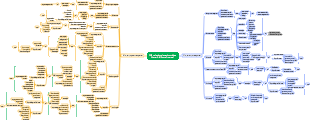
MindMap Gallery PMP Professional Examination Knowledge Chapter 7-Chapter 8 (Cost, Quality)
PMP refers to the Project Management Professional certification. The figure below summarizes the contents of Chapters 7 to 8 of PMP, project cost management and project quality management. Hurry and collect the pictures below to study!
Edited at 2022-05-12 17:07:11This is a mind map about bacteria, and its main contents include: overview, morphology, types, structure, reproduction, distribution, application, and expansion. The summary is comprehensive and meticulous, suitable as review materials.

This is a mind map about plant asexual reproduction, and its main contents include: concept, spore reproduction, vegetative reproduction, tissue culture, and buds. The summary is comprehensive and meticulous, suitable as review materials.
This is a mind map about the reproductive development of animals, and its main contents include: insects, frogs, birds, sexual reproduction, and asexual reproduction. The summary is comprehensive and meticulous, suitable as review materials.
This is a mind map about bacteria, and its main contents include: overview, morphology, types, structure, reproduction, distribution, application, and expansion. The summary is comprehensive and meticulous, suitable as review materials.
This is a mind map about plant asexual reproduction, and its main contents include: concept, spore reproduction, vegetative reproduction, tissue culture, and buds. The summary is comprehensive and meticulous, suitable as review materials.
This is a mind map about the reproductive development of animals, and its main contents include: insects, frogs, birds, sexual reproduction, and asexual reproduction. The summary is comprehensive and meticulous, suitable as review materials.
PMP Professional Examination Knowledge Chapter 7-Chapter 8 (Cost, Quality)
7. Project cost management
7.1. Planning cost management
7.2. Estimating costs
1. Project management plan
cost management plan
quality management plan
Scope Baseline
2. Project files
Lessons Learned Register
Project schedule
Resource requirements
risk register
3. Business environment factors
4. Organizational process assets
enter
1. Expert judgment
2. Analogous estimation
3. Parameter estimation
4. Three-point estimation
Refer to the previously published Chapter 6
5. Bottom-up estimation
6. Data analysis
Alternatives Analysis
Reserve analysis
quality cost
7. Project management information system
8. Decision-making
Tools & Techniques
9. Cost estimation
1. Project file update
Hypothetical log
Lessons Learned Register
risk register
2. Basis for estimation
output
7.3. Develop a budget
1. Project management plan
cost management plan
resource management plan
Scope Baseline
2. Project files
Estimate basis
Cost Estimate
Project schedule
risk register
3. Business documents
business case
Benefit Management Plan
4. Agreement
5. Business environment factors
6. Organizational process assets
enter
1. Expert judgment
2. Cost summary
3. Data analysis
Reserve analysis
4. Historical information review
5. Fund limit balance
6. Financing
Tools & Techniques
1. Cost basis
2. Project funding requirements
3. Project file update
Cost Estimate
Project schedule
risk register
output
7.4. Control costs
1. Project management plan
cost management plan
cost basis
performance measurement benchmarks
2. Project files
3. Project funding requirements
4. Work performance data
5. Organizational process assets
enter
1. Expert judgment
2. Data analysis
Earned value analysis
Deviation analysis
trend analysis
Reserve analysis
3. Performance index required for completion
4. Project management information system
Tools & Techniques
1. Work performance information
2. Cost forecast
3. Change request
4. Project management plan update
cost management plan
cost basis
performance measurement benchmarks
5. Project file update
Hypothetical log
Estimate basis
Cost Estimate
Lessons Learned Register
risk register
output
8. Project quality management
8.1. Planning quality management
1. Project Charter
2. Project management plan
demand management plan
risk management plan
Stakeholder Engagement Plan
Scope Baseline
3. Project files
Hypothetical log
requirements document
Requirements Tracking Matrix
risk register
Stakeholder register
4. Business environment factors
5. Organizational process assets
enter
1. Expert judgment
2. Data collection
Benchmarking
Brainstorming
Interview
3. Data analysis
Cost-benefit analysis
quality cost
4. Decision-making
Multi-criteria decision analysis
5. Data performance
flow chart
Logical data structure diagram
Matrix diagram
mind Mapping
6. Planning of tests and inspections
7. Meeting
Tools & Techniques
1. Quality management plan
2. Quality measurement indicators
3. Project management plan update
risk management plan
Scope Baseline
4. Project file update
Lessons Learned Register
Requirements Tracking Matrix
risk register
Stakeholder register
output
8.2. Management quality
1. Project management plan
2. Project files
Lessons Learned Register
Quality control measurement results
quality measures
risk report
3. Organizational process assets
enter
1. Data collection
2. Data analysis
3. Decision-making
4. Data performance
5. Audit
6. X-oriented design
7. Problem solving
8. Quality improvement methods
Tools & Techniques
1. Quality report
2. Testing and evaluation documents
3. Change request
4. Project management plan update
quality management plan
Scope Baseline
progress baseline
cost basis
5. Project file update
Problem log
Lessons Learned Register
risk register
output
8.3. Control quality
project management plan
quality management plan
project files
Lessons Learned Register
quality measures
Test and Evaluation Documents
Approved change request
Deliverables
job performance data
business environment factors
organizational process assets
enter
data collection
Checklist
Checklist
statistical sampling
Questionnaire
data analysis
performance review
Root Cause Analysis
examine
Test product evaluation
Data performance
cause and effect diagram
Control Charts
Histogram
Scatter plot
Meeting
Tools & Techniques
Quality control measurement results
Verified deliverables
job performance information
change request
Project Management Plan Update
Project file updates
output
Quality aphorism
Low grade is not necessarily a problem, but quality that does not meet the requirements is definitely a problem.
PDCA was defined by Shewhart, and Deming improved and perfected the PDCA ring (14 principles), which is continuous improvement; prevention is better than inspection.
Julan: Quality means fitness for us (subjective), and the key to management is continuous improvement.
Crosby: Quality is meeting requirements, doing the right thing right the first time, zero defects
Kaoru Ishikawa: The inventor of the cause-and-effect diagram, also known as the fishbone diagram, fishbone diagram, Ishikawa diagram,
Genichi Taguchi: Quality management is designed rather than inspected, and he proposed experimental design
Six Sigma
Total quality management: An organization centered on quality and based on the participation of all employees, aiming to achieve long-term success through customer satisfaction and benefits to all members of the organization and society, proposed by Juran and Feigenbohm.
Trends and new experiments