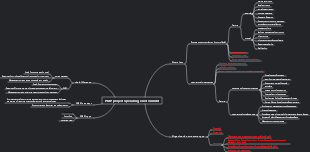
MindMap Gallery 2-PMP Chapter 2 Project Operation Environment
This is a mind map about the environment in which the project runs in Chapter 2 of 2-PMP.
Edited at 2021-10-04 09:38:22This is a mind map about bacteria, and its main contents include: overview, morphology, types, structure, reproduction, distribution, application, and expansion. The summary is comprehensive and meticulous, suitable as review materials.

This is a mind map about plant asexual reproduction, and its main contents include: concept, spore reproduction, vegetative reproduction, tissue culture, and buds. The summary is comprehensive and meticulous, suitable as review materials.
This is a mind map about the reproductive development of animals, and its main contents include: insects, frogs, birds, sexual reproduction, and asexual reproduction. The summary is comprehensive and meticulous, suitable as review materials.
This is a mind map about bacteria, and its main contents include: overview, morphology, types, structure, reproduction, distribution, application, and expansion. The summary is comprehensive and meticulous, suitable as review materials.
This is a mind map about plant asexual reproduction, and its main contents include: concept, spore reproduction, vegetative reproduction, tissue culture, and buds. The summary is comprehensive and meticulous, suitable as review materials.
This is a mind map about the reproductive development of animals, and its main contents include: insects, frogs, birds, sexual reproduction, and asexual reproduction. The summary is comprehensive and meticulous, suitable as review materials.
PMP Chapter 2 Project Operation Environment
3.Governance
concept
Project governance is the framework, functions, and processes used to guide project management activities to create unique products, services, or similar results that meet organizational, strategic, and operational goals.
Based on the organizational governance model, supervision of the entire project life cycle
governance areas
consistency
risk
performance
communicate
Governance can only
supervise
control
Integrate
decision making
4.Organizational structure
functional organization
a hierarchical structure
Every employee has a clearly identified superior
Personnel are grouped by profession
Project managers do not have the authority to allocate resources
Functional managers give orders to members
project organization
Team members usually work together
Most of the organization's resources are devoted to project work
Project managers have great autonomy and authority
A project is a department
matrix organization
concept:
It has the characteristics of both a functional organization and a project-based organization.
An organizational structure in which project managers and functional managers are jointly responsible for prioritizing work and guiding the work of project members
Advantages: Improves project manager’s control over resources
Disadvantages: Communication is more responsible
Classification
Those who are more functional are weak, and those who are more project-oriented are strong.
weak matrix type
Retains most of the characteristics of a functional organization, with the project manager acting more like a coordinator or liaison rather than a true project manager
The Weakness of Project Managers and the Power of Functional Managers
balanced matrix type
While acknowledging the need for a full-time project manager, he is not given full authority to manage projects and project funds.
strong matrix type
It has many characteristics of a project-based organization, with full-time project managers and full-time project administrators with greater authority.
hybrid organization
Organizations use all of the above structures at different levels
5.PMO: Project Management Office
concept
An organizational unit that standardizes project-related governance processes and facilitates the sharing of resources, methodologies, tools, and technologies
Ferey Classification
Supportive PMO
Provide support with little control over the project
Controlled PMO
Moderate level of control over the project
Directive PMO
Directly manage and control projects. This type of PMO has a high degree of control over the project
2. Organizational process assets
content
All process-related assets
from all organizations involved in the project
Contribute to project success
illustrate
Project team members are responsible for contributing to organizational process assets
The number of process assets owned by an organization reflects the maturity of the organization
organizational process assets
Processes, policies and procedures/workflows, procedures, etc.
Initiation and planning
Guidelines and Standards
specific organizational standards
Product and project life cycle
template
Supplier List and Contract Agreement Type
Execution and monitoring
Change process
tracking matrix
financial control procedures
Problem and Defect Management Program
Resource availability control and allocation
communication needs
work authorization system
template
Standardized guidelines, work instructions, proposal evaluation and performance measurement
Verification and confirmation procedures for product results and services
Closing project or closing guide requirements
organizational knowledge base
Configuration management knowledge base
financial database
Project archive historical information and lessons learned knowledge base
Problem and Defect Management Database
Lessons learned from the project should be collected from all relevant parties to ensure that all lessons learned can be recorded.
1. Business environment factors
Concept: refers to various conditions that are beyond the control of the project team and will affect, restrict or direct the project.
key point
These conditions may come from within and/or externally to the organization
These factors may increase or limit project management flexibility and may have a positive or negative impact on project outcomes.
Enterprise environmental factors are input into most planning processes
internal
Organizational culture, structure and governance
Geographic distribution of facilities and resources
infrastructure
information technology software
Resource availability
Staff ability
external
market conditions
Social and cultural influences and issues
legal restrictions
business database
Academic Research
Government or industry standards
financial considerations
Currency exchange rate etc.
physical environmental factors
Work environment, weather and constraints