MindMap Gallery 11PMP Exam-Project Risk Management Summary
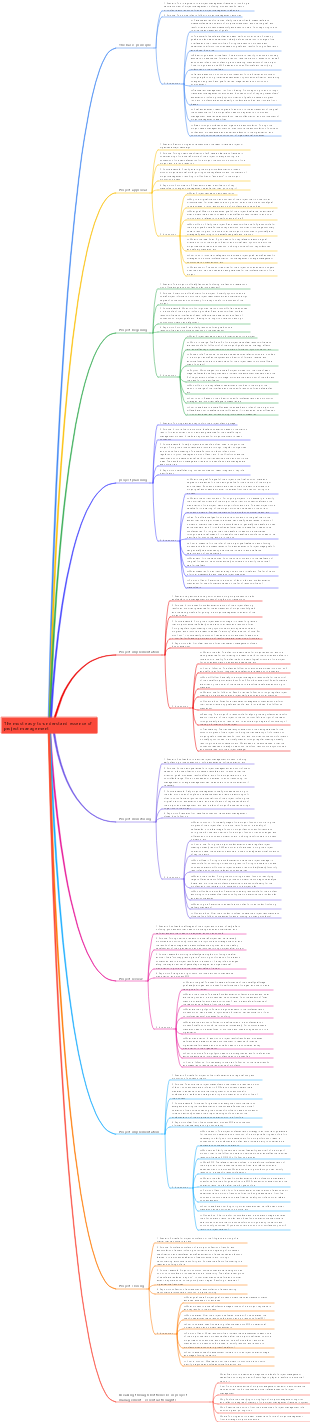
This is a mind map about the 11PMP exam-project risk management summary. What is project risk management? Risk management includes the formulation of risk management plans, risk identification, qualitative risk analysis, quantitative risk analysis, basic measures to deal with risks, and risk monitoring. Let's learn together.
Edited at 2021-06-06 23:55:48This is a mind map about bacteria, and its main contents include: overview, morphology, types, structure, reproduction, distribution, application, and expansion. The summary is comprehensive and meticulous, suitable as review materials.

This is a mind map about plant asexual reproduction, and its main contents include: concept, spore reproduction, vegetative reproduction, tissue culture, and buds. The summary is comprehensive and meticulous, suitable as review materials.
This is a mind map about the reproductive development of animals, and its main contents include: insects, frogs, birds, sexual reproduction, and asexual reproduction. The summary is comprehensive and meticulous, suitable as review materials.
This is a mind map about bacteria, and its main contents include: overview, morphology, types, structure, reproduction, distribution, application, and expansion. The summary is comprehensive and meticulous, suitable as review materials.
This is a mind map about plant asexual reproduction, and its main contents include: concept, spore reproduction, vegetative reproduction, tissue culture, and buds. The summary is comprehensive and meticulous, suitable as review materials.
This is a mind map about the reproductive development of animals, and its main contents include: insects, frogs, birds, sexual reproduction, and asexual reproduction. The summary is comprehensive and meticulous, suitable as review materials.
PMP-Project Risk Management
project risk management
concept
Designed to exploit or enhance positive risks (opportunities) and avoid or mitigate negative risks (threats)
level
individual project risks
overall project risk
Derived from
Uncertainty that exists in any project
attributes of risk
The objectivity and universality of risk existence
Basic properties
Randomness and relativity
basic concept
Known - known risks
Known-Unknown Risks (Contingency Reserve)
Unknown - unknown risk (management reserve)
Residual risk (residual risk): hands not washed
Secondary risk (secondary risk): when the gourd is pressed, the scoop rises
planning risk management
ITTO
enter
1. Project Charter (should be started during the project conception phase and completed early in the project planning phase)
2. Project Management Plan (all components)
3. Project documents (stakeholder register)
4. Business environment factors
5. Organizational process assets
Tools & Techniques
1. Expert judgment
2. Data analysis (stakeholder analysis)
3.Meeting
output
1.Risk Management Plan
methodology
Roles and Responsibilities
Budget
Schedule
Risk Category/Subcategory
Risk Breakdown Structure (RBS)
Definition of Risk Probability and Impact
Probability and Impact Matrix: Threat, Opportunity Probability
Revised Stakeholder Tolerance
Report form
track
Identify risks
ITTO
enter
1. Project management plan
demand management plan
progress management plan
cost management plan
quality management plan
resource management plan
risk management plan
Scope Baseline
progress baseline
cost basis
2.Project files
Hypothetical log
Cost Estimate
duration estimate
Problem log
Lessons Learned Register
requirements document
Resource requirements
Interested Party Register
3. Agreement
4. Procurement documents
5. Business environment factors
6. Organizational process assets
Tools & Techniques
1. Expert judgment
2. Data collection
Brainstorming
Delphi technique: a group of experts discuss and circulate anonymous votes
Interview
3.Data analysis
Root Cause Analysis
Assumptions and constraints analysis
SWOT Analysis: Identifying Pros and Cons of Cocktails
Document analysis: cause and effect diagrams, system or process flow diagrams, influence diagrams
4.Interpersonal and team skills (guidance)
5. Tip List
6.Meeting
output
1. Risk Register
List of identified risks (check risk management plan for unidentified risks)
List of potential countermeasures
The risk response plan is included in the risk register
2.Risk Report
3.Project files
Hypothetical log
Problem log
Lessons Learned Register
basic concept
participants
project manager
project team members
risk management team
client......
Risks should be described in a consistent format
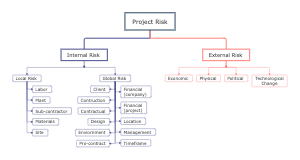
Sources and Classification of Risks
source
Classification
Unpredictable externally
Externally predictable
Internal non-technical
technology
law
Conduct qualitative risk analysis (holistic, ranked)
ITTO
enter
1. Project management plan
risk management plan
2.Project files
Hypothetical log
risk register
Interested Party Register
3. Business environment factors
4. Organizational process assets
Tools & Techniques
1. Expert judgment
2. Data collection (interviews)
3.Data analysis
Risk data quality assessment
Risk probability and impact assessment
Assessment of other risk parameters
4.Interpersonal and team skills (guidance)
5. Risk classification
6.Data performance
Probability and Impact Matrix
hierarchical
7.Meeting
output
1. Project file update
Hypothetical log
Problem log
risk register
A relative ranking or priority list of project risks
Risks by Category
Risk causes or project areas that require special attention
List of risks that need to be addressed in the near future
Low priority risk watch list
Trends in Qualitative Risk Analysis Results
risk report
Conduct quantitative risk analysis
ITTO
enter
1. Project management plan
risk management plan
Scope Baseline
progress baseline
cost basis
2.Project files
Hypothetical log
Estimate basis
Cost Estimate
cost forecast
duration estimate
Milestone List
Resource requirements
risk register
risk report
progress forecast
3. Business environment factors
4. Organizational process assets
Tools & Techniques
1. Expert judgment
2. Data collection (interviews)
3.Interpersonal and team skills (guidance)
4. How uncertainty manifests itself
5.Data analysis
Simulation: Monte Carlo analysis (using various models to simulate the impact of uncertainty on the target
Sensitivity analysis: Tornado chart, the most influential and most sensitive! Determine which risks have the greatest potential impact on the project, helping to understand the correlation between changes and uncertainties
Decision tree analysis: selection of multiple alternatives, expected monetary value (EMV) analysis, calculation: weighted sum
influence diagram
output
1. Project file update
risk report
Project probability analysis
Probability of achieving cost and time targets
Quantitative Risk Prioritization Checklist
Trends in Quantitative Risk Analysis Results
basic concept
Conduct a quantitative analysis of the impact of identified individual project risks and other sources of uncertainty on overall project objectives
effect
Quantify overall project risk exposure
Plan risk responses
ITTO
enter
1. Project management plan
resource management plan
risk management plan
cost basis
2.Project files
Lessons Learned Register
Project schedule
Project team dispatches work orders
Resource Calendar
risk register
risk report
Interested Party Register
3. Business environment factors
4. Organizational process assets
Tools & Techniques
1. Expert judgment
2. Data collection (interviews)
3.Interpersonal and team skills (guidance)
4. Threat response strategies
Report
The team or sponsor believes that a threat is outside the scope of the project
The proposed response exceeds the project manager's authority
avoid
Change the project management plan to completely eliminate
alleviate
Reduce the probability and impact of adverse risk events, alternative resources
transfer
Transfer the responsibility and consequences of risks, outsource and find a third party to buy insurance
accept
Take the initiative to accept: establish emergency reserves and reserve time and costs in advance
Passive acceptance: LET IT BE
No action before risk occurs
5. Opportunity response strategies
Report
open up
Ensure opportunities are realized
Allocate the most capable resources to the project
eliminate uncertainty
improve
Increase the probability and positive impact of opportunities
Increase resources for early completion of activities
share
Allocate part or all of an opportunity to a third party that can best seize the opportunity for the benefit of the project
accept
happy to take advantage of
Not actively pursuing
6 emergency response strategies
Emergency plans
Bounce back plan
7. Overall project risk response strategy
8.Data analysis
Alternatives Analysis
Cost-benefit analysis
9.Decision making
Multi-criteria decision analysis
output
1. Change request
2. Project management plan update
progress management plan
cost management plan
quality management plan
resource management plan
Procurement Management Plan
Scope Baseline
progress baseline
cost basis
3. Project file update
Hypothetical log
cost forecast
Lessons Learned Register
Project schedule
Project team dispatches work orders
risk register
risk report
basic concept
Develop appropriate approaches to overall project risks and individual project risks, allocate resources to add activities to documents and plans
risk tolerance
income
invest
status resources
risk orientation
Risk-seeking
risk neutral
Risk averse
Implement risk responses
ITTO
enter
1. Project management plan
risk management plan
2.Project files
Lessons Learned Register
risk register
risk report
3. Organizational process assets
Tools & Techniques
1. Expert judgment
2.Interpersonal and team skills (influence)
3. Project management information system
output
1. Change request
2. Project file update
Problem log
Lessons Learned Register
Project team dispatches work orders
risk register
risk report
Oversight risk
ITTO
enter
1. Project management plan
risk management plan
2.Project files
Problem log
Lessons Learned Register
risk register
risk report
3. Job performance data
4. job performance report
Tools & Techniques
1.Data analysis
Technical performance analysis
Reserve analysis
2.Audit
Risk audit: Examine and document the effectiveness of risk responses in addressing identified risks and their root causes
3.Meeting
other
risk reassessment
Deviation and trend analysis
technical performance measurement
output
1. Job performance information
2. Change request
3. Project management plan updates (any component)
4. Project file update
Hypothetical log
Problem log
Lessons Learned Register
risk register
risk report
5. Organizational process asset updates
Purpose
Discover new, changing and obsolete risks
three terms
emergency plan
Bounce back plan
A cover-up plan
contingency measures