MindMap Gallery CISSP Study Notes-16 (Security Operation Management)
Regarding the mind map of the review notes of Chapter 16 of the CISSP textbook, it is full of useful information. Interested friends can refer to it!
Edited at 2024-02-22 16:05:11This is a mind map about bacteria, and its main contents include: overview, morphology, types, structure, reproduction, distribution, application, and expansion. The summary is comprehensive and meticulous, suitable as review materials.
This is a mind map about plant asexual reproduction, and its main contents include: concept, spore reproduction, vegetative reproduction, tissue culture, and buds. The summary is comprehensive and meticulous, suitable as review materials.
This is a mind map about the reproductive development of animals, and its main contents include: insects, frogs, birds, sexual reproduction, and asexual reproduction. The summary is comprehensive and meticulous, suitable as review materials.
This is a mind map about bacteria, and its main contents include: overview, morphology, types, structure, reproduction, distribution, application, and expansion. The summary is comprehensive and meticulous, suitable as review materials.
This is a mind map about plant asexual reproduction, and its main contents include: concept, spore reproduction, vegetative reproduction, tissue culture, and buds. The summary is comprehensive and meticulous, suitable as review materials.
This is a mind map about the reproductive development of animals, and its main contents include: insects, frogs, birds, sexual reproduction, and asexual reproduction. The summary is comprehensive and meticulous, suitable as review materials.
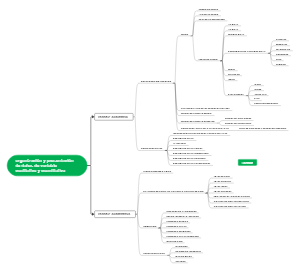
CISSP Study Notes-16 (Security Operation Management)
Knowledge points
Apply basic security operations concepts
Need-to-know and least privilege
On-demand access
grant access
The purpose is to keep secret information secret
Associated with security clearance
Usually associated with licenses from government and military agencies, but also applies to civilian applications
principle of least privilege
Privileges to perform assigned work, including access to data and the authority to perform system tasks
Protect data integrity and confidentiality
Suitable for accessing data and systems
Segregation of duties and responsibilities
Separation of Duties SoD
The individual does not have complete control over critical functions or systems
Dual control
Executed after approval by two people
knowledge segmentation
Integrating separation of duties and two-player control
job rotation
Deterrence and detection mechanisms
Peer review, fraud reduction, cross-training
compulsory leave
peer review
Deterrence and detection mechanisms
Privileged Account Management PAM
In Microsoft domain, including local administrators, users in the domain administrator group, and users in the enterprise administrator group
Real-time management principle: users are assigned to privileged groups, reorganized members do not have elevated privileges, users apply for tickets, and have time limits to prevent Kerberos attacks.
In Linux, including the root account and users granted root access by sudo command
Service Level Agreement SLA
Memorandum of Understanding MOU, informal, no penalty clauses
Address personnel safety and security issues
coercion
security system password
Electronic locks
One password for regular use
one for alarm
On business trip
Sensitive data
encryption
Malware and surveillance equipment
Carry
temporary equipment
Free WiFi
VPN
emergency management
Security training and awareness
Securely configure resources
Information and asset ownership
Data owners have ultimate organizational responsibility, such as executives, CEOs
Senior managers have ultimate responsibility for other assets such as hardware
The data owner can delegate data protection responsibilities to others
Data custodians perform day-to-day tasks such as access control, backups, and managing data storage
asset Management
Hardware asset inventory
Barcode, RFID
Software asset inventory
Includes operating system and applications
Intangible assets list
Not using inventory method
ManagementThe management team is the owner
Large organizations apply Generally Accepted Accounting Principles GAAP valuation
Implement resource protection
media management
media protection technology
tape media
mobile device
media management life cycle
MTTF mean time to failure
Cloud hosting services
Share responsibilities using cloud service models
responsibility model
SaaS
all
PaaS
Applications and Data - Users
IaaS
application, data, runtime, operating system - user
Cloud deployment model
public cloud
Private Cloud
community cloud
hybrid cloud
Scalability and elasticity
Conduct configuration management CM
Baselines and images are used to deploy systems
Configuration
Disable all unused services
Close all unused logical ports
Delete all unused apps
Change default password
baseline
Create a baseline using mirroring technology
automation
Manage changes
Change management
version control
Configuration document
Manage patches and mitigate vulnerabilities
System Management
including mobile devices
Patch management
Vulnerability management
Daily vulnerability scanning
Regular vulnerability assessment
Vulnerability Scan
Common vulnerabilities and disclosures
Common Vulnerabilities and Exposures CVE Dictionary - maintained by MITER
Exam points
Understand the difference between need-to-know and the principle of least privilege. Need-to-know and the principle of least privilege are two standard IT security principles followed in a secure network environment. The principles of need-to-know and least privilege restrict access to data and systems so that users and other subjects only have access to what they need. This limited access helps prevent security incidents and helps limit the impact of an incident if it occurs. If an organization does not adhere to these principles, security incidents will cause greater damage to the organization.
Understand segregation of duties and job rotation. Segregation of duties is a basic security principle that ensures that no single person has access to critical functions or critical system elements. Through job rotation, employees can be rotated to different jobs, or tasks can be assigned to different employees. Collusion is when multiple people work together to perform some unauthorized or illegal act. In the absence of collusion, these strategies can prevent fraud by limiting individual behavior.
Understand the importance of monitoring privileged operations. Although privileged users are trusted, they may abuse their privileges. Therefore, it is necessary to monitor the allocation and use of all privileges. The purpose of monitoring privileged operations is to ensure that trusted employees do not abuse granted privileges. Because attackers often use privileges when attacking, monitoring privileged operations can also detect some attacks. Advanced privilege management limits the time a user has advanced privileges.
Understand service level agreements. The organization enters into service level agreements with external entities such as suppliers. An SLA specifies performance expectations, such as maximum downtime. SLAs often include penalty clauses in case the supplier fails to meet expectations.
Pay attention to personnel safety. Duress systems enable guards to sound the alarm in emergencies, and emergency management plans help organizations prepare for disasters. Employees need to be aware of the risks when traveling, especially when traveling to a different country. Security training and awareness programs ensure employees understand these risks and ways to mitigate them.
Understand security configuration concepts. Secure configuration of resources includes ensuring that resources are deployed in a secure manner and maintained in a secure manner throughout their lifecycle. Asset management tracks tangible assets (hardware and software) and intangible assets (such as patents, trademarks, company goodwill, and copyrights)
Learn how to manage and protect media. Media management technology tracks the media that holds sensitive data. Media is protected throughout its life and destroyed when no longer needed.
Understand the difference between SaaS, PaaS and IaaS. The Software as a Service (SaaS) model provides full-featured applications that are typically accessed via the Web. The Platform as a Service (PaaS) model provides users with computing infrastructure, including hardware, production systems, and operational environment. The Infrastructure as a Service (IaaS) model provides basic computing resources such as servers, storage, and network resources.
Identify security issues in cloud hosting services. Cloud hosting services include cloud storage or any resources accessed through the cloud. Storing data in the cloud increases risk, so additional measures may be needed to protect the data, depending on the value of the data.
When leasing a cloud-based service, it’s important to understand who is responsible for maintenance and security. Cloud service providers offer minimal maintenance and security in the LaaS model.
Interpret configuration and change control management. Business disruptions and many other incidents can be prevented with an effective configuration and change management plan. Configuration management ensures that systems adopt similar configurations and that system configurations are known and recordable. Baselining ensures that deployed systems have the same baseline or the same launch point, while mirroring is a general baseline technique. Change management helps prevent unauthorized changes, thereby reducing business disruption and preventing security compromises. The change management process defines the request, approval, testing and recording of changes. Version control uses a tag or numbering system to track changes to software versions.
Understand patch management. Patch management ensures that systems are kept up to date with current patches. It should be recognized that an effective patch management plan includes patch evaluation, testing, approval and deployment. Additionally, system audits will verify that approved patches have been deployed to the system. Patch management is often combined with change and configuration management to ensure that documentation content reflects changes. Without an effective patch management plan, organizations often experience outages and incidents caused by known problems that could have been prevented.
Explain vulnerability management. Vulnerability management includes routine vulnerability scanning and periodic vulnerability assessments. Vulnerability scanners can detect known security holes and vulnerabilities, such as unpatched or weak passwords. Vulnerability management can generate reports that point out vulnerabilities in the system and provide an effective check on the patch management plan. Vulnerability assessment involves not only technical scanning but also review and auditing of vulnerability detection
Important exercises
Which security principle addresses knowledge and possession of sensitive information as an aspect of the profession? A. Principle of least privilege B. Segregation of duties C. Know according to need D. On-demand basis
C By necessity: Any given system user should be granted access to a portion of the sensitive information or data needed to perform certain tasks. Principle of Least Privilege: Ensuring that people are only given the permissions they need to perform their jobs Segregation of Duties Principle: Ensure that no single person has full control over critical functions or systems
The organization ensures that users are only given access to the data required to perform specific work tasks, what users need to follow in principle? A. Principle of least privilege B. Segregation of duties C. Know according to need D.Job rotation
C
What is the concept of granting users only the rights and permissions they need to complete their job responsibilities? A. Know according to need B. Mandatory leave C. Principle of least privilege D. Service Level Agreement (SLA)
C
Need-to-know refers to the requirement to access and possess data to perform specific work tasks The principle of least privilege is ineffective in IT security, including rights and permissions
Large organizations using Microsoft domains want to limit how long users have elevated privileges. Which of the following security operations concepts supports this goal? A. Principle of least privilege B. Segregation of duties C. Know according to need D. Privileged account management
D
Administrator is assigning database permissions. What is the default access level that administrators should grant new users to the organization? A. Read B.Modify C. full access D. No access rights
D
You want to use the principle of least privilege when creating new accounts in your software development department. Which of the following should you do? A. Create each account with only the rights and permissions the employee needs to perform their job. B. Grant each account full rights and permissions to the software development department server. C. Create an account without any rights and permissions. D. Add the account to the local Administrators group on the new employee's computer.
A
Your organization has divided the high-level audit function into separate work tasks and then assigned these tasks to three administrators. No one administrator can perform all tasks. What safety principle does this approach describe? A. Job rotation B. Mandatory vacation C.Separation of duties D.Principle of least privilege
C
Financial institutions typically have employees change positions every six months. What security principles are they adopting? A. Job rotation B. Segregation of duties C. Mandatory vacation D.Principle of least privilege
A
Which of the following is the primary reason organizations implement furlough policies? A. Rotate job responsibilities B. Detect fraud C. Improve employee productivity D. Reduce employee stress
B
Your organization has contracted with a third-party provider to host cloud-based servers. Management expects to be able to fine third-party providers if they do not meet their contractual responsibilities related to uptime and downtime. Which of the following measures is the best option to meet this requirement? A.MOU B.ISA C. SLA D.SED
C
Which of the following cloud service models provides the organization with the most control and requires the organization to perform all maintenance of operating systems and applications? A. Infrastructure as a Service (laas) B. Platform as a Service (Paas) C. Software as a Service (Saas) D.Public
A
Which of the following cloud service models allows users to access email through a web browser? A. Infrastructure as a Service (laaS) B. Platform as a Service (Paas) C. Software as a Service (SaaS) D.Public
C
IT departments often use images when deploying new systems. Which of the following options is the main benefit of using mirrors? A. Provide a baseline for configuration management B. Improve patch management response time C. Reduce vulnerabilities of unpatched systems D. Provide change documentation
A
A server administrator recently modified the server's configuration to improve performance. Unfortunately, when the automation script is run once a week, changes cause the server to restart. After several hours of troubleshooting, it was finally determined that the problem was not with the script, but with the handover. What measures can be taken to prevent this from happening? A. Vulnerability Management B. Patch management C.Change Management D. Block all scripts
C
Which of the following steps would be included in the change management process? (Choose three) A. If a change will improve performance, implement it immediately B. Request a change C. Create a rollback plan for the change D. Record changes
BCD
A new CIO learned that the organization lacked a change management plan. The CIO insisted that the change management plan be implemented immediately. Which of the following options is the primary goal of a change management program? A. Personnel safety B. Allow rollback of changes C. Ensure changes do not reduce security D. Audit privileged access
C
Systems within an organization are configured to receive and update patches automatically. After receiving the patch, 55 of the systems automatically rebooted and booted with a stop error. Which of the following measures would prevent this problem without sacrificing security? A. Disable settings for automatically applying patches B. Implement a patch management process to approve all patches C. Ensure that the system regularly reviews patches D. Implement a patch management process and test patches before deploying them
D
Security administrators want to verify that existing systems have the latest patches. Which of the following options is the best way to ensure that your system has the required patches? A. Patch management system B. Patch Scanner C. Penetration tester D. Fuzz tester
A
Your organization's servers were recently attacked, causing business disruption. You need to check your system for known issues that an attacker could exploit to attack other systems on your network. Which of the following is the best option to meet this requirement? A. Version tracking B. Vulnerability Scanner C. Security audit D. Security review
B
Which of the following processes is most likely to list all security risks within a system? A. Configuration management B. Patch management C. Hardware asset list D. Vulnerability scanning
D