 Wondershare EdrawMind
MindMap Gallery Super Individual-1.2 The underlying logic of career planning
- 27
Super Individual-1.2 The underlying logic of career planning
In an era of rising individuals, how to lead in the future workplace? You need to re-understand the new career model, learn to use the Internet and social media, upgrade your various professional skills, and continue to study and time, seize the trend, and become a "super individual." This is a series about personal growth. This part mainly talks about the underlying logic of career planning (Part 2). If you like it, please follow me and I will continue to update
Edited at 2022-02-28 19:37:33
- bacteria
This is a mind map about bacteria, and its main contents include: overview, morphology, types, structure, reproduction, distribution, application, and expansion. The summary is comprehensive and meticulous, suitable as review materials.
- Plant asexual reproduction
This is a mind map about plant asexual reproduction, and its main contents include: concept, spore reproduction, vegetative reproduction, tissue culture, and buds. The summary is comprehensive and meticulous, suitable as review materials.
- Reproductive development of animals
This is a mind map about the reproductive development of animals, and its main contents include: insects, frogs, birds, sexual reproduction, and asexual reproduction. The summary is comprehensive and meticulous, suitable as review materials.
Super Individual-1.2 The underlying logic of career planning
- bacteria
This is a mind map about bacteria, and its main contents include: overview, morphology, types, structure, reproduction, distribution, application, and expansion. The summary is comprehensive and meticulous, suitable as review materials.
- Plant asexual reproduction
This is a mind map about plant asexual reproduction, and its main contents include: concept, spore reproduction, vegetative reproduction, tissue culture, and buds. The summary is comprehensive and meticulous, suitable as review materials.
- Reproductive development of animals
This is a mind map about the reproductive development of animals, and its main contents include: insects, frogs, birds, sexual reproduction, and asexual reproduction. The summary is comprehensive and meticulous, suitable as review materials.
- Recommended to you
- Outline
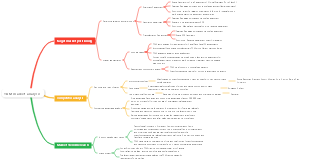

1.2 The underlying logic of career planning
career development model
an observation
What constitutes an ultimately suitable career?
a model
Minnesota Work Adaptation Theory
Individual ability
Ability, education, resources
personal needs
Economy, growth, sense of accomplishment
Career requirements
results, performance, indicators
career feedback
money, honor
success
If a person's abilities always match his position, his performance is relatively high, his ratings are good, and his grade is high... This means that the organization is very satisfied with him, and in short, he is more "successful"
happiness
If a person is always satisfied with the feedback the organization gives him, if he has growth, high income, and a good atmosphere... he will be relatively "happy"
a strategy
Although the workplace model is simple, it reveals an underlying logic of the profession—equivalent exchange.
Career is a process of self-realization by continuously meeting the needs of the other party. Because it is a continuous exchange of equal value, the best state for both parties to the exchange is matching.
Once this match is broken, then one person between the two needs to change, and if the change continues, there will be an emotion called complaining.
Complaining is a kind of incompetent greed
People who complain always hope that if they don’t change, others will change, and it will be beneficial to themselves.
a summary
Career development model and four elements of career development: personal abilities, personal needs, career requirements and career feedback. These four together constitute a person's career satisfaction, success and happiness
We mentioned that the underlying nature of profession is continuous exchange and dynamic matching.
Two strategies for successful career development
an observation
The relationship between people and careers is like a dance, a dynamic matching
When do we need to follow and actively adapt to the profession; when should we lead the dance and let the profession match us?
a concept
resource strategy
Starting from the existing capabilities and resources, first do the things at hand, do what you can do, and do what you can do well.
realist following strategy
benefit
high efficiency
Very pragmatic
Can start right away
Gain immediately
little pressure
harm
What you do may not be exactly what you want to do
You may not like all the feedback you receive.
Following for a long time will lead to a person's inertia
vision strategy
Starting from my own needs, I work backwards to meet the conditions - what abilities and resources should I have to achieve this goal? Then take the initiative to make up for it
Idealistic Leading Strategy
benefit
You can finally get what you want
harm
this may take a long time
a strategy
Different career types require different strategies
resource strategy
Suitable for positions where the threshold is not high, but practical experience is greater than knowledge learning
Such as sales, marketing, media, product managers, administration, human resources
It is very important to learn while practicing for a position like this. You must start doing it as early as possible and you will learn by practicing.
vision strategy
Positions that require a large amount of complete professional knowledge accumulation before starting
For example, doctors, lawyers, scientific researchers
Be sure to choose as early as possible, start as early as possible, learn first and then practice. And once selected, switching costs are high
Many people's career development is not smooth because their career strategies are confused.
I wanted to be a writer, but I ended up reading 200 books on writing, but I didn’t write a single word. In fact, writing is a resource strategy, something that needs to be learned through practice
Different stages of career require different strategies
Just entered the workplace, or entered a new organization or circle
The best strategy must be to follow
Understand your needs first, adapt first, and then survive
Wait until you have passed the adaptation period
You need to switch to a vision strategy
Following you for a long time will make you not make much progress
At this time, you have successful experience, the right to speak, and the ability to bargain. Instead, the organization will take the initiative to think about how to meet your needs, such as promotion, transfer, or intrapreneurship opportunities...you start to take the lead.
a summary
Two strategies for career development, resource strategy and vision strategy
Different professions have different strategies. Different stages of career also have different strategies.
Career is a means of social exchange that continuously enables self-fulfillment by meeting the needs of others
Three stages of career development
one question
Three perspectives for understanding things
microscope
Career development is the back-and-forth interaction of four elements. The best state is dynamic matching. If there is no matching, just find the reason and adjust it.
Plane mirror
You and your career interact back and forth. Who leads whom at this stage? Do you adopt a follow or lead strategy? The key lies in the strength of your relationship with real life. You must know how to adapt to the situation.
telescope
A person's career spans about 35 years from employment at the age of 25 to retirement at the age of 60. What is a person's entire career like?
a concept
three stages of career
Lifetime
The demand for a career is mainly a means of survival, and the goal is to become financially independent as soon as possible
The average person’s survival period is about 3-5 years
The post-90s generation is the first group of people in China who were born in a truly well-off society. Many of them do not have problems with survival, so they start off directly and enter the development stage.
Development period
The demand is not for income, but for rapid improvement of capabilities and development.
The most important feature is to look beyond income to see growth rate, and to look beyond making money to earn capital.
At this stage, income is only a matter of your cash flow, but more importantly, your professional assets are increasing in value.
If you haven't completed this transformation and are still subconsciously reusing an ability to make money, without making any progress over time, you will basically be useless.
career period
Actively enter the career stage
You have reached the pinnacle of your career, external sense of achievement can no longer drive you, and you have enough resources at hand, and you start to want to do something interesting.
Passively enter the career stage
When a person's career reaches a plateau around the age of 45 and development slows down, he will think, I still have 15 years to work, why not do something I really want to do?
The career period is characterized by finding the inner standards of success
The English name for the career period is calling, which originally means "calling from God"
We will do what we are interested in, use our favorite working methods, and determine our own success standards
The most important characteristic is to transcend external evaluation and return to one's inner self
Career becomes a means of self-actualization
Generally speaking, it takes 20-30 years for a person to complete the three stages of his career.
Many of the three stages are not completed in one person, but in a family.
These families have completed the division of survival period, development period and career period. One generation of parents completes the survival task, some of the children develop, and some try to realize themselves.
The first-generation Chinese immigrants in the United States basically solve the problem of survival; the second-generation immigrants often have high education, engage in technical jobs such as computers and actuarial science, and solve development problems; by the third-generation immigrants, a large number of immigrants begin to Children read art, film, music
a strategy
How do you assess which stage you are at?
Make a financial assessment of yourself
An important indicator of the survival period entering the development period is economic independence, with income greater than expenditure.
The best situation when you enter the career stage from the development stage is that you are financially free and do not need to work for money at all.
It doesn’t matter if you can’t achieve it. You just need to ensure that the income from doing what you like can meet your sustainable development needs. This requires you to find this direction and reserve capabilities and resources in advance.
Assess your career drivers
The core demand during the survival period is income
The core demands during the development period are external sense of success and improvement of capabilities and resources.
The core appeal during the career period is the inner sense of success and meaning.
When you got up this morning, what motivated you to go to work?
If financial and psychological indicators are inconsistent, listening to finance, financial reflection ability, and ability improvement are the keys to all this.
No matter how fast you go through the three stages, the law of development has not changed - you can speed through it, but you can't cross it.
Poetry and distance must exist, but we must start from the first step of understanding and accepting reality.
Whether you are making a living today, working hard to link resources for development, or seeking to realize your own value, you are on the track of self-realization.
Realistic idealism strategy
The idea of target learning
What do I want to do? If the goal is to be like someone, what exactly are the ingredients for that person's success?
Is what I learned today relevant to achieving that goal?
If so, is this the best option for me right now?
So what should I do next?
a summary
There are three stages of career development: survival period, development period and career period.
The three stages can be passed quickly, but cannot be crossed.
Assess which stage you are at
When your heart is in the career period and you are in the survival period, you need to learn to understand and accept reality.
Four career development paths
one question
Many people will get a job goal at the beginning of the year, such as what their performance will be and what tasks they need to complete, and then they will start immersing themselves in work based on this.
But why is it done? Why give this task? Did you add value during this period? No idea at all - we have been working hard at a low level
The biggest time management is actually the management of direction - we must learn to position ourselves and work according to the requirements of the organization. This is how we go to work, not to let you in the class
a concept
Understand organizational perspective
glass pyramid
It is divided into three floors from top to bottom, each floor is divided into 8 areas, and there is an elevator in the middle.
8 areas mean 8 different departments
The three levels correspond to the three organizational forms of execution, management, and decision-making.
Pyramid plan
Market: branding, advertising, public relations, business cooperation, etc.
Sales: direct sales, distribution, telemarketing, conference sales channels, agents, etc.
R&D: research, development, design, product manager, etc.
Production: production, production, coding, planting, etc.
Services: customer service, service provision, knowledge services, etc.
Finance: money management, accounting, tax avoidance, capital operation
Manpower: selection and retention of people, salary and benefits, corporate culture
Administration: venue, item procurement, administrative affairs
cross section of pyramid
The more core the department, the easier it is to get on the elevator
The more core people in each department are closer to the center, the easier it is for them to get on the elevator.
The core does not require you to be the most professional. The person in charge of a sales team is not necessarily the person with the best performance. But he often performs well and is willing to spend time and energy to lead others and manage people
Any company that has more contact with the management will be more likely to get on the elevator with people who are closer to it.
The best way to go upstairs is to work with people in the core department, at the head of the team, and who often have contact with senior management.
a strategy
upward development
Take on greater responsibilities within the organization, lead a larger team, and do greater things
Develop in depth
Professional development, becoming more sophisticated in the team
On the one hand, major itself is a kind of professional competitiveness. In a professional enough company, you can continue to work in professional positions.
On the other hand, being more professional is also an important means to get closer to management positions.
development left and right
Change roles and enter a field that suits you better
outward development
If your current core values cannot be obtained within the organization for the time being, looking outward is a good way
Your time and life are the most important. The biggest waste in the world is taking detours.
"Angle - Depth - Height - Angle", find an entry point, make yourself professional, and then go to a higher level in management, and then continue to find angles and become professional... When you encounter obstacles in development, develop outward to improve your comprehensive capabilities.
a summary
Understand the organizational pyramid
Four strategies for career development: upward development, deep development, left-right development, and outward development
"Angle - Depth - Height - Angle"
Accelerate career development
Capability three cores
an observation
Cultivation of abilities is a long process, but the industry is changing rapidly, so how to coordinate the two?
It’s easy for us to focus on the value of new things, but often ignore the value of what we currently own.
When you need to move, whether it's a house or a job, you don't need to start over all over again - you should carve out the most valuable parts of the existing value and then take it to the new area to continue to add value.
In an era of uncertainty, our professional needs often require migration - one type of migration is spatial, from one industry to another; the other is temporal, from one era to another.
In first- and second-tier cities and in third- and fourth-tier cities, people have different preferences and prefer different teaching methods.
Around 2002, the most popular teaching method was large class teaching.
At that time, the core skill was public speaking ability.
Later, more people entered the market
Core skills become product development capabilities - you must constantly innovate
In the third stage, the large class gradually turned into a small class
At this time, a few teachers are not enough. Enrollment capabilities and teachers’ operational capabilities have become the focus. This is the migration of time.
a concept
The ability to solve problems in one area can be transferred to other areas after being transformed, because problem-solving skills are transferable.
Capability three cores
Knowledge
Professional knowledge, concepts, and procedures for doing things in this field are acquired through learning and memorization.
For example, the books I read and the process I followed when doing this column are knowledge.
Skill
A series of actions that we can skillfully operate and complete through training
Such as writing, problem solving, English, information gathering, time management
competence
Talents are some skills, qualities and traits that we internalize and use unconsciously through a lot of practice. They are a mixture of innate talents and acquired a lot of practice. They are internalized from skills through a lot of training.
For example: optimism, sense of humor, intuition
Although great people always move between various fields, they just relearn knowledge and have the same set of skills and talents.
The CEO is usually a marketing director or sales director, because the job of a CEO is very similar to that of sales. To be a salesperson, you need to sell products to others. To be a CEO, you need to sell your business concept to business partners, sell your vision to employees, and sell your vision to investors. Man selling business plan
We often say that every other line is like a mountain. In fact, the only real difference is the ticket office at the entrance on the ground floor. The higher you go, the closer and more familiar your abilities and talents become. This is why everyone says - all efforts will not be in vain, they are all connected.
The Lotus Sutra says, "Don't donate your merits to others." This is what it means.
The chain of contempt for self-growth cultivators
T-shaped combination > Specialized practice > View selected information > Read books > Check Moments
All-rounders despise specialists, specialists despise those who only watch and practice, those who only watch and practice despise those who read randomly, those who read books despise those who check Moments, and those who check Moments despise those who watch live broadcasts?
a summary
We mentioned that among everyone’s abilities are hidden skills that can be recycled and transferred. These skills are called transferable skills
Ability is composed of 3 parts: knowledge, skills and talents. What separates us is knowledge, skills can be transferred to different career fields, and talents can be extended to all aspects of life and work.
Abilities can be combined and separated. The separated skills and talents can be transferred to new areas to continue practicing, so you don’t need to start over.
Ability extraction
a concept
How to find your transferable skills and transfer them to new areas?
Ability extraction
The ability to extract the essence of your abilities from your past successful events and then put them into another field.
Ability extraction is one of the tricks of all crossovers
In the 1970s, management was an emerging field, and all management masters were extractors and crossovers from their original fields.
a strategy
Three steps for skill extraction
Think about something you did well before?
Digging from previous jobs
For example, if you help the company choose a telecommunications supplier, although it is a small matter, if you really compare several quotes and call to bargain, you can help the company save 2,000 yuan in phone bills for a year (say 30% of telecommunications charges). More imaginative), does it prove that you have "data analysis skills" and certain "negotiation skills", and also shows that you are very responsible?
Dig from hobbies
A person who is particularly good at finding movies must have very powerful search abilities;
If you like playing chess and poker, it means that your strategic thinking ability may be very strong;
If you like to make things happen, it means you may have good community management skills.
Dig from life
Are you a stay-at-home mom? The transferable skills of an excellent stay-at-home mother are almost the same as those of a CEO - the "budget establishment and control" skills of family finances, the "empathy and teaching" skills of children, and the "difficult communication" skills of living with the mother-in-law without losing face. "Ability, self-regulation and "stress management" ability
Give your abilities a name that the other party can understand.
"12 Basics of Work" by Yukio Okubo, a Japanese career expert
Responsiveness, affinity, optimism, goal discovery, continuous learning, contextual understanding, professional construction, network development, delegation, negotiation, teaching, coordination
Landing in a new field
When you go to a new company for an interview and introduce yourself to others, or when you face another situation, look back at this competency list and think about what other abilities I have that can be extracted and transferred today?
Flirting V.S. Extraction
The difference between the two is whether you have done something really well. In the middle of this matter, you have done the stupid work of a smart person, and then you can take this ability to new areas. If you have done it, it is called extraction; if you have not done it, it is cheating.
Even if you don't like working, this is not a problem. The question is, are you playing hard and living hard?
If you are a junior player even in playing, and don’t even work hard in playing or living, what is there worth extracting from your life? Your attitude towards life, work and hobbies is your attitude towards life
a summary
Extraction capacity in three steps
Find an achievement event
Extract an ability noun, preferably one that is unclear
Implement it into a new field
The premise of ability extraction is that you really do the stupid work of smart people, so that there is essence in life that can be extracted - do it seriously, play hard, and live with all your strength.
Lego-like capability structure
an observation
Are there any downsides to skill transfer?
a concept
skills transfer
positive migration
If the input and output of two skills are consistent, it will be easy to migrate
For example, butterfly stroke is derived from breaststroke - it is powered by the waist and is symmetrical on all four sides.
If you can learn breaststroke well, butterfly stroke is easier to learn
negative transfer
If the input of two skills is consistent but the output is different or even opposite, negative transfer will occur.
For example, it is often more difficult for badminton players to switch to tennis than for beginners.
Badminton uses the wrist to exert force, while tennis uses the entire arm to exert force.
This alone makes badminton and tennis interfere with each other very seriously. It is difficult for one person to learn both games at the same time.
a strategy
Three steps for migration
Only a solid skill set is transferable
Do your job well and practice well
When approaching an unfamiliar target, don’t rush to take action first, but think clearly about the goals and results of the matter.
Thinking back - what abilities are needed to do this? Which capabilities can be transferred, and which capabilities are negatively transferred and need to be adjusted?
Try to avoid learning too many skills at the same time
If you are really a learning control - try to avoid practicing too many similar skills at the same time, otherwise you may easily have negative transfer to each other and learn nothing.
Lego-like capability structure
In the uncertain workplace of the future, the best competency model is the Lego-style competency structure
Today's workplace is ever-changing, but we also have a way to adapt to the ever-changing changes, which is skill transfer and recombination. The ability to combine skills is a more important ability
A super individual is such a person. Different abilities can be assembled in different tasks; different abilities can also be combined in different roles. One set for home, one set for work, one set for now, one set for future, and then some new modules will be added every once in a while - your form is fluid, and your appearance will always be the latest version.
General skills VS professional skills
If it is a field with low barriers to entry and high competition, it is recommended to develop general skills first
Such as marketing, sales, and planning
If the threshold is high and the field is narrow, it is recommended to develop professional abilities first.
For example, technology, research and development, art
a summary
If the inputs of two skills are consistent and the outputs are consistent, it is called positive transfer; if the inputs are consistent but the outputs are different or even opposite, it is called negative transfer.
Three strategies for competence:
(1) Only when abilities are well developed can they be transferred
(2) Be sure to find the relationship and analogy between the old and new capabilities, and be clear about which capabilities need to be migrated and which capabilities should not be migrated.
(3) Try to avoid learning too many skills at the same time, which will cause mutual interference between skills.
Use skills transfer to create competitiveness
value chain analysis
one question
How to break out of the limitations of the enterprise, stand at the height of the industry, and reposition yourself from the perspective of creating value?
a concept
value chain analysis
Harvard Business School Professor Michael Porter's "Competitive Advantage"
Every aspect of the company's operations is designed to create value - these links are superimposed on the final product to form the overall customer value
Organizations can separate the value of each link from the overall value, find breakthrough points, and form unique competitiveness.
For example, JD.com’s core competency is logistics
Wal-Mart's core capability is to use information systems to achieve zero inventory
two questions
"What is the core value of your industry? What value do you provide?"
“What capabilities do you need to do well in this value chain?”
"I am a person who creates...value in...the industry through...ability." This positioning will not change. If you grasp the value chain, you will grasp the essence.
example
The core value of the media is to let the public know what is happening faster and more accurately
"Faster" means the ability to respond faster and spread more widely, and to express responses and expressions
"More accurate" means first-hand information and professional vision
"More accurate" is more valuable than "faster".
Because fast is physical work and the ceiling is obvious; it is accumulation and there is compound interest.
Benefits of career positioning based on value chain
1. Easy to migrate
Your value is not affected by different companies and positions, and you can move freely within the industry
2. Ability improves quickly
You won’t be fooled by a task today or tomorrow. It’s not about learning this or doing that, but focusing on a few subjects. Being clear about your goals and professionalism is the first prerequisite for deliberate practice.
3. Ability can be taken away
Ability can be taken away by oneself, but positions, relationships, and resources may not be taken away
a strategy
How to find the capabilities behind the value chain?
ask yourself a question
If you leave the team after a year and your salary doubles, is it because of what progress you made during the year (implicit abilities) and what results you created (identifiable explicit indicators)?
This ability, which can be used across companies and double your worth, is generally the core value common to the industry.
How to operate
Simply multiply your salary by 2, and then look for the corresponding job requirements on the recruitment website. The gap between this requirement and yours is the core capability of the industry value chain
Staring at the position, the more you stare at it, the more scared you become. Focus on the essence, the more you focus on, the stronger you will become
a summary
Use value chain analysis to reposition yourself from the perspective of creating value
“I am a person who creates…value in…industry through…ability”
Find the capabilities behind the value chain
Simply multiply your salary by 2, and then look for the corresponding job requirements on the recruitment website. The gap between this requirement and yours is the core capability of the industry value chain
The best opportunity to enter the industry
a concept
Industry life cycle diagram
dawn period
Feeling that there is a need, a group of idealists cleared a piece of land and completed the hard work of infrastructure.
Chaoyang period
Demand increases, the first people discover business opportunities, and new industries emerge.
As the industry expands, a second wave of people pours in, entering into brutal competition.
The industry is mature, and a third group of people are trying to squeeze in to take advantage of the remaining space.
mature stage
The industry is stable, and the fourth group of people takes over and makes small profits.
sunset period
As the industry declines, some people stay and some migrate to find new opportunities.
The best period to enter a new industry is the sunrise period
The first wave gets 50% premium, the second wave gets 30% premium, and the third wave gets 10%.
By the time of the fourth wave, there will only be small profits and not much premium.
There are probably 3-4 good opportunities in a person's life
a technology
How to tell when is a good time
Enter with caution during the dawn period
The first batch of opportunities are reserved for those who have been looking at them for a long time. It is too late for you to enter now.
All the leaders you can see in the public eye did not start from scratch, but transferred their skills from similar fields.
Mi Meng is a writer, PAPI Jiang is a screenwriter, and they have accumulated all kinds of knowledge and IP over many years.
Pay attention to sub-industries
You should go directly to the more segmented markets that these people have no time for, maybe sub-industries.
Pay attention to the secondary market
Since everyone is digging for gold, why don’t we sell water and jeans?
Lateral migration
China is very big. What has been done in first-tier cities can be done again in second- and third-tier cities, and then in fourth- and fifth-tier cities.
a summary
Industry life cycle
Dawn period, rising sun period, maturity period, sunset period
The best period to enter an industry is the sunrise period
suggestion
Enter with caution during the dawn period
Pay attention to sub-industries
Pay attention to the secondary market
Pay attention to lateral migration
Keep abreast of industry trends