MindMap Gallery Digestive tube
The digestive tract plays a vital role in the human body. It is not only a channel for food digestion, but also a key part in maintaining normal physiological functions of the human body.
Edited at 2024-03-13 16:17:59This is a mind map about bacteria, and its main contents include: overview, morphology, types, structure, reproduction, distribution, application, and expansion. The summary is comprehensive and meticulous, suitable as review materials.

This is a mind map about plant asexual reproduction, and its main contents include: concept, spore reproduction, vegetative reproduction, tissue culture, and buds. The summary is comprehensive and meticulous, suitable as review materials.
This is a mind map about the reproductive development of animals, and its main contents include: insects, frogs, birds, sexual reproduction, and asexual reproduction. The summary is comprehensive and meticulous, suitable as review materials.
This is a mind map about bacteria, and its main contents include: overview, morphology, types, structure, reproduction, distribution, application, and expansion. The summary is comprehensive and meticulous, suitable as review materials.
This is a mind map about plant asexual reproduction, and its main contents include: concept, spore reproduction, vegetative reproduction, tissue culture, and buds. The summary is comprehensive and meticulous, suitable as review materials.
This is a mind map about the reproductive development of animals, and its main contents include: insects, frogs, birds, sexual reproduction, and asexual reproduction. The summary is comprehensive and meticulous, suitable as review materials.
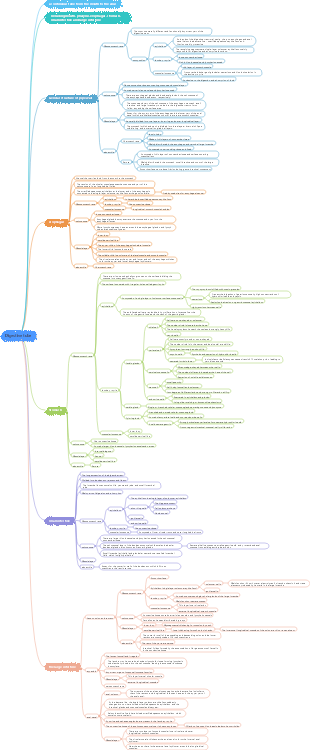
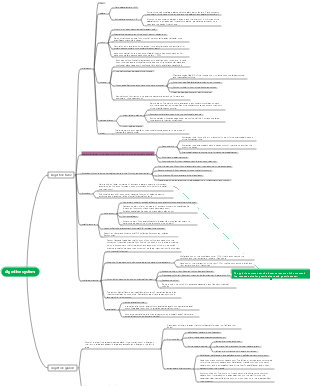
Digestive tube
superior
oral cavity
Function
maxillofacial region
muscle
Masticatory muscles
shut up
Temporalis muscle, masseter muscle, medial pterygoid muscle, lateral pterygoid muscle (upper head)
Open your mouth
Lateral pterygoid muscle (lower head) (Suprahyoid muscle group) Digastric muscle Mylohyoid muscle Genohyoid muscle Stylohyoid muscle
Expression muscles
⑴ Mouth (upper group of muscles around the lips, lower group of muscles around the lips, orbicularis oris muscle)
⑵ Nose (nasal muscle, depressor septum muscle, rhizome muscle)
⑶ Orbital (orbicularis oculi, corrugator supercilii)
⑷ Ear (preauricular muscle, supraauricular muscle, postauricular muscle)
⑸ Cranial parietal muscles (frontalis muscle, occipital muscle, galea aponeurosis
artery
Source of facial and cervical arteries:
common carotid artery
External carotid artery: anterior neck, oral and maxillofacial region, skull top, dura mater
⑴ Lingual artery ⑵ Facial artery ⑶ Maxillary artery ⑷ Superficial temporal artery
⑸ Superior thyroid artery ⑹ Occipital artery ⑺ Posterior auricular artery ⑻ Ascending pharyngeal artery
Internal carotid artery: anterior 3/5 of the brain, orbit, and forehead
subclavian artery
Deep lower part of the neck and 2/5 of the back of the head
vein
facial vein
a. Communicates with the intracranial cavernous sinus b. Some lack venous valves c.Danger triangle
nerve
Trigeminal nerve
Large sense (eyes, upper and lower jaw) small movements chewing
⑴ Ocular nerve (general somatosensory fibers)
⑵Maxillary nerve (general somatosensory fibers)
(3) Mandibular nerve mixed
facial nerve
⑴ Temporal branch ⑵ Zygomatic branch ⑶ Buccal branch ⑷ Mandibular marginal branch ⑸ Cervical branch
Paralysis of expressive muscles on the injured side outside the tube
Intracanal damage: hyperacusis, dysgeusia in the front 2/3 of the tongue
anatomy oral cavity
salivary glands
parotid gland parotid gland
The parotid duct is located in the anterior and lower part of the external auditory canal and the posterior mandibular fossa, opening at the papilla of the parotid duct, facing the buccal mucosa of the crown of the maxillary second molar.
submandibular gland
sublingual gland
——Opening at the sublingual caruncle ——Opens into the sublingual caruncle and sublingual fold (large tube) (small tube
intubation
The vestibule of the oral cavity is connected to the proper oral cavity through the space behind the third molar.
tooth
Ru20Heng32
remember
A Upper right area B Upper left area 87654321 ⅠⅡ Ⅲ IV Ⅴ Ⅴ Ⅳ Ⅲ ⅡⅠ 12345678 C lower right area D lower left area
tongue
dorsum of tongue
Divided into two parts by the boundary ditch: Tongue body, tongue base
Tongue belly (tongue tie)
Tongue mucosa General taste (nipples
contoured nipples foliate papillae Filamentous papillae (no taste buds) fungiform papillae
The root is bitter, the tip is sweet, the side is sour and the front is salty.
tongue muscle
Intrinsic tongue muscles – change the shape of the tongue External tongue muscles – change the position of the tongue
genioglossus
Neurovascular
Mainly the lingual artery and its branches The posterior 1/3 of the tongue is joined by the ascending pharyngeal artery
General sensation (pain, warmth, touch, pressure) Trident Anterior 2/3, lingual nerve; posterior 1/3, glossopharyngeal nerve Special sense (taste) The anterior 2/3, facial nerve chorda tympani; the posterior 1/3, glossopharyngeal nerve; the middle part of the posterior 1/3 is conducted by the vagus nerve
Movement: Mostly the hypoglossal nerve, the palatoglossal muscles are innervated by the vagus nerve
Swallow ~ slightly
esophagus
point
Neck: about 5cm long, chest: 18-20cm, abdomen: 1-2cm
Arteries and veins Azygos veins Pulmonary veins
narrow
First stenosis: Starting point is about 15cm from the central incisor
Second stenosis: intersection of left main bronchus About 25cm from central incisor
Third stenosis: where the esophagus passes through the diaphragm, About 40cm from the central incisor
Foreign bodies are easily retained and are common sites of esophageal cancer
abdomen
cardiac notch
lower sphincter
Stomach
form
The most expanded part. between esophagus and duodenum
Branch View Picture
Two mouthfuls front and back walls Big and small curves
cardiac department fundus of stomach gastric body Pylorus
Gastric ulcers and gastric cancer mostly occur in the pyloric antrum of the stomach near the lesser curvature of the stomach. Angular notch
Location and proximity
Most of them are located in Zuojili District A small part is located in the epigastric area
Greater curvature of stomach
Cardia—left side of the 11th thoracic vertebra Pylorus—right side of 1st lumbar vertebra
Look at the picture
stomach bed
Subtopic The septal omentum sac of the posterior wall of the stomach is adjacent to the pancreas, left adrenal gland, left kidney, spleen, transverse colon and its mesentery, and these organs together form
stomach wall
Blood vessel
artery
⒈ Left gastric artery ⒉ Right gastric artery ⒊ Right gastroepiploic artery ⒋Left gastroepiploic artery ⒌ Short gastric artery ⒍ Posterior gastric artery
vein
prepyloric vein
pyloric sign
lymph node
nerve
vagus nerve
Sympathetic Parasympathetic
Vice excitement. Highly selective vagotomy for gastric ulcer treatment
duodenum
Down