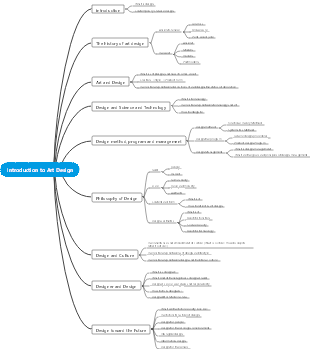
MindMap Gallery Introduction to Design Chapter 1
Introduction to Design refers to activities in both the applied arts and engineering technology categories. Contains design philosophy, Design principles and methods, design purpose, etc.
Edited at 2024-03-16 22:50:19This is a mind map about bacteria, and its main contents include: overview, morphology, types, structure, reproduction, distribution, application, and expansion. The summary is comprehensive and meticulous, suitable as review materials.

This is a mind map about plant asexual reproduction, and its main contents include: concept, spore reproduction, vegetative reproduction, tissue culture, and buds. The summary is comprehensive and meticulous, suitable as review materials.
This is a mind map about the reproductive development of animals, and its main contents include: insects, frogs, birds, sexual reproduction, and asexual reproduction. The summary is comprehensive and meticulous, suitable as review materials.
This is a mind map about bacteria, and its main contents include: overview, morphology, types, structure, reproduction, distribution, application, and expansion. The summary is comprehensive and meticulous, suitable as review materials.
This is a mind map about plant asexual reproduction, and its main contents include: concept, spore reproduction, vegetative reproduction, tissue culture, and buds. The summary is comprehensive and meticulous, suitable as review materials.
This is a mind map about the reproductive development of animals, and its main contents include: insects, frogs, birds, sexual reproduction, and asexual reproduction. The summary is comprehensive and meticulous, suitable as review materials.
Chapter 1 Design
Definition of design
It refers to activities in both the applied arts category and engineering technology categories.
The verb "design": the process of conceiving products, structures, and systems
Noun "design": a plan with a conclusion, or the form and procedure for executing this plan
In addition to the original first design (original design), it also includes a large number of redesigns
Design steps
Preparation stage before design
Design brief, clarify design purpose
Design analysis
Research
Organize design purpose
Solutions to existing problems
Design proposal method
design implementation stage
design development
design test
later stages of design
Integrate design throughout the entire process to implement the design
Evaluate and summarize the results of the design, including a summary of both positive and negative opinions
redesign
Before, during, and after the design, if it is found that the purpose of the design is biased or the design method has potential problems, the design should be redesigned immediately.
design philosophy
It is the designer’s personal concept of design and has a relatively strong purpose.
Different designers have different design values and form different design philosophies.
"Design philosophy" is the sum of values and methodologies used to achieve design goals.
Design principles and methods
design principles
"KISS" principle
Consider the many possibilities involved
user-centered principle
The product itself
To meet the needs and desires of end users
design method
Explore possibilities and limits
Conduct research to define the scope of an existing product or service problem, or to create a new one
Redefining design conclusions
Retrofit design based on existing design
Design purely for the purpose of fashion and popularity
Create a new usage environment based on current conditions, break through the limitations of conditions, and create new design types
design purpose
The purpose of design includes comparison of marketability, technology, education, entertainment and hobby of personal nature.
The design also sometimes contains political, moral, and demand content of a social nature.
"Purpose" also includes broader connotations such as religion, ethics, etc.
Abraham Malos – Five Needs
Physiological needs
Safety requirements
social needs
Respect needs
self-actualization needs
good design
Germany's Dieter Rams' ten principles of good design
Good design is innovative
Good design is easy-to-use design
Good design is good-looking and aesthetically pleasing
Good design is a product that is easy to understand
Good design is unobtrusive design
Good design is sincere design
Good design is a product that lasts
Good design is design with careful attention
Good design is a design that protects the environment
Good design is to try to design as little as possible, with less design, the product will be better
Classification and scope of design
Commercial design category
Refers to the category traditionally known as "graphic design"
Architectural design category
Industrial design category
fashion design category
Cultural and creative industries
Design research areas
Intellectual property rights involved