MindMap Gallery Medical Psychology Chapter 4 Main Theoretical Schools (1)
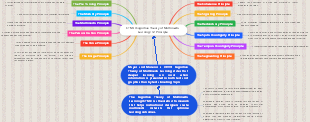
This is a mind map about Chapter 4 of Medical Psychology: Main Theoretical Schools (1), including psychoanalysis and psychodynamic theory, behavioral learning theory, cognitive theory, humanistic psychology theory, etc.
Edited at 2024-03-11 11:21:18This is a mind map about bacteria, and its main contents include: overview, morphology, types, structure, reproduction, distribution, application, and expansion. The summary is comprehensive and meticulous, suitable as review materials.

This is a mind map about plant asexual reproduction, and its main contents include: concept, spore reproduction, vegetative reproduction, tissue culture, and buds. The summary is comprehensive and meticulous, suitable as review materials.
This is a mind map about the reproductive development of animals, and its main contents include: insects, frogs, birds, sexual reproduction, and asexual reproduction. The summary is comprehensive and meticulous, suitable as review materials.
This is a mind map about bacteria, and its main contents include: overview, morphology, types, structure, reproduction, distribution, application, and expansion. The summary is comprehensive and meticulous, suitable as review materials.
This is a mind map about plant asexual reproduction, and its main contents include: concept, spore reproduction, vegetative reproduction, tissue culture, and buds. The summary is comprehensive and meticulous, suitable as review materials.
This is a mind map about the reproductive development of animals, and its main contents include: insects, frogs, birds, sexual reproduction, and asexual reproduction. The summary is comprehensive and meticulous, suitable as review materials.
Main theoretical schools
Psychoanalysis and Psychodynamic Theory
Freud
content
Subconscious theory: consciousness, preconscious (can be aware of under certain circumstances), subconscious (primitive impulse or instinct)
Personality structure theory: id (instinct), ego (actualized instinct), superego (moralized self)
Psychosexual development stage theory: 0 to 1 oral stage, 2 to 3 anal stage, 4 to 6 genital stage, 6 to 13 latent stage, and sexual stage
Anxiety and self-defense mechanism theory
Conflict between id, ego and superego may lead to anxiety → realistic anxiety, neurological anxiety, moral anxiety
Repression (the most basic), denial (the simplest), regression, projection, reverse formation, displacement, rationalization, identification, intellectualization, sublimation (the most active)
dream interpretation theory
Dream interpretation function: glimpse into subconscious desires and conflicts
Human mental activities are regular, and dream interpretation follows the laws of cause and effect.
Dreams are the fulfillment or satisfaction of wishes (latent dreams, manifest dreams)
The function of dreams: satisfy desires and protect sleep
Theoretical shortcomings: ① The dream interpretation theory is based on the dreams of mental patients and has shortcomings when used to explain the dreams of ordinary people. ② Subconscious desires are always interpreted as sexual impulses, the content of dreams is modeled, and the diverse background of the formation of dreams is ignored.
The development of modern psychoanalysis
Anna Freud and others - Self Psychology
New psychoanalysis - emphasizes the influence of sociocultural factors, the self is independent of the id, and childhood experience and family environment are important for personality development and the etiology of mental illness
Klein, Kornberg - Object Relations Theory - The impact of the intimate relationship between mother and baby on mental health
Kohut - Self Psychology
behavioral learning theory
Theoretical content
Behavior: The directly observable part of an individual’s activities
Human behavior: Behavior is what people say and do. Behavior has more than one measurement scale. Behavior has an impact on the external environment. Behavior is governed by the laws of nature.
Human nature: Human beings are reactions or organisms determined by the environment and genetics. Human beings are products of the environment. Behaviors are regular and learned.
New behaviorism: Behavior is a variety of internal and external movements of people, and development is learning based on rewards, punishments and imitation.
Classic Behavioral Learning Theory
classical conditioning theory
Classical conditioned reflex is the basic unit of all behaviors: unconditioned reflex - (neutral stimulus) → primary conditioned reflex - (another neutral stimulus) → secondary conditioned reflex
Classical conditioning factors: ① The stronger the stimulus, the stronger the effect, ② The conditioned stimulus (CS) occurs before or at the same time as the unconditioned stimulus (UCS), ③ CS and UCS are displayed at the same time in the experiment, ④ The more times CS and UCS cooperate, Conditioned reflex enhancement, ⑤ The subject has been exposed to a certain stimulus without UCS. When this stimulus works together with UCS, it is unlikely to become a conditioned stimulus.
Human behavior is the result of learning, and behavior follows the law of frequent cause and the law of recency.
operant conditioning theory
Positive reinforcement of behavior, negative reinforcement of behavior (the consequences of behavior affect the increase or decrease of behavior)
Behavioral reinforcement factors: directness of stimulus and behavior, consistency of stimulus and behavior, characteristics of formed events and results
social learning theory
Human behavior is acquired through observational learning and imitation learning (negative conditioning)
The process of observational learning: attention → retention → application and reproduction → motivation establishment
cognitive theory
Theoretical content
cognition
The processing process that people go through after receiving information, and the individual’s perception and understanding of social individuals and social phenomena and their relationships.
Basic processes of cognition: Accept and evaluate stimuli → make decisions and generate coping behaviors → predict and evaluate consequences
The influence of cognition: ① Individuals give different meanings and explanations to things, resulting in different emotional experiences and behavioral reactions. ② The cognitive model formed since childhood affects people's information processing and determines people's evaluation of things, reasoning and problem-solving processes. ③Changing people’s cognitive models can change attitudes and behaviors and solve psychological problems
cognitive therapy
Change thoughts or beliefs and behaviors → change bad cognitions → eliminate bad emotions and behaviors
External stimuli do not directly cause individual responses and require the involvement of cognitive factors
Basic principles: ①Cognition affects behavior, ②Reconstruct cognition (key), ③Focus on non-functional cognitive problems, change views and attitudes towards things → improve psychological problems, ④Change the patient's realistic evaluation (technical)
cognitive behavioral theory
Ellis Rational Emotive Therapy Theory - "ABC Emotion Theory Framework", people are not troubled by things, but by their views on things.
Glasser's reality therapy theory - problem-centered, relying on people's rationality and logical abilities, emphasizing the client's responsibilities, strengths, strengths and potentials, and solving problems in realistic and reasonable ways
Beck's cognitive therapy theory - psychological problems are the result of misunderstanding of reality; individual feelings and behaviors are largely determined by the way of understanding the outside world; psychological disorders are formed under distorted or wrong thinking through cognitive processing; errors Thoughts often appear in the form of "automatic thoughts."
Clinical application: treatment of psychological disorders; health education for patients in various disciplines
The development of modern cognitive theory: diversified development, among which mindfulness therapy has the most rapid development
Mindfulness therapy: mindfulness-based stress reduction therapy, mindfulness-based cognitive therapy, dialectical behavior therapy, acceptance and commitment therapy
humanistic psychology theory
Maslow's needs and self-actualization theory
The psychological drive for human behavior is need (denial of sexual instinct)
Hierarchy of needs: Physiological→Safety→Belonging and Love→Respect/→Cognition→Aesthetic→Self-actualization
Basic needs, humans and animals, external acquisition
Growth needs, only people, inner desires
Frustrated needs lead to feelings of meaninglessness and emptiness
Maslow's view on mental health and psychotherapy
Mental illness is the patient's inability to recognize and meet his or her own needs and to achieve a state of mental health
Conditions for psychological treatment to be effective: ① The patient’s basic needs are met, ② The patient’s self-understanding is improved, ③ a good social environment is established
Rogers' main theories
Everyone has his own subjective world, existing in a constantly changing world of experience centered on himself. People are born honest, kind and trustworthy, and their "evil" characteristics come from defending society.
Self and actualization tendencies
Realization tendency (core hypothesis): People tend to develop towards perfection and the realization of various potentials
Self and self-actualization
Self - an individual's impression of all aspects of oneself, ideal self - valuable qualities that an individual considers important
The self-concept of a mature and healthy person is consistent with the real situation, and the self-concept is close to or consistent with the ideal self.
People are consistent with their self-concept, and the tendency toward actualization is almost the same as the tendency toward self-actualization. on the contrary.
The evaluation process of the organism: the evaluation of the experience, the evaluation process of whether the experience satisfies the actualization tendency
Value conditions: In early infant development, the need for care, acceptance and positive evaluation from others (the need for positive attention). If you want to receive positive attention and feel valuable, you must act in accordance with the expectations of others (value condition)
Self-concept and psychological disorders
People are in the process of realizing their self-concept, and psychological disorders are related to invalid self-concepts.
Subconscious perception—the defensive mediating process between ontological experience and self-concept
Invalid self-concept is difficult to change and involves a lot of value conditioning (external education). People believe evaluations consistent with negative self-concepts, ignore visceral feelings, and distance themselves from themselves. It triggers anxiety when subjectively wanting to change (self-concept is inconsistent with experience), creating a vicious cycle.
Person-centered psychotherapy: Create an atmosphere and conditions of sincerity and consistency, unconditional positive attention, and understanding from the patient’s perspective → The client can freely express himself and understand himself → The client will develop self-growth and self-realization tendencies → The client will change overall
Development of modern humanistic theories: transpersonal psychology (Maslow, Satych), positive psychology
psychobiological theory
Theoretical content
Cannon - Thalamus hypothesis of emotion - Emotional control center in thalamus, emergency response.
Seri - Stress Theory
Hess - Emotional Center Hypothesis - The center of autonomous function is in the medulla oblongata, diencephalon and hypothalamus
Wolff - psychosomatic correlation - correlation between psychological variables and biological variables
Lobka, Wernick, Sperry, Luria - Positioning of brain functions - People use the left cerebral hemisphere to speak, mental activities are located in the cerebral cortex, left and right brain functions are separated, and the theory of joint areas of the three basic functions of the brain
Progress in Psychobiological Theory
genetic research
Neuroendocrine research (HPT, HPA, HPG axis)
hypothalamic-pituitary-thyroid axis, hypothalamic-pituitary-adrenal axis, hypothalamic-pituitary-gonadal axis
Central neurotransmitter research
Neuroimmunology research (relationship between psychological factors and neuro-endocrine-immune system)
brain imaging technology