MindMap Gallery cardiopulmonary resuscitation(1)
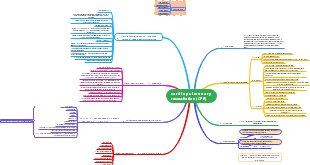
about Cardiopulmonary resuscitation (1) mind map, including the basic procedures of cardiopulmonary resuscitation, Judging the effectiveness of cardiopulmonary resuscitation, Precautions for cardiopulmonary resuscitation, etc.
Edited at 2024-03-10 11:55:19This is a mind map about bacteria, and its main contents include: overview, morphology, types, structure, reproduction, distribution, application, and expansion. The summary is comprehensive and meticulous, suitable as review materials.

This is a mind map about plant asexual reproduction, and its main contents include: concept, spore reproduction, vegetative reproduction, tissue culture, and buds. The summary is comprehensive and meticulous, suitable as review materials.
This is a mind map about the reproductive development of animals, and its main contents include: insects, frogs, birds, sexual reproduction, and asexual reproduction. The summary is comprehensive and meticulous, suitable as review materials.
This is a mind map about bacteria, and its main contents include: overview, morphology, types, structure, reproduction, distribution, application, and expansion. The summary is comprehensive and meticulous, suitable as review materials.
This is a mind map about plant asexual reproduction, and its main contents include: concept, spore reproduction, vegetative reproduction, tissue culture, and buds. The summary is comprehensive and meticulous, suitable as review materials.
This is a mind map about the reproductive development of animals, and its main contents include: insects, frogs, birds, sexual reproduction, and asexual reproduction. The summary is comprehensive and meticulous, suitable as review materials.
CPR
Basic procedures of cardiopulmonary resuscitation
Assess environmental safety
Ensure environmental safety, protect yourself and avoid secondary harm
Determine patient consciousness
Tap the patient on the shoulder, call loudly, baby tap the soles of the feet
Activate the emergency response system AED
Place the resuscitation position on a hard surface, on the same axis as the body, unbutton the clothes, expose the chest wall, and place the emergency personnel on the side of the patient near the chest.
Check breathing and pulse
Adults: Carotid artery, bring your right index finger and middle finger together, slide 2~3cm sideways in the middle of the patient's trachea, and lightly touch the carotid artery pulse on the inside of the sternocleidomastoid muscle
Child or Infant: Femoral Artery
Loop support
chest compressions
Pressing position: midpoint of the line connecting the two nipples
Pressing depth: 5~6cm
Compression frequency: 100~120 times/minute
Open airway (clear oral secretions, etc.)
Head-up and jaw-lift method
Adult 90° Child 60° Infant 30°
jaw drag method
For patients with suspected head and neck trauma
artificial respiration
Mouth-to-mouth artificial respiration
Use appropriate ventilation guards
Pinch the patient's nostrils with your thumb and index finger, and use your other hand at the angle of the mandible to lift the patient's head.
The rescuer opens his mouth close to the patient's mouth
Take 1 normal breath and blow slowly 2 times
The patient has perioral trauma, trismus, etc. Mouth to nose
Snorkel or mask ventilation
early defibrillation
Judging the effectiveness of cardiopulmonary resuscitation
consciousness
Visible eye movement, eyelash reflex to light reflex appears
Complexion and lips
Cyanosis turns to ruddy
carotid pulse
The pulse still exists after the compression is stopped, indicating that the heartbeat is restored.
pupil
From large to small, reaction to light appears at the same time (from small to large, fixed, indicating invalid)
Spontaneous breathing occurs
Have strong spontaneous breathing (weak, still need to insist on artificial assisted breathing)
Precautions for cardiopulmonary resuscitation
Change of presser
Multiple pressers are replaced every 2 minutes
Substitution time is completed within 5 seconds
Prevent gastric bloating
The blowing time is long and the air flow speed should be slow
If it has happened, gently press the upper abdomen with your hands to help the gas escape.
If there is reflux and vomiting, tilt the patient's head to one side to prevent aspiration, and a gastric tube can also be placed
Termination of prehospital cardiopulmonary resuscitation
Restore effective self-help circulation and spontaneous breathing
A more professional life support rescue team will take over
Doctor confirmed death
The patient does not respond to any stimulus
No spontaneous breathing
No circulatory features, no pulse, undetectable blood pressure
The self-help circulation of the heart has not recovered after 30 minutes of cardiopulmonary resuscitation, and the electrocardiogram shows a straight line (more than 3 leads)
If the rescuer continues to resuscitate, he will be in danger or put other people in danger.