MindMap Gallery General Rheumatism
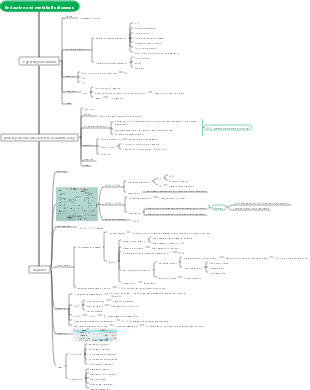
Type 1 diffuse connective tissue disease Category II seronegative spondyloarthropathy Category III degenerative changes Category 4 Rheumatic diseases associated with infection Category 5 Metabolism and Endocrinology Category 6 Neoplasia Category 7 Neurovascular Disease Category 8 Bone and cartilage lesions Category 9 Non-articular rheumatism Category 10: Other diseases with joint symptoms 1983 ARA Standard Introduction to Rheumatism Clinical features of rheumatism Rheumatology Laboratory Tests rheumatism treatment
Edited at 2024-03-09 16:59:33This is a mind map about bacteria, and its main contents include: overview, morphology, types, structure, reproduction, distribution, application, and expansion. The summary is comprehensive and meticulous, suitable as review materials.

This is a mind map about plant asexual reproduction, and its main contents include: concept, spore reproduction, vegetative reproduction, tissue culture, and buds. The summary is comprehensive and meticulous, suitable as review materials.
This is a mind map about the reproductive development of animals, and its main contents include: insects, frogs, birds, sexual reproduction, and asexual reproduction. The summary is comprehensive and meticulous, suitable as review materials.
This is a mind map about bacteria, and its main contents include: overview, morphology, types, structure, reproduction, distribution, application, and expansion. The summary is comprehensive and meticulous, suitable as review materials.
This is a mind map about plant asexual reproduction, and its main contents include: concept, spore reproduction, vegetative reproduction, tissue culture, and buds. The summary is comprehensive and meticulous, suitable as review materials.
This is a mind map about the reproductive development of animals, and its main contents include: insects, frogs, birds, sexual reproduction, and asexual reproduction. The summary is comprehensive and meticulous, suitable as review materials.
General Introduction to Rheumatism General Rheumatism
Introduction to Rheumatism
Rheumatology concept
A clinical discipline that mainly studies joints, bones and their surrounding tissues (such as muscles, bursae, tendons, fascia, ligaments) Key symptoms: pain, swelling (redness), tenderness, and dysfunction
Classification of rheumatism
Type 1 diffuse connective tissue disease
1 Rheumatoid arthritis
Pathological features: synovitis
2 Sjogren’s syndrome
3 Lupus erythematosus
Pathological features: small vessel vasculitis
4 Scleroderma
5 Polymyositis/Dermatomyositis
6 Vasculitis
The damage to tissues and organs is mostly caused by autoimmune inflammatory reactions, and a variety of autoantibodies appear in the serum; the pathology is vasculitis; the lesions involve multiple systems.
Category II seronegative spondyloarthropathy
1 Ankylosing spondylitis
2 Reiter syndrome
3 Psoriatic arthritis
4 Inflammatory bowel disease arthritis
Enthesitis, progressive ankylosing of the spine, strong correlation with HLA-B27
Category III degenerative changes
osteoarthritis
Category 4 Rheumatic diseases associated with infection
Reactive arthritis, rheumatic fever, etc.
Category 5 Metabolism and Endocrinology
Gout, immunodeficiency disease, Marfan syndrome
Category 6 Neoplasia
Primary: synovialoma, synovial sarcoma Secondary: leukemia, multiple myeloma, metastases
Category 7 Neurovascular Disease
Carpal tunnel syndrome, Raynaud's disease, compressive neuropathy
Category 8 Bone and cartilage lesions
Osteoporosis, osteitis, avascular osteonecrosis, hypertrophic osteoarthropathy
Category 9 Non-articular rheumatism
Intervertebral disc disease, bursitis, fibromyalgia, fibrositis, joint neurosis
Category 10: Other diseases with joint symptoms
Periodic rheumatism, intermittent joint effusion, autoimmune hepatitis.
1983 ARA Standard
Large vasculitis vasculitis small vessel vasculitis variant vasculitis single organ vasculitis Vasculitis associated with systemic disease Vasculitis associated with possible causes
Note: Rheumatic diseases are not the same as rheumatic fever Joint diseases are not simply classified by rheumatism and rheumatoid
Clinical features of rheumatism
Wide range The disease affects all systems of the body Often multiple systems are affected at the same time Various initial symptoms Different diseases are closely related to age and gender
Cardiovascular System
respiratory system
clinical manifestations
interstitial pulmonary fibrosis
pleurisy
Pulmonary rheumatoid nodules
rheumatoid pneumoconiosis
pulmonary hypertension
urinary system
The kidneys have rich blood flow and the glomerulus serves as a blood filter
Immune complex deposition and vasculitis important prone areas
Most CTDs can involve the kidneys
digestive system
Non-specific target organs most commonly affected by CTD
Easily confused with other diseases and ignored
nervous system
Peripheral neuropathy
epileptiform seizures
Psychiatric symptoms
cerebral vascular embolism
blood system
Rheumatology Laboratory Tests
Commonly used laboratory tests for rheumatic diseases are crucial to the diagnosis of rheumatic diseases. Some tests can be used as detection indicators to judge the condition and prognosis, and to evaluate the therapeutic effect. Routine inspection Specific tests
complement system
The complement system is composed of a group of interacting proteins that are involved in immune and inflammatory responses and have the function of strengthening and amplifying antibody responses.
Reduced complement is seen in many immune diseases, mostly due to excessive consumption of complement. Such as SLE, acute glomerulonephritis, SLE complicated by nephropathy, cryoglobulinemia and certain hemolytic diseases and serum sickness.
autoantibodies
Autoantibodies (antibodies produced against one's own tissues, organs, cells and cellular components) refer to immunoglobulins against intracellular, cell surface and extracellular antigens of one's own cells. They are found in a variety of rheumatic diseases, especially in diffuse connective tissue diseases. is more common in .
Autoantibody detection methods
Indirect immunofluorescence (IIF) Enzyme-linked immunosorbent assay (ElISA) Radioimmunoassay (RIA) Passive hemagglutination (PHA) Convection immunoelectrophoresis (CIE)
Antinuclear antibodies (ANAs)
In autoimmune diseases, the cell nucleus often becomes the target of autoimmune reactions. The nuclear envelope, chromatin in the nucleus, non-histone proteins, and various riboproteins composed of ribonucleic acid (RNA) and related proteins may be Autoantibody attack. (anti-DNA, anti-histone, anti-non-histone, anti-nucleolar antibodies, antibodies to other cellular components)
ANA can be positive in many rheumatic diseases, such as SLE, SSc, SS, RA, etc. Healthy elderly people, infectious diseases, chronic liver diseases, primary pulmonary fibrosis, tumors and those taking certain drugs (isoniazid, phenytoin, hydralazine, procainamide) may also be positive.
Lack of specificity and not related to disease activity
Anti-double-stranded DNA antibodies
High specificity for diagnosing SLE The rise and fall of antibody titers is related to the activity of SLE disease Radioimmunoassay (Farr method), indirect immunofluorescence method
Antineutrophil cytoplasmic antibodies (ANCA)
ANCA, named for its anti-neutrophil cytoplasmic component, is an autoantibody present in the blood. In 1985, Van der Woude et al. used IIF to find that ANCA was highly specific for Wegener's granulomatosis (WG), and the antibody titer was related to disease activity. Classic IIF detection of ANCA, positive fluorescent staining models can be divided into two types: Cytoplasmic (CANCA-PR3 serine protease 3) GPA Perinuclear type (PANCA-MPO myeloperoxidase) MPA, EGPA
anti-ENA antibodies
Antibodies to saline extractable nuclear antigens Generally made from the spleen and thymus of animals Western blot detection The main ingredients include u1-RNP, Sm, SSA, SSB, Scl-70, Jo-1, r-RNP seven antigens
The main ingredients include seven antigens: u1-RNP, Sm, SSA, SSB, Scl-70, Jo-1 and r-RNP. Sm — SLE labeled antibody SSB — PSS-specific antibodies Jo-1 — PM/DM serum labeled antibodies
Antiphospholipid antibody (APL)
APL antibodies are a group of autoantibodies that can react with a variety of antigenic substances containing phospholipid structures, mainly including anticardiolipin antibodies (ACL antibodies), lupus anticoagulant (LAC), and anti-β-GP1 antibodies.
Rheumatoid factor (RF)
The target antigen is the Fc fragment of the denatured IgG molecule High titers correlate with disease activity and severity, and often have severe extra-articular manifestations In addition to CTD, it can be seen in infections, lymphomas and normal people
Anti-cyclic citrullinated peptide (CCP) antibodies
ELISA method detection Highly specific for rheumatoid arthritis Helps diagnose early RA related to the severity of the disease
Summary
Anti-double-stranded DNA is highly specific for the diagnosis of SLE and is associated with disease activity. DNA-anti-DNA immune complexes play an important role in lupus nephritis Anti-Sm: It is an SLE marker antibody that helps prospective and retrospective diagnosis. It often coexists with nRNP antibodies.
Anti-nRNP exists in a variety of connective tissue diseases, and high titers are beneficial to the diagnosis of MCTD. Anti-rRNP antibodies are related to SLE, especially those with psychoneurological symptoms have a higher positive rate.
Anti-SSA and anti-SSB are associated with Sjogren's syndrome and can cause neonatal lupus and congenital heart block. Anti-ScL-70: a marker antibody for systemic sclerosis.
Anti-Jo-1 is a marker antibody for polymyositis/dermatomyositis. Anti-Jo-1-positive myositis patients with arthritis, "technician's hand", Raynaud's disease, interstitial pulmonary degeneration, etc. are called anti-synthetase antibody syndrome. . Antihistone antibodies are associated with a variety of connective tissue diseases and can aid in the diagnosis of drug-induced lupus. Anti-nucleolar antibody, anti-SCL-70, is often associated with systemic sclerosis.
HLA-B27
Highly associated with seronegative spondyloarthropathy
Ankylosing spondylitis 95% Reiter syndrome 80% Enteropathic arthritis 50% Psoriatic arthritis 70%
Synovial fluid examination Can differentiate between inflammatory, non-inflammatory, and septic arthritis pathology Kidney, synovial membrane, labial gland, muscle biopsy
Film degree exam
X-Ray: reflects the degree of joint damage, the speed of disease progression and response to treatment. It should be listed as a routine examination item and should be reviewed regularly. CT ECT MRI Ultrasound
rheumatism treatment
treatment goals
Eradicate the original cause of the disease Control inflammatory response Prevent tissue damage Promote tissue and functional recovery
Rheumatism treatment principles
Early diagnosis (critical) Emphasis on treatment strategies (patient education, multidisciplinary cooperation, functional exercise) Tolerance (5D), compliance principle of individualization
General treatment
medical treatement
Nonsteroidal anti-inflammatory drugs (NSAIDs)
It has anti-inflammatory, analgesic, antipyretic and swelling effects. Selective COX-2 inhibitors (such as coxibs) can significantly reduce gastrointestinal adverse reactions compared with traditional NSAIDs (inhibiting cyclooxygenase, thereby inhibiting the conversion of arachidonic acid into prostaglandins) Other adverse reactions: kidney and peripheral blood cell reduction, coagulation disorder, aplastic anemia, liver damage, cardiovascular disease, etc. Dosage form and dosage individualization Avoid taking two or more NSAIDs at the same time. Only change to another NSAID after one NSAID has been used in sufficient quantity for 1 week and becomes ineffective. Cannot change the course of the disease and prevent joint destruction
Glucocorticoids
Quickly reduce joint pain and swelling. In severe patients with acute attacks of arthritis or involvement of organs such as the heart, lungs, eyes, and nervous system, the dose may be adjusted depending on the condition. Small doses can relieve the symptoms of most patients and can be used as a "bridge" before DMARDs take effect, or as a short-term measure when the efficacy is unsatisfactory. The tendency to use hormones alone must be corrected and DMARDs should be taken at the same time
Glucocorticoid use guidelines
Which hormone to choose Appropriate hormone dosage Appropriate hormone administration method and time Perioperative medication
Short-acting hormone (cortisone): has little effect on HPA, but its effect is weak. It is only suitable for replacement treatment of adrenocortical insufficiency. Medium-acting hormone (prednisone): suitable for the treatment of autoimmune diseases Long-acting hormone (dexamethasone): strong effect, great impact on HPA (hypothalamic-pituitary-adrenal axis), suitable for short-term use
Taking it orally at night or before going to bed will destroy the early morning low and prevent the 8 o'clock peak. Oral administration three times a day will seriously disrupt physiological hormone secretion patterns, and long-term use may damage the HPA axis.
Disease-modifying antirheumatic drugs (DMARDs) or slow-acting antirheumatic drugs (SAARDs)
It takes effect slowly, and it takes about 1-6 months for significant improvement of clinical symptoms, so it is also called slow-acting drug (SAARD). It has the effect of improving and delaying the progression of the disease Use early to prevent joint damage Methotrexate and cyclophosphamide are often used
Sulfasalazine: breaks down in the intestine into 5-aminosalicylic acid and sulfapyridine. The former inhibits prostaglandins and clears endothelial Inflammatory oxygen ions released by phagocytes Azathioprine: Interferes with the synthesis of adenine and guanine nucleotides, hindering the synthesis and growth of activated lymphocytes. Leflunomide: Inhibits dihydroorotate dehydrogenase and inhibits the synthesis of pyrimidine nucleotides, allowing activated lymphocytes to synthesize stunted growth Methotrexate: inhibits the synthesis of purine and pyrimidine nucleotides by inhibiting dihydrogen acid reductase and activates lymphocytes Synthetic growth retardation Mycophenolate mofetil: Its active metabolite inhibits guanine nucleotides by inhibiting hypoxanthine mononucleotide dehydrogenase, making it active The growth of lymphocytes is blocked Cyclosporin: Inhibits the synthesis and release of IL-2, inhibits and changes the growth and response of T cells Cyclophosphamide: Cross-links DNA and proteins to hinder cell growth Tripterygium wilfordii: Inhibits lymphocytes, inhibits immunoglobulins, inhibits prostaglandins Pay attention to adverse reactions
botanical medicine
used historically Quinine Ephedrine Digitalis Tripterygium wilfordii Qingfengvine White paeony glycosides
Biologic Agents
TNF inhibitors: Infliximab (human/mouse chimeric anti-TNF monoclonal antibody) Adalimumab (human anti-TNF monoclonal antibody) Etamercept, Enbrel (fusion protein of TNF receptor and IgG-Fc region) IL-1 receptor antagonist (IL-1Ra), IL-6 receptor antagonist Anti-CD20 monoclonal antibody (Rituximab) Anti-B cell stimulating factor monoclonal antibody (belimumab) SLE Costimulation blocking factor (abatacept) Monoclonal antibodies produced through genetic engineering; antibodies are targeted and block important links in the pathogenesis of the disease.
JAK inhibitor (can selectively inhibit JAK kinase and block the JAK/STAT pathway) Adverse reactions
adjuvant therapy
Immunoglobulin, plasma exchange, plasma immunoadsorption, etc.
Surgical treatment