 Wondershare EdrawMind
MindMap Gallery International Trade Practice
- 151
- 2
- 1
International Trade Practice
A summary of international trade practices, including terminology and risk classification, etc., with a detailed introduction and comprehensive description. I hope it will be helpful to interested partners!
Edited at 2024-03-08 00:23:31
- bacteria
This is a mind map about bacteria, and its main contents include: overview, morphology, types, structure, reproduction, distribution, application, and expansion. The summary is comprehensive and meticulous, suitable as review materials.
- Plant asexual reproduction
This is a mind map about plant asexual reproduction, and its main contents include: concept, spore reproduction, vegetative reproduction, tissue culture, and buds. The summary is comprehensive and meticulous, suitable as review materials.
- Reproductive development of animals
This is a mind map about the reproductive development of animals, and its main contents include: insects, frogs, birds, sexual reproduction, and asexual reproduction. The summary is comprehensive and meticulous, suitable as review materials.
International Trade Practice
- bacteria
This is a mind map about bacteria, and its main contents include: overview, morphology, types, structure, reproduction, distribution, application, and expansion. The summary is comprehensive and meticulous, suitable as review materials.
- Plant asexual reproduction
This is a mind map about plant asexual reproduction, and its main contents include: concept, spore reproduction, vegetative reproduction, tissue culture, and buds. The summary is comprehensive and meticulous, suitable as review materials.
- Reproductive development of animals
This is a mind map about the reproductive development of animals, and its main contents include: insects, frogs, birds, sexual reproduction, and asexual reproduction. The summary is comprehensive and meticulous, suitable as review materials.
- Recommended to you
- Outline
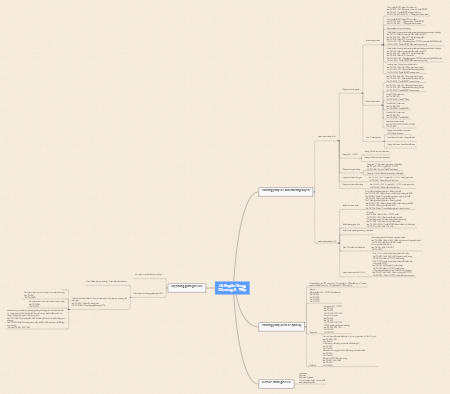




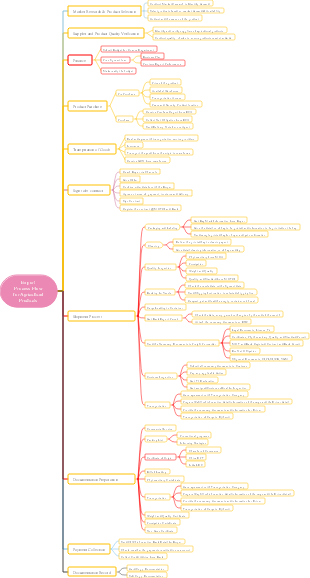

International Trade Practice
international trade regulations
Basic process
Export trade
Pre-transaction preparation stage
Select staff to participate in negotiations, select target markets, select transaction partners, formulate export commodity business plans, and complete foreign registration of export commodity trademarks, etc.
Transaction negotiation and contract signing stage
consultation
The quality, quantity, packaging, price, transportation, insurance, payment, commodity inspection, disputes, claims, force majeure arbitration and other transaction conditions of goods purchased and sold.
trade
Invite offers, offers, counter-offers, accept and sign contracts.
Export contract performance stage
Preparing goods, urging for corrections, reviewing and modifying certificates, chartering ships, booking space and insurance, preparing documents and settling foreign exchange, verifying foreign exchange collection and export tax refund.
import trade
Preparatory work stage before import trade
Prepare import plans, reasonably arrange the quantity and time of goods and purchase markets, select target markets and transaction objects, strictly control transaction prices, formulate import commodity business plans, and flexibly select transaction conditions and trade methods, etc.
Transaction negotiation and import contract signing stage
Do not make too many inquiries to the same region to prevent foreign businessmen from taking the opportunity to raise prices; carefully compare quotations from different countries or regions.
The performance stage of the import contract
Issuing letters of credit, chartering ships and booking space, receiving goods, handling freight insurance, reviewing documents and paying, customs declaration and picking up goods, inspecting and delivering goods, and handling trade claims, etc.
Overview of international trade sales contract
meaning
A contract for the sale of goods entered into between parties whose places of business are in different countries
Features
International
The subject matter is the goods
The nature is buying and selling
Principles to be followed in concluding international goods contracts
principle of equality
voluntary principle
The principle of fairness
Principle of good faith
The principles of legality and respect for social ethics
form
Writing
Main forms of contract
oral form
Simple and easy, but difficult to distinguish responsibilities.
other forms
content
Name and address of the parties, subject matter, quantity, quality, price or remuneration, time limit, place and method of performance, liability for breach of contract, and method of resolving disputes.
Laws and regulations applicable to international trade
international treaty
Meaning and function
A general term for various agreements such as conventions, agreements, and protocols concluded by two or more sovereign states to determine each other's political, economic, trade, cultural, and military relations, rights, and obligations.
Main international treaties in international business
United Nations Convention on Contracts for the International Sale of Goods
domestic law
A law enacted or recognized by a country and effective within the sovereign jurisdiction of that country.
international trade practices
Some behavioral norms and customary practices formed through repeated practice in international trade business and interpreted and codified by international organizations.
effect
Conducive to smooth negotiation and conclusion of sales contracts.
Helps resolve disputes and disputes in the performance of contracts.
It is conducive to the interconnection of various links in international trade, which is also conducive to promoting the normal and orderly conduct of international trade and ensuring its continued development.
Commonly used international trade practices
Incoterms
Receipt and payment aspects of international trade
Transportation and insurance
International arbitration
International guarantee
Incoterms
Overview of trade terms
effect
Commodity price composition
The division of risks, responsibilities and expenses related to the goods during the risk process
Determine delivery point
Determine risk transfer points
Responsibilities for determining fee division points and handling relevant procedures
Determine the price components of a product
International practice
"Warsaw-Oxford Rules 1932"
"1990 Revision of the Definition of Foreign Trade of the United States"
"General terms of International trade explanation"
International practice is not law
The relationship referenced in the contract is mandatory
Maritime and inland waterway transport
FAS
Free Alongside ship (named port of shipment) FOS at port of shipment (specified port of shipment)
trading locations
Boatside
Risk transfer location
Boatside
Location of fee division
Boatside
Import and export customs clearance procedures
export seller import buyer
Transportation method
water transport
Seller's obligations
Deliver the goods to the shipside designated by the buyer at the designated port of shipment within the specified time limit.
Responsible for export customs clearance and fees
Bear the risks and expenses from the time the goods are delivered to the buyer's shipside at the designated place.
Buyer obligations
Receive goods and pay for goods
Post-delivery risks
Import customs clearance
Pay attention to the problem
The side of the ship refers to the reachable range of the cargo crane of the loading and unloading equipment.
Delivery on barge
Risks and costs can be transferred in advance after the goods are specified
FOB
Free on board (insert named part of shipment) F.A.V. at port of shipment (insert designated port of shipment)
trading locations
On board ship at shipping port
Risk transfer location
The seller delivers the goods on board the ship at the shipping port
Location of fee division
Delivery is bounded by port of shipment on board.
Import and export customs clearance procedures
export seller import buyer
Transportation method
water transport
Seller's obligations
Deliver the goods stipulated in the contract to the ship designated by the buyer at the time and port of shipment specified in the contract, and notify the buyer in a timely manner
Bear all costs and risks before delivering the goods to the ship at the port of shipment
Obtain an export license or other official approval documents, and handle all customs formalities for exporting goods at your own risk and expense.
Submit electronic information regarding shipping documents or EDI
Seller's obligations
Receive the goods submitted by the seller at the time and place specified in the contract, and pay according to the contract.
Responsible for chartering ships and booking space, paying relevant freight charges, and promptly notifying the seller of the ship name, loading location and required delivery time.
Obtain an import license or other official approval document at your own expense and risk, and handle all customs formalities for the import of goods.
Bear all costs and risks after the goods are loaded on the ship
Precautions
The buyer sometimes appoints the seller as the agent for chartering and booking space, and the risks and expenses are still borne by the buyer.
symbolic delivery
Prevent joint fraud when the buyer appoints a freight forwarder
The contract stipulates the consequences of cargo not arriving in time.
CFR
Cost and Freight(named port of destination)Cost and Freight(named port of destination)
trading locations
On board ship at shipping port
Risk transfer location
The seller delivers the goods on board the ship at the shipping port
Location of fee division
Shipping port front-on-board charges Ocean freight
Import and export customs clearance procedures
export seller import buyer
Transportation method
water transport
Seller's obligations
Load the ship within the contract period and notify the buyer; be responsible for chartering the ship, booking space, and paying the normal freight to the destination port.
Others are the same as FOB.
That
FOB is the same.
Buyer Obligations.
payment
Bear the risk and cost after the goods are loaded on the ship
Second-rate
Go through import formalities
Receive goods and related documents
Precautions
Charter booking
Shipping advice
CIF
Cost Insurance and Freight (named port of destination) Cost Insurance and Freight (insert named port of destination)
trading locations
On board ship at shipping port
Risk transfer location
The seller delivers the goods on board the ship at the shipping port
Location of fee division
Seller: C F I
Import and export customs clearance procedures
export seller import buyer
Transportation method
water transport
Seller's obligations
During the contract period, the goods are loaded on the ship and the buyer is notified.
Export customs declaration procedures and other documents.
Responsible for chartering ships, booking space and paying normal freight to the destination port.
Apply for marine insurance, handle insurance business, and pay premiums.
Responsible for all costs and risks before the goods are loaded on the ship.
Provide relevant documents.
Buyer obligations
payment
Bear the risks after the goods are loaded on board the ship
Go through import procedures and receive goods
Precautions
Responsibility for chartering a ship and booking a space: The buyer is only responsible for chartering a ship and booking a space under normal conditions and choosing a usual route.
When the port of shipment and port of destination need to be changed (especially the port of destination), both parties must negotiate.
symbolic delivery
The seller handles the insurance on behalf of the buyer, and the risks along the way are still borne by the buyer.
any mode of transportation
EXW
Ex Works (named place) Factory exchange (specified location)
trading locations
Delivered to the carrier or designated person at the designated place
Risk transfer location
After the goods are delivered to the carrier
Location of fee division
Delivery to carrier.
Import and export customs clearance procedures
buyer
any transportation
Seller's obligations
Specify the time and place, deliver the goods to the buyer, and transfer risks and costs
Provide commercial invoices, etc.
Notify the buyer of the time and place of delivery
Buyer obligations
Bear all risks and expenses after receiving the goods at the seller's location.
Handle export related procedures by yourself
Transport goods from delivery location to destination
Notify the seller of the time to pick up the goods
Precautions
The seller bears minimal risk, responsibility and expense
The seller is not responsible for loading the goods onto the transportation means prepared by the buyer, nor is it responsible for export customs clearance.
The seller only needs to provide normal packaging, and the seller is generally not obliged to provide export packaging.
FCA
Free Carrier (named place)
trading locations
Deliver to the carrier or designated person at the designated location.
Risk transfer location
After the goods are delivered to the carrier
Location of fee division
Delivery Carrier
Import and export customs clearance procedures
export seller import buyer
any transportation
Seller's obligations
Place the goods stipulated in the contract under the control of the carrier designated by the buyer at the time and place specified in the contract, and notify the buyer in a timely manner.
Bear all costs and risks before the goods are handed over to the carrier's control.
Obtain an export license or other official approval document and complete all customs formalities required for the export of goods at your own risk and expense.
Provide a commercial invoice or equivalent electronic message and provide the usual proof of delivery for payment.
Buyer obligations
Sign a contract to transport goods from the designated place, pay the relevant freight, and promptly notify the seller of the name of the carrier and relevant information.
Receive the goods and pay the price according to the provisions of the contract.
Bear all costs and risks incurred after receiving the goods.
Obtain an import license or other official documentation and complete customs formalities required for the import of goods at your own risk and expense.
Precautions
Delivery location: The tubes are loaded and transported, and the tubes are not unloaded.
CPT
Free Carrier (named place)
trading locations
Delivered to the carrier or designated person at the designated place
Risk transfer location
After the goods are delivered to the carrier
Location of fee division
Freight before delivery to carrier
Import and export customs clearance procedures
export seller import buyer
Transportation method
any method
Seller's obligations
Deliver the goods stipulated in the contract to the designated carrier at the time and place specified in the contract, and notify the buyer in a timely manner.
Provide relevant documents, such as commercial invoices
Enter into a transportation contract to the designated destination and bear the normal freight charges for transporting the goods to the designated destination.
You are responsible for all costs, (plus freight) and risks before the goods are handed over to the carrier at the designated location.
Handle export customs declaration and other procedures and bear costs.
Buyer obligations
Pay upon receipt, accept goods documents, pay the price, and receive the goods at the destination.
Bear all costs (except freight F) and risks after the goods are delivered to the carrier.
Handle import customs declaration procedures and bear costs.
Precautions
Promptly provide shipping notices to the buyer so that the buyer can obtain insurance.
CIP
Carriage and Insurance paid to (named place of destination) Carriage and Insurance paid to (named place of destination)
trading locations
Delivered to the carrier or designated person at the designated place
Risk transfer location
After the goods are delivered to the carrier
Location of fee division
Seller: FCI F I
Import and export customs clearance procedures
export seller import buyer
Transportation method
any method
Seller's obligations
Enter into cargo transportation insurance and pay premiums
Others are the same as CPT.
Buyer obligations
Handle import customs declaration and other procedures
Accept cargo documents, pay for goods, and receive goods at destination
Bear all costs and risks after the goods are delivered to the first carrier (except freight F and insurance)
Precautions
The seller applies for insurance on behalf of the buyer, and the risk during the process is still borne by the buyer.
Insurance liability: For the benefit of the buyer, the contract does not stipulate the type of insurance. If there is no express provision to the contrary: the seller only needs to purchase the minimum protection of Institute Clauses A (Institute Clauses A) or similar insurance clauses.
Insured by the seller, the insured named in the policy is the seller: the policy shall be assigned to the buyer.
DAT/DPU(2020)
Delivered At Terminal (named terminal at port or place of destination) Transport terminal delivery (named terminal at port or place of destination)
trading locations
Destination port or destination terminal.
Risk transfer location
After delivery at the destination port or destination terminal
Location of fee division
Destination port or destination terminal.
Import and export customs clearance procedures
export seller import buyer
Transportation method
any method
Delivered at Place Unloaded(named place of destination) Delivered after unloading at destination (named place of destination)
Seller's obligations
Ship the goods to the designated shipping terminal and pay the freight
Complete export declaration and other procedures and pay handling fees
The goods are transported to the designated transportation terminal and unloaded, and all risks and expenses before unloading are borne.
Submit relevant documents and notify the buyer to receive the goods.
Buyer obligations
Receive the goods and pay for the goods, and bear all risks and expenses arising from receipt of the goods.
Handle import customs declaration and other procedures
Assistance given to sellers in the importing country
Precautions
Arrival contract, actual delivery
DAP
Delivered At Place (named place of destination) Destination delivery (named place of destination)
trading locations
destination
Risk transfer location
After delivery at destination
Location of fee division
destination
Import and export customs clearance procedures
export seller import buyer
Transportation method
any method
Seller's obligations
Ship the goods to the designated destination and bear the freight
Handle export declaration and other procedures
The goods are shipped to the designated destination. Bear all risks and expenses before delivery
Notify buyer to receive goods
Buyer obligations
Receive and pay at designated locations
Handle import customs declaration and other procedures
Precautions
undelivered
DDP
Delivered Duty Paid(named place of destination)
trading locations
destination
Risk transfer location
After delivery at destination
Location of fee division
After delivery at destination
Import and export customs clearance procedures
seller
Transportation method
any method
Seller's obligations
Ship the goods to the designated destination and hand them over to the buyer at the time and place specified in the contract.
Bear all costs and risks before transporting the goods to the destination in the importing country
Handle all customs formalities for export and import and bear relevant costs
Provide a commercial invoice or equivalent electronic message and provide, for a fee, the usual proof of delivery
Buyer obligations
Accept the relevant documents provided by the seller, receive the goods at this designated location, and pay the price
Bear all costs (including unloading costs) and risks incurred after receiving the goods
Provide the seller with all assistance in obtaining import licenses and other official documents
Precautions
No unloading
Principles for choosing trade terms
economic factors
Buyers and sellers have preferences when choosing terminology
transportation factors
Choice of transportation method
Volume size and transportation arrangements
Changes in freight charges and related surcharges
Transportation route selection
trading environment
geographical restrictions
Difficulty of import and export customs clearance procedures
exchange controls
government intervention
trade practices
Subject matter in international sales of goods
Product name
significance
The product name reflects the natural attributes, uses and main performance characteristics of the product to a certain extent.
naming method
Main uses, main raw materials, main ingredients, appearance, production technology and characters.
Contents of product name clauses
List the product name, model, etc.
no unified format
Product quality
The importance of quality
intrinsic quality
Physical properties, mechanical properties, chemical composition, biological characteristics and other natural attributes.
Appearance
Color, gloss, transparency, style, color, shape, etc.
Ways to express quality
physical representation
Sight buying and selling
Buy and sell by sample
Reference samples are for reference only.
Standard sample, also known as transaction sample.
text description
Buy and sell based on specifications, buy and sell by grade, buy and sell based on standards, buy and sell based on instructions and drawings, buy and sell based on trademarks or trademarks, and buy and sell based on name of origin.
Regulations on quality flexibility
stipulated scope
Specify limits
Specify the difference between upper and lower
quantity of goods
unit of measurement
weight
1 Short Ton=907 Kilograms 1 Long Ton = 1016 Kilograms Metric Ton (M/T)
number
length
Yard
area
volume
volume
How to calculate weight
gross weight
The weight of the product itself plus the weight of the packaging.
net weight
The actual weight of the item itself.
If there is no stipulation in the contract, it shall be calculated based on net weight.
Net weight, minus sales packaging.
public quantity
It is suitable for commodities with high economic value and extremely unstable moisture content.
The standard moisture regain rate is 11%
legal weight
The weight of the goods plus the packaging materials that come into direct contact with the goods are mostly used for customs tax collection.
Regulations on quantity maneuverability
Overfill and short package terms
prescribed method
Clear and specific regulations
Add the word "about" before the transaction quantity
An increase or decrease of no more than 10%
not clearly specified
There is an increase or decrease of 5%.
Product packaging
type
Transport packaging to protect goods
Can be divided into single piece transportation, packaging and collective transportation packaging
sales packaging
There are requirements for easy display and sales, easy identification of goods, easy portability and use, and artistic appeal.
Labels and instructions
barcode
UPC(US and Canada)
EAN (European Union), 13 digits
Neutral packaging, including unbranded neutral packaging and branded neutral packaging.
OEM: Original equipment manufacturer refers to a manufacturer that produces products and product accessories for another manufacturer based on its requirements.
Logo on shipping packaging
shipping signs
Standard shipping mark, consignee code, reference number, destination, piece number.
Side mark. On the side, there is generally unimportant information.
Indicative signs
warning sign
Packaging terms in the contract
Packaging requirements should be clear and specific
Packaging materials, styling and specifications.
It should be specified who will bear the packaging costs
Make it clear who provides the shipping markings
international cargo transport
Maritime transport
Characteristics of ocean transportation
It has obvious advantages such as strong passing capacity, large freight volume, low freight and strong adaptability to cargo.
The transportation speed is slow and affected by climate and natural conditions, making it more likely to be in danger and with a higher risk factor.
Mode of operation
Liner shipping characteristics
Four fixed: fixed routes, fixed ports, fixed shipping schedules and relatively fixed rates.
First responsibility: The ship is responsible for loading and unloading, and the loading and unloading fees are included in the freight.
Based on the bill of lading, the rights of both parties to the ship and cargo
Liner transportation is suitable for the transportation needs of general groceries and small trade goods, but is not suitable for bulk goods.
No stipulation on loading and unloading time of goods
Liner freight calculation
Liner freight is the remuneration charged by liner carriers for transporting goods, and the unit price (or rate) used to calculate freight is called liner freight.
Basic shipping fee
According to the gross weight of the goods, also called weight ton (Weight Ton), represented by "w"
The volume of goods is measured, also known as Measurement Ton, and is represented by "M". Generally, one cubic meter or 40 cubic feet is calculated as one ton.
Freight charges are calculated based on the gross weight or volume of the goods, whichever is higher when calculating collection. Expressed as "w/M" in the tariff
The price of the goods includes freight, also known as ad valorem freight. Indicated by "A.V" or "ad.val." in the tariff
Charges are calculated based on the highest of the weight, volume or value of the goods, and are expressed as "W/M or ad.val." in the freight rate list.
Charged based on the number of pieces of goods
Temporarily negotiated prices are temporarily negotiated between existing cargo owners or shipping companies. They are usually used for bulk low-value goods, such as grain, beans, coal, ore, etc.
Minimum Rate refers to the freight calculated based on the weight or volume listed on each order. If it has not reached the minimum freight amount specified in the freight rate table, the minimum freight rate will be charged.
Additional shipping fee
Over Weight Surchurge
Over Length Surchurge
Additional on Optional Discharging port
Direct Additional
Transshipment Surcharge
Deviation Surcharge
Port Surcharge
Port Congestion Surcharge
Fuel surcharge (Banker Surchargesor Banker Adjustment Factor.BAF)
Devaluation Surcharge or Currency Adjustment Factor
charter transport
scheduled charter
Features
The operation and management of the ship is the responsibility of the ship owner
Specify certain routes, types, names, quantities of goods shipped, and loading and unloading ports.
In addition to being responsible for the navigation, driving, and management of the ship, the ship owner is also responsible for the transportation of cargo.
In most cases, shipping charges are calculated based on the quantity of goods shipped
Specify a certain loading and unloading period or loading and unloading rate, and calculate demurrage and despatch charges.
The responsibilities and obligations of both parties to the ship shall be subject to the voyage charter party.
Freight calculation
According to the specified freight rate
Whole ship package price
How to divide loading and unloading costs
Conditions under which the ship shall bear loading and unloading charges (Gross Terms, Liner Terms or Berth Terms), also known as "liner terms"
Ship's pipe loading and unloading (Free out, FO) conditions
Ship's pipe unloading regardless of loading (Free in, FI) conditions
The ship does not bear loading and unloading charges (Free in and Free out, FIO). Warehousing charges and leveling charges are generally stipulated to be borne by the charterer.
During the lease period, both parties to the ship and cargo are responsible for the project
The ship owner is responsible for: ship maintenance, fuel, water, import and export port fees (all expenses in operation and management)
The cargo owner is responsible for: providing goods and paying rent (freight)
time charter
Features
During the lease period, the charterer is responsible for the operation and management of the ship. Under the time charter conditions, the shipowner is responsible for the ship's operating expenses, including crew wages, supplies, ship repairs and maintenance, and hull machinery insurance;
It does not stipulate ship routes and loading and unloading ports, but only stipulates ship navigation areas.
Unless otherwise specified, all legal goods can be shipped.
No loading and unloading deadlines or loading and unloading rates are specified. Demurrage and despatch charges are not calculated.
The rent is calculated based on a certain amount per ton per month during the lease period.
The rights and obligations of both parties to the ship charter shall be subject to the time charter contract.
Bareboat charter
The shipowner is only responsible for providing empty ships. The charterer is not responsible for providing crew members. The charterer shall provide crew members, provide wages and supplies, and be responsible for the operation, management and navigation of the ship.
During the charter period, the charterer actually has control and possession rights over the ship.
The shipowner has no responsibilities or fees other than charging rent, which is equivalent to a kind of leasing of property.
Bill of Lading
Properties and functions
The bill of lading is evidence of a carriage contract by sea (Evidence of a Carriage Contract)
The bill of lading is a receipt issued by the carrier to prove that the goods have been accepted or shipped by the carrier (Receipt for goods)
Document of Title
type
Depending on whether the goods have been shipped
On Board B/L; Shipped B/L
Received for Shipment B/L
According to whether there are any endorsement terms in the bill of lading
Clean B/L
When issuing a bill of lading, the carrier will add any comments on the bill of lading regarding damage to the goods, poor packaging, number of pieces, weight and volume, or other comments that would hinder the settlement of foreign exchange.
Unclean B/L; Foul B/L
A bill of lading in which the carrier clearly notes on the bill of lading that the surface condition or packaging of the goods is defective or defective.
Depending on the title of the bill of lading
Nominal bill of lading
A bill of lading that specifically fills in the name of a specific person or company in the consignee column on the bill of lading.
Specific consignee, cannot endorse transfer and circulation
bearer bill of lading
The consignee is not specified in the consignee column on the bill of lading, only the words "To Bearer" are filled in.
Transferable without endorsement
Order B/L
Fill in the bill of lading with the words "To Order" or "To Order of" in the consignee column on the front of the bill of lading.
Transfer after endorsement
According to transportation mode,
direct bill of lading
Transshipment bill of lading
intermodal bill of lading
Traditional and simplified according to the content of the bill of lading
Full or traditional bill of lading (Long From B/L)
Short From B/L
The bill of lading issued under a charterparty is usually a simplified bill of lading.
Expired bill of lading (Stale B/L)
Due to shorter routes or slower bank transfers. When the goods arrive at the destination port, the consignee has not yet received the bill of lading. Resulting in obstruction of delivery.
The exporter failed to go to the bank to negotiate in time after obtaining the bill of lading, resulting in an expired bill of lading.
content
Contents on the front of the bill of lading
shipper
Receiver
Notified person
Place of receipt or port of shipment
Destination or port of discharge
Ship name and voyage number
Mark and part number
Item number and number of pieces
weight and volume
Freight prepaid or freight collect
Number of copies of the original bill of lading
Signature and seal of the shipping company or its agent
Place and date of issuance of bill of lading
Terms on the back of bill of lading
There are usually shipping terms printed on the back of the liner bill of lading.
Container transport and international intermodal transport
container shipping
Economic benefits of container transportation
Efficient, fast, cheap and safe
Suitable for ocean transportation, railway transportation and international multimodal transport
Specifications and types
Standard box, specification is 8×8×20, load capacity is 17.5 tons, and effective volume is 25 cubic meters.
40 inches, specification is 8×8×40, load capacity is 25 tons and effective volume is 55 cubic meters.
Packing method
Full container load (FCL)
LCL cargo (LCl)
Handover method
Door to Door
Door to CY
Door to CFS
CY to Door
CY to CY
CY to CFS
Station to Door (CFS to Door)
Station to site (CFS to CY)
Station to station (CFS to CFS)
Freight calculation
Basic rate plus surcharge for groceries (commonly known as bulk price)
According to the box rate (commonly known as the box price)
Lowest shipping fee, highest shipping fee
International multimodal transport
Constitutive conditions
A multimodal transport contract/a multimodal transport document.
Two or more different modes of transportation\single freight rate for the entire journey
MTO\International
advantage
Simple procedures, unified and clear responsibilities
Convenient transportation, reducing time loss during transportation
Explain freight charges and reduce transportation costs
Mainland bridge transport
siberian land bridge
New Eurasian Continental Bridge
North American Continental Bridge
Shipping terms
loading time
Provide clear, specific shipping times.
It stipulates that a specific event is required as a prerequisite for shipment.
Specifies near-term shipping terms.
Shipping port and destination port
Under normal circumstances, the port of shipment and the port of destination are stipulated to be one each.
According to actual business needs, two or more ports of shipment or destinations can also be specified respectively.
Select port
Partial shipment and transshipment
Partial Shipment
According to UCP 600 Article 31(a): "Partial shipments are permitted unless otherwise provided in the letter of credit".
According to UCP 600 Article 31(b): "Several sets of transport documents using the same means of transport and transported via the same voyage name, when submitted at the same time, will not be regarded as partial shipments as long as they show the same destination."
However, if the letter of credit clearly stipulates the batch quantity or any terms restricting batches, time and quantity, the seller shall strictly implement the agreed batch shipment terms. As long as any batch is not shipped on time and in quantity, the seller shall be The batch and all subsequent batches will become invalid.
transport
Shipping Notification
Demurrage and despatch
The despatch rate is usually half the demurrage rate
International cargo transportation insurance
Insurance Overview
Characteristics of insurance
Economy
Commodity
Mutuality
Contractual
Types of insurance
property insurance
life insurance
Liability Insurance
Guarantee (credit) insurance
Basic principles of insurance
insurable interest principle
The principle of utmost good faith
compensation principle
principle of subrogation
Duplicate insurance apportionment principle
Marine transportation insurance
risk
Perils of the Sea
Natural Calamities
Fortuitous Accidents
Extraneous Risks
General external risks
Theft, failure to pick up the goods, short quantity, mixing, contamination, leakage, damage, breakage, odor, moisture and heat, broken packaging, fresh water rain, hook damage, rust damage
special external risks
Risk of war, risk of strike, government refusal to import or confiscation of goods
Loss
total loss
actual total loss
Constructive total loss
partial loss
General average
Directly from the risk insured Causing damage to ships and cargo
separate average
To remove or mitigate risks, intentionally caused artificially
cost
rescue costs
Salvage expenses
my country’s maritime cargo insurance clauses
Basic insurance
Ping An Insurance (F.P.A)
No compensation for single average loss
Ping An Insurance has the smallest coverage and the lowest insurance premiums.
Water Damage Insurance (W.P.A.)
Responsible for separate average
Water damage insurance = Ping An insurance, separate average loss caused by natural disasters
All Risks (A.R.)
All risks = water damage insurance, general losses caused by external causes (general additional insurance)
Exclusions
Losses and expenses that the insurance company clearly stipulates will not be covered
The beginning and end of insurance liability for basic insurance
.The insurance period of basic insurance and strike insurance follows the "warehouse-to-warehouse" principle.
Insurance duty The commencement is effective when the goods leave the shipping warehouse specified in the insurance policy and begin transportation.
Additional insurance
General additional insurance
Special additional insurance
strike insurance
war risk
water hazards
Basic insurance can be insured separately, but additional insurance cannot be insured separately; If you have all-risk insurance, you don't need to insure general additional insurance.
Insurance Institute of London Marine Cargo Insurance Clauses
I.C.C. Marine Cargo Insurance Clauses
Association Cargo (A) Insurance Clauses, namely ICC (A)
All Risks
Association Cargo (B) Insurance Clauses, namely ICC (B)
water damage insurance
Association Cargo (C) Insurance Clauses, namely ICC (C)
Ping An Insurance
Association Cargo War Risk Clauses
Association Cargo Strike Insurance Clauses
Malicious damage insurance clause, (cannot be insured separately)
No insurance clause for theft and delivery of goods
Insurance clauses in sales contracts
insurance policy holder
FOB, CFR, FCA, CPT: Insurance to be covered by the buyers
When a CIP or CIF transaction is completed: If there is no agreement, the seller will insure at the lowest level.
How my country’s foreign trade companies handle cargo transportation insurance
Export cargo transportation insurance - insurance on a case-by-case basis
The insurance amount usually needs to be increased by a certain amount based on the invoice amount. The percentage is the insurance bonus.
Insurance amount and insurance rate
Insurance amount = CIF price/CIP price × (1 insurance premium rate)
The insurance rate A.R.0.8% is determined by the insurance company
Insurance premium = insurance amount × insurance rate
insurance document
The insurance policy is referred to as the "policy". Written proof that the insurer and the policy holder have signed an insurance contract.
Main types of insurance documents
insurance policy, also known as large insurance policy
The back states the rights and obligations between the insurer and the insured.
insurance certificate insurance certificate, also known as small insurance policy
The rights and obligations between the insurer and the insured are not stated on the back.
The insurance clauses in the contract include
The policyholder means that the contract must state who is responsible for entering into the insurance contract. He is the policyholder.
Insurance type refers to the type of insurance insured
Insurance terms based on
Insurance amount
Prices for international goods sales
Control of commodity prices
Price terms in the contract
Terms of Pride in Contract.
The composition of unit price in international trade
Quotation currency
Unit price amount
unit of measurement
Trade terms
Main export prices and conversions
Currency choice
Use local currency as much as possible
Try to use freely exchangeable goods
When the exchange rate is unstable: Use coins for exports and soft currencies for imports.
CoinHardCurrency
Appreciation trend
Soft Currency
depreciation trend
How to calculate price
Purchase cost
Domestic charges
net profit
FOB price = purchase cost, domestic expenses, net profit
CFR price = purchase cost, domestic cost, foreign freight, net profit = FOB, foreign freight F
CIF price = purchase cost, domestic cost, foreign freight F, foreign insurance premium I, net profit = CFR, foreign shipping insurance premium
cost
Actual purchase cost = purchase cost (tax included) - export tax rebate income
Export tax rebate income = purchase cost (tax included) * export tax rebate rate / (1 value-added tax rate)
cost
Packaging fees, warehousing fees, inland freight, certification fees, port fees, commodity inspection and customs declaration fees, export taxes, advance interest, operation and management fees, bank fees, etc.
profit
Expected revenue is generally calculated based on transaction volume.
External quotation accounting
FOB=(actual purchase price cost domestic expenses)/(1-expected profit margin)
CFR=(actual purchase cost, domestic cost, foreign freight)/(1-expected profit rate)
CIF=(actual purchase cost, domestic cost, foreign freight)/[1-expected profit rate-(1 insurance markup rate)*insurance rate]
Calculation of insurance premiums
Insurance amount=CIF*(1 insurance bonus rate)
I insurance premium = insurance amount * premium rate
FOB=CFR-F=CIF-F-I
price conversion
FOB
FOB=CFR-F=CIF-F-I
FOB price*(1-insurance bonus*premium rate)-F
CFR
CFR=FOB F
CFR price = CIF price * (1-insurance markup * insurance rate)
CIF
CIF=CFR I=FOB I F
CIF price=CFR/(1-insurance rate*insurance bonus)
Insurance bonus = 1 Insurance rate * Insurance bonus = 1 10%
Export exchange cost
Exchange cost = total export cost (local currency)/net foreign exchange income from exported goods (FOB price)
Pricing method
Fixed price
No fixed price yet
Some have fixed prices, some have no pricing for the time being.
tentative price
Sliding Price (Price Adjustment Clause)
commission
How commissions are stipulated
expressed in text description
After the price conditions, add the abbreviation "C" for commission and the commission rate.
Specify the absolute number of commissions
Calculation of commission
Commission price = net price/(1-commission rate)
Commission amount = commission-inclusive price * commission rate = commission-inclusive price - net price
Net price = price including commission - commission = price including commission * (1 - commission rate)
They are divided into open servants and secret servants.
Discount
Divided into open buckles and hidden buckles
The difference is commission: commission is the handling fee paid by the seller to a third party, and discount is the concession given directly by the seller to the buyer.
Discount method
expressed in words
Add the discount abbreviation "D" and the percentage of the discount to the trade terms.
expressed as an absolute number
Calculation of discounts
Discount amount per unit of goods = original price 1,000 * discount rate 5%
The seller’s actual net income = original price – discount amount per unit of goods
Discount payment methods
It is usually deducted in advance when the buyer pays the price.
It can also be paid separately to the seller. (hidden discount or rebate)