 Wondershare EdrawMind
MindMap Gallery Key points of each major in drawing review
- 21
Key points of each major in drawing review
A mind map on the key points of each major in drawing review, mainly including architectural electrical, Water supply, drainage and heating, municipal engineering, Building roofing, building decoration and decoration, etc.
Edited at 2024-03-07 20:48:58
- bacteria
This is a mind map about bacteria, and its main contents include: overview, morphology, types, structure, reproduction, distribution, application, and expansion. The summary is comprehensive and meticulous, suitable as review materials.
- Plant asexual reproduction
This is a mind map about plant asexual reproduction, and its main contents include: concept, spore reproduction, vegetative reproduction, tissue culture, and buds. The summary is comprehensive and meticulous, suitable as review materials.
- Reproductive development of animals
This is a mind map about the reproductive development of animals, and its main contents include: insects, frogs, birds, sexual reproduction, and asexual reproduction. The summary is comprehensive and meticulous, suitable as review materials.
Key points of each major in drawing review
- bacteria
This is a mind map about bacteria, and its main contents include: overview, morphology, types, structure, reproduction, distribution, application, and expansion. The summary is comprehensive and meticulous, suitable as review materials.
- Plant asexual reproduction
This is a mind map about plant asexual reproduction, and its main contents include: concept, spore reproduction, vegetative reproduction, tissue culture, and buds. The summary is comprehensive and meticulous, suitable as review materials.
- Reproductive development of animals
This is a mind map about the reproductive development of animals, and its main contents include: insects, frogs, birds, sexual reproduction, and asexual reproduction. The summary is comprehensive and meticulous, suitable as review materials.
- Recommended to you
- Outline
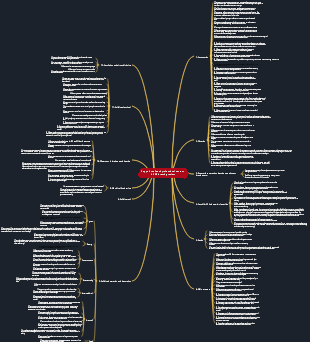
Key points of each professional content in BIM drawing review
1. Construction
1. The design instructions are inconsistent with the materials and methods used in the drawings of each layer. The materials and methods used in the drawings of each layer are inconsistent with the detailed component drawings.
2. The floors of bathrooms, corridors, etc. are lowered and the beam width is greater than the wall width, resulting in beam angles at the foot of the wall.
3. The designed wall thickness does not match the market brick specifications. The foundation bricks are not solid bricks, the type of exterior wall bricks is not indicated, or the exterior walls are made of hollow bricks.
4. Partition walls and lightweight walls do not indicate the types of materials used.
5. There are no detailed drawings of building components, no reinforcement drawings, no concrete markings, and unknown dimensions.
6. The heights of parapets, bathrooms, and other partition walls are not marked.
7. Whether there are anti-beams in parts with waterproof requirements such as bathrooms, railings, parapets on floors, etc., and whether the construction and construction facilities are clearly marked.
8. Whether the height of the window bottoms on each floor is uniform, and whether the heights of the window tops, door tops and beam bottoms are consistent.
9. When there is an open ditch, is there a cover at the door?
10. The relationship between the drawing elevation and the planned elevation, the relationship between the ground floor elevation of the building and the outdoor elevation, and the elevation relationship between the bottom of the stairs, each interior, and the corridor.
11. Whether there is any conflict between the top elevation of doors and windows and the bottom elevation of beams or the remaining space is insufficient than the thickness of the lintel.
12. The stairwell wall is short. If there is a window, whether there are electrical boxes, fire boxes, etc. at that location, and whether the space is sufficient.
13. Whether the pipes of water and electricity installation projects occupy the door and window openings; whether the pipes have fixed brackets.
14. Are there concrete beams on the roof or floor slabs of different floors in the indoor halls and rooms?
15. When the doors and windows are decorated with cover panels, are there any cover panels left on the door openings and walls?
16. Are there any obstacles or contradictions in the opening direction of doors and windows and the entrance and exit.
17. Can this be avoided if the roof or the balcony of the changing layer is designed with two side by side concrete beams with a small distance between them?
18. Whether the route from the opening of the indoor air-conditioning pipe to the outdoor unit is smooth and whether there is an air-conditioning water drainage pipe.
19. Do the wall thickness, beam width, electrical box, and fire box size have any impact on the building’s functional functions? Can they be improved?
20. The height of the entrance to the basement should generally be no less than 2.2m, preferably 2.4m.
21. The podium roof is at the same height as the standard floor. Since the balcony elevation of the standard floor is generally set to lower the drainage by 50mm, if this is also lowered, it will not be level with the podium roof. If the balcony water is not lowered, the balcony water cannot be drained.
22. When decorating the balcony with columns and boards, is the dividing line between interior and exterior decoration marked?
23. Whether the peripheral dimensions of the exterior wall match the module of the exterior decorative bricks.
2. Donation
1. Whether the discharge position of the main reinforcement of the column reinforcement is clear, whether the beam reinforcement is too dense, affecting the entry of concrete stones, and whether the plate thickness is exceeded when multiple beams cross.
2. Whether the reinforcement of building components cannot be made.
3. The beam position in the Jianshi drawing does not match the wall position in the Jianshi drawing.
4. Whether the bottom of the secondary beam is low or the bottom of the main beam is low.
5. Whether the platform cap collides with the reinforcing belt.
6. Whether it is convenient to purchase building materials locally and propose changes.
7. It is recommended to take measures to construct the post-cast belt in advance.
8. Whether the exterior walls and bathroom walls are made of easy-to-use materials.
9. In the basement floor reinforcement, the direction of the beams within the slab is inconsistent. There is no standard reinforcement direction in the picture, and the description mentions that the plate reinforcement is usually configured in both directions, and the anchorage length of the steel bar is not specified, causing the plate reinforcement to have a long stroke within the beam span. shape layout.
10. The elevation of the cap platform and the floor beam should be the same. The dense hoop of the floor beam starts from the edge of the column or from the cap platform.
11. The height of the cap platform is large. Is it required that the insertion depth of columns and shear wall reinforcements all reach the bottom of the cap platform? Can the four corner bars be placed to the bottom and the remaining bars be arranged as anchors?
3. Structural construction drawings, equipment drawings, etc.
A comprehensive summary of frequently asked questions on joint review drawings is as follows:
⑴ Whether the size and elevation are consistent (building, structure);
⑵ Are there any conflicts between the professional drawings and drawing numbers of water, electricity, and equipment installation?
⑶ Whether the reserved holes and embedded parts are correct or missing (various majors);
⑷Whether the structural methods are clearly explained;
⑸ Whether the material selection is reasonable and whether the design can meet the quality requirements;
⑹ Whether the architectural drawings and structural drawings are consistent;
⑺Whether the standard drawings and detailed drawings are correct;
⑻ Whether the ceiling, wall, dado, skirting, floor and other decoration methods are coordinated (most design institutes use atlas);
⑼ Whether the size, specification and quantity of doors, windows and components are consistent, etc.
Familiar with the methods and essentials of drawings: first coarse and then fine: first look at the flat, vertical and cross-sectional drawings to have an outline understanding of the entire project, as well as the total length and width dimensions, axis dimensions, elevation, floor height, total Gao has a general impression. Then look at the details and check the overall size and detail size.
The following issues should be reviewed during drawing review:
(1) Building part: Whether the position of the building (structure) layout on the general building plan is unclear or insufficiently based, whether there is any inconsistency between the building (structure) layout and the actual site, etc.
(2) Small first, then large: first look at the small sample drawings and then the large sample drawings, and check whether the details marked in the plan, elevation, and section drawings are consistent with those in the large sample drawings; the standard component atlas numbers used, Are there any conflicts between the type, model and design drawings? Are there any missing index symbols? Are the large sample drawings complete, etc.
(3) Construction first, then structure: that is, look at the architectural drawings first, then the structural drawings; and compare the architectural drawings with the structural drawings to check whether their axis dimensions and elevations match, whether there are any contradictions, whether there are missing dimensions, and whether there are Improper construction.
(4) First general, then special: You should look at general parts and requirements first, then special parts and requirements. Special parts generally include foundation treatment methods, setting of deformation joints, waterproofing treatment requirements and technical requirements for earthquake resistance, fire protection, thermal insulation, heat insulation, sound insulation, dustproof, special decoration and other technical requirements.
(5) Combination of drawings and descriptions: When looking at the drawings, it is necessary to compare the general design description and the detailed descriptions in the drawings to check whether there are any contradictions between the drawings and the descriptions, whether the regulations are clear, whether the requirements are feasible, whether the approach is reasonable, etc.
(6) Combination of civil engineering and installation: When looking at civil engineering drawings, you should look at some installation drawings in a targeted manner, and check whether there are any contradictions in the installation drawings related to civil engineering, and whether the positions and sizes of embedded parts, reserved holes, and grooves are Consistent, understand the civil engineering requirements of the installation in order to consider collaboration issues during construction.
(7) Combine the drawing requirements with the actual situation: check whether the drawings are unrealistic, such as whether the relative position of the building, site elevation, geological conditions, etc. are consistent with the design drawings; whether the construction unit can do some special construction techniques wait.
Foundation and foundation, PHC pipe piles:
1. When the designed pile top elevation is close to the natural ground elevation on site, the site should be backfilled with sand to 50cm above the designed pile top elevation to ensure that the pile driver will not damage the constructed engineering piles when traveling.
2. If a large amount of rocks are used in the backfill construction site, it should be recommended to carry out pile exploration in the backfill area, and the depth of the pile exploration should be clarified. Allow gas shielded welding to cool down naturally for 5 minutes before continuing construction;
3. Welding piles should be changed to CO;
4. The construction sequence should be as follows: test piles before construction, then continue construction of engineering piles, and conduct static load tests after the construction of engineering piles is completed.
5. For projects with basements, the pile top elevation is located deep below the ground. During the construction process, it is recommended that the relevant units confirm the static load detection piles in advance so that piping piles can be added to the ground.
4. Punch (drill) hole cast-in-place piles
1. Should the formal construction of engineering piles start after the static load test is completed?
2. Coring holes and ultrasonic testing embedded pipes should be sealed or cored after use, and corresponding design changes should be made.
3. Usually the stiffening hoop adopts Φ14. If the stiffening hoop is used for the guard pile, it should be changed to Φ16~18. Only in this way can the lifting stiffness requirements of the steel cage be ensured.
4. This suggestion should consider adding additional hanging bars to the natural ground and welding them to the machine platform to fix the steel cage and prevent the steel cage from floating during the pouring of concrete for the pile body.
5. When the hole top elevation is deep from the ground, it is recommended that the concrete exceed the pouring height by 3D to ensure the quality of the poured concrete pile body.
6. When the top elevation of the hole is deep from the ground, a long empty hole will be left after construction, which will easily damage the site's bearing capacity and affect the opening construction of adjacent piles. It is easy to cause quality defects such as pile deflection and string holes. It is recommended to use gravel backfill immediately after the pouring is completed. The purpose of using gravel backfill is mainly to ensure the quality of the pile top. After the cast-in-place pile is poured, the pile top is easy to segregate. In order to ensure the construction quality, use gravel to fill and avoid defects in the mortar pile head. .
7. For cast-in-place pile projects, the use of self-mixed concrete at the construction site should be eliminated and commercial concrete should be used.
8. For projects with basements, the pile top elevation is located deep below the ground. During the construction process, relevant units should be asked to confirm the detection piles in advance. The pile top needs to be extended to the natural ground, and the steel cage should also be lengthened accordingly.
5. Basics
1. Whether the waterproof construction scope of the platform is clear.
2. The bottom plate of the horse stool and the steel support frame of the large platform (there is a steel mesh on the platform) should be clear;
3. Whether the reserved holes and water collection well buildings are consistent with the structural positioning and size;
4. Whether a horizontal moisture-proof layer is installed on the masonry foundation;
5. The issue of steel bar levels (the foundation cap reinforcements of some projects are directly applied to the atlas, and the steel bar levels on the atlas are often first and second levels). Try to avoid having two levels of steel bars of the same diameter.
6. Main structure
1. The design steel bar is Ф6. Due to market reasons, it is recommended to change it to Ф6.5;
2. Whether the floor slabs at the corners of the building have double-layer reinforcement or additional radioactive steel bars.
3. The exterior walls of shear wall structures should be reinforced with water-stop bolts as much as possible.
4. Electroslag pressure welding should be used for steel bars above 14mm and the difference between the upper and lower bar levels should not exceed two levels, otherwise the welding quality will be difficult to control;
5. The elevation of some structural beams will be lowered, and the remaining parts will be filled with plain concrete of the same grade.
6. The concrete grades of beams and columns differ by several grades. Try to avoid pouring the column heads separately.
7. Can granite pads be used as protective layer?
8. Whether the position of the building wall matches the position of the structural beam;
9. Whether the spacing between wall tie bars in the general structural description is consistent with the brick modulus;
10. If the side door height of the concrete component is less than 300mm, it is recommended to change it to a structural column structure;
11. Is the setting of structural columns and waist beams clear? Structural columns are required to have horse-shaped beams as much as possible.
12. Are the anti-cracking measures for the infilled wall masonry clear (materials and processing locations), whether it is steel wire mesh or mesh cloth.
13. If autoclaved aerated concrete blocks are used, is there any clear method for constructing the ridge (concrete construction should be used as much as possible).
14. The adjacent roof walls and the edges around the chimney exiting the roof should be made of plain concrete with a thickness of more than 200mm.
15. If there are lines and air-conditioning panels around the building and the top elevation is flush with the floor, the base of the wall should be made of plain concrete to retain water.
16. If the balcony railings and roof parapet railings are built with blocks, additional structural columns and top beams should be required.
7. Building decoration and decoration
ground:
1. The compaction coefficient of the backfill soil should be determined based on the soil quality; for important ground, reinforced concrete should be used as much as possible.
2. The thickness of concrete poured directly on the soil surface should not be less than 100mm, and reinforcement should be provided (try to be double-layered and bidirectional).
3. The equipment rooms on the ground floor should use concrete elevated panels as much as possible.
4. Outdoor drainage ditches and scattered water slopes with an outdoor backfill thickness exceeding 1 meter should use cantilevered components connected to the structure.
5. The mix ratio of floor cement mortar leveling layer and surface layer should not be less than 1:2, the thickness should not be less than 20mm, and the strength grade should not be less than M15. (Many of the requirements for the cement mortar leveling layer in the acceptance specifications are the same as those for the cement mortar surface layer).
6. The strength of the concrete surface layer should not be lower than C20; when it is a basement surface layer, the strength grade should be C30 and the thickness should not be less than 100mm.
Plastering:
1. The surface plastering mortar should be made of polymer cement mortar; when plastering the infill wall masonry, polypropylene fiber should be mixed into the mortar (to prevent cracking, especially if it is directly decorated with cement mortar calendering).
2. The decorative plastering surface layer of exterior wall paint should be combined with the facade to set dividing joints.
Doors and windows:
1. Whether it conflicts with the pipes installed in the water and electricity installation and cannot be opened.
2. Whether safety glass is used for floor-to-ceiling doors and windows, casement windows above seven floors and glass larger than 1.5 square meters;
3. The profile thickness of aluminum alloy windows shall not be less than 1.4mm, and the profile thickness of aluminum alloy doors shall not be less than 2.0mm.
4. The exterior windows of the building should not be installed flush with the exterior wall.
5. The lightning protection grounding of high-rise exterior doors and windows should be as clear as possible.
Suspended ceiling:
1. Due to the space requirements for laying pipes for water, electricity, HVAC and fire protection, the ceiling elevation of some rooms does not reach the drawing requirements.
2. Aluminum ceilings are used for styling suspended ceilings. The corners of the aluminum ceiling's light slots and the edges where they meet other materials will have a corner aluminum edge strip, which will affect the decoration effect.
3. Whether to add horse paths to the ceiling of the multifunctional conference room.
Veneer panel (brick):
1. Facing bricks should not be pasted on the exterior wall insulation layer.
2. Exterior wall facing tiles should not be designed with tight joints, otherwise there will be hidden dangers of water seepage;
3. The adhesive layer of wet-paved stone must be equipped with a steel mesh. The fixed spacing should not exceed 500mm and should be connected through the wall.
Curtain wall:
1. Some embedded parts are not embedded with the main structure and need to be supplemented and embedded with post-embedded parts;
2. The connection nodes between the tie rod awning and the main structure, the connection nodes between the tie rods and the main structure, and the burying method of the awning embedded parts should be clear.
3. The exposed steel of the steel structure awning should be treated with fluorocarbon spraying with good weather resistance and good appearance.
4. To fix the hidden frame window to the main structure, if the fixed base is plain concrete, it is recommended to use chemical anchors.
5. The horizontal span of the blinds is long, which will cause the leaves to sag;
6. The lightning protection nodes of doors, windows and curtain walls should be clearly defined, and the composition of lightning protection nets and lightning protection systems should be clearly stated.
7. In the glass curtain wall, aluminum water conduits are used for sealing. This may easily cause water accumulation and leakage after construction. It is recommended to use silicone weather-resistant sealant for sealing.
8. The grid size of some aluminum veneers is too large, which may make it impossible to process.
Details:
1. The air-conditioning switch and socket are embedded at the back of the cabinet and are recommended to be moved.
8. Building roof
1. For the second layer of waterproofing, it is not advisable to directly paste waterproof membranes on the coating waterproof layer. It is better to set a cement mortar leveling layer on the coating waterproof layer and then lay the waterproof membrane.
2. The upper waterproof opening should not follow the slope of the structure, but should be set horizontally.
3. Try to use mung bean paste protective layer as the protective layer of the flap.
9. Municipal Engineering
1. Is road acceptance based on highway standards or municipal standards?
2. Does the foundation of the retaining wall need to undergo a foundation trench bearing capacity test? 3. The back of the retaining wall platform should be backfilled with random rubble and sand or a sand and gravel mixture with good water permeability.
10. Water supply, drainage and heating
1. Which series should be clearly used for PP-R pipes? Different S series pipes have different application ranges.
2. Rainwater pipes and air conditioning condensate pipes should be discharged separately.
3. Considering the hygiene issues of domestic water tanks, it is recommended to install stainless steel water tanks. At the same time, if it is installed on the roof, sun protection measures should be taken. The water tank should also specify the elevation of the water pump suction pipe, water inlet pipe, overflow pipe, etc.
4. Sun protection and rain protection measures should be considered for roof equipment.
5. It is recommended to add local equipotential in the pipeline well.
6. Since the water meter is designed in the drawing to be in the bathroom of each household, according to the regulations of the water company, it cannot be placed indoors in each household to avoid trouble in future meter reading and maintenance. Water supply pipes should not pass through other residents' rooms. 7. The water supply and drainage pipes in the civil air defense basement should be galvanized pipes.
8. Design the drainage pipe to use RC (A) flange connection. It is recommended that pipes below DN150 use clamp connection.
9. It is recommended to use pressure-reducing and pressure-stabilizing fire hydrants in the low areas of high-rise buildings.
10. It is recommended to uniformly set drainage ditches on the floor of the pump room to organize drainage.
11. Building electrical
1. If there is a bridge or busbar in the shaft, special grounding (copper bar or flat steel) should be added. It is recommended to set up local equipotential in the electrical shaft.
2. Equipment in basements, floors, roofs, etc. should be connected with dedicated ground wires.
3. Residential strong and weak current pipes should not pass through the spaces of other residents.
4. Electricity between different users should be measured separately.
5. When the height of the main distribution box (meter box) in the residential stairwell cannot meet the requirements, it should be moved or protective measures should be taken.
6. Aviation obstruction lights should have clear installation locations and large drawings.
7. In humid places such as water pump rooms, lighting fixtures should be fire-proof.
8. Power distribution rooms, fire control centers and other places should be waterproof.
9. Fire prevention and sealing methods should be clearly defined.
10. Clarify the lighting requirements in the room (test basis for energy saving part).
11. There must be no water supply and drainage pipes passing through the power distribution room.
12. The partition wall where the indoor lighting box BX3 is located in some residential buildings is only 100mm thick. The wall is too thin and the BX3 box cannot be installed in the wall.
13. Whether the lightning protection grounding plan clearly specifies the location of the down conductor, the method and quantity of the grounding device, the location and quantity of repeated grounding, and the reservation for the artificial grounding flat steel.
12. Ventilation and air conditioning
1. Pipes with larger diameters (DN450 and above) should have clear bracket fixing methods to meet load-bearing requirements.
2. It is recommended to add a 0.6mm aluminum plate protective layer to the pipe insulation layer on the roof or in the machine room.
3. Whether the fan is equipped with a shock-absorbing hanger.
4. Whether the fire damper settings are complete.
5. Add valves to the balanced pressure collection pipe of the water distributor to facilitate maintenance.