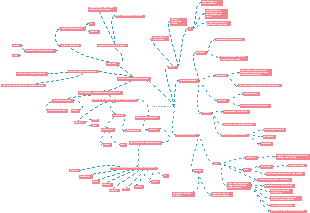
MindMap Gallery Artificial Intelligence Product Manager PM Training Manual in the AI Era
Artificial Intelligence Product Manager: PM Training Manual in the AI Era: The particularity of Class B products determines that the product’s CAC (Acquisition Cost, user acquisition cost) and product LTV (Time Value, user’s lifetime value) must be considered in the product management process And the PBP (Period, the payback period of the cost to acquire users) of the product.
Edited at 2022-11-10 16:28:57This is a mind map about bacteria, and its main contents include: overview, morphology, types, structure, reproduction, distribution, application, and expansion. The summary is comprehensive and meticulous, suitable as review materials.
This is a mind map about plant asexual reproduction, and its main contents include: concept, spore reproduction, vegetative reproduction, tissue culture, and buds. The summary is comprehensive and meticulous, suitable as review materials.
This is a mind map about the reproductive development of animals, and its main contents include: insects, frogs, birds, sexual reproduction, and asexual reproduction. The summary is comprehensive and meticulous, suitable as review materials.
This is a mind map about bacteria, and its main contents include: overview, morphology, types, structure, reproduction, distribution, application, and expansion. The summary is comprehensive and meticulous, suitable as review materials.
This is a mind map about plant asexual reproduction, and its main contents include: concept, spore reproduction, vegetative reproduction, tissue culture, and buds. The summary is comprehensive and meticulous, suitable as review materials.
This is a mind map about the reproductive development of animals, and its main contents include: insects, frogs, birds, sexual reproduction, and asexual reproduction. The summary is comprehensive and meticulous, suitable as review materials.
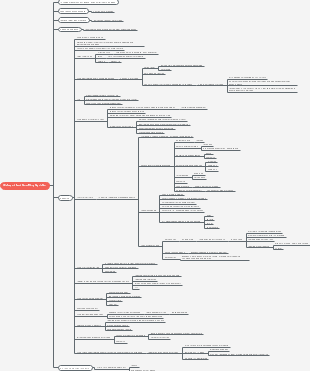
Artificial Intelligence Product Manager: PM Training Manual in the AI Era
Summarize:
1. The times are developing rapidly, and AI products are gradually emerging. The current market demand is met through artificial intelligence, which puts forward new requirements for new AI product managers. Compared with previous product managers, AI product managers need to be more professional. With multiple product skills and technical skills, AI product managers need to understand data collection, data algorithm types and uses, and training models.
2. Compared with traditional products, artificial intelligence products have "thousands of people with different needs" for functions and processes. The artificial intelligence recommendation results that appear during design should have a preset range of results in the design.
3. Product managers need to understand the latest technology on the market and the core demands of users. The use of artificial intelligence technology needs to better serve users and meet actual user usage scenarios. It should be user-centered, and it should not use very powerful technology, but it does not conform to the user's usage habits and scenarios, resulting in a half-cut product.
4. Technology-driven products are the direction of the AI product era. When used for technological innovation, products need to balance technology, users, scenarios, costs, practicality, etc. for comprehensive consideration.
5. Intelligence is a trend. As more and more algorithms are used, network communication becomes more and more convenient. This is a new growth point for the current business value of enterprises.
7.2.1 What is cross-departmental communication
(1) Good interpersonal network
(2) Close alliance relationship.
(3) The ability to persuade others.
(4) Negotiation ability.
6.3.3 Reasonably prioritize product requirements
1. Value vs Complexity Matrix You can evaluate each requirement based on the value of the requirement and the complexity of development/deployment.
2. Carnot model (Model) The Carnot model divides demand into three types
(1) The first category, basic functions, represents the “basic threshold” for products to enter the market and ensures that the product meets the minimum standards for the general needs of the industry or users.
(2) The second category, performance functions, is the product requirements that need to be developed in order to improve and optimize product performance after the basic functions are implemented.
(3) The third category, the screaming (excitement) function, is the function that creates joy and excitement for users.
3. Similar grouping method (Grouping)
4. Weighted scoring method The weighted scoring method is actually a quantitative measurement method that scores different needs in multiple dimensions, compares the comprehensive weighted scores horizontally, and uses the highest-scoring needs as high priority.
6.3.2 Common design principles for artificial intelligence products
(1) Cognitive resonance product managers need to reach cognitive agreement with users.
(2) Emotional resonance.
Product managers need to feel users' emotions such as happiness, pain, helplessness, loneliness, fear, etc.
(3) Resonance of physical feelings. Product managers need to imagine the physical feelings of users when using the product.
Chapter 5 Machine Learning
5.2 Dismantling of machine learning process
(1) Raw data collection Raw data, as the input source in the machine learning process, is collected from various channels.
(2) Data preprocessing
The "quality" and "quantity" of training data (input data) determine the success or failure of machine learning in a sense, but the quality of original training data often fails to meet training requirements.
Set), a verification set (Set) used for tuning during development and a test set (Set) used for testing.
(3) Model training Before officially starting model training, we need to classify our training goals.
(4) Model Evaluation (Evaluation) Next, it is time to look at the quality of the model after training.
(5) Tuning After evaluating the model, the training (learning) process can be optimized through parameter tuning.
(6) Inference The goal of machine learning is to use data to answer a certain question. Therefore, inference or prediction is a key step for machine learning to answer questions, and it is also an important part of realizing the value of machine learning.
5.3.1 Algorithm classification
Artificial intelligence product managers should proactively understand and master the basic logic, best usage scenarios, and data requirements of each common algorithm.
1. Supervised learning (Learning) From a given set of input x output y training set, learn the function that maps input to output (how to associate input and output), and the data samples in the training set have labels (Label) or Target (Target), this is supervised learning.
2. Unsupervised Learning (Learning) The biggest difference between unsupervised learning and supervised learning is that the training data of unsupervised learning has no labels.
3. Semi-supervised learning (Learning) In many machine learning scenarios, due to the high cost of obtaining labeled data, part of the training data is often labeled and the other part is not labeled, and in engineering practice there are usually only a small number of labeled data. Labeled data and the vast majority of unlabeled data.
4. Reinforcement learning (Learning) Reinforcement learning is a method that allows the computer to learn from errors (feedback) through continuous trials and errors (feedback) how to choose the action that can get the greatest reward in a specific situation, and finally find the pattern and achieve the goal. Reinforcement learning is different from supervised learning in that it does not use clear behaviors (labeled training data) for guidance, but uses existing training information to evaluate behaviors. Reinforcement learning is also different from unsupervised learning. The essence of unsupervised learning is to discover hidden structures from a bunch of unlabeled samples, while the purpose of reinforcement learning is mainly to learn how to maximize reward signals and try repeatedly until the model converges.
5. Deep learning Deep learning (Learning) is an algorithm that attempts to use multiple processing layers composed of multiple nonlinear transformations to perform high-level abstraction of data.
6. Transfer learning (Learning) Transfer learning is a learning method that transfers the parameters of a trained model to a new model to help the training of the new model.
5.3.2 Applicable scenarios of the algorithm
(1) The size of the data volume, data quality and characteristics of the data itself. (2) What is the essence of the problem in the specific business scenario to be solved by machine learning? (3) What is the acceptable calculation time? (4) How high is the algorithm accuracy requirement?
4.3.2 Data quality
(1) Relevancy: During the training process, algorithm models in artificial intelligence products have extremely high requirements for the relevance of domain data.
(2) Recency: The data should have relatively strong timeliness.
(3) Range: The data range also represents the completeness of the data.
(4) Reliability: For many types of artificial intelligence products, the credibility of data is a key factor in gaining user trust.
4.1 Artificial Intelligence Product Implementation Logic
(1) Infrastructure provider provides the entire product system with computing power, tools for products to communicate with the outside world, and supports it through the basic platform.
(2) The data provider is the data source of the system and provides sufficient "nutrient" for subsequent data processing.
(3) Data processors, representing various artificial intelligence technologies and service providers, are mainly responsible for intelligent information representation and formation, intelligent reasoning, intelligent decision-making, and intelligent execution and output.
(4) System coordinator, responsible for system integration, definition of requirements, coordination of resources, packaging of solutions, and all work other than research and development that can ensure the smooth operation and implementation of artificial intelligence products in the industry.
2.1.2 The requirements of the three types of companies for product managers’ abilities
The particularity of Class B products determines that in the product management process, the product's CAC (Acquisition Cost, user acquisition cost), product's LTV (Time Value, user's lifetime value) and product's PBP (Period, the cost to acquire users) must be considered. the payback period of the cost paid).
2.3.1 Enter the industry with “points”
(1) Artificial intelligence product managers should hone their understanding and judgment of scenarios to ensure that the product’s positioning in the market is the most suitable at the current stage.
2.3.2 Dig deeper into “points” and turn them into “lines”
Having the ability to control “points” is only the first step for product managers to become industry experts. Artificial intelligence product managers also need to improve the product chain by deeply exploring the value of the scene, that is, forming a change from "point" to "line".
Artificial intelligence product managers can accumulate from "points" to "lines" from the following aspects.
(1) Dig deeply into users’ needs in scenarios and provide users with solutions rather than just products.
(2) Mining the value in user data and creating surprises for users.
2.3.3 Expand the “line” horizontally and turn it into a “face”
Artificial intelligence product managers can integrate from "line" to "surface" from two aspects.
(1) Integrate external resources to achieve diversified collaboration: Due to the complex architecture of artificial intelligence products, data, algorithms, and computing capabilities need to be rapidly accumulated and integrated.
(2) Lay out internal product ecology: When the company’s product lines become richer, product managers should realize the advantage combination and value sharing of each product line by building a unified artificial intelligence platform.
3.1.2 The more important, the easier it is to be ignored: Defining non-functional requirements
Non-functional requirements are often described as “quality attributes”, “quality goals” or “non-behavioral requirements” of a product.
3.2.1 Why quantitative demand analysis is necessary
(1) Evaluate existing data resources and discover the existence of “small data” or weakly labeled data.
(2) If you want to achieve the quantitative standards proposed by the product manager (which may include a specific business indicator or model indicator), you need to apply for more resources (data, human investment, funding, etc.) to complete the product launch on time.
(3) Quantitative requirements can be achieved within the specified time based on existing resources.
3.2.2 How to quantify demand
1. Clarify the needs to meet the product vision. You must first clarify the business needs of the product. The business needs include: business opportunities, business goals, success criteria, and product vision.
2. Identify the demand scenarios to determine the macro and micro goals of the product. The product manager needs to analyze the usage scenarios corresponding to each goal.
3. Define the quantifiable standards in the scenario. After determining the specific micro-goals and splitting different scenario goals from the micro-goals of the product, the next step is to define the quantifiable standards.
(1) Consider internal factors.
(2) Consider external factors.
(3) Refer to the performance of the same industry
(4) Output reasonable expectations for the model’s prediction accuracy.
(5) Define special indicators of the algorithm according to specific scenarios.