MindMap Gallery Derivative (differential)
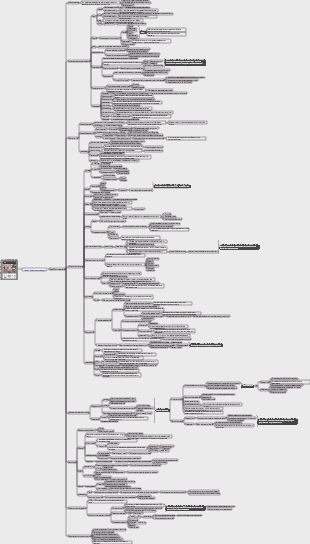
Summary of derivative (differential) knowledge, including three parts: differential calculus of multivariate functions, derivatives and differentials, mean value theorem and derivatives. You can take it by yourself if needed.
Edited at 2022-06-15 00:50:49This is a mind map about bacteria, and its main contents include: overview, morphology, types, structure, reproduction, distribution, application, and expansion. The summary is comprehensive and meticulous, suitable as review materials.
This is a mind map about plant asexual reproduction, and its main contents include: concept, spore reproduction, vegetative reproduction, tissue culture, and buds. The summary is comprehensive and meticulous, suitable as review materials.
This is a mind map about the reproductive development of animals, and its main contents include: insects, frogs, birds, sexual reproduction, and asexual reproduction. The summary is comprehensive and meticulous, suitable as review materials.
This is a mind map about bacteria, and its main contents include: overview, morphology, types, structure, reproduction, distribution, application, and expansion. The summary is comprehensive and meticulous, suitable as review materials.
This is a mind map about plant asexual reproduction, and its main contents include: concept, spore reproduction, vegetative reproduction, tissue culture, and buds. The summary is comprehensive and meticulous, suitable as review materials.
This is a mind map about the reproductive development of animals, and its main contents include: insects, frogs, birds, sexual reproduction, and asexual reproduction. The summary is comprehensive and meticulous, suitable as review materials.
Derivative (differential)
Derivatives and Differentials
The concept of micro business
The definition of micro business
The instantaneous speed of an object moving in a straight line
If the function y=f(x) is differentiable, then the function is continuous at that point. Continuity is not a sufficient condition for differentiability.
Four arithmetic operations of micro-business
Differential quotient of composite function and inverse function
The derivative of a function at a point is exactly equal to the reciprocal of the derivative of its inverse function at the corresponding point
An elementary function is differentiable in any open interval in its domain, and its derivative function is still an elementary function.
infinitesimals and differentials
The concept of infinitesimal quantities
An infinitesimal quantity is a variable whose limit is zero.
The concept of differential
The geometric meaning of differentials
Formal invariance of first-order differentials and its applications
Formal invariance of first-order differential: No matter y is an independent variable or an intermediate variable, when z=g(y), the formula dz=g’(y)dy always holds
Find implicit functions and derivatives of functions represented by parametric equations
Differential and Approximate Calculations
Higher Order Derivatives and Higher Order Differentials
Application of the Mean Value Theorem and Derivatives
mean value theorem
Rolle's theorem
content
Geometric meaning
Fermat's theorem
content
Geometric meaning
Lagrange's mean value theorem
content
Geometric meaning
Cauchy's mean value theorem
content
Geometric meaning
L'Obitat's Law
Other undecided types
Taylor formula
theorem
Taylor's Mean Value Theorem with Lagrangian Remainder
Taylor's Mean Value Theorem with Peano Remainder
application
Find the best value
Find the limit
Find higher-order derivatives at specific points
Higher order derivatives of abstract functions
Prove the inequality
Taylor formula form and research
function monotonicity criterion
graphic method
theorem method
Steps to find the monotonic interval of a function
(1) Find the discontinuity points of the function;
(2) Find the derivative and find the point where f′(x)=0 and the derivative does not exist;
(3) Determine the sign of the derivative in each divided interval, thereby obtaining the monotonic interval of the function.
Concave-convexity and inflection points of curves
definition
determination
first derivative method
second derivative method
Steps to determine the concavity and convexity of a function and find the inflection point
Find f″(x)
Find the real roots of the equation f″(x)=0
The real root of f″(x)=0 divides the domain of the function y=f(x) into several intervals, and determines the sign of f″(x) on each interval to determine the curve of the curve y=f(x). concave and convex interval
If the signs of f″(x) are opposite on both sides of the real root of f″(x)=0, then this point is the inflection point of the curve y=f(x)
How to find the extreme value of a function
first sufficient condition
second sufficient condition
Steps to find extreme value
(1) Find the derivative f′(x)
(2) Find all stationary points and non-differentiable points
(3) Determine the signs of f′(x) on both sides of these points
(4) Determine the extreme point and find the extreme value
The maximum value of the function
continuous on a closed interval
There is only one stationary point that is differentiable in the interval and is an extreme point.
There is a unique stationary point in the definition interval and the function must have a maximum or minimum value
Differential calculus of multivariate functions
Multi Function
The concept of multivariate functions
A multivariate function is a function that contains multiple independent variables.
subtopic
Element function, domain, value, range, independent variable, dependent variable, graph
Mapping of sets in R^n to R^m
The essence of the N-ary function: a mapping from a set in R^n to R -> Generalization: a mapping from a set in R^n to R^m
Example: Plane curve parametric equation/coordinate transformation on the plane
Distance, neighborhood and open set in R^n
Triangle Inequality: The sum of two sides of a triangle is greater than the third side
Open set: Every point in the set is an interior point. Necessary and sufficient conditions: There are no boundary points in E. Closed set: the set contains all its boundary points
Connected: Any two points in E can be connected by a curve falling in E
Region: connected non-empty open set closed area
Limits of multivariate functions
Limit concept of binary functions
Limit operation rules and basic properties of binary functions
Arithmetic
The limit of the larger function ≥ the limit of the smaller function
"Pinch Theorem"
subtopic
Repeated limit and comprehensive limit
The cumulative limit and the comprehensive limit are two different concepts, and generally speaking there is no necessary connection between them. When finding the limit, the comprehensive limit cannot be defined by the cumulative limit
Continuity of multivariate functions
Definition of continuity of multivariate functions
u=f(x,y) is defined in area D and is continuous at every point in D. It is said that u=f(x,y) is continuous in area D.
Several definitions of continuity of binary functions
f(x,y), that is, g(x,y) is continuous at one point (x0,y0), then ± * /(g(x0,y0) are all continuous
z=f(x,y) is defined and continuous near point (x0,y0), u=g(z) is continuous at point z0=f(x0,y0), then u=g(f(x,y) ) is continuous at point (x0, y0)
Mapping continuity
Necessary and sufficient conditions for mapping f:D->R^m at a point P0∈D: each component fi of f is continuous at P0
Properties of continuous functions on bounded closed regions
boundedness theorem
Maximum (minimum) value theorem
Intermediate value theorem
Partial Derivatives and Total Differentials
Definition of first-order partial derivative
The geometric meaning of partial derivatives
Higher order partial derivatives
Two second-order mixed partial derivatives being continuous in a region ensure that they are equal to each other
Total differential
Differentiable: The function f (x, y) is differentiable at every point in the point area D. It is said that the function is differentiable.
If a function is differentiable, it must be continuous
If the function is differentiable, then partial derivatives exist
The existence of partial derivatives does not mean continuity, that is, the existence of partial derivatives does not necessarily mean that they are differentiable.
Sufficient conditions for differentiability: two partial derivatives exist and are continuous
For elementary functions: if partial derivatives exist, they must be differentiable
Differential Mean Value Theorem and Taylor's Formula for Multivariate Functions
Differential Mean Value Theorem for Two-Dimensional Functions
Lagrangian median formula for binary functions
If the function z=f(x,y) has continuous partial derivatives in the region D and satisfies ∂f/∂x≡0, ∂f/∂y≡0, then f(x,y) is a constant in D
Taylor's formula for functions of two variables
Taylor's formula with Lagrangian remainder
Taylor's formula with Peano-type remainder
Taylor polynomial
Derivative Rules for Partial Derivatives of Composite Functions
Differentiation of multivariate functions
chain rule
algorithm
Invariance of first-order total differential forms
Derivatives of implicit functions determined by a system of equations
case of an equation
unary function
binary function
The case of the system of equations
formula method
differential method
Using the invariance of the differential equation, find the differential on both sides of the equation
Derivative method
Derive both sides separately to solve for all partial derivatives
Geometric Applications of Multivariable Differentials
Tangents and normal planes of space curves
Normals and tangent planes of space curves
Directional Derivatives and Gradient
Directional derivative
definition
The relationship between directional derivatives and partial derivatives
Partial derivatives exist, and directional derivatives must exist.
Directional derivatives exist, but partial derivatives do not necessarily exist
established when
calculate
binary function
ternary function
gradient
definition
Simple geometry application - the relationship between gradient and isosurface
Gradient and Directional Derivatives
The directional derivative along the gradient direction is largest and equal to the length of the gradient
The directional derivative along the opposite direction of the gradient is the smallest and is the opposite of the directional derivative.
Extreme values and maximum values of multivariate functions
Extreme values of multivariate functions
Definition of extreme value
Necessary conditions for extreme values
Sufficient conditions for extreme values
Maximum and minimum values of multivariable functions
step
Conditional extreme value, Lagrange multiplier method
Convert to unconditional extreme value
Lagrange multiplier method
floating theme
floating theme
central theme
theme