MindMap Gallery ordinary differential equations
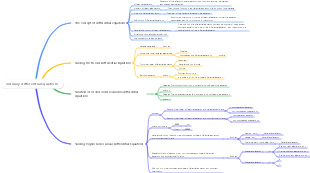
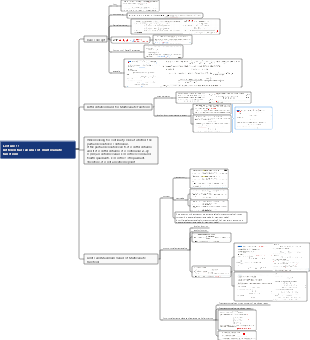
This is a mind map about ordinary differential equations, including: basic concepts, separable variable equations, homogeneous equations, first-order linear ordinary differential equations, Bernoulli's equation, reducible second-order differential equations, second-order linear Differential Equations.
Edited at 2022-02-01 18:07:51This is a mind map about bacteria, and its main contents include: overview, morphology, types, structure, reproduction, distribution, application, and expansion. The summary is comprehensive and meticulous, suitable as review materials.

This is a mind map about plant asexual reproduction, and its main contents include: concept, spore reproduction, vegetative reproduction, tissue culture, and buds. The summary is comprehensive and meticulous, suitable as review materials.
This is a mind map about the reproductive development of animals, and its main contents include: insects, frogs, birds, sexual reproduction, and asexual reproduction. The summary is comprehensive and meticulous, suitable as review materials.
This is a mind map about bacteria, and its main contents include: overview, morphology, types, structure, reproduction, distribution, application, and expansion. The summary is comprehensive and meticulous, suitable as review materials.
This is a mind map about plant asexual reproduction, and its main contents include: concept, spore reproduction, vegetative reproduction, tissue culture, and buds. The summary is comprehensive and meticulous, suitable as review materials.
This is a mind map about the reproductive development of animals, and its main contents include: insects, frogs, birds, sexual reproduction, and asexual reproduction. The summary is comprehensive and meticulous, suitable as review materials.
ordinary differential equations
basic concept
differential equations
Equations that relate independent variables, dependent variables, and their derivatives or differentials
Ordinary Differential Equations (ODE)
The unknown function in question is a function of one variable
Partial Differential Equations
Ordinary differential equation form
Order of Ordinary Differential Equations
The order of an ordinary differential equation is determined by the order of the highest derivative (differential) in the equation.
Solutions to Ordinary Differential Equations
The formula for y that makes the ordinary differential equation equal to zero
General solutions to ordinary differential equations
The solution of the equation contains arbitrary constants that are not related to each other, and the number is equal to the order of the equation
Special solutions to ordinary differential equations
Taking a special value of any constant is generally derived from the initial value condition
initial value condition
An ordinary differential equation of order n contains an initial value condition
The actual meaning is generally the initial state of things
The initial value condition of a first-order ordinary differential equation is the value of the function value of the original function at a certain point.
initial value problem
Find the value of a solution to an ordinary differential equation that satisfies the initial value condition
separable variable equation
form
Features
The first derivative has been solved
The right end is the multiplication of functions about x and y respectively.
solution
1. Identify the type
2. Separate variables
3. Integrate both sides of the equal sign and add appropriate constants
4. Simplify and get the general solution
5. Determine whether there is an initial value condition
Yes, substitute it to get a special solution
None, examine the roots of this equation, which is also the solution of the equation
Then get the complete solution
homogeneous equation
form
Solution (variable substitution)
1. Order
2. Bring it into the equation to simplify and eliminate y
3. What is obtained is an ordinary differential equation of separable variables.
4. Solve according to the solution method of ordinary differential equations with separable variables
First order linear ordinary differential equation
form
inhomogeneous term
When , it is called a first-order non-homogeneous linear ordinary differential equation
Recorded as (1)
When , it is called a first-order homogeneous linear ordinary differential equation
Recorded as (2)
solution
First solve (2), and obtain its general solution by solving separable variable equations, which contains an arbitrary constant
constant change
c becomes u, u is a function of x
Substitute the "general explanation" after the change into (1)
There must be two items that can cancel each other
summary
Solve first level General solutions to linear ordinary differential equations
constant variation method
You can also directly apply the formula in subsequent problem solving
Directly apply the formula method
Bernoulli equation
form
α=0, is a first-order linear ordinary differential equation
α=1, is a separable variable type
Solution (variable substitution)
1. Identify the type
2. Divide both sides by y raised to the α power at the same time
3. Let y raised to the (α-1) power equal to z
4. Transform into a first-order linear ordinary differential equation of z with respect to x
5. Solve according to the method of solving first-order linear ordinary differential equations
Generally, the method with formula is used
Reducible second-order differential equations
direct derivative
form
Reduction method
Calculate the integral directly on both sides of the equal sign, remember to add the constant, because the integral sign here represents the original function, remember to have two constants to get the general solution
Do not show the y and eliminate the dy type
form
solution
1. Identify the type
2. Changing the element eliminates dy, because it is changing the element of the first-order differential. After changing the element, the order is reduced.
3. Identify type solution
Finally, remember to change the yuan back to the differential
Do not show x, eliminate dx type
form
solution
1. Identify the type
2. Exchange yuan to eliminate dx. After changing yuan, the level will be reduced.
3. Identify type solution
Second-order linear differential equation
form
f(x) is a non-homogeneous term
Second-order linear differential operator
L[cy]=cL[y]
L[y x]=L[y] L[x]
superposition principle
Assume that y1=y1(x), y2=y2(x) are both solutions to L[y]=0, c1 and c2 are constants, then c1y1 c2y2 is also a solution to L[y]=0
When , the two functions are linearly related, and c1 and c2 are related to each other.
When , the two functions are linearly independent, c1 and c2 are independent of each other, c1y1 c2y2 is the general solution of L[y]=0
Structural Theorem for General Solutions of Second-Order Homogeneous Linear Differential Equations
Assume y1 and y2 are two linearly independent solutions of L[y]=0, c1 and c2 are arbitrary constants, then the general solution of L[y] is y=c1y1 c2y2
Structural theorem for general solutions of second-order non-homogeneous linear differential equations
Suppose y`=y`(x) is a special solution of L[x]=f(x), and Y=c1y1 c2y2 is a general solution of L[y]=0. Then, the general solution of L[y]=f(x) is y` Y, c1, c1 are arbitrary constants
generalized superposition principle
Assume that y1 and y2 are special solutions of L[x]=f1(x) and L[x]=f2(x) respectively, then y1 y2 is the solution of L[x]=f1(x) f2(x).