MindMap Gallery Gases, solutions and colloids
Inorganic and analytical chemistry, gases, solutions and colloids mind map sorting out, the main content includes the dispersion system of ideal gases, actual gases, solutions, etc.
Edited at 2021-10-20 21:49:50This is a mind map about bacteria, and its main contents include: overview, morphology, types, structure, reproduction, distribution, application, and expansion. The summary is comprehensive and meticulous, suitable as review materials.
This is a mind map about plant asexual reproduction, and its main contents include: concept, spore reproduction, vegetative reproduction, tissue culture, and buds. The summary is comprehensive and meticulous, suitable as review materials.
This is a mind map about the reproductive development of animals, and its main contents include: insects, frogs, birds, sexual reproduction, and asexual reproduction. The summary is comprehensive and meticulous, suitable as review materials.
This is a mind map about bacteria, and its main contents include: overview, morphology, types, structure, reproduction, distribution, application, and expansion. The summary is comprehensive and meticulous, suitable as review materials.
This is a mind map about plant asexual reproduction, and its main contents include: concept, spore reproduction, vegetative reproduction, tissue culture, and buds. The summary is comprehensive and meticulous, suitable as review materials.
This is a mind map about the reproductive development of animals, and its main contents include: insects, frogs, birds, sexual reproduction, and asexual reproduction. The summary is comprehensive and meticulous, suitable as review materials.
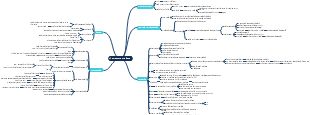
Gases, solutions and colloids
gas
ideal gas
high temperature, low pressure
PV=nRT
R=8.314kpa·L/mol/K =8.314pa·m³/mol/k
Dalton's law of partial pressures
Pi=P total·Vi/V total=P total·ni/n total
real gas
(p a/v02)(v0-b)=RT
solution
dispersion system
Molecular and ionic dispersions
<1nm
true solution
Sodium chloride, sucrose solution
colloidal dispersion
1~100nm
polymer solution
Protein and nucleic acid solutions
sol
Iron hydroxide, arsenic sulfide solution
Coarse dispersion
>100nm
emulsion, suspension
milk, mud
solution
How to express solution concentration
quality score
WB=mB/m
quantity concentration of substance
cB=nB/V
molality
bB=nB/mA
Mole fraction (amount fraction of a substance)
xB=nB/n
colligative properties of dilute solutions
nature
essential decision
Color, conductivity and acidity of solution
Concentration determines
Vapor pressure decreases, boiling point increases, freezing point decreases, osmotic pressure
The vapor pressure of the solution drops
Features
The vapor pressure of the same liquid increases as the temperature increases
At the same temperature, the vapor pressure of a dilute solution is always lower than the vapor pressure of pure solvent water
reason
solvated molecules formed
Occupies part of the surface of the solution
The greater the concentration of the solution, the greater the vapor pressure decreases.
Raoult's law
premise
Hardly volatile non-electrolyte dilute solutions
At a certain temperature, the vapor pressure of a dilute solution of a non-volatile non-electrolyte is equal to the vapor pressure of the pure solvent multiplied by the mole fraction of the solvent in the solution
P=P*xA
At a certain temperature, the vapor pressure drop Δp of a dilute solution of a non-volatile non-electrolyte is proportional to the mole fraction of the solute xB
At a certain temperature, the vapor pressure drop of a dilute solution of a non-volatile non-electrolyte is proportional to the molar concentration of the solution, regardless of the type of solute.
The boiling point of the solution increases
Boiling point: refers to the temperature at which the saturated vapor pressure of a liquid is equal to the external atmospheric pressure
Reason: Adding non-volatile non-electrolytes reduces the vapor pressure of the solution
Features
The greater the concentration of the solution, the lower the vapor pressure and the higher the boiling point rises.
Proportional to the molar concentration of the solute, regardless of the nature of the solute
pressure cooker
The freezing point of the solution decreases
Freezing point: The temperature at which the solid and liquid phases coexist with equal vapor pressures
Features
The freezing point of the solution is lower than the freezing point of the pure solvent
The lower the vapor pressure, the greater the freezing point decrease
The degree of depression of the freezing point of a solution is proportional to the molar concentration of the solute in the solution and has nothing to do with the nature of the solute.
Osmotic pressure of solution
condition
There is a semipermeable membrane
The number of solvent molecules per unit volume on both sides of a semipermeable membrane is different
reason
The number of solvent molecules in a pure solvent per unit volume is greater than that entering the pure solvent from the solution, and solute molecules cannot pass through the semipermeable membrane, forming a height difference until the penetration rates are equal and equilibrium is reached.
direction
Water molecules diffuse from hypotonic solution to hypertonic solution
application
Seedlings burn, cells lose water and swell
Special case, reverse osmosis
reason
The external pressure exceeds the osmotic pressure of the solution, allowing the solvent molecules in the solution to diffuse toward the pure solvent through the semipermeable membrane, and the liquid level of the pure solvent rises
application
Desalination, industrial wastewater treatment and concentration of solutions
The molar mass of a solute can be measured. Because the freezing point depression constant of commonly used solutions is large, the freezing point depression of the solution is often used to measure it. The osmotic pressure drop is suitable for molecules with large molar masses.
surface phenomenon
surface energy
definition
Surface particles have more energy than internal particles
Features
The greater the surface energy, the more unstable the system is.
adsorption
Features
is an effective way to reduce surface energy
molecular adsorption
Definition, an adsorbent adsorbs adsorbate in the form of molecules to its surface in a non-electrolyte or weak electrolyte solution.
law
Similar attracts
Ion adsorption
definition
The adsorbent adsorbs solute ions in strong electrolyte solutions
Ion selective adsorption
definition
That is, the solid adsorbent preferentially selects and adsorbs ions from the solution that are related to its own composition or have similar properties and have a larger concentration in the solution.
Ion exchange adsorption
definition
That is, while the solid adsorbent adsorbs a certain ion from the solution, it itself displaces an equal amount of another ion with the same charge sign into the solution.
Features
Reversible process
The greater the ion concentration, the greater the ion exchange capacity
For ions with the same concentration, the higher the ion valence, the stronger the exchange ability.
The exchange capacity when the ion valence is the same is related to the hydrated ionic radius of the ion. That is, the larger the ionic radius, the weaker the electric field strength and the smaller the degree of hydration. The smaller the hydrated ionic radius, the stronger the exchange capacity.
sol
nature
Optical properties
Tyndall effect
Dynamic properties
Brownian motion
give it a certain degree of stability
Electrical properties
electrophoresis
The phenomenon of directional movement of sol particles under the action of external electric field
The sol particles are fixed and the dispersion medium moves directionally under the action of external electric field.
i.e. electrodynamic phenomenon
Cause of electrification
Adsorption charge
Sol particles have a large surface area, that is, a large surface energy, and show strong adsorption.
Dissociation and charging
The phenomenon that sol particles become charged through the ionization of surface molecules
micelle structure
Glue core
It is a solid phase and has a large surface area and surface energy.
Adsorption layer
Colloidal particles
diffusion layer
micelles
Sol stability and coagulation
stability
kinetic stability
Large dispersion, small particle size, strong Brownian motion
Coalescence stability
The micelle structure of the sol is related to
Same charges, mutual repulsion prevents them from getting closer
Both the potential ions and counter ions of the micelles can undergo solvation to form a hydration film.
gather and sink
definition
In order to reduce the surface energy, the sols will merge with each other in the constant collision with each other, agglomerate into larger particles and sink.
So the sol is a thermodynamically unstable system.
coagulation method
Add a small amount of strong electrolyte
heating
Mixing of Sols with Opposite Electricity
Surfactants and emulsions
Surfactant
definition
A substance that can significantly reduce the surface tension of a liquid by adding a small amount
Structural features
With hydrophilic polar groups
-OH,-COOH,-NH2
Has lipophilic non-polar groups
Hydrocarbon chain, phenyl, organic matter
emulsion
definition
A coarse dispersion of one liquid into another liquid in the form of small droplets
constitute
water
organic liquid i.e. oil
type
Oil-in-water emulsion, W/O
Water-in-oil emulsion, i.e. O/W
Has instability
Often emulsifiers, i.e. surfactants, are used
application
Pesticide preparation
In the adsorption layer: potential ions > counter ions
It is a highly dispersed multiphase system
It is of great significance to the cold and drought resistance of plants
The regularity is stronger when the solution is a dilute solution of a non-electrolyte that is difficult to evaporate.
Note: The difference between bB and cB values is very small.