MindMap Gallery Acupuncture anesthesia mind map
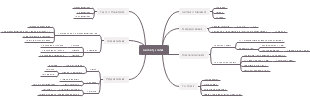
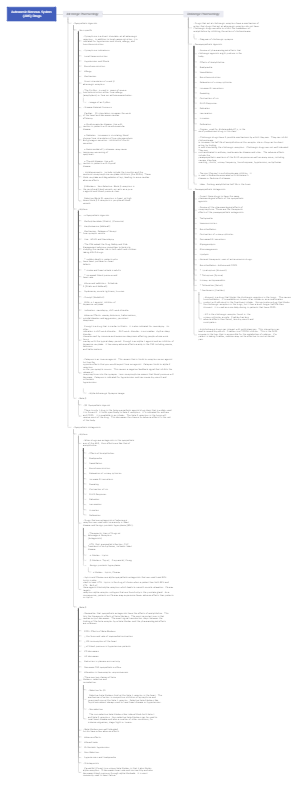
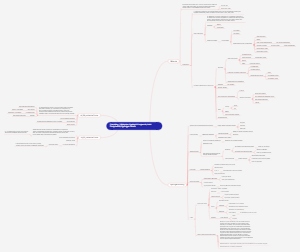
This is a mind map about acupuncture anesthesia. This article mainly summarizes acupuncture anesthesia from the definition, development process, single acupuncture, combined acupuncture and drug anesthesia, peripheral mechanisms and other effects of acupuncture analgesia, other mechanisms, central nervous system, indications, and characteristics.
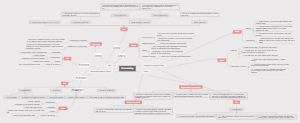
Edited at 2021-12-04 07:01:34This is a mind map about bacteria, and its main contents include: overview, morphology, types, structure, reproduction, distribution, application, and expansion. The summary is comprehensive and meticulous, suitable as review materials.
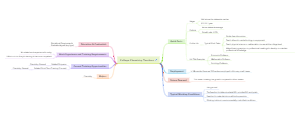
This is a mind map about plant asexual reproduction, and its main contents include: concept, spore reproduction, vegetative reproduction, tissue culture, and buds. The summary is comprehensive and meticulous, suitable as review materials.
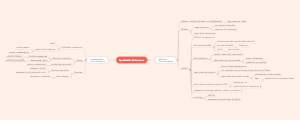
This is a mind map about the reproductive development of animals, and its main contents include: insects, frogs, birds, sexual reproduction, and asexual reproduction. The summary is comprehensive and meticulous, suitable as review materials.
This is a mind map about bacteria, and its main contents include: overview, morphology, types, structure, reproduction, distribution, application, and expansion. The summary is comprehensive and meticulous, suitable as review materials.
This is a mind map about plant asexual reproduction, and its main contents include: concept, spore reproduction, vegetative reproduction, tissue culture, and buds. The summary is comprehensive and meticulous, suitable as review materials.
This is a mind map about the reproductive development of animals, and its main contents include: insects, frogs, birds, sexual reproduction, and asexual reproduction. The summary is comprehensive and meticulous, suitable as review materials.
acupuncture anesthesia
definition
Acupuncture anesthesia, referred to as "acupuncture anesthesia", is based on the fact that acupuncture has the effect of analgesic and regulating the functions of various human body systems. It stimulates certain acupuncture points on the human body to achieve the effect of dulling or disappearing pain, so that surgical operations can be performed. a special anesthesia method.
development path
Innovative technologies of the 1950s.
The first acupuncture operation in ancient times was recorded in "Ji Yi Ji" by Xue Yongruo of the Tang Dynasty.
In 1958, acupuncture was applied to surgery.
By the end of 1959, acupuncture and anesthesia surgery involved more than 90 types of diseases and syndromes in various clinical departments.
At the beginning of 1966, 14 provinces and cities across the country had launched acupuncture, and 8,734 acupuncture surgeries had been completed.
After 1980, the combined acupuncture and drug anesthesia method was created.
Single needle
shortcoming
Incomplete anesthesia
Cannot completely suppress visceral reactions
Not enough muscle relaxation
Clinical application
extract a tooth
Electroacupuncture anesthesia eyebrow tattoo
thyroid surgery
Combined acupuncture and drug anesthesia
definition
It is an anesthesia method that involves pricking acupoints and applying a certain drug. Anesthesia based on acupuncture, plus anesthesia with a dose of anesthetic that is not normally sufficient to complete surgical analgesia, can be called combined acupuncture and drug anesthesia.
Purpose
The main purpose of auxiliary medication is sedation and analgesia to assist acupuncture and improve its effect.
advantage
Strengthen the analgesic effect of acupuncture and save the amount of narcotics.
Postoperative recovery time is shortened and complications are reduced. There are some special advantages.
Common methods
Acupuncture - combined epidural anesthesia
Acupuncture - gas combined anesthesia
Acupuncture - thiopental sodium combined anesthesia
Acupuncture - local compound anesthesia
Clinical application
New laryngoplasty
Brain functional area and deep tumor surgery
kidney transplant surgery
Peripheral mechanism of acupuncture analgesia
Cyclic nucleotides (cAMP, cGMP)
Pituitary-adrenocortical system
Injections of vasopressin or vasopressin to strengthen the needle sting analgesia
Other mechanisms of acupuncture analgesia
molecular mechanism
Meridian mechanism
Central nervous system mechanism of acupuncture analgesia
Neural pathways for acupuncture analgesia
Needle sensing device
Mainly small nerve bundles and favorable nerve endings
Peripheral afferent pathways of acupuncture signals
Aβ, Aδ fiber excitation
The transmission pathway of acupuncture signals in the spinal cord
Acupuncture signals and pain signals are integrated at the spinal cord level
Acupuncture signals and pain signals are integrated at the brainstem level
Acupuncture signals and pain signals are integrated at the level of the thalamus
Neurochemical mechanisms of acupuncture analgesia
endo-opioid peptides
Acupuncture analgesia → Enhanced activity of endogenous opioid analgesics (OLS) → Activation of OLS-ergic neurons → Endogenous opioid peptides → β-endorphin, enkephalin, and dynorphin
exerts an analgesic effect in the brain
Exudes analgesic effects within the spinal cord
Opioid peptide neurons in the spinal cord release corresponding transmitters → Opioid receptors in primary sensory N afferent terminals → Inhibit the release of substance P from afferent terminals → Inhibit spinal cord nociceptive neuron pain responses
The opioid peptidergic neurons of the relevant nuclei are excited and release transmitters → neuron replacement participates in the descending inhibitory system → inhibits pain transmitters
The pituitary gland releases beta-endorphin into the blood to act as an analgesic
Cholecystokinin octapeptide (CCK-8)
Electroacupuncture stimulation→increased release of opioid peptides→increased central NSCCK and neuronal CCK→antagonizes the effects of opioid peptides
Indications
People allergic to anesthetic drugs
People with poor liver, kidney, and lung function, critical illness, shock, and old age cannot receive anesthesia. drug addict
Those whose condition is clearly diagnosed and does not require extensive exploration
Those who are willing to accept acupuncture, have good pain tolerance and are not obese
Those who have received acupuncture and can exert the adjustment effect of acupuncture should have a good acupuncture effect before surgery. fruit prediction
Features
Safe, no side effects, wide application range
The patient is awake, making it easier to cooperate with the doctor
Intraoperative physiological disturbance is minor, which facilitates postoperative recovery.
Simple, economical and easy to promote
effect
auxiliary analgesic effect
Sedative effect
antivisceral stretch response
Anti-traumatic shock effect
Anti-surgical infection effect
Protect important organ functions
Promote wound repair
Promote postoperative recovery
Control postoperative pain
Reduce postoperative nausea and vomiting
Correct postoperative gastrointestinal dysfunction