MindMap Gallery Neuraxial anesthesia and analgesia mind map
The mind map of neuraxial anesthesia and analgesia describes the definition, administration mode, application timing, drugs, advantages, and ideal labor analgesia of neuraxial anesthesia and analgesia.
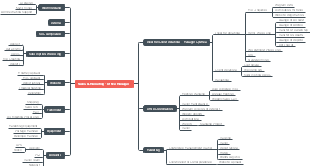
Edited at 2021-10-11 19:41:00This is a mind map about bacteria, and its main contents include: overview, morphology, types, structure, reproduction, distribution, application, and expansion. The summary is comprehensive and meticulous, suitable as review materials.
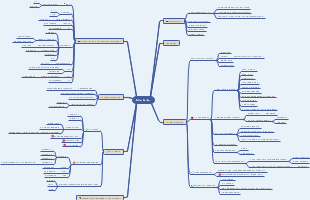
This is a mind map about plant asexual reproduction, and its main contents include: concept, spore reproduction, vegetative reproduction, tissue culture, and buds. The summary is comprehensive and meticulous, suitable as review materials.
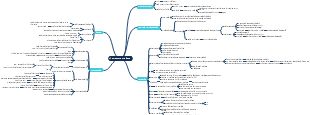
This is a mind map about the reproductive development of animals, and its main contents include: insects, frogs, birds, sexual reproduction, and asexual reproduction. The summary is comprehensive and meticulous, suitable as review materials.
This is a mind map about bacteria, and its main contents include: overview, morphology, types, structure, reproduction, distribution, application, and expansion. The summary is comprehensive and meticulous, suitable as review materials.
This is a mind map about plant asexual reproduction, and its main contents include: concept, spore reproduction, vegetative reproduction, tissue culture, and buds. The summary is comprehensive and meticulous, suitable as review materials.
This is a mind map about the reproductive development of animals, and its main contents include: insects, frogs, birds, sexual reproduction, and asexual reproduction. The summary is comprehensive and meticulous, suitable as review materials.
Neuraxial anesthesia and analgesia
Definition: Neuraxial labor analgesia is a method of injecting anesthetics into the spinal canal, which can block the conduction of sensory nerve signals in the maternal pelvic cavity and relieve pain.
Ideal labor analgesia
Little impact on mother and baby
Easy to administer, fast onset of action, reliable in action, meeting the needs of analgesia during the entire labor process;
Avoid movement block and not affect uterine contractions and maternal movements;
The mother is awake and can participate in the delivery process; if necessary, the need for surgery can be met.
Compared
Epidural labor analgesia basically meets the above requirements, is easy to implement, has few adverse reactions, and is highly controllable. It is currently the most commonly used in clinical practice.
CSEA and continuous spinal anesthesia have concerns about leakage of cerebrospinal fluid, postoperative headache, and requirement for supine positioning.
drug
Ropicar
Ropivacaine has a long-lasting analgesic effect. It can block the separation of sensory and motor nerves at low concentrations. The drug does not easily pass through the placental barrier and has no effect on the blood perfusion of the uterus and placenta. It is highly safe.
Fentanyl
Fentanyl is an opioid receptor agonist with a strong narcotic analgesic effect. It can effectively inhibit pain afferent nerves and block the pain perception below the waist of the parturient. Combined with ropivacaine for analgesia, it can reduce The concentration of local anesthetic drugs reduces the dosage of anesthetics, enhances the analgesic effect, reduces motor blockade, has less inhibition on the central nervous system, is safer, and the administration method is simple and the effect is rapid.
Way
Epidural anesthesia
Epidural anesthesia uses a large amount of analgesic, has a slow onset of action, and may block motor nerves, but it lasts long and can achieve continuous analgesia during labor.
Combined spinal-epidural anesthesia CSES
In order to make the analgesic advantages of spinal anesthesia and epidural anesthesia complementary, the two are implemented together, that is, CSEA,
Method: During delivery, rapid-acting spinal anesthesia is first used for analgesia, and then continuous epidural anesthesia is used to maintain it.
the difference
Opioids can be used alone for spinal anesthesia in the early first stage of labor, and the analgesic effect is satisfactory without motor block, but the analgesia is insufficient in the late stage of labor.
Using local anesthetics plus opioids for spinal anesthesia analgesia has better analgesic effects and lasts longer than using local anesthetics or opioids alone.
Low-concentration local anesthetics plus opioids are used for epidural anesthesia analgesia, which can reduce the concentration of local anesthetics and reduce the dosage of local anesthetics.
In particular, the use of low concentrations of ropivacaine can achieve selective blockade of sensory nerves without motor blockade, and the mother can move freely during the analgesia. This is walking epidural analgesia.
CSEA is used for labor analgesia and is especially suitable for parturients whose cervix is dilated more than 5 cm, labor progresses rapidly, and pain is severe.
persistent spinal anesthesia
A microcatheter is inserted through the subarachnoid space and local anesthetics and/or opioids are intermittently injected into the subarachnoid space to achieve continuous subarachnoid space block, which is called continuous spinal anesthesia.
This method has a definite analgesic effect, but requires higher conditions.
Advantage
The application of neuraxial labor analgesia to primiparous women with vaginal delivery can effectively exert the analgesic effect, shorten the labor time, and increase the vaginal delivery rate.
Analgesia with anesthetic drugs can relieve maternal tension to a certain extent, reduce plasma catecholamines, reduce norepinephrine levels, fully relax maternal uterine arteries, and increase blood supply to the placenta.
Reduce labor pain, relieve uncoordinated uterine contractions, help mothers conserve their physical strength, promote labor progress, and shorten labor time
Application time
It is safe and feasible to use neuraxial anesthesia analgesia during vaginal trial labor during another pregnancy after cesarean section, and can significantly reduce labor pain.
principle
Using analgesic measures on the basis of regular uterine contractions can not only help the mother relax and increase the pelvic floor muscles
When the fetal head compresses the cervix, it promotes rapid expansion of the cervix, shortens the labor process, reduces the chance of a mother choosing a cesarean section, increases the natural delivery rate, and effectively improves the outcome of delivery.
Effectively reduces maternal postpartum hemorrhage and improves maternal satisfaction with delivery
incubation period
Latent period neuraxial anesthesia is more suitable for parturients with severe pain. It does not have motor block and allows the mother to participate in the entire labor process. The mother can not only stay awake, but also eat and drink, and will not affect the mother's uterine contraction and cervical dilation.
The clinical application effect of neuraxial anesthesia and labor analgesia during the latent period (cervical dilation 1~2 cm) is significant, which can effectively improve maternal and infant outcomes and reduce pain scores.
active period
Anesthesia in the active phase can easily affect the delivery outcome of newborns and lead to asphyxia in newborns.
Dosing mode
Programmed intermittent epidural administration (PIEB), referred to as pulse pump.
Advantages: Compared with continuous background infusion, PIEB mode has equivalent analgesic effect, but PIEB requires fewer additional drug additions and total drug consumption, and at the same time, maternal satisfaction is higher.
The working principle of the pulse pump is to rapidly release a fixed dose of anesthetic drugs into the epidural space at intervals of the same period of time.
Comparison: Compared with the continuous slow infusion pump, it has the characteristics of interval and high speed. Its infusion rate is much greater than that of the traditional continuous pump. There is no statistically significant difference in the impact of pulse pump on labor compared with traditional continuous epidural infusion. However, pulse pump mode has the advantages of reducing the use of local anesthetics, reducing the risk of explosive pain and improving maternal satisfaction.
Patient controlled epidural analgesia (PCEA)
Its administration mode adopts the first dose, continuous background infusion volume and patient-controlled volume.