MindMap Gallery Summary of anesthesia equipment
Summary of knowledge points on anesthesia equipment. Some chapters have not been summarized yet. It is one of the basic courses for the anesthesiology major (undergraduate) and is an interdisciplinary subject of anesthesiology, biomedical engineering and other disciplines.
Edited at 2021-06-17 22:20:27This is a mind map about bacteria, and its main contents include: overview, morphology, types, structure, reproduction, distribution, application, and expansion. The summary is comprehensive and meticulous, suitable as review materials.
This is a mind map about plant asexual reproduction, and its main contents include: concept, spore reproduction, vegetative reproduction, tissue culture, and buds. The summary is comprehensive and meticulous, suitable as review materials.
This is a mind map about the reproductive development of animals, and its main contents include: insects, frogs, birds, sexual reproduction, and asexual reproduction. The summary is comprehensive and meticulous, suitable as review materials.
This is a mind map about bacteria, and its main contents include: overview, morphology, types, structure, reproduction, distribution, application, and expansion. The summary is comprehensive and meticulous, suitable as review materials.
This is a mind map about plant asexual reproduction, and its main contents include: concept, spore reproduction, vegetative reproduction, tissue culture, and buds. The summary is comprehensive and meticulous, suitable as review materials.
This is a mind map about the reproductive development of animals, and its main contents include: insects, frogs, birds, sexual reproduction, and asexual reproduction. The summary is comprehensive and meticulous, suitable as review materials.
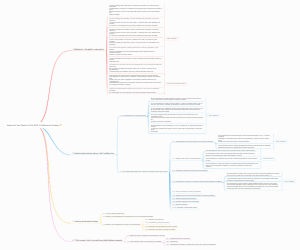
Anesthesia equipment science Note: Grasp the key points of each chapter!
1. Introduction
2. Basic knowledge of medical instruments
electronic circuit
Analog circuit
Circuits that process analog signals
Classification
amplifying circuit
Amplify useful signals and suppress interference signals
Zero drift suppression
Differential mode signal amplification
The amplification factor depends on the transistor amplification factor of the individual
Common mode signal rejection
CMRR (Common Mode Rejection Ratio)
Measures the ability of an amplifier to amplify differential mode signals and suppress common mode signals.
Filter circuit (filter)
frequency selectivity
Lowpass
Myoelectric high frequency
Qualcomm
Bandpass
band resistance
50Hz trap
Oscillation circuit
No external signal input, relying on self-oscillation to generate an oscillating current that changes periodically in size and direction.
For example,
Generate stimulating signals to interfere with physiology
Power-on self-detection signal
Power amplifier circuit
power circuit
Analog-to-digital conversion circuit A/D
sampling
Keep
Quantify
coding
Digital circuits
Circuits that process digital signals
logic gate
combinational logic
Sequential logic
sensor
blood pressure
Piezoelectric sensor
blood oxygen saturation
Photoelectric Sensors
glucose concentration
enzyme sensor
tissue density
Ultrasonic transducer
anesthetic drug concentration
Infrared photoelectric sensor
arterial partial pressure of oxygen
Ag-AgCl electrode
Medical instrument composition
Physiological information collection system
Signal preprocessing
Input overload protection
enlarge
core
Filtering, etc.
signal processing
Convert preprocessed analog signals into digital signals
include
A/D conversion circuit
digital logic circuit
storage circuit
Main Specifications
Accuracy
single
Precision
Repeatability
repeatedly
input resistance
Sensitivity
Frequency response
signal-to-noise ratio
literal meaning
signal to noise
zero drift
Enter zero and exit deviation
CMRR (Common Mode Rejection Ratio)
Measuring amplifier performance
3. Respiratory function monitoring equipment
Ventilation frequency monitoring
Conventional impedance ventilation frequency monitoring
Airway pressure monitoring
Reflects the resistance encountered during ventilation
15-20cmH2O during normal inhalation
instrument
U-shaped tube water column pressure gauge
advantage
Simple structure and easy to use
Accurate and reliable
shortcoming
Water inertia, poor dynamics
Commonly used to calibrate other airway pressure measurement instruments
Mechanical pressure gauge
Diaphragm pressure gauge
Pressure Sensor
strain gauge pressure sensor
Flexible original
Withstand external force
Resistance strain gauge
piezoresistive effect
Detection circuit
Wheatstone bridge
Can suppress the effects of temperature changes
It can also suppress lateral force interference
Piezoresistive pressure sensor
Utilizing the semiconductor piezoresistive effect
One of the most widely used pressure sensors currently
advantage
high sensitivity
High-resolution
High frequency response
Directly feel the measured pressure
shortcoming
susceptible to temperature effects
Inductive pressure sensor
Changes in self-inductance coefficient or mutual inductance coefficient
Commonly used pressure sensors for respiratory monitoring
advantage
Works reliably
long life
high sensitivity
Linear
Good repeatability
Flow rate detection
Most used
Main pressure pipe
Pitot tube (probe)
Main pressure pipe
Both ends open into L-shaped pipes
For liquid speed measurement
Measure the height of the liquid column at the measured point and calculate the flow rate at that point.
pitot tube
Used to measure the velocity of flowing gas at a certain point
Total pressure pipe and static pressure pipe combination
subtopic
Traffic detection
The volume of fluid passing through a certain cross-section per unit time (flow rate)
Impeller ventilation meter
photoelectric
The blades are blocked, forming photoelectric pulse counting
Features
climax volume
The reading is too high
inertia
low tidal volume
Reading is too small
Friction
Differential pressure flow meter
Install throttling elements on the flow path to increase flow resistance
Create a static pressure difference on both sides
Must be constantly corrected during the measurement process
Features
Easy to use
Better frequency response and sensitivity
It is widely used in pulmonary ventilation measurement.
Vortex flowmeter
Fluid flows through obstacles to create a stable vortex street
Karman Vortex Street
Ultrasonic detection of vortex occurrence frequency
Hot wire flow meter
Using constant temperature circuit
A second heating wire is added to the pipeline to offset the effects of the gas temperature itself and the ambient temperature.
Fast response
Susceptible to water vapor interference
respiratory function monitor
By-stream
Suitable for tracheal intubation patients
D-life sensor
It is a bidirectional, differential pressure, side-stream flow sensor.
Usually between the Y-shaped tube of the breathing circuit and the endotracheal tube
Two pressure measuring ports A and B
blood oxygen saturation monitor
principle
H b O2
absorb more infrared light
through more red light
Hb
absorb more red light
Transmits more infrared light
660nm red light
940nm infrared light
Shine fingers
Note subtracting the dark current
Eliminate the influence of ambient light on detection
Methemoglobin extreme value tends to 85%
HBCO extreme value tends to 100%
Pulse volume chart
Waveform indicates peripheral vascular perfusion
Cerebral oxygen saturation monitoring
Infrared spectrometry technology
4. Circulation function monitoring instruments
ECG /EKG (mainly reading!)
red black right
yellow green left
Classification
Standard limb leads
1, 11, 111
E inthoven triangle
Compressed unipolar limb leads
aVR, aVL, aVF,
wilson center end
single level precordial leads
V1~V6
Invasive electrocardiogram
Esophageal ECG
atrial arrhythmias
intratracheal electrogram
Diagnosing atrial arrhythmias in children
epicardial electrocardiogram
Different degrees of myocardial ischemia and myocardial infarction
ECG monitor
G
three-electrode system
Improved three-electrode
CS5
Anterior myocardial ischemia
CB5
Myocardial ischemia and arrhythmias
CM5
Conducive to ST segment monitoring
MCL1
ICU monitoring
CS5
intraoperative monitoring
five-electrode system
blood pressure monitoring
NIBP non-invasive
Manual cuff pressure measurement
Palpation
The measured systolic blood pressure value is low
Auscultation
Korotkoff sound
Not suitable for patients with hypotension
Electronic automatic pressure measurement
Electronic Korotkoff sound automatic pressure measurement
micro sound sensor
advantage
good consistency
shortcoming
Vulnerable to interference from external environment
The strength of the pulse also has an impact
Vibration method
At present, the main method of NIBP is
Pressure sensor detects pressure oscillation waves
Oscillation amplitude rises sharply
systolic blood pressure
The maximum point of the oscillating wave amplitude
mean arterial pressure
The oscillation amplitude decreases fastest
diastolic blood pressure
advantage
Resist interference from electrosurgery and other interference
Less susceptible to strong and weak pulse images
Good repeatability and accuracy
shortcoming
Susceptible to external vibrations
Low pressure is susceptible to deflation velocity and catheter stiffness imaging
May not be accurate in case of arrhythmia
Ultrasonic Doppler automatic pressure measurement
Ultrasound Doppler Effect
advantage
Suitable for high noise, shock patients, hypotension, and infants
shortcoming
Complex structure and high cost
IBP is invasive
liquid coupling method
saline
Diaphragm pressure sensor
Biggest problem
Waveform distortion
Catheter end sensor method
Micro pressure sensor
insert directly
Significantly stronger than the even method
arterial blood pressure monitoring
Measure once every 3 to 5 minutes
cardiac output monitoring
Non-invasive
electrical impedance plethysmography
advantage
Simple operation, non-invasive dynamic observation
shortcoming
Poor ability to resist electromagnetic interference
TEE Transesophageal Doppler Ultrasound
parts
Descending aorta
Accounts for 70% of blood flow
advantage
Good correlation with thermodilution method
Easy to place
shortcoming
There is slight pharyngeal and esophageal damage
Transtracheal Doppler Ultrasound
advantage
Fixed anatomical position
Accurate results
shortcoming
endotracheal intubation
High technical difficulty
Invasive
Fick method
gold standard
Theoretical basis
Pulmonary circulation and systemic circulation equal blood flow
Using oxygen as an indicator
advantage
Non-invasive, simple to operate and reliable
shortcoming
Many image factors
indicator dilution method
dye dilution method
non-toxic indicator
Commonly used
indocyanine green
via femoral or radial artery
Rarely used clinically, limited to experimental research
Lithium dilution method
advantage
Simple operation and low cost
shortcoming
Susceptible to sodium ion interference
Interfere with certain drugs vecuronium
thermodilution method
Swan-Ganz Pulmonary Artery Catheter
subtopic
It is a widely used clinical method
serial thermodilution method
Values are updated every 30 seconds
pulse waveform method
subtopic
The composition and working principle of bedside monitoring equipment
5. Anesthesia depth monitoring equipment
electroencephalogram
Electrode placement montage
subtopic
EEG power spectrum monitoring
index
SEF (edge frequency)
As the anesthesia induction dose increases, SEF decreases,
SEF increases as anesthesia becomes shallower
MF (median frequency)
50%
total power
Absolute power and relative power
MFRQ (mean frequency)
ASY (asymmetry)
delta ratio
coherence
BIS (bispectral index)
Reflect brain functional status and depth of anesthesia
0-100, 100 completely awake
clinical
Monitor sedation levels and desensitize to pain
Affected by the combined use of multiple anesthetics
Improve the quality of anesthesia
Nitrous oxide and ketamine anesthesia cannot be monitored
AEP (auditory evoked potential)
Hearing is the last to be lost during anesthesia and the earliest to recover
Has clear anatomical positioning significance
The AEP index has no overlap in monitoring consciousness transitions and is more reliable than BIS.
Reliable indicators for body movement prediction
More comprehensive monitoring
brain entropy index
RE (reaction entropy)
Fast response parameters
Intubation, skin incision
0—100
SE (state entropy)
More stable
Can be used to study the hypnotic effects of anesthetic drugs on the brain
0-91
BSR (Burst Suppression Entropy)
Burst suppression percentage in two periods
6. Muscle relaxation monitoring equipment
Electrical stimulation method
single twitch stimulation
shortcoming
Unable to determine the nature of neuromuscular blockade
Poor sensitivity
advantage
Simple
The patient feels little discomfort and can be tested repeatedly
tetanic stimulation
advantage
If there is posttetanic facilitation in non-depolarizing block, the nature of the block can be determined
More sensitive than a single twitch stimulus
shortcoming
The nerves need to be restored and continuous dynamic monitoring is not suitable.
Pain at the stimulation site, difficult to accept when awake
TOF train of four stimuli
Currently the most widely used clinically
T4/T1
Disappears when blocked 4~1
During recovery 1~4
advantage
Continuous dynamic monitoring
Non-depolarizing block T4/T1 gradually decreases Depolarizing block T4/T1 remains unchanged
Sober and available
shortcoming
Less sensitive than tetanic stimulation
PTC post-tetanic stimulation count
advantage
Monitoring Single twitch stimulation and TOF Neuromuscular function blockade that cannot be monitored
shortcoming
Unable to continuously monitor dynamically
Dedicated to deep non-depolarizing blockade
DBS dual burst stimulation
advantage
Significantly improves the detection rate of residual neuromuscular blockade and monitors residual non-depolarizing blockade
The larger the DBS value, the more complete the recovery
shortcoming
Discomfort for conscious patients is greater than TOF
7. Ultrasound diagnostic equipment
Imaging principle
reflection
The greater the acoustic impedance, the greater the intensity of the reflected wave. The basics of ultrasonic imaging
transmission
refraction
attenuation
The greater the frequency, the greater the absorption attenuation in soft tissue.
Ultrasound probe
piezoelectric crystal
Usage features
working frequency
Bandwidth
Sensitivity
resolution
vertical resolution
The higher the frequency, the narrower the pulse and the higher the length.
Lateral resolution
Vertical resolution is always better than horizontal resolution
Influencing factors
Radiation characteristics
Small diffusion angle and good directivity
radiation area
The larger the radiation area, the smaller the diffusion angle, and the lateral resolution is improved.
Frequency response
Mechanical quality
Matching between layers
Acoustic properties
Radiation characteristics
Absorption properties
Frequency characteristics
Conversion properties
Transient characteristics
Ultrasound imaging
Type A
The position and brightness of the light spot reflect the depth and reflection intensity of the interface echo in the body
M type
Observe and measure fast-moving tissue structures
Mode B (two-dimensional echocardiography)
fan sweep
Suitable for cardiac tomography
D type (Doppler ultrasound)
Doppler effect
moving object echo
Spectrum display
Bandwidth
bandwidth
Large speed distribution
Turbulent velocity distribution is large and bandwidth
narrow band
The speed distribution range is small
Laminar flow velocity distribution is small and the band is narrow
Spectral grayscale
frequency shift signal amplitude
High amplitude
Bright
low amplitude
dark
CW (Continuous Wave Doppler Echocardiography)
Can measure high-speed blood flow velocity
No distance resolution capability, unable to measure blood flow velocity in point area
PW (pulsed wave Doppler echocardiography)
Ability to identify distance
Unable to accurately measure high-speed blood flow velocity
color doppler echocardiography
Average flow speed, the greater the brightness, the faster the flow speed
Facing probe, red
Away probe, blue
Blood flow dispersed, green
TEE (transesophageal echocardiography)
Ultrasound-guided anesthesia technique
Probe selection
Superficial
Above 8MHz, high frequency, linear array probe
Deep
4~7MHz convex array probe
Neural tissue imaging characteristics
substantive organization
homogeneous echo
fluid-containing tissues and organs
Anechoic or hypoechoic fluid areas
aerated tissue
Strong echo bright area
8. Medical gas monitoring instruments
end-tidal and alveolar gases
Collection method
mainstream
Susceptible to contamination by water vapor and respiratory tract emissions
By-stream
There is a certain delay
The monitoring value is lower than the arterial blood gas analysis result
Cut-off type
Closest to arterial blood gas analysis results
Detection Technology
Currently commonly used are electrochemical, paramagnetic, and infrared
electrochemical analysis technology
The cathode is not consumed and the anode is gradually consumed
G,,,battery
aka dye battery
The oxygen meter responds slowly and cannot monitor in real time.
Mean oxygen concentration in the main anesthesia circuit
Clark electrode
Also known as polarographic electrode
Potential drift often occurs
The main cause of the error is water vapor
The response speed is slow and cannot be monitored continuously.
Micro fuel cell oxygen meter
Fast response speed and continuous monitoring
Paramagnetic analysis technology
Paramagnetic substances
A substance that conducts magnetism and enhances the surrounding magnetic field
Among medical gases related to anesthesia, only oxygen is paramagnetic.
Microphone detects specific audio signals
Acoustomagnetic analysis
Stable performance and fast response
Continuous and dynamic observation of oxygen concentration
Infrared analysis technology
Gas molecules with two or more different elements
Has a specific infrared absorption spectrum
Therefore, except oxygen
Mainstream infrared gas monitors are mainly used for end-tidal carbon dioxide monitoring
Fast response
Can be monitored in real time
and record the carbon dioxide respiratory waveform
To prevent steam interference, constant temperature heating function
There is a risk of burns to patients
By-stream
Stable working environment
Conducive to accurate measurement
Can continuously measure carbon dioxide in respiratory gases and various inhaled anesthetic gases
There is a certain delay time
other
Gas Chromatography Analysis Technology
Like dissolves
Commonly used detectors
thermal conductivity cell
Hydrogen flame ion detector
Good versatility, first used in anesthetic gas analysis technology
Can detect various anesthetic gases
Slow and difficult to continue
Mass spectrometry Fast response time and high sensitivity
quadrupole mass spectrometer
The gas is positively charged, accelerated by the electric field, and hits the target electrode
magnetic selection mass spectrometer
Using magnetic fields to change the trajectory of charged particles
Can detect multiple known gas components simultaneously
Raman spectroscopy analysis technology
Belongs to light scattering analysis technology
No Raman scattering phenomenon in monatomic gases
such as xenon atoms
Can identify and detect almost all gases related to clinical anesthesia
Piezoelectric Crystal Analysis Technology
Under the action of inter-electrode voltage, the crystal oscillates at a certain frequency
Fast response time
Cannot detect physiological gases
Can only detect one type of anesthetic gas
Optical interference analysis technology
The interference fringes shift according to changes in the refractive index of the gas.
Unable to follow breathing for continuous monitoring
Cannot be used for N2O inhalation anesthesia
Monitor influencing factors
Gas collection method
end-tidal and alveolar gases
The cut-off type is the most effective
Effects of altitude and atmospheric pressure
A certain concentration of carbon dioxide
As the atmospheric pressure increases, the partial pressure value increases
Certain partial pressure of carbon dioxide
Atmospheric pressure increases Concentration increases
water vapor
Instrument drift
Regular calibration
Other influencing factors
High concentration of oxygen can broaden the CO2 infrared absorption band, making the measured value lower.
Influence of strong electromagnetic waves such as electric knife
Medical gas monitoring instrument calibration
General procedure
Commonly used standard gas preparations
10. Anesthesia laryngoscope and light channel fiberoptic endoscope
11. Anesthesia machine
12. Ventilator
13. Medical infusion equipment
stepper motor
Input amount
pulse sequence
Output
Corresponding incremental displacement and step motion
Teeth misalignment
Degree of misalignment, number of steps
Medical infusion pump
Linear peristaltic infusion pump
Valve-like continuous jet squeezing action propels liquid flow
External force presses the intravenous line against the fixed plate on its back
More commonly used clinically
A set of eccentric cams
Photoelectric drop detector
Rotary peristaltic infusion pump
roller squeeze
Infusion speed - roller speed
Reciprocating piston infusion pump
Piston reciprocating motion
Piston activated membrane infusion pump
Prevents gas from entering and expelling into the patient's body
Medical infusion pump
Apply constant pressure to the syringe plunger
More stable and accurate
Mostly used for infusion of anesthetic drugs and other special drugs
shortcoming
Volume limitation, not suitable for large volume infusions
analgesic pump
mechanical
single use
Background infusion volume
Continuous constant rate infusion
Single infusion volume
Infusion volume after patient compression
Each dose is ≥0.5ml
With limited time interval function
Electronics
Reusable pump body
Disposable liquid storage box matched with pump body
TCIP (Target Concentration Controlled Injection Pump)
A special type of medical syringe pump
14. Extracorporeal circulation auxiliary equipment
artificial heart-lung machine
blood pump
instead of heart
power system
roller pump
Main pump or suction pump
Double-ended rolling column
advantage
Stepless speed regulation
constant stroke volume
The damage is slight for a certain period of time
Simple control operation
shortcoming
Non-pulsatile perfusion function, long-term use, corresponding pathophysiological changes
Red blood cells are destroyed to a certain extent over a long period of time
The pump tube is squeezed and the microthrombus in the lumen falls off
High-speed movement, risk of pump tube rupture
centrifugal pump
Main pump for blood perfusion
Magnetism
characteristic
Little damage to blood components
Avoid cavitation
Pulsatile perfusion possible
Less risk of pump tube rupture
Oxygenator
BO bubble type
oxygenation
Main place for gas exchange
subtopic
Under certain conditions, the smaller and more bubbles are, the larger the blood gas exchange area is, and the more favorable oxygenation is.
defoaming
Polyurethane sponge with silicone oil evenly applied
Performance degrades with increased traffic and time delays
filter
Prevent micro-thrombosis in the body
store blood
Insurance measures to give perfusionists time to respond
Smooth blood flow and reduce turbulence
variable temperature
Mostly straight multi-tube type or spirally coiled bellows type
Stainless steel or epoxy coated aluminum pipe
MO (membrane oxygenator) membrane type
Closest to human physiological condition
Features
No direct contact between blood and gas
Biomimetic membrane similar to lungs
Gas passes freely and liquids are not allowed to penetrate
Oxygen and carbon dioxide delivery rate imaging factors
membrane surface area
Under a certain flow rate, the larger S is, the greater the delivery rate is.
But the larger S is, the larger the foreign body contact surface is and the greater the adverse image is.
Membrane properties
Methyl silicone membrane, etc.
blood film thickness
Hollow fiber internal blood circulation type
Control the inner diameter of each fiber
Hollow fiber external blood circulation type
Increase the ridge of the protrusion or change the blood flow pattern
transmembrane driving pressure
Determined by the difference in gas partial pressure on both sides of the membrane
heat exchange system
Thermostat
variable temperature water tank
Blood recovery and filtration system
blood recovery system
arterial microthrombus filter
ECMO extracorporeal membrane oxygenation
method
V-A veno-arterial
Newborns most often
The right internal jugular vein leads out, and the right common carotid artery returns to the aortic arch.
V-V venovenous
Internal jugular vein to femoral vein
Femoral vein on one side to femoral vein on the opposite side
intravenous double lumen catheter method
Equipment and piping
Membrane lung and blood pump
core
Intubation and tubing
subtopic
Blood reservoir holder and blood pump controller
Heat exchanger and variable temperature water tank
pressure monitor
Venous oxygen saturation monitor
ACT monitor
Understand anticoagulation levels and determine heparin dosage
VAD ventricular assist device
Pumping blood from the venous system or heart directly into the arterial system
Classification
Pulsating
Constant flow impeller pump
Axial flow pump
centrifugal pump
screw pump
Maglev blood pump
IABP intra-aortic balloon counterpulsation
Airbag location
In the descending aorta between the distal left subclavian artery and the proximal opening of the renal artery
Inflate during diastole and deflate before aortic valve opens
effect
Reduce left ventricular afterload and reduce heart work
Increase diastolic blood pressure and increase coronary perfusion
Improve right heart function
Improve systemic blood perfusion
counterpulsation device
balloon catheter
Silicon-containing polyurea urethane polymer materials
Inflate from proximal to distal
Drive control and alarm system
ECG trigger
pressure trigger
Use and adjustment
Pressure zero point adjustment
Trigger signal selection
Counterpulsation ratio adjustment
Inflation and deflation phase selection
16. Perioperative insulation equipment
17. Pain diagnosis and treatment equipment
entropy index reliability
It is unknown whether large-dose opioid anesthesia and ketamine anesthesia are reliable
RE and SE
RE100, SE91
wide awake
RE, SE60~40
Intraoperative memory is extremely unlikely
If accompanied by RE-SE>10
Increase the dose of analgesics
RE and SE 0
suppression of cortical electrical activity