MindMap Gallery Education-Sixth Course Management Mind Map
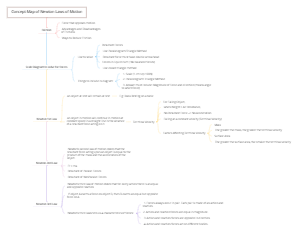
This is a mind map about pedagogy-curriculum management, including the model of curriculum management, school-based curriculum and its development, etc.
Edited at 2023-12-03 21:27:03This is a mind map about bacteria, and its main contents include: overview, morphology, types, structure, reproduction, distribution, application, and expansion. The summary is comprehensive and meticulous, suitable as review materials.
This is a mind map about plant asexual reproduction, and its main contents include: concept, spore reproduction, vegetative reproduction, tissue culture, and buds. The summary is comprehensive and meticulous, suitable as review materials.
This is a mind map about the reproductive development of animals, and its main contents include: insects, frogs, birds, sexual reproduction, and asexual reproduction. The summary is comprehensive and meticulous, suitable as review materials.
This is a mind map about bacteria, and its main contents include: overview, morphology, types, structure, reproduction, distribution, application, and expansion. The summary is comprehensive and meticulous, suitable as review materials.
This is a mind map about plant asexual reproduction, and its main contents include: concept, spore reproduction, vegetative reproduction, tissue culture, and buds. The summary is comprehensive and meticulous, suitable as review materials.
This is a mind map about the reproductive development of animals, and its main contents include: insects, frogs, birds, sexual reproduction, and asexual reproduction. The summary is comprehensive and meticulous, suitable as review materials.
Course management
Curriculum management in a broad sense goes far beyond the scope of the school and refers to the organization and control of the implementation, preparation and evaluation of the curriculum as a whole. Curriculum management in a narrow sense is considered to be part of school education management.
Model of course management.
Centralized
The country implements unified curriculum plans and curriculum standards, and uniformly compiles textbooks across the country. Uniformly hold national or regional entrance and graduation examinations.
Advantages: The national unified curriculum plan and curriculum standards can enable all regions and schools across the country to have relatively unified education standards and evaluation standards to ensure the quality of education. The national unified textbooks ensure that primary and secondary school students learn common knowledge and ensure equal access to education. The unified national examination is helpful for the education administration department to evaluate the teaching quality and school running level of the school.
Disadvantages: Overemphasis on the central government’s power over curriculum management limits local enthusiasm for running schools. Uniform curriculum plans, curriculum standards, lack of diversity in textbooks, and lack of flexibility in the curriculum. It is difficult to adapt to the economic and social development of different regions. Paying attention to unified teaching requirements is not conducive to the development of personality and is difficult to adapt to the needs of students with different learning levels. Uniform standards and requirements for examinations will increase the academic burden on students.
decentralization
Features: The country does not have a unified curriculum plan. Curriculum settings and course arrangements are all determined by the school or local area. The country does not uniformly formulate curriculum standards and does not compile textbooks. All curriculum standards are compiled by academic institutions, universities or private curriculum institutions. There is no unified examination system across the country and is organized by local governments or schools themselves.
Advantages: 1. Fully consider regional differences so that the curriculum can be closely linked to the local economy and society. 2. The decentralized curriculum management model gives local schools greater autonomy and choice in management rights, which is conducive to mobilizing the initiative of local governments and schools and giving full play to the creativity of local schools. 3. In the decentralized curriculum management model, every school in each region strives to achieve local optimization. The organic combination of these optimizations can make the overall curriculum system run at high speed and efficiency. 4. The decentralized curriculum management model reflects the democratization and scientificization of education. 5. The decentralized management model can ensure actual equality in education.
Disadvantages: 1. With decentralized management, there is no unified curriculum plan and curriculum standards across the country, and the quality of education is difficult to guarantee. 2. The subjects of decentralized management are diversified, and the scope of management is deep and wide. It is difficult to have an overall understanding and to grasp the operation of the curriculum system in a timely and accurate manner, which is not conducive to the country's macro-unified control and management of education. It is easy to cause confusion in education and affect the long-term and stable development of education. 3. It will also lead to a large number of good schools, while some schools are empty. True fairness is difficult to achieve.
blend mode
Practice shows that a country cannot simply adopt decentralization and centralization. Instead, it must find the best balance point and deeply explore curriculum management based on its national conditions to achieve the optimal operation of education.
my country's curriculum management model, three-level curriculum management system.
The principles that should be followed when implementing three-level course management.
Adhere to student-centeredness.
Give full play to teachers' initiative.
Extensively solicit opinions from all walks of life.
Pay attention to the coordinated development of diversity and unity.
Correctly understand the third-level course management.
The three-level curriculum management and the state, local and school departments each perform their own duties. They not only emphasize the grading of authority but also pay attention to the lower-level courses, and must implement the upper-level courses. And creative development must not only ensure the unified requirements of the country, but also adapt to the development of different schools in different regions.
It includes three levels of curriculum management, national-level curriculum management and local schools.
Significance: Increase the flexibility of the curriculum so that the curriculum structure can adapt to the economic conditions and cultural development conditions of different regions. Let local schools participate in curriculum development and implementation, continuously stimulate their initiative, and make them become executors and implementers in the true sense. The three-level parallel curriculum structure needs to highlight students’ individuality and adapt to their development on the basis of giving full play to school and local sovereignty.
School-based curriculum and its development
The essence of school-based curriculum development refers to the school-based curriculum development initiated by the school, an open and democratic decision-making process, in which teachers, experts, principals, students and social people jointly participate in the formulation, implementation and evaluation of curriculum plans. It reflects the change of curriculum values and in practice also promotes the reallocation of original curriculum resources.
Characteristics of school-based curriculum development
It is based on the implementation of national curriculum and local curriculum. Guided by the school's unique educational philosophy, we conduct a scientific assessment of the needs of the school's students. School teachers work independently or in cooperation with external authorities to develop and utilize local resources and the school's own curriculum resources.
The main body of this course development
Principal, teachers, students, parents
Principles of school-based curriculum development: distinctiveness, personalization, and localization
Problems in school-based curriculum development.
People are not clear about the concept and connotation of school-based curriculum, management power is insufficient, teachers lack the ability to develop school-based curriculum, and they lack sufficient analysis of the current situation of teachers themselves.
Problem response strategies.
The curriculum system needs to be reformed, authority must be implemented, and schools must have the right to develop and implement curriculum. They must also attract the participation of multiple entities, so that teachers, students, and parents can work together.
The school must have clear characteristics and mission of running the school, which are the characteristics of the school-based curriculum. Vibrant security.
Schools should be based on practice, clarify the needs of students' social development, proceed from reality, and use their own advantages to absorb local characteristic resources.
Teachers are the main force in developing school-based curriculum, and teachers should be supported in their development and given authority.
The guidance and help of subject experts and curriculum development experts are indispensable, but they are only participants. Do not pass the responsibility for curriculum development to
The rest includes policy support, human, material and financial support, and the attention of all sectors of society.
In short, school-based curriculum is of great significance and is irreplaceable in adapting to the characteristics and needs of students in local schools. All sectors of society must work together.
Factors influencing school-based curriculum development
development participants
teachers, curriculum specialists, parents, school administrators and leaders.
environment
physical environment
The physical environment at all levels of central, local and school levels, among which the school physical environment is the most important.
soft environment
Educational administration system policy
The significance of school-based curriculum development (dimensions include curriculum system, curriculum resources, country, locality, school, inter-school, teacher, and student)
In terms of curriculum system, it makes the entire curriculum system more complete and has strong vitality and challenge.
In terms of curriculum resources, school-based curriculum development makes full use of various local and school curriculum resources.
For the country, it reflects the flexibility of national policies and schools have the right to pursue diversity and distinctiveness of courses.
It has more local characteristics for the local area and meets the educational needs.
For teachers, it is conducive to improving the professional level of teachers and mobilizing enthusiasm and initiative in work.
For students, respect their subjective interests, physical and mental development rules, and teach students in accordance with their aptitude.
For schools, it is conducive to the formation of school-running characteristics.
It can promote the sharing of resources between schools.
Expenditure on school-based curriculum development requires a full investigation of the school's own software and hardware. During the implementation stage, it must fully rely on and utilize various curriculum resources within the school. When evaluating school-based curriculum, it is necessary to fully utilize the development local and school resources. Curriculum resources as a standard.