MindMap Gallery Medicine-esophageal cancer mind map
This is a mind map about radiotherapy technology for esophageal cancer, including treatment methods, anatomy, Posture and fixation tools, postural fixation implementation, School position and body position verification, etc.
Edited at 2023-12-02 17:15:25This is a mind map about bacteria, and its main contents include: overview, morphology, types, structure, reproduction, distribution, application, and expansion. The summary is comprehensive and meticulous, suitable as review materials.
This is a mind map about plant asexual reproduction, and its main contents include: concept, spore reproduction, vegetative reproduction, tissue culture, and buds. The summary is comprehensive and meticulous, suitable as review materials.
This is a mind map about the reproductive development of animals, and its main contents include: insects, frogs, birds, sexual reproduction, and asexual reproduction. The summary is comprehensive and meticulous, suitable as review materials.
This is a mind map about bacteria, and its main contents include: overview, morphology, types, structure, reproduction, distribution, application, and expansion. The summary is comprehensive and meticulous, suitable as review materials.
This is a mind map about plant asexual reproduction, and its main contents include: concept, spore reproduction, vegetative reproduction, tissue culture, and buds. The summary is comprehensive and meticulous, suitable as review materials.
This is a mind map about the reproductive development of animals, and its main contents include: insects, frogs, birds, sexual reproduction, and asexual reproduction. The summary is comprehensive and meticulous, suitable as review materials.
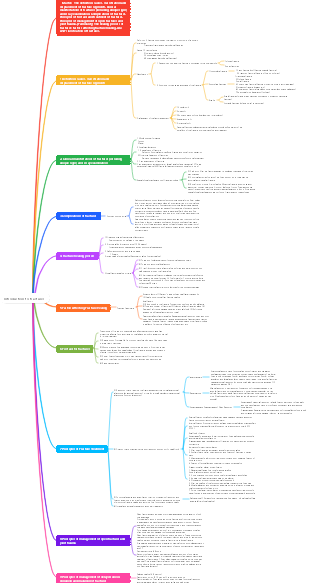
Esophageal cancer
concept
It refers to a malignant tumor originating from the esophageal mucosal epithelium from the hypopharynx to the junction of the esophagus and the stomach. Squamous cell carcinoma is more common in China.
Commonly occurs in middle-aged and elderly people
Symptoms: Progressive dysphagia
Diagnosis: Endoscopic pathological examination is the most reliable, and barium meal CT/MRI can help determine the scope of the lesion.
Pathological staging
Medullary type 58%
Mushroom type 17%
Ulcer type 12%
Narrowness 8%
Intraluminal type 5%
treatment
Surgery should be the main treatment for early-stage esophageal cancer. Cervical and upper thoracic esophageal cancer, as well as mid-stage esophageal cancer, can be treated with radical concurrent chemoradiotherapy or radiotherapy. Chemotherapy Comprehensive Treatment
anatomy
The upper end of the esophagus is connected to the pharynx at the cricoid cartilage, and the lower end passes through the diaphragm 1~4cm and then connects with the cardia. The distance from the incisors to the entrance of the esophagus is about 15cm, and to the cardia is about 40cm.
Three physiological strictures (esophageal cancer prone areas)
The starting part, the lower edge of the cricoid cartilage is equivalent to the lower edge of the sixth cervical vertebra
Behind the left main bronchus and its intersection, that is, between t4-5
The esophageal hiatus where the esophagus passes through the diaphragm is equivalent to the T10 level
Classification of whole esophagus
Cervical esophagus
From the hypopharynx to the thoracic entrance of the esophagus (sternal notch), endoscopically measure 15~20cm from the incisors
upper thoracic esophagus
The level from the thoracic inlet to the lower edge of the azygos vein arch is measured endoscopically at a distance of 20 to 25 cm from the incisors.
Midthoracic esophagus
From the lower edge of the azygous arch to the level of the inferior pulmonary vein, measured endoscopically 25 to 30 cm from the incisors
lower thoracic esophagus
From the level of the inferior pulmonary vein to the lower esophageal sphincter, measured endoscopically 30~40cm from the incisors
Positioning and fixation tools
Position: Supine or prone position
Auxiliary fixing tools: integrated frame, headrest
Fixation tool: cervical pleura
Preparation before position fixation
Before entering the simulation room, ask the patient to change into slippers and wait quietly in the back clinic.
Before making the fixture, the technician must clearly explain the purpose and function of the production to the patient, introduce the production process and matters needing attention.
Read the immobilization application form carefully and verify the patient’s general information and immobilization requirements.
Guide patients to verify their identity information when entering the Ct simulation room
Implementation of postural fixation
Place the integrated frame so that the central axis of the integrated frame coincides with the longitudinal laser line
Instruct the patient to take off his shirt, jewelry, and wig, and guide the patient to position his or her back on the CT gantry.
Use the laser line to adjust the body position so that the eyebrows, the tip of the nose, the center of the lips, the sternal notch, and the navel fall on the longitudinal laser line, and the intersection of the laser lines on both sides falls on the two lateral canthus or the two external ear holes.
Soak the mask in hot water at about 70° until it becomes soft and transparent, then take it out. Use a towel to absorb the moisture on the surface of the mask. Stand in the direction of the patient's head, align the middle of the mask with the midline of the patient's head, and apply even pressure with both hands downwards. Stretch until the three-dimensional frame is aligned with the corresponding orifice and fixed (the lower part of the mask can reach under the xiphoid process according to the requirements of the application form)
School position and body position verification
School location
Before the patient's first treatment, the patient's position is calibrated between the CT simulation positioning (the process includes the preparation of the thermoplastic mold, the same body position fixation and simulation implementation process)
Location verification
Before the patient undergoes treatment for the first time, go to the linear accelerator room for position verification (two unknown verification methods, EPID and CBCT)
treatment delivery
Check radiotherapy patient treatment orders
Communicate with patients about the radiotherapy process
Fix and position the body according to the positioning marks on the cervical pleura.
Position verification for patients undergoing radiation therapy for the first time
One of the treatments inputs all the patient's visual field parameters and instructions according to the treatment information. The other checks and presses the button to execute.
During the treatment, a therapist must observe the patient's movements on the monitor throughout the entire process to ensure that the machine frame does not collide with the patient or the treatment bed during rotation. If any abnormality occurs, stop urgently and call a doctor.
If a machine failure occurs during treatment and the treatment is interrupted, the emergency plan should be activated immediately, the patient should be taken out of the treatment room to record the data and reported to the person in charge and maintenance engineer, and timely notification should be made to patients who are not treated that day
After all treatments are completed, record the day's treatment during treatment, adjust the treatment bed in the room to the minimum, assist the patient in getting dressed, lead him to the treatment room, and prepare for the positioning procedure for the next patient.