MindMap Gallery Food flavor chemistry and analysis mind map
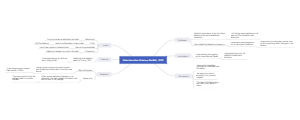
This is a mind map about food flavor chemistry and analysis, including an introduction to flavor, Research on aroma active ingredients, etc.
Edited at 2023-12-02 09:46:23This is a mind map about bacteria, and its main contents include: overview, morphology, types, structure, reproduction, distribution, application, and expansion. The summary is comprehensive and meticulous, suitable as review materials.
This is a mind map about plant asexual reproduction, and its main contents include: concept, spore reproduction, vegetative reproduction, tissue culture, and buds. The summary is comprehensive and meticulous, suitable as review materials.
This is a mind map about the reproductive development of animals, and its main contents include: insects, frogs, birds, sexual reproduction, and asexual reproduction. The summary is comprehensive and meticulous, suitable as review materials.
This is a mind map about bacteria, and its main contents include: overview, morphology, types, structure, reproduction, distribution, application, and expansion. The summary is comprehensive and meticulous, suitable as review materials.
This is a mind map about plant asexual reproduction, and its main contents include: concept, spore reproduction, vegetative reproduction, tissue culture, and buds. The summary is comprehensive and meticulous, suitable as review materials.
This is a mind map about the reproductive development of animals, and its main contents include: insects, frogs, birds, sexual reproduction, and asexual reproduction. The summary is comprehensive and meticulous, suitable as review materials.
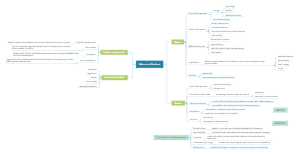
food flavor Chemistry and Analysis
Introduction to Flavor
flavor definition
Flavor is a complex combination of olfactory, gustatory and trigeminal sensory properties experienced during tasting
Olfaction: odor, volatility
Taste: Taste, non-volatile
5 basic tastes: sour, sweet, bitter, salty, umami
Taste discovered by research: thick, fat taste
Pathways of the Five Basic Flavors
Sweet, bitter, umami→receptor→Ca2 concentration
Sour taste → receptor → proton H concentration
Salty taste → receptor (Na channel)
Touch/Pain: Trigeminal Nerve
Research on aroma active ingredients
Basic steps for aroma analysis
1.Sample pretreatment
2. Extraction/Separation
3. Concentration (solvent extraction)
Gas Chromatograph (GC)
Descriptive Observational Analysis Gas Chromatography-Olfaction (GC-O) Analysis (gas reactive compounds)
Aroma intensity estimate
Retention index (RI), mass spectrometry (MS), Infrared spectroscopy, nuclear magnetic resonance (NMR)
Quantitative analysis
Aroma component extraction/separation
headspace extraction
Static headspace extraction (SHS)
Low sensitivity
Dynamic Headspace Extraction (DHS)
key links
cold trap capture
Thermal desorption
Stir Bar Adsorption (SBSE)
Solid phase microextraction (SPME)
Influencing factors
fiber coating type, coating thickness
Sample preparation mode
Sample preparation time/temperature
Injection parameter optimization
Injection temperature
Pressure (carrier gas flow rate)
Carrier gas type
Inlet diameter (L.D.)
Injection time (thermal desorption time)
Needle depth
Fiber coating thickness
solvent extraction
Solvent requirements
Must be a good solvent for volatile substances
The density of the solvent should be significantly different from water in order to separate the phases more effectively
Research on flavor active ingredients
Research on taste analysis methods: instrumental analysis combined with sensory identification analysis
Taste analysis research steps
1.Sample pretreatment
2. Extraction of flavor components (solvent extraction, ultrafiltration, etc.)
3. Taste component analysis (gel permeation chromatography, liquid chromatography)
4. Collection of flavor component fractions (preparative liquid chromatography)
5. Sensory evaluation of flavor components (rotary steaming, freeze-drying)
Judgment of contribution of flavor active ingredients (Taste dilution analysis)
Qualitative and quantitative flavor components (LC/MS, NMR; internal standard/external standard)
6. Taste restructuring and elimination experiments
7. Identify key flavor active substances
molecular sensory science
definition
In every step of the extraction, separation and analysis of food flavor substances, the instrumental analysis method Combined with human perception of flavor, the final result is a flavor reconstituted product with defined ingredients
The basic steps
1. Determine accurate qualitative and quantitative analysis of odor compounds
2. Construction of aroma model
3. Missing experiments
4. Obtaining aroma reconstituted products
Sensory-oriented flavor analysis
Technology based on instrumental analysis and sensory evaluation
Identification of gas reactive compounds
Identification of flavor active compounds
Testing of "synthetic" flavor systems (aroma model, taste model)