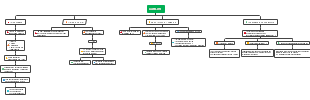
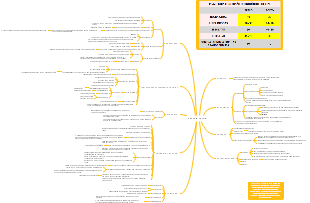
MindMap Gallery Infectious Diseases - General Introduction to Infectious Diseases (required for exams)
Pathogen elimination, latent infection, overt infection, pathogen carrying status, latent infection, source of infection, route of transmission, susceptible population, epidemiological characteristics, post-infection immunity, latent period, prodromal period, obvious symptom period, recovery period , prevention, 2 categories of Class A infectious diseases, 11 categories of Class C infectious diseases, management of infectious sources Exercises, analysis, and memory tips
Edited at 2023-12-01 00:04:28This is a mind map about bacteria, and its main contents include: overview, morphology, types, structure, reproduction, distribution, application, and expansion. The summary is comprehensive and meticulous, suitable as review materials.
This is a mind map about plant asexual reproduction, and its main contents include: concept, spore reproduction, vegetative reproduction, tissue culture, and buds. The summary is comprehensive and meticulous, suitable as review materials.
This is a mind map about the reproductive development of animals, and its main contents include: insects, frogs, birds, sexual reproduction, and asexual reproduction. The summary is comprehensive and meticulous, suitable as review materials.
This is a mind map about bacteria, and its main contents include: overview, morphology, types, structure, reproduction, distribution, application, and expansion. The summary is comprehensive and meticulous, suitable as review materials.
This is a mind map about plant asexual reproduction, and its main contents include: concept, spore reproduction, vegetative reproduction, tissue culture, and buds. The summary is comprehensive and meticulous, suitable as review materials.
This is a mind map about the reproductive development of animals, and its main contents include: insects, frogs, birds, sexual reproduction, and asexual reproduction. The summary is comprehensive and meticulous, suitable as review materials.
General Introduction to Infectious Diseases
Summary
1
"Anthrax (C pair) is an animal-borne infectious disease caused by Bacillus anthracis. It is a natural foci disease and a Class B infectious disease."
2
Infection is the parasitic process of pathogens on the human body (pair C). Other answers are not accurate or comprehensive enough.
3
Latent infection (going) invisible infection(ing) Pathogen carrying status (ed and unsuccessful)
Stealth infection>Pathogen carrying status>Explicit infection Remember
4
Latent infection is also called latent infection. During latent infection, pathogens are generally not excreted from the body, so they do not become a source of infection.
5
Pathogen carrier status is seen in epidemic cerebrospinal meningitis (B pair), diphtheria (C pair), cholera (D pair), and bacillary dysentery (E pair). Measles (A is wrong, is the correct answer to this question), chickenpox, etc. Most infected people show overt infection
6
Hidden sense
7
Weak acquired immunity: Schistosomiasis, influenza, dysentery, hepatitis C powerful: Measles, typhoid, Japanese encephalitis, polio, hepatitis A, hepatitis B
Biscuits (Hepatitis C) Flow (flu) Blood (schistosomiasis) Miles (dysentery)
8
Wearing a vest will give you a solid immunity Up→typhoid fever horse → measles A→Hepatitis A
9
Just think about the many hepatitis B patients in China. There are definitely not as many people with chronic hepatitis as there are hidden infections.
10
The role of pathogens in the infection process: ① Invasiveness ② Virulence ③ Quantity ④ Variability (pathogens can mutate due to factors such as environment, genetics, drugs, etc.) It can be seen that the variation and quantity of pathogens are two parallel concepts, rather than an inclusive relationship.
11
The non-specific immune factor that first acts after a pathogen invades the human body is the phagocytosis of phagocytes (B pair). Interleukin (A error), interferon (D error) and tumor necrosis factor (E error) are all cytokines. They are mainly peptide substances released by monocytes-phagocytic cells and lymphocytes after they are activated. Sensitized T lymphocytes (C wrong) belong to the category of specific immunity and are inconsistent with the title.
12
opsonin In pathology, it also refers to a type of protein that can enhance the phagocytosis function of phagocytes. Any immunoactive molecule with opsonizing effects is called opsonin. The so-called opsonization refers to the combination of antibodies, complement and antigen to form a complex. It can bind to the Fc receptor and C3b receptor on the surface of phagocytes through the Fc segment and C3b, thereby being fixed on the surface of phagocytes, which is conducive to the phagocytosis and clearance of antigen-antibody/complement complexes by phagocytes. If the antigen is a bacterium, it will help phagocytes to engulf and kill the bacteria. This promotion of phagocytosis by antibodies and complement is called opsonization. Antibodies and complement are the main opsonins in the body.
13
IgM: appears first but does not last long and is a sign of recent infection IgG: appears later and lasts for a longer period of time IgA: mainly local antibodies on the membranes of the respiratory tract and digestive tract IgE: mainly acts on invading protozoa and worms
14
Antitoxin: Antibodies corresponding to bacterial toxins (usually exotoxins) or immune serum containing such antibodies. It neutralizes the toxic effects of the corresponding exotoxins. The body can produce antitoxins when infected by pathogenic bacteria that produce exotoxins, such as diphtheria, tetanus, gas gangrene and other bacteria.
15
Horizontal transmission, that is, transmission among individuals in the population; vertical transmission. Horizontal transmission includes: 1. Respiratory tract transmission 2. Gastrointestinal tract transmission 3. Contact transmission 4. Insect-borne transmission 5. Blood and body fluid transmission. Vertical transmission includes mother-to-child transmission.
16
Measles is spread through the respiratory tract and contact, and is spread horizontally but not vertically (wrong A). Influenza is spread through the respiratory tract and contact, and is spread horizontally but not vertically (wrong B). The causative agent of meningococcal meningococcal meningitis is Neisseria meningitidis, and the main route of transmission is respiratory tract transmission, which is horizontal transmission without vertical transmission (C wrong). Hepatitis A is mainly transmitted through the fecal-oral route, and there is no vertical transmission (
B, C and D are the same as hepatitis B, and A and E are fecal-oral transmission.
17
Insect-borne transmission: malaria, typhoid, scrub typhus, kala-azar Lyme disease is a tick-borne spirochetal infectious disease caused by Borrelia burgdorferi. In my country, the first case of this disease was discovered in the forest area of Heilongjiang Province in 1985. Nervous system damage is the main clinical manifestation of the disease. The most common neurological damage is meningitis, encephalitis, cranial neuritis, and motor and sensory neuritis. In the first stage of Lyme disease, only antibiotics can be effective, but in the second and third stages, antibiotics will not help, especially if the nervous system is damaged, and there is no specific treatment. It is characterized by chronic erythema migrans on the skin in the early stage, followed by neurological, cardiac or joint lesions later on. It usually develops in summer and early autumn and can occur at any age, with slightly more men than women. The disease mostly affects young adults and is closely related to occupation. Field workers and forestry workers have higher infection rates.
Transmitted by blood-sucking arthropods
18
Scrub typhus, also known as scrub typhus, is an acute natural foci infectious disease caused by Orientia scrub typhus and can be transmitted through the bites of blood-sucking arthropods (chiggers) (pair C). Blood-sucking arthropods infected by pathogens, such as Anopheles mosquitoes, human lice, rat fleas, sand flies, Ixodes ticks and chiggers, etc., can transmit the pathogens to susceptible people when they bite, which can cause malaria, epidemic typhus, and Endemic typhus, kala-azar, Lyme disease and scrub typhus, among others.
19
Respiratory tract transmission: pathogens exist in droplets or aerosols in the air, and susceptible people acquire infections when inhaled, such as measles (A), diphtheria, tuberculosis, avian influenza and severe acute respiratory syndrome, etc." Digestive tract transmission: Pathogens contaminate food, water sources or tableware, and susceptible people acquire infections when eating, such as typhoid, bacillary dysentery (C) and cholera, etc." Contact transmission: Susceptible persons acquire infections when they come into contact with water or soil contaminated by pathogens, such as leptospirosis (E error), schistosomiasis, hookworm, etc." Blood and body fluid-borne pathogens are present in the blood or body fluids of carriers or patients and are transmitted through the use of blood products, childbirth or sexual intercourse, such as malaria, viral hepatitis B, viral hepatitis C and AIDS (B error), etc." .
20
Leptospira - Contact Transmission (Soil Typhoid, cholera - digestive tract (water, food Malaria - vector-borne (blood, body fluids
twenty one
twenty two
Contact with water – leptospirosis and leptospirosis
twenty three
) & "The main difference between infectious diseases and other diseases is that they have the following four basic characteristics: (1) Pathogens… (2) Infectiousness… (3) Epidemiological characteristics… (4) Post-infection immunity”
Aggregation is usually food poisoning
twenty four
Epidemiological characteristics of infectious diseases: Epidemic (spread, outbreak, epidemic, pandemic) Seasonal local foreignness
25
Outbreak (P8) refers to the sudden appearance of many patients with the same disease in a certain local area or collective unit in a short period of time, mostly from the same source of infection or the same transmission route, such as food poisoning, influenza, etc. Water and food (pair C) can cause disease outbreaks, such as the hepatitis A outbreak in Shanghai in 1987-1988. Sporadic transmission is caused by contact transmission (error A), diagnosis and treatment surgery (error B), various agents (error D), and insect-borne transmission (error E).
26
Disperse: occur scatteredly Outbreak: Many people suddenly develop an illness with the same symptoms in a short period of time Epidemic: refers to the incidence rate in a certain area significantly exceeding the annual incidence level of the disease Pandemic: Spreading across regions and regions
27
Incubation period quarantine Infectious period isolation
28
The development of acute infectious diseases is divided into the following four stages: Incubation period (A pair), Prodromal stage (B pair), Symptoms are obvious (C pair), There is a recovery period (E is correct), and there is no development period (D is incorrect, which is the correct answer to this question).
29
Residual fever: high fever persists, and the temperature difference within 24 hours does not exceed 1°C (pair A). A temperature difference of more than 1°C within 24 hours, but the lowest point is less than normal, is flaccid fever (B error). Intermittent fever (C error) occurs when the body temperature fluctuates between high fever and normal temperature within 24 hours. Sudden onset of high fever, followed by sudden subsidence for several days, intermittent absence of fever for several days, and recurrence of high fever are relapsing fever (D error). Fever for several days, fever subsides for one day, and fever again for several days is irregular fever (False E).
30
One day is feng shui and two days are monkey, three hemp, five spots and six cold
For chickenpox and rubella, the rash usually occurs on the first day of the disease. Scarlet fever more than day 2, Measles more than the 3rd day, Typhus more than the 5th day, Typhoid fever occurs more often than the 6th day. Therefore, exanthematous infectious diseases are arranged in the order of appearance of rash, as follows: chickenpox, scarlet fever, measles, typhus, and typhoid fever (pair E).
31
Many infectious diseases can be diagnosed clearly by detecting the pathogens under a microscope or with the naked eye
In the early stages of infectious diseases, specific antibodies often have not yet appeared in the serum or the titers are very low, so the detection of specific antibodies in the early stages of infectious diseases is of little significance (pair E).
32
Pathogenic examination is a type of laboratory examination
clinical information Epidemiological data laboratory tests
33
The total number of white blood cells is usually reduced or normal during viral infections, such as influenza, dengue fever, and viral hepatitis. However, the total number of white blood cells in patients with hemorrhagic fever with renal syndrome and Japanese encephalitis often increases.
️Viral infection WBC is generally ↓ or —, hemorrhagic fever with renal syndrome (hantavirus), except for epidemic Japanese encephalitis ↑ Bacterial infections WBC is generally ↑ (pus cells), except G-bacillus ↓, eg. typhoid, paratyphoid, Brucella Parasite Protozoal infection Malaria, kala-azar WBC↓ Worm acidophilus ↑
34
35
) & "Eosinophilia is common in patients with typhoid fever (D pair), epidemic cerebrospinal meningitis, etc."
36
Examining the smear with an ordinary microscope to determine the pathogen is a direct examination of the pathogen. Bacillary dysentery (Shigella dysenteriae) requires isolation and culture first (because textbook P4 says that only 10 bacteria are required to cause disease, so it is difficult to observe it in the field of view through direct microscope observation), and it is the second type of isolation and culture of pathogens for examination. Pathogen
"Take the ecchymosis tissue fluid, blood or cerebrospinal fluid for culture" (C pair
37
General laboratory tests: blood, urine, stool, the three major routine tests, as well as blood biochemical tests
38
The etiological examination of infectious diseases includes direct examination of pathogens (D pair), isolation and culture of pathogens (A pair), detection of specific nucleic acids (B pair), and detection of specific antigens (C pair). Detecting specific antibodies is one of the laboratory test methods, not a pathogenic test (
Etiology - related to the pathogen itself. Antibodies are produced by the human body and are called serological tests.
39
The specific diagnosis mainly used for epidemic hemorrhagic fever is the detection of specific IgM antibodies (E pair). Diseases that detect specific antigens (error A) include: hepatitis B virus. Specific IgG type antibodies (B error) are more commonly used for the definitive diagnosis of AIDS. To detect specific nucleic acids (C error), molecular biology detection methods can be used. If necessary, in situ polymerase chain reaction and gene chip technology can also be used for examinations. They are not used for the specific diagnosis of epidemic hemorrhagic fever. The diseases for which pathogen culture (D is wrong) are: bacteria (Salmonella typhi, Shigella, Vibrio cholerae, Cryptococcus neoformans), spirochetes, fungi, viruses (dengue fever, polio).
40
General treatment refers to non-specific treatment methods. Including rest, diet, nursing, symptomatic, supportive therapy, rehabilitation therapy, etc.
General treatment includes: isolation, disinfection, nursing, and psychological treatment
Antibiotics are drugs and belong to the treatment of pathogens
41
The functions of symptomatic treatment include reducing body consumption (Pair A), protecting vital organs (Pair B), minimizing damage (Pair C), and alleviating patient pain (Pair E). Promoting the body's recovery (D is wrong, the correct answer to this question) is the function of rehabilitation treatment.
42
Kala-azar, acute hemorrhagic conjunctivitis, hand, foot and mouth disease, leprosy, rubella, filariasis, hydatid disease, mumps, influenza, epidemic and endemic typhus, diarrhea
43
Category A includes: ① Plague; ② Cholera. Severe infectious diseases that are under compulsory management are required to be reported through the infectious disease epidemic monitoring information system within 2 (A pair) hours after discovery." , It is worth noting that among Class B infectious diseases, SARS, pulmonary anthrax, and poliomyelitis must take reporting and control measures for Class A infectious diseases."
Category A is 2 hours Category B is 24 hours (note that some diseases are managed according to Category A)
Vibrio cholerae group O1 is the main cause of cholera. It can be divided into classical biotype and Eltor biotype”.
44
45
My original one️ Category C infectious diseases: lipstick, black stockings, fashion charge Hand, foot and mouth disease, acute hemorrhagic conjunctivitis, kala-azar; Influenza, mumps, epidemic and endemic typhus, filariasis, hydatid disease, rubella, leprosy
46
) & "Category B includes: Infectious SARS (severe acute respiratory syndrome), AIDS (D pair), viral hepatitis, Poliomyelitis... is a strictly controlled infectious disease and requires reporting through the Infectious Disease Epidemic Monitoring Information System within 24 hours after diagnosis.”
Category A infectious diseases management and Category B infectious diseases are Infectious atypical pneumonia, Pulmonary anthrax (E pair), Human infection with highly pathogenic avian influenza and polio.
Generally speaking, if there are three blanks, fill them in SARS, pulmonary anthrax, avian influenza, Fill in the four blanks SARS, pulmonary anthrax, avian influenza, polio, hope this helps you
47
Traditional Chinese medicine treatment (E pair) plays a very important role in adjusting the functions of various systems of the patient.
Original words in the book
48
In our country, schistosomiasis (A pair) is a Category B infectious disease. Typhus (False B), influenza (False C), and acute hemorrhagic conjunctivitis (False D) are Category C infectious diseases. Cholera (E error) is a Class A infectious disease.
49
The patient in this case has been diagnosed with H7N9 influenza, which is a Class B infectious disease, but the reporting and control measures of Class A infectious diseases are required. Category A infectious diseases are severe infectious diseases under compulsory management. Urban areas require reporting through the infectious disease epidemic monitoring information system within 2 hours of discovery, and no more than 6 hours in rural areas. The patient in this case was found in the county, so the prescribed time limit is 2 hours (pair B). Class B infectious diseases are required to be reported directly online within 6 hours after discovery, and no more than 12 hours in rural areas. Category C infectious diseases require reporting within 24 hours after discovery.
50
Rabies patients are afraid of light, water, and sound. Isolation treatment is good for the patient. Moreover, rabies damages the nervous system and the patient's mental state is abnormal, so he cannot be released.
51
Protective isolation is suitable for: Large-area burns, immune deficiency, and leukemia are not infectious diseases. However, because the physical protective barrier of large-area burns is damaged, and the immune system of immune deficiency and leukemia is damaged, infection can easily occur. Strict isolation applies to: Class A or highly contagious Class B infectious diseases, such as: cholera, pulmonary anthrax, SARS (infectious atypical pneumonia), etc. Intestinal isolation is suitable for: infectious diseases transmitted through the fecal-oral route, such as typhoid, bacillary dysentery, hepatitis A, etc. Contact isolation applies to: diseases transmitted through skin wounds, such as rabies, tetanus, etc. Blood and body fluid isolation is applicable to: diseases transmitted through blood and body fluids, such as hepatitis B, AIDS, etc.
52
IgD content varies greatly among individuals and can exist as a membrane receptor on the surface of B cells. The function of IgD is not yet clear. Some studies have suggested that IgD may be involved in initiating B cells to produce antibodies, and may also be related to certain hypersensitivity reactions, such as anti-insulin antibodies, anti-penicillin antibodies, anti-nuclear antibodies, anti-"O" antibodies, Anti-basement membrane antibodies and autoantibodies in autoimmune diseases such as rheumatoid arthritis, thyroiditis, and systemic lupus erythematosus, some of which are IgD.
IgM—recent infection IgG—past infection
53
Suspended red for post-operative blood loss Allergic liver soluble washing red Repeated transplantation to remove white and red Close relative blood transfusion irradiated red
54
Improve it: fight (pox) bile (single) torture (malaria) sister (tuberculosis)
Latent infections are seen in infections such as tuberculosis (pair A), malaria (pair B), herpes simplex (pair D), and herpes zoster (pair E).
55
Infectious diseases are classified according to severity: Light (A pair), Typical (B pair), also called medium (C pair) or ordinary type, Heavy (D pair) and Fulminant type (E pair).
56
The morphology of rash can be divided into four major categories: (1) Maculopapular rash (A pair)… (2) Hemorrhagic rash (B pair)… (3) Herpes (C pair)… (4) Urticaria (pair D)”.
57
In shock, fluids should be replenished, volume should be expanded, and microcirculation should be improved! Cardiac arrest requires cardiopulmonary resuscitation, Heart failure requires a strong heart.
Three steps: volume expansion, fluid replenishment, and improvement of microcirculation
58