 Wondershare EdrawMind
MindMap Gallery Cell Biology-Chapter 5 Cell Inner Membrane System and Vesicle Transport Mind Map
- 98
Cell Biology-Chapter 5 Cell Inner Membrane System and Vesicle Transport Mind Map
This is a mind map about cell biology - Chapter 5: The inner membrane system and vesicle transport of cells, including endoplasmic reticulum, lysosomes, vesicles and vesicle transport, etc.
Edited at 2023-11-30 23:04:30
- bacteria
This is a mind map about bacteria, and its main contents include: overview, morphology, types, structure, reproduction, distribution, application, and expansion. The summary is comprehensive and meticulous, suitable as review materials.
- Plant asexual reproduction
This is a mind map about plant asexual reproduction, and its main contents include: concept, spore reproduction, vegetative reproduction, tissue culture, and buds. The summary is comprehensive and meticulous, suitable as review materials.
- Reproductive development of animals
This is a mind map about the reproductive development of animals, and its main contents include: insects, frogs, birds, sexual reproduction, and asexual reproduction. The summary is comprehensive and meticulous, suitable as review materials.
Cell Biology-Chapter 5 Cell Inner Membrane System and Vesicle Transport Mind Map
- bacteria
This is a mind map about bacteria, and its main contents include: overview, morphology, types, structure, reproduction, distribution, application, and expansion. The summary is comprehensive and meticulous, suitable as review materials.
- Plant asexual reproduction
This is a mind map about plant asexual reproduction, and its main contents include: concept, spore reproduction, vegetative reproduction, tissue culture, and buds. The summary is comprehensive and meticulous, suitable as review materials.
- Reproductive development of animals
This is a mind map about the reproductive development of animals, and its main contents include: insects, frogs, birds, sexual reproduction, and asexual reproduction. The summary is comprehensive and meticulous, suitable as review materials.
- Recommended to you
- Outline
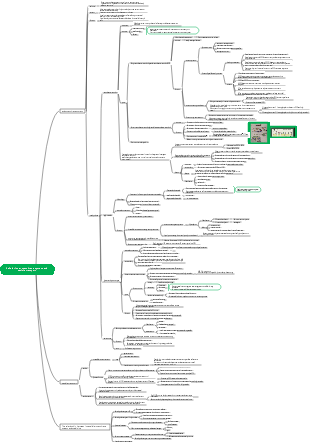
Cellular inner membrane system and vesicle transport
endoplasmic reticulum
Morphological structure and types of endoplasmic reticulum
The endoplasmic reticulum is a three-dimensional network of membrane systems surrounded by unit membranes in the cytoplasm.
Discovery: In 1945, K.R. Porter and others discovered and named the endoplasmic reticulum
Basic "structural unit": tubules, vesicles or flat vesicles with an average membrane thickness of about 5 to 6 nm
In the same tissue cells of different species, the endoplasmic reticulum is basically similar. However, the number and structural complexity of the endoplasmic reticulum are often positively correlated with the development process of cells. Differentiated endoplasmic reticulum is developed, while undifferentiated endoplasmic reticulum is underdeveloped.
Rough endoplasmic reticulum and smooth endoplasmic reticulum are the two basic types of endoplasmic reticulum.
The main morphological feature of rough endoplasmic reticulum (granular endoplasmic reticulum) is the presence of ribosomes attached to the surface
Structural form: mostly flat sacs arranged neatly.
Function: Related to the synthesis, processing and transport of exported proteins and various membrane proteins.
Developed: in cells with the function of secreting peptide hormones or proteins Underdeveloped: tumor cells and undifferentiated cells.
Smooth endoplasmic reticulum (granular-free endoplasmic reticulum) has a smooth-surfaced tubuloveolar-like network structure.
Structure: It has a tube and bubble-like network structure with a smooth surface.
Multifunctional organelles: in different cells or in different physiological stages of the same cell, Their structural morphology, intracellular spatial distribution and degree of development vary greatly, and often exhibit completely different functional characteristics.
Both are rough endoplasmic reticulum: pancreatic exocrine cells Both are smooth endoplasmic reticulum: smooth muscle and striated muscle cells
There are structures derived from the endoplasmic reticulum in some special tissue cells: myeloid bodies found in retinal pigment epithelial cells, pore ring-shaped lamellar bodies in some cancer cells, sarcoplasmic reticulum...
Chemical composition of the endoplasmic reticulum
Lipids and proteins are the main chemical components of the endoplasmic reticulum
The endoplasmic reticulum contains many systems with glucose-6-phosphatase as the main iconic enzyme.
Oxidation reaction electron transfer enzyme system related to detoxification function
Enzymes related to functional reactions of lipid metabolism
Enzymes related to functional reactions of carbohydrate metabolism (glucose-6-phosphatase)
Various enzymes involved in protein processing and transport
Endoplasmic proteins are a class of proteins ubiquitous in the lumen of the endoplasmic reticulum.
Common features: The carboxyl terminus of the polypeptide chain contains a 4-amino acid sequence resident signal of KDEL or HDEL.
It can reside in the lumen of the endoplasmic reticulum without being transported through the recognition and binding of the resident signal to the corresponding receptor on the endoplasmic reticulum membrane.
Currently known reticulin proteins: immune protein heavy chain binding protein, endoplasmic protein (endoplasmic reticulum signature molecular chaperone) Calreticulin, calnexin (can recognize and bind to misfolded polypeptides and protein subunits that have not yet been assembled, retaining them, and at the same time promote refolding, assembly and transport), Protein disulfide bond isomerase (in the endoplasmic reticulum cavity, abundant oxidized glutathione is a necessary condition for disulfide bond formation. The enzyme greatly accelerates disulfide bond formation and peptide chain folding)
endoplasmic reticulum function
The main function of the rough endoplasmic reticulum is protein synthesis, processing, modification, sorting and transport.
Signal peptide-directed synthesis of secreted proteins in rough endoplasmic reticulum
The signal peptide hypothesis of G.Blobel and D.Sabatini: the decisive factor that guides the synthesis of protein polypeptide chains in the rough endoplasmic reticulum, It is a special amino acid sequence at the N-terminus of the synthesized peptide chain, that is, the signal peptide.
Relying on the mediation of signal recognition particles (a complex composed of 6 polypeptide subunits and 1 RNA with a sedimentation coefficient of 7S) in the cytoplasmic matrix, Signals on the endoplasmic reticulum membrane recognize granule receptors and transporters.
After the N-terminal signal of the nascent peptide chain is translated from 5'-3', it is immediately recognized and bound by SPR. As a result, the SRP-ribosome complex structure is formed, translation is stopped, and the elongation of the peptide chain is blocked.
SRP recognizes and binds to SRP-R on the endoplasmic reticulum membrane, and mediates ribosome anchoring and attachment to the transporter translocation protein. At this time, SRP dissociates and repeats the above process, and the peptide chain continues to extend.
The peptide chain enters the lumen of the endoplasmic reticulum through the channel (formed by the central tube of the large ribosome subunit and the transporter translocation protein), and then the signal peptide sequence is cleaved by the signal peptidase. The nascent peptide chain continues to elongate until it is terminated. At this time, the large and small ribosome subunits depolymerize and dissociate from the endoplasmic reticulum.
Channel opening conditions: ribosomes bind to transporters
glycosylation of proteins
N-linked glycosylation-in rough endoplasmic reticulum (glycosyltransferase)
O-linked oligosaccharide proteins-intra-Golgi
Intracellular transport of proteins (budding)
1. Enters the Golgi complex in the form of transport vesicles, is further processed and concentrated, and is finally excreted outside the cell as secretory granules.
2. (Pancreatic exocrine cells of some mammals) The secreted proteins of the rough endoplasmic reticulum enter a large concentrated vesicle in the form of membrane vesicles, It develops into zymogen granules and is excreted from the body.
Possible mechanism of signal peptide-directed transmembrane resident protein insertion transfer
Mechanism of single transmembrane protein insertion transfer
1. Co-translational insertion mechanism of nascent peptide chain
2. Internal start transfer peptide insertion transfer mechanism mediated by internal signal peptide
Transfer and insertion of multiple membrane-penetrating proteins: It is generally believed that the internal signal peptide is used as the initial transfer signal.
Rough endoplasmic reticulum is the starting point for protein sorting
No signal peptide at the N-terminus: synthesis continues on free ribosomes in the cytoplasm until the synthesis is completed.
There is a signal peptide at the N-terminus: protein sorting (the signal peptide is the initial signal)
Signal spots are also important protein sorting and transport signals.
Smooth endoplasmic reticulum is a multifunctional organelle that serves as the main site for intracellular lipid synthesis.
Smooth endoplasmic reticulum is involved in lipid synthesis and transport
It is generally believed that lipids synthesized in the smooth endoplasmic reticulum often combine with proteins in the rough endoplasmic reticulum to form lipoproteins.
Except for the two phospholipids unique to mitochondria, almost all membrane lipids required by cells are synthesized by the endoplasmic reticulum.
Transport of lipids from the endoplasmic reticulum to other membrane structures
Transported as budding vesicles to Golgi complex, lysosomes and plasma membrane
Water-soluble phospholipid exchange protein (specific) is used as a carrier to form a complex that enters the cytoplasmic matrix and diffuses freely to the mitochondria and peroxisomal membranes that lack phospholipids.
The smooth endoplasmic reticulum participates in the metabolism of glycogen: glycogen particles are degraded by glycogen phosphorylase to form glucose 1-phosphate, which is converted into glucose 6-phosphate under the action of phosphoglucomutase, and finally is converted to glucose-6-phosphate by glucose-6-phosphatase. Catalytic dephosphorylation occurs to form glucose.
Smooth endoplasmic reticulum is the main site of cellular detoxification
The liver is the main organ tissue that decomposes and detoxifies exogenous and endogenous poisons and drugs in the body. Its detoxification effect is mainly completed by the smooth endoplasmic reticulum in liver cells.
Basic mechanism of detoxification: In the redox process of electron transfer, it catalyzes the oxidation or hydroxylation of various compounds. On the one hand, it inactivates or destroys the toxic effects of poisons and drugs. On the other hand, it enhances the polarity of compounds and facilitates excretion.
The differences between the endoplasmic reticulum electron transport chain and the mitochondrial electron transport chain: 1. The chain is shorter 2. Essentially, an oxygen atom is added to the substrate molecule.
The smooth endoplasmic reticulum is the storage place for Ca2 in muscle cells: usually, the Ca2-ATPase on the sarcoplasmic reticulum membrane pumps Ca2 into the reticulum for storage. When stimulated by nerve impulses or the action of extracellular signaling substances, it causes Ca2 is released into the cytoplasmic matrix.
Smooth endoplasmic reticulum is closely related to the synthesis and secretion of gastric acid and bile
In gastric parietal gland epithelial cells, Cl- combines with H to generate HCl
In liver cells, bile salts are synthesized, and through the action of glucuronosyltransferase, water-insoluble bilirubin particles are formed into water-soluble conjugated bilirubin.
endoplasmic reticulum stress
Physiological and pathological conditions: hypoxia, oxidative stress, viral infection, nutritional deficiencies, chemical drugs
Moderate endoplasmic reticulum stress helps cells restore cellular homeostasis under external stimulation, while prolonged or severe endoplasmic reticulum stress can lead to damage to endoplasmic reticulum function and lead to cell apoptosis.
Activates three signaling pathways: unfolded protein response, endoplasmic reticulum overload response (disordered protein processing), and sterol regulatory cascade (depletion of cholesterol synthesized on the endoplasmic reticulum surface)
lysosome
Morphological structure and chemical composition of lysosomes
Lysosome is a highly heterogeneous membrane-structured organelle.
A common feature of lysosomes is that they contain acid hydrolase
All lysosomes are sac-like structures wrapped by a unit membrane.
are rich in hydrolytic enzymes, among which acid phosphatase is the signature enzyme of lysosomes
Lysosomal membranes are rich in two highly glycosylated transmembrane integral proteins, lgpA and lgpB. They may help prevent the digestion and breakdown of their own membrane structures by acid hydrolases contained in lysosomes
There is a proton pump embedded in the lysosomal membrane, which can rely on the energy released by hydrolyzing ATP to pump H into the lysosome against the concentration gradient to form and maintain an acidic internal environment in the lysosomal cyst.
Lysosomal membrane protein family has high homology
The formation and maturation process of lysosomes
1. N-glycosylation of enzyme protein and endoplasmic reticulum transport: The enzyme protein precursor enters the lumen of the endoplasmic reticulum, is processed and modified to form N-linked mannose glycoprotein, and is then transported to the cisternal surface in the form of budding golgi complex
2. Processing and transfer of enzyme proteins in the Golgi complex: catalyzed by phosphotransferase and N-acetylglucosamine phosphoglycosidase, mannose-6-phosphate is formed
3. Sorting and transport of enzyme proteins: When arriving at the reverse Golgi complex, they are recognized and bound by receptor proteins, and finally separated in the form of coated vesicles covered with clathrin on the surface.
4. Formation and maturation of endosomal lysosomes
After the separation, the coated vesicles shed their clathrin coat to form uncoated transport vesicles, which then fuse with late endosomes in the cytoplasm to form endosomal lysosomes.
Early endosome: an alkaline internal environment with a pH roughly equivalent to that of extracellular fluid. late endosome
Late endosomes fuse with transport vesicles containing acid hydrolase derived from the Golgi complex, and under the action of proton pumps, an acidic environment is formed. Lysosomal precursors detach from the M-6-P membrane receptor and mature by dephosphorylation.
Enzymes come from rough endoplasmic reticulum, membranes come from Golgi apparatus and late endosomes
Types of lysosomes
Lysosomes can be divided into three basic types based on their different functional states.
Primary lysosomes (inactive lysosomes)
Secondary lysosome (a functional state)
Autophagolysin (endogenous substance): primary lysosome fuses with autophagosome
Heterolysosomes (exogenous substances): Heterophagosomes formed through endocytosis between primary lysosomes and cells
Phagolysosome (foreign material): formed by the fusion of primary lysosome and phagosome
tertiary lysosomes
Residual body: After the secondary lysosome has completed the digestion and decomposition of most of the substrates, there are still some substances that cannot be digested or decomposed remaining in it and eventually disappear as the enzyme activity gradually decreases.
1. It can be cleared and released outside the cells in the form of exocytosis through the elimination of cells. 2. It will be deposited in the cells without being excreted.
Examples of deposition: lipofuscin, myeloid structures, siderosomes
Lysosomes can be divided into two major types based on their different forms and processes.
Endosomal lysosomes are transport vesicles budded from the Golgi complex that are incorporated into late endosomes formed by endocytosis.
Phagolysosomes: formed by the fusion of endosomal lysosomes and autophagosomes or xenophagosomes
The function of lysosomes
Lysosomes can break down foreign substances in the cell and remove aging and damaged organelles
Lysosomes have the functions of material digestion and cell nutrition
Lysosomes are part of the body's defense and protective functions
Lysosomes participate in the regulation of secretory processes in certain glandular tissue cells
Lysosomes play an important role in biological ontogeny and development.
Vesicles and vesicle transport
The role of vesicles in intracellular protein transport
Gated transport: protein transport between the cytosol and nucleus
Transmembrane transport: Protein transport by protein transporters bound to the membrane
Vesicular transport: a form of protein transport carried by different membranous transport vesicles
Types and sources of vesicles
Clathrin is produced in coated vesicles at the Golgi complex and cell membranes
Clathrin vesicles produced by the Golgi complex: mainly mediate the transport of substances from the Golgi complex to lysosomes, endosomes or outside the plasma membrane
Clathrin formed during endocytosis is transported by vesicles: to transport foreign substances to the cytoplasm or from endosomes to lysosomes
Structural features: 1. It is covered with a grid structure composed of clathrin fibers. 2. It is filled with a large number of adapter proteins in the gap between the outer frame of the clathrin structure and the capsule.
In addition to clathrin and adapter proteins, dynamin also plays an important role
COPI II is produced in the endoplasmic reticulum by vesicles and mediates the transport of substances from the endoplasmic reticulum to the Golgi complex.
Produced by rough endoplasmic reticulum, non-clathrin-coated vesicle type
Material transport is selective
The main function of COPI coated vesicles is to recycle and transport endoplasmic reticulum escape proteins
Found in the Golgi complex, it is a non-clathrin coated vesicle type
Mainly responsible for the capture, recycling and transport of proteins escaping from the endoplasmic reticulum, the reverse transport of proteins within the Golgi complex membrane, and the anterograde transfer from the endoplasmic reticulum to the Golgi complex.
vesicle transport
Vesicle transport is a basic pathway for directional transport of cellular materials
Vesicle transport is a highly ordered, strictly selected and precisely controlled substance transport process.
Specific recognition and fusion is the basic guarantee for directional transport and accurate unloading of vesicle materials
The SNAREs protein family mediates fusion between vesicles and target membranes
Rab protein family plays a regulatory role in vesicle transport and fusion
Vesicle transport is a bridge to achieve functional structural transformation and metabolic renewal of cell membranes and endomembrane systems
The relationship between intracellular membrane system and medicine
Pathological changes of endoplasmic reticulum
The most common pathological changes of the endoplasmic reticulum are swelling, hypertrophy or cisternal collapse
Cause of swelling: a hydrolytic degeneration caused by the infiltration and influx of Na and water. So can hypoxia, radiation, obstruction, etc.
Cause of cystic cistern collapse: Synthetic disorder caused by peroxidative damage to the membrane
The formation and appearance of inclusions in the endoplasmic reticulum lumen is a characteristic of certain diseases or pathological processes.
Endoplasmic reticulum shows diverse changes in different tumor cells
Less endoplasmic reticulum: poorly differentiated cancer cells, low invasive cancer cells
Lots of endoplasmic reticulum: highly differentiated cancer cells and highly invasive cancer cells
Pathological changes in the Golgi complex
Hyperfunction leads to compensatory hypertrophy of the Golgi complex
Toxic substances cause atrophy and damage of the Golgi complex
Tumor cell differentiation status affects Golgi complex morphology
Lysosomes and disease
Lysosomal enzyme deficiency or defective diseases are mostly congenital diseases
1. Tay-Sachs disease, formerly known as familial amaurotic dementia. Hexosaminidase A deficiency
2. Type II glycogen storage disease, lack of a-glycosidase
Cell or tissue damage diseases caused by the release or leakage of lysosomal enzymes
1. Silicosis: Negatively charged silica particles form silicic acid molecules in lysosomes, which bind to lysosomal receptors or cations on the membrane through non-covalent bonds, affecting the stability of the membrane. Eventually causing pulmonary tissue fibrosis.
2. Gout: It is a purine metabolism disorder with hyperuricemia as the main clinical and biochemical indication. The hydrogen bonds formed between the phagocytosed urate crystals and the lysosomal membrane change the stability of the lysosomal membrane.
The release of lysosomal enzymes is closely related to the occurrence of rheumatoid arthritis and the irreversible loss of cells and the body after shock.
Peroxisomes and disease
Genetic disorders caused by primary peroxisome defects
Hereditary acatalaseemia
Prone to diseases such as stomatitis
Zellweger cerebral hepatorenal syndrome
Autosomal recessive genetic disease, clinical manifestations include severe liver dysfunction, severe skeletal muscle hypotonia, brain development delay, epilepsy and other comprehensive diseases
Pathological changes in peroxisomes during disease processes
Increased number of peroxisomes: diseases such as hyperthyroidism, chronic alcoholism, or chronic hypoxia
Decreased number of peroxisomes, aging or hypoplasia: hypothyroidism, hepatic steatosis or hyperlipidemia, etc.
Vesicle transport and disease
Such as neurodegenerative diseases, metabolic diseases such as diabetes, immune deficiencies, tumors, etc.
peroxisome
Basic physical and chemical characteristics of peroxisomes
Peroxisomes are a highly heterogeneous membranous saccular organelle.
Discovery: In 1954, J.Rhodin first discovered the submicrostructure in the renal tubular epithelial cells of rat kidneys.
Characteristics that are different from lysosomes
1. Peroxisomes often contain crystal structures with high electron density and regular arrangement. Formed by urate oxidase and known as nucleoids or crystalloids
2. A highly electron-dense strip-like structure called the edge plate can be seen on the inner surface of the peroxisome boundary membrane. If present on one side, peroxisomes are half-moon-shaped; if present on both sides, they are rectangular.
Peroxisomal enzymes have high material permeability
The peroxisome membrane not only allows the free passage of small molecular substances such as amino acids, sucrose, and lactic acid, but also allows the non-phagocytic transmembrane transport of some large molecular substances under certain conditions.
Peroxisomes contain more than 40 enzymes marked by catalase
Oxidase enzymes (accounting for about 50% to 60%)
Including flavin adenine dinucleotide-dependent oxidases such as urate oxidase, D-amino acid oxidase, L-amino acid oxidase, etc.
RH₂ O₂→R H₂O₂
Catalase (about 40%)
2H₂O₂→2H₂O O₂
peroxidase
Peroxidase may be found only in peroxisomes of a few cell types, such as blood cells. In addition, peroxisomes also contain malate dehydrogenase, citrate dehydrogenase
2H₂O₂→2H₂O O₂
The function of peroxisomes
Peroxisomes can effectively remove hydrogen peroxide and other toxic substances produced during cell metabolism.
Peroxisomes efficiently regulate cellular oxygen tension
20% of oxygen is supplied to peroxisomes and 80% to mitochondria.
Peroxisomes are involved in the decomposition and transformation of high-energy molecular substances such as fatty acids in cells.
The occurrence of peroxisomes
1. It is believed that the occurrence and formation process of peroxisomes is similar to that of lysosomes
2. The occurrence of peroxisomes is similar to that of mitochondria, which are derived from the division of original peroxisomes.
golgi complex
The morphological structure of the Golgi complex
The Golgi complex is an organelle composed of three different types of membranous vesicles
In 1898, Italian scholar C. Golgi first discovered this organelle. Later generations named it Golgi apparatus in memory of him.
Flat vesicles (cisternae)
Its convex surface faces the nucleus and is called the cis surface
The concave side faces the cell membrane, called the transverse side
Vesicles (transport vesicles)
Origin: It is generally believed to be derived from the budding and differentiation of rough endoplasmic reticulum.
significance
Transport of substances from the endoplasmic reticulum to the Golgi complex
Continuously renew and replenish the membrane structure and contents of flat Golgi cisternae
Large vesicles (vacuoles)
The Golgi complex is remarkably polar
shunmyeongorgi.com
The side close to the endoplasmic reticulum shows the chemical characteristics of the starvation response.
Function
Sorts proteins and lipids from the endoplasmic reticulum, transfers most of them to the Golgi intermediate membrane vesicle, and sends a small part back to the endoplasmic reticulum to become resident proteins
Perform protein-modifying O-linked glycosylation and acylation of cytoplasmic matrix-side domains of transmembrane proteins
Golgi intermediate membrane vesicle
The main function is to carry out glycosylation modification and synthesis of polysaccharides and glycolipids.
reverse gorgi network
The main function is to sort proteins and then secrete them out of the cell or transport them to lysosomes
The Golgi complex exhibits different distribution patterns in different tissue cells
Chemical composition of the Golgi complex
Lipids are the basic components of the Golgi complex membrane (the lipid content is between the plasma membrane and the endoplasmic reticulum membrane)
The Golgi complex contains a variety of enzyme protein systems marked by glycosyltransferases
The composition content and complexity of Golgi complex proteins are also between those of the endoplasmic reticulum and the cell membrane. It is inferred from this that the Golgi complex is a transitional organelle that constitutes the interconnection between the plasma membrane and the endoplasmic reticulum.
Golgi complex function
The Golgi complex is a transit station for intracellular protein transport and secretion.
In the mid-1960s, G.E. Palade, J.D. Jamieson and others used radioisotope labeling and tracing technology to inject 3H-labeled leucine into guinea pig pancreatic cells.
After 3 minutes, 3H-leucine appears in the endoplasmic reticulum. After about 20 minutes, it enters the Golgi complex. After 120 minutes, it appears in the secretory vesicle at the top of the cell and begins to be released.
exogenous secreted protein
Continuous secretion (constant secretion)
After the exported protein is in its secretory vesicle form, it is then discharged out of the cell
discontinuous secretion
Stored in secretory vesicles and released outside the cell when needed
The Golgi complex is an important site for the processing and synthesis of intracellular substances.
Glycoprotein processing and synthesis
N-linked glycoprotein
Begins in the endoplasmic reticulum and completes in the Golgi complex
O-linked glycoprotein
Mainly or entirely carried out and completed in the Golgi complex
The importance of protein glycosylation
Glycosylation protects proteins from degradation by hydrolases
Glycosylation functions as a transport signal, guiding protein packaging to form transport vesicles for targeted transport.
Glycosylation forms a sugar coat on the surface of the cell membrane, which plays an important role in cell membrane protection, recognition, communication and other life activities.
Protein hydrolysis processing
The endoplasmic reticulum contains two peptide chains A and B and the connecting C peptide. Only after entering the Golgi complex and hydrolyzing the C peptide can it become active.
Phosphorylation of lysosomal acid hydrolase, sulfation of proteoglycans
The Golgi complex is a hub for intracellular protein sorting and lipid vesicle-directed transport.
Through the modification and processing of proteins, different proteins carry sorting signals that can be recognized by specific receptors on the omentum of the Golgi complex, and are selected and concentrated to form transport and secretory vesicles with different destinations.