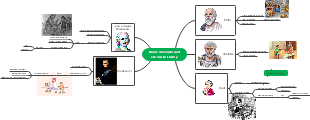
MindMap Gallery Montessori sensory education
This is a mind map about Montessori sensory education, including the definition, purpose, content of sensory education, characteristics of teaching aids, etc.
Edited at 2023-11-29 22:15:55This is a mind map about bacteria, and its main contents include: overview, morphology, types, structure, reproduction, distribution, application, and expansion. The summary is comprehensive and meticulous, suitable as review materials.

This is a mind map about plant asexual reproduction, and its main contents include: concept, spore reproduction, vegetative reproduction, tissue culture, and buds. The summary is comprehensive and meticulous, suitable as review materials.
This is a mind map about the reproductive development of animals, and its main contents include: insects, frogs, birds, sexual reproduction, and asexual reproduction. The summary is comprehensive and meticulous, suitable as review materials.
This is a mind map about bacteria, and its main contents include: overview, morphology, types, structure, reproduction, distribution, application, and expansion. The summary is comprehensive and meticulous, suitable as review materials.
This is a mind map about plant asexual reproduction, and its main contents include: concept, spore reproduction, vegetative reproduction, tissue culture, and buds. The summary is comprehensive and meticulous, suitable as review materials.
This is a mind map about the reproductive development of animals, and its main contents include: insects, frogs, birds, sexual reproduction, and asexual reproduction. The summary is comprehensive and meticulous, suitable as review materials.
Montessori sensory education
definition
Learn abstract concepts through concrete experiences and impressions
Meng: Help children establish connections with the world and build intelligence through experiences in the world.
It does not develop new skills, but more refinedly accepts the different sensory impressions (audio, hearing, smell, touch, and physical senses) of the world in which it lives, and organizes and categorizes them.
Understand the abstraction process
Sensation: - nerve center - movement (feeling, will, muscle)
The senses perceive reality - three-dimensional solids - two-dimensional planes - concepts stored in the mind
Purpose
Help children perceive the physical characteristics of things, such as color, shape, smell, size, and help children understand the world
Help children refine their senses
Help children classify and summarize sensory impressions
Giving children the keys to the world
It cannot be exhaustive, but sensory teaching aids are the key to open the door, and inside the door is the whole world.
Help children develop an understanding of the world
Help children build intelligence
Sensory teaching aids help children develop an orderly mind
Store abstract concepts and learn many words
Help children develop scientific learning methods
Precise teaching aids: provide children with opportunities to explore, pair, classify and sort, and develop logical thinking
Environmental games: establishing connections between things - drawing inferences from one example to another
memory
Helps children store abstract concepts—recalling different objects and traits more accurately
Help detect children’s sensory deficiencies
visual sensory deficits
auditory sensory deficits
Cannot match contour shapes
Contents of sensory education
Vision
Cylinder with socket
pink tower
brown ladder
red stick
Swatches
geometric picture cabinet
Geometry combination card
Decimal Square
Binomial
trinomial
Construct a triangle
Rectangular box
subtopic
blue triangle
triangular box
big hexagon
small hexagon
12 blue triangles
gradient geometry
Gripless twisting cylinder
hearing
sound tube
subtopic
sense of smell
olfactory bottle
Taste
Taste bottle
touch
Rough and smooth boards
tactile version
cloth box
temperature feeling
thermos bottle
Temperature sensing board (marble steel plate glass wood board)
Feeling of weight
weight plate
physical senses
solid geometry
Classification activities
mystery bag
Characteristics of teaching aids
beautiful
Pink Tower (Green)
(Painted) Pink Tower
scientific design
The pink color of the brown elevator cross-section is the same as the pink color of the pink tower. The pink tower with socket is both brown and red.
The weight difference between the lightest, heaviest and the middle board in the weight version is 66 grams.
independent characteristic
size color shape smell
independent sense
independent touch
independent hearing
Finiteness
uniqueness
Each set of teaching aids only has one set to train willpower and patience
Offers limited sensory experience
There are only six sets of sound tubes
Each teaching aid contains multiple tasks
A piece of teaching material with different activities
indirect preparation
socket cylinder
hand-eye coordination
subtopic
error control
Error control of teaching aids themselves
Perceptual judgment
abstraction concretization
General principles for the design of sensory teaching aids
subtopic
order of demonstration
demonstration
Way
pair
Identical pairing
Special pairing: socket cylinder, geometric picture cabinet, different pairings
Sorting Tray Weight version, more than two pairs - sorting
sort
concise clear elegant action analysis
practise
Help children recognize teaching aids again in a more precise way
After giving the child the key, the child explores and discovers self-education through exercises
Encourage repetition to incarnate the child's senses
language
Language tags connect concrete and figurative objects with abstract language tags, thereby expanding rich and precise language expressions and slowly achieving complete reading.
three stages
game
After mastering the demonstration and language, when you lose your strong interest, you can ignite your desire to operate the teaching aids through games.
Better familiarity with teaching aids and better ways to establish abstract concepts
Most of them are group activities, which are conducive to social development.
significance
Maintain interest in teaching aids
Relate the nature of teaching aids to daily life
Enhance memory of educational nature
Notice
Games should not be introduced to children too early. Games should be introduced after the age of four.
Play the game as a group
Diversification and discovery
Make children more exploratory
Allow children to use their own different ways to understand and define the concepts conveyed by the teaching aids
Placement of teaching aids
Sensory area teaching aids
Stem socket cylinder
pink tower
brown ladder
red stick
Swatches
Color palette one 1. Demonstration 2. Exercise 1: This is red, this is blue, this is yellow Please put red here. Please put blue here. Please put yellow here. what colour is this? Matching: Color Matching Game
Color palette two Could you please open the box, is this? red I took out six pieces and now I ask you to match them. Next, your task is to break them up and ask you to match them. Please match the same color. There are other colors in my box, please come and take a look. I'm going to put the same colors together to match. Pairing successful. Next, we will mess up all these and ask you to match them. Looking at your confident eyes, you will definitely be able to do it. Please find the colors you know This is purple, this is orange, this is brown Please put purple here Summary: This is today’s work. If you don’t know the remaining colors, you can ask your brothers and sisters for help. Next, please put away the swatches
Color palette three From the darkest pink to the lightest pink, please pick up a set of color swatches to operate. Operation for children: Just now you sorted the gradient colors from the darkest purple to the lightest. Our color palettes are all from the darkest to the lightest. Exercise 1: Exercise 2: Ask the children to choose two mixes, classify them first and then sort them. You can add more colors in sequence. 9 color mixing operations Exercise 3: Game 9 Colors Mix all the colors together and let the children sort them Sort color groups from dark to light
Sensitization of fingertips
Rough and smooth boards
tactile pad