 Wondershare EdrawMind
MindMap Gallery Learn to ask questions mind map
- 63
Learn to ask questions mind map
It was my first time to do a mind map, and there were a lot of things that were cumbersome to do. But mind maps are really convenient, and they are very helpful for learning books. I will continue to improve myself in the future to make them better and more concise.
Edited at 2023-11-29 13:43:18
- bacteria
This is a mind map about bacteria, and its main contents include: overview, morphology, types, structure, reproduction, distribution, application, and expansion. The summary is comprehensive and meticulous, suitable as review materials.
- Plant asexual reproduction
This is a mind map about plant asexual reproduction, and its main contents include: concept, spore reproduction, vegetative reproduction, tissue culture, and buds. The summary is comprehensive and meticulous, suitable as review materials.
- Reproductive development of animals
This is a mind map about the reproductive development of animals, and its main contents include: insects, frogs, birds, sexual reproduction, and asexual reproduction. The summary is comprehensive and meticulous, suitable as review materials.
Learn to ask questions mind map
- bacteria
This is a mind map about bacteria, and its main contents include: overview, morphology, types, structure, reproduction, distribution, application, and expansion. The summary is comprehensive and meticulous, suitable as review materials.
- Plant asexual reproduction
This is a mind map about plant asexual reproduction, and its main contents include: concept, spore reproduction, vegetative reproduction, tissue culture, and buds. The summary is comprehensive and meticulous, suitable as review materials.
- Reproductive development of animals
This is a mind map about the reproductive development of animals, and its main contents include: insects, frogs, birds, sexual reproduction, and asexual reproduction. The summary is comprehensive and meticulous, suitable as review materials.
- Recommended to you
- Outline
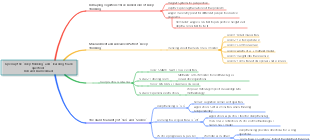
Learn to ask questions
Chapter 1 The benefits and methods of asking the right questions
We live in a noisy, chaotic world
In the real world, people of all kinds insist that we do what they say because they know best what we should wear, what we should eat, what we should buy, and what we should believe. What they claim is the truth, we must accept. They kept saying they wanted to help us. They refused to let us go, leaving us alone to figure out who we should be. Worse still, those trying to convince us are not above board in their efforts to shape our behavior. What they say is, at best, a mixture of truth and falsehood.
No matter how nice the experts say, they may not be reliable.
We listen to them in order to construct our own answers, rather than listening to them and immediately doing what they say, as if we were a helpless lamb or a puppet with strings.
Think rationally with your brain
Critical thinking encourages you to listen to others, learn from others, and weigh what others say to see how they carry weight. In this way, you will understand that we must rely on others, but we cannot refuse everyone who comes, we must make choices.
Stimulate your critical thinking
The term critical thinking refers to assessment skills activated by the following three dimensions:
1) Be aware of a set of interlocking critical issues; 2) Ability to ask and answer these questions at the appropriate time and in an appropriate manner; 3) Have a strong desire to use these critical questions proactively.
Sponge thinking and gold digging thinking
Sponge thinking - absorbing a large amount of information, which lays the foundation for complex thinking in the future; more passive, no need to rack your brains or meditate.
Gold-digging thinking: Take the initiative and choose what to absorb and what to ignore. To make this choice, you have to read with a special attitude, that is, an attitude of constantly asking questions. This way of thinking requires you to actively participate in interactions. The author is constantly selling you ideas, and you should always be prepared to debate them, even if the author is not physically present.
Weak critical thinking and strong critical thinking
Weak critical thinking is using critical thinking to defend one's current beliefs.
Strong critical thinking is the use of critical thinking to evaluate all assertions and beliefs, especially your own beliefs.
Values influence interactions between people
Definition: Values are ideas (often unstated) that people consider valuable.
They establish certain rules of conduct by which we measure the quality of human behavior. Values are the standards of behavior that we ourselves recognize and that we expect others to behave in a manner consistent with them.
You can treat other people as your most valuable resources and as the basis for the facts, opinions, and conclusions you ultimately have. Other people are part of the “family” from which many of your conclusions emerge. They are integral and continue to have an impact. The theme of this family is interconnectedness.
The role of your interactions with other people is shaped by your values and the values you experience from those with whom you interact.
Often, our preferred goals, experiences, and actions stem from the very ideas we value.
The most common social connection brought about by values is similarity. Those who regard personal responsibility as an important value will inevitably seek out and sympathize with others who also believe that better personal choices can solve most of humanity's problems. It turns out that many of our most valuable social interactions or learning experiences begin with interactions with people who share similar values.
Given this, one of the great challenges we face is trying to understand the arguments of those whose values differ from our own.
Our most common tendency is to only listen to those whose values are similar to ours, and we need to work hard to resist this tendency. We must fight against this tendency.
Manipulative Arguments: Anyone who is determined to cling to his or her conclusion is likely to find many reasons to support his or her point of view.
Keep the conversation going effectively
An argument is made up of two forms of statements joined together: a conclusion and reasons that seem to support the conclusion. It is the close connection between reasons and conclusions that constructs one's argument.
Chapter 2 What are the thesis and conclusion?
What are the thesis and conclusion?
A topic is an issue or controversy that triggers dialogue or discussion. It was the driving force behind all discussions that followed.
The conclusion is the message the writer or speaker wants you to receive.
Topic type
Descriptive issues refer to questions about whether various descriptions of the past, present, or future are accurate (what something is objectively like in the past, present, or future).
Prescriptive issues are questions about what should be done and what should not be done, what is right and what is wrong, what is good and what is bad.
Find a topic
1. Direct type. The title, the beginning of the article, or the thesis stated by the author.
2. Indirect type. The author's response to the event; the author's background is the social institution to which he belongs.
3. Find the conclusion first, and then confirm the thesis.
looking for conclusions
Start by asking "What is the author or speaker trying to prove" or "What is the point they are making". Any answers to the questions asked by the writer or speaker are also conclusions.
A statement or series of statements that a writer or speaker wants you to believe.
Based on the various points presented by the author, infer what he wants to prove.
Supplement: The conclusion is inferred and derived from the argument. Conclusions need support from other perspectives. We call assertions without evidence a mere opinion.
5 clues to the conclusion
Clue 1: Ask what the thesis is.
Clue 2: Look for indicator words.
therefore, it follows that, the point I'm trying to make is , shows that, proves that, indicates that, the truth of the matter is
Clue Three: Look at possible locations. The beginning or end of the article.
Clue Four: Remember what the conclusion is not.
None of the following are possible as conclusions: examples, data, definitions, background material, evidence.
Clue 5: Check the context of the communication and the author’s background.
Chapter 3 What is the reason?
Why do you believe this conclusion?
Three cornerstones of the argument building
Thesis, conclusion and reasons.
Argument Components
reason
Beliefs, metaphors, and other statements that support or justify a conclusion.
These statements are the basis for the credibility of the conclusion and the logic (because, therefore) behind the conclusion.
evidence
consists of a series of facts.
It is another basis for supporting assertions. These facts help convince the listener or reader that your reasons are solid.
Notice
Reasons are the reasons or principles behind why we believe a conclusion.
Evidence refers to facts that prove the truth of a reason.
The argument itself requires our attention
An argument must have a purpose. People develop arguments because they hope to persuade us to believe something or to act in a particular way.
The quality of arguments varies.
An argument has two obvious necessary components, a conclusion and the reasons that support it.
Note: An argument consists of a conclusion and reasons supporting the conclusion.
Find reasons through prompt words
The basic structure of the argument is "A is true because of B."
Here are some prompt words for reasons
Because, research shows, because of this fact, because of this reason, supported by the following materials, because evidence shows, etc.
Deconstructing complex arguments
Try to organize the material, separate reasons from conclusions, and rearrange it in a logical manner.
Write and speak like a critical thinker
What is a good topic? What is a good conclusion?
A clear and interesting question; a focused, well-stated conclusion; a conclusion supported by reasons and evidence that most people will find convincing; a conclusion that responds to the thesis; a conclusion that is easy for readers or listeners to find.
How to organize a writing or speech well
Reframe it into a question and think about the topic as a question.
The ambiguity in writing comes from not knowing what thesis is about.
Identify a clearly stated thesis.
The topic must be one that can inspire the audience to think.
Once you have decided on the conclusion you wish to demonstrate, make sure it is on topic, clearly stated, and easy to find.
Backed by strong reasons and evidence.
Several elements for achieving clarity
1) Indicative words; 2) Researched and focused topics; 3) Clear reasons supporting the conclusion; 4) Reasonable structure and clear layout of the article.
How to organize the argument structure?
First, make sure we really have something to say about the chosen topic.
Secondly, we can do research beforehand.
Once we have a topic and strong reasons to support the conclusion, we must build a clear and well-structured framework so that readers can clearly understand our well-argued conclusion.
Chapter 4 Which words have unclear meanings
Identifying the exact meaning of a key word or phrase is an essential step in deciding whether you agree with someone else's point of view.
Which words are ambiguous (ambiguous)?
Elusive polysemy (we always think that the meaning of words is obvious).
Find the right keywords.
Use the topic as a clue, a word or phrase that has more than one potential meaning in the context of the topic.
Look for key words in the argument structure, i.e. look for these words or phrases in the reasons and conclusion.
Watch out for "abstract" words or phrases.
Find potentially important and ambiguous words or phrases through reverse role-playing
Principle: The more abstract a word or phrase is, the more likely it is that people will interpret it multiple times.
The definition of abstraction in this book is that "abstract" means that the farther the object referred to by a word is from a specific, concrete instance, the more abstract it becomes.
Check for ambiguity
obstacles to overcome
Is what you understand the same as what the writer wants to express?
Think that words have only one definition.
Judgment method to find ambiguity
Substitute the different meanings of the word into the structure of the argument and see if the word has a significant impact on the conclusion supported by the reasons in the argument.
decision ambiguity
First identify the thesis, conclusion and reasons, and only the ambiguous words that appear during the argument are important.
Think about the picture of reality that these phrases represent. If it cannot be imagined, it means that the meaning of these phrases is unclear. If different images lead you to evaluate his reasons differently, then you have found an important ambiguity.
Find out the true meaning based on context
• Vague statements, often the only clue you can rely on is the context of the words.
The definition in the dictionary may not necessarily fit the situation in the article
multiple meanings of words
synonymous substitution
for example
What we call "specific standard definitions"
If you cannot find a meaning that fits the context in the context or dictionary, imagine the specific image that the word represents in your mind.
Whoever wants to convince you must explain clearly
Write and speak like a critical thinker
In the writing process, the meaning should be clear and reduce ambiguous words or phrases.
Find key words or phrases in the thesis and conclusion, and define and/or explain them.
Find key words or phrases in the rationale and define and/or explain them.
Identify abstract words in the core argument. The more abstract a word is, the more we need to clarify it.
In what way would those who disagree with me define these terms to support their own arguments?
Only those words that are central to our argument need to be defined.
Someone else comes and reads what we write and lets him point out words he doesn't understand.
Chapter 5 What are value assumptions and descriptive assumptions?
Reasons and conclusions complement each other to form a complete statement.
Reasons include superficial, stated reasons and inner, unspoken thoughts.
Unstated ideas are called assumptions.
Hypothetical key attributes
1) Hidden or not stated explicitly (in most cases); 2) The arguer takes it for granted; 3) Has a greater impact on determining the conclusion; 4) May be deceptive; 5) Points to a specific conclusion necessary for reasons.
Note: Only the assumptions that affect the quality of the argument structure are of concern.
Where to look for assumptions
Between reasons and conclusions, looking for reasons is necessary to prove the conclusion (connecting assumptions)
In reasons, look for the assumptions that are essential for the justification to be established.
Value conflicts and value assumptions
An important reason for different conclusions is conflict of values, or different values derived from different frames of reference.
value assumptions
The unstated tendency to prefer one value over another in a given situation.
How to find value assumptions
The background of the arguer as a clue to finding value assumptions
possible consequences
Different positions point to different results or consequences
Whether the consequences corresponding to a certain conclusion are acceptable mainly depends on personal value preferences.
Whether the conclusion is acceptable depends mainly on the likelihood of various potential consequences and the degree to which these consequences are taken seriously.
“Why does that person place so much importance on the specific consequence or outcome that he uses as justification?”
Cross-dressing
“What would these people in the argument care about if they took the opposite position?
A conflict between an individual’s right to act in a particular way and the impact of that way on collective well-being.
descriptive hypothesis
How he understands the nature of the world and the nature of people.
Distinction from Value Assumptions
Prescriptive assumptions, or value assumptions, are what the writer or speaker wants the world to be like—what goals are most important to him (beliefs about what the world should be like). Descriptive assumptions are beliefs about what the world has been, is, or will be like in the future.
Looking for descriptive hypotheses
Keep thinking about the gap between reasons and conclusions. Look for those thoughts that the writer or speaker takes for granted.
"How did you come to this conclusion from this reason?"
"If the reasons are valid, what other conditions need to be established to draw this conclusion?"
"Assuming these reasons are valid, is it possible that this conclusion is still wrong?"
Look for supporting arguments.
Put yourself in opposition.
Learn more about the topic.
Write and speak like a critical thinker
Think carefully about the values behind the positions we take and reflect on which values are more important to us.
We actually have the same values. The difference lies not in the values we uphold, but in the order in which we rank them.
Thinking about different values that might lead to different conclusions about a question, we decide which answer best fits our beliefs.
The context of an argument may cause us to change our values. Each argument and its context will determine how we rank values.
Identifying the values that underpin our conclusions gives us the opportunity to see how we see the world.
Integrate the process of identifying values and descriptive assumptions into your own writing or speaking
1) Examine the value assumptions underlying the underlying conclusions of the proposed topic.
2) Choose the conclusion that best aligns with our values.
3) After choosing a conclusion, we need to identify the value assumptions underlying the underlying reasons supporting that conclusion.
4) Choose reasons that are consistent with our chosen conclusion and our preferred value assumptions in the current context.
5) If we cannot find a reason that is consistent with the value assumptions behind the conclusion we choose, then we have to go back to all potential conclusions and re-evaluate.
Chapter 6 Are there any fallacies in the argument?
"Based on the reasons provided, is this conclusion acceptable?"
A fallacy is a deception in an argument that the communicator may use to persuade you to accept his conclusion.
fallacy type
Personal attack fallacy, targeting people rather than things.
Refers to making a personal attack on an individual without directly refuting the reasons provided.
Narrative fallacy, confusing story with reality.
It is a mistake to assume that because we can tell a story that seems to explain a series of unfolding facts, we have recognized all the connections between facts and phenomena.
Slippery slope fallacy, taking action A will lead to doing the same thing B.
Assume that taking a certain course will trigger an uncontrollable chain of adverse events, when in fact there are procedures in place to prevent such chain events from occurring.
The fallacy of pursuing perfect solutions
It is a mistake to believe that if a solution is tried and there are still unresolved problems, then that solution should not be adopted at all.
appeal to public fallacy
Trying to justify an assertion by citing a view that many people hold. It is a mistake to assume that something that many people support is desirable.
appeal to dubious authority fallacy
To support a conclusion by quoting an authority who has no particular expertise on the topic.
appeal to emotion fallacy
Use emotive language to distract readers or listeners from relevant reasons and evidence.
Emotions that are often exploited are: fear, hope, patriotism, pity, and empathy.
straw man fallacy
Misrepresenting the other party’s point of view to make it vulnerable to attack on a point of view that in fact does not exist.
(The author sets up a target to attack, making it easier for us to side with him, but the target does not actually exist)
The fallacy of labeling
The mistaken belief that because you gave a name to a specific event or behavior that you justified it.
planning fallacy
People and organizations tend to underestimate how long it will take them to complete a task, even though there are many past experiences where they have consistently underestimated how long it will take to complete something.
whitewash fallacy
Using vague, emotionally powerful words that describe character can make us more likely to agree with something without examining the reasons for it.
red herring fallacy
To insert an irrelevant topic to divert attention from the original thesis. To win an argument by diverting attention from the current argument to another thesis.
Circular Argument Fallacy
An argument in which one assumes that one's conclusion is true during the argument.
Chapter 7 The effectiveness of evidence: personal experiences, typical cases, testimonies of parties and expert statements
Fact or opinion
Facts can be strong or weak, and their possibilities can be big or small. The truth is more complicated than right and wrong.
Opinions are often contrasted with facts, as they should be. Opinions are of little value, and expressing them is effortless.
Evidence is persuasive when it approaches fact and moves away from mere opinion.
Evidence comes from the systematic collection and organization of facts.
we need reliable evidence
The greater the quantity and quality of evidence supporting an assertion, the more trustworthy we can be in that assertion, and the more we can call such an assertion a "fact."
The biggest difference between opinion and fact is the state of the relevant evidence. The more evidence supporting a belief, the higher the “degree of truth” of the belief. We can also say another way about what facts are: they are more or less likely to be true.
Determine how reliable a factual assertion is
What is your evidence? ·How do you know it's true? ·Where is the evidence? ·Why do you believe it? ·Are you sure it's true? ·Can you prove it?
source of evidence
Evidence is clear information provided by the arguer to support or prove the reliability of a factual assertion.
In a prescriptive argument, evidence is needed to support those reasons that are part of the assertion of fact.
In a descriptive argument, evidence is needed to directly prove a descriptive conclusion.
tend to endorse factual assertions
When the assertion seems to be unquestionable common sense, such as the assertion "Lifting weights helps build muscle."
When the assertion follows from a watertight argument
When the assertion is well supported by reasons supported by evidence
Is it reliable to use personal experience as evidence?
Fallacy of Generalization: A person draws conclusions about an entire group based on the experiences of only a very small portion of the group.
Is it reliable to use typical cases as evidence?
A typical case is to depict or shape one or more characters (or events) in detail and vividly to prove a certain conclusion. Such descriptions are usually based on observations or interviews, and their formats vary from in-depth discussions to shallow descriptions.
Note: The specific, vivid and touching plot can easily create images in our minds.
Is it reliable to use the testimony of the parties as evidence?
Testimonials, the words of specific parties, especially celebrities, are used to prove the quality of an idea or a product, or to prove that extraordinary things have indeed happened. These are all based on their personal experiences.
Note: They are generally not very useful unless we can identify more relevant expertise, interests, values, and biases behind them.
Is expert opinion reliable as evidence?
Experts ask the following questions
How much expertise, training, or special knowledge does the expert have? Is this a subject that he has devoted many years of research to? Alternatively, does this person have extensive experience related to this topic?
Chapter 8 The Power of Evidence: Personal Observation and Research
Is personal observation reliable as evidence?
What we “see” and say is what remains after being filtered through a set of values, biases, attitudes, past experiences, past training, and expectations.
What we see and hear is what we want to see and hear
For an experience, what we select and remember are those aspects that are most consistent with previous experiences and backgrounds.
Biased surveys and questionnaires
Influencing factors
Due to certain factors, people often conceal the truth
The questions in the poll are ambiguous in their wording and open to multiple interpretations. The more vague the wording, the more the credibility of the findings will be compromised.
Surveys themselves contain many biases, two of the most important being wording bias and contextual bias.
Is it reliable to use research reports as evidence?
Well-done scientific research is an excellent source of evidence.
Scientific research emphasizes repeatability, control, and precision.
Information appears in the form of publicly verified data, and its data is obtained under certain conditions, and other qualified people can conduct similar observations and obtain the same results based on the same conditions.
Control - the use of special procedures to reduce errors in observations and interpretation of research results.
linguistic precision
When you encounter a statement like "Research results show..." reinterpret it as "Researchers explain that their findings show..."
Fallacy of forced certainty: Believing that a research conclusion should be discarded if it is not 100% certain.
Is the sample representative of the population?
It mainly depends on the sample size, coverage and randomness of the events or populations studied by the researchers.
The process of selecting events or groups of people for study is called “sampling.”
Is the measurement method reliable?
What measurement methods were used in the study, and were they satisfactory?
“Are there other ways to measure this concept, and if so, are they likely to provide different results?
When are expert opinions most credible?
Whether there is a conflict of interest behind it; limited qualitative expression; limited scope of application; supported by other research; subject to critical review in other fields; sufficient critical discussion, etc.
Write and speak like a critical thinker
Find convincing evidence to support our claims.
Don't rely too much on experts or authorities.
Another limitation of turning to experts is that we tend to trust experts who agree with us and feel the same way.
Find high-quality evidence, such as from your school's online library.
No matter how strongly you feel about a conclusion, or how much you like your reasons, if there isn't enough good evidence to support your opinion, your best option is to treat it as a learning experience and pack up and move on.
Chapter 9 Is there any alternative reason?
alternative cause
A plausible alternative explanation for why a particular outcome occurs.
Find alternative causes
If you find that there may be an alternative cause, you can ask the following questions
Is there any other way to interpret this evidence?
What other factors might have triggered this action or led to these findings?
Looking at this event from another perspective, what factors might I consider important?
If this interpretation is incorrect, what other interpretation might make sense?
The only reason is still one of the reasons
A combination of causes occurs more frequently than a single cause.
Different people may have completely different reasons for performing the same behavior.
Oversimplification of causality fallacy: Relying on causal factors that are insufficient to explain the entire event to explain an event, or overemphasizing the role of one or more of these factors.
Be wary of “confirmation bias”
"Confirmation bias" is the search for and reliance on evidence that is consistent with our beliefs.
Confusing correlation and causation
We are born with a tendency to "see" events that are related to each other, or events that occur together, as events that are causally related to each other.
Because there is a relationship between feature A (such as the number of energy bars eaten) and feature B (such as performance in a sports game), we say that A causes B. There are at least four different hypotheses for this association
A is a cause of B.
B is a cause of A.
The relationship between A and B is because of the third factor - C.
A and B influence each other.
Remember: correlation or correlation does not prove causation!
Causal Confusion Fallacy: Confusing the cause and effect of an event, or failing to recognize that two events may influence each other.
Ignoring the Common Cause Fallacy: Failure to recognize that two events are connected because of a third factor at play.
Confusing "after this" with "therefore"
Post hoc attribution fallacy: Assume that event B was caused by event A simply because event B occurred immediately after event A.
Explain a single event or behavior
Fundamental attribution error refers to our tendency to overestimate the importance of personal tendencies and underestimate the role of environmental factors in explaining the behavior of others.
lessons learned
1) Many types of events can be explained by various alternative causes.
2) Experts may examine the same piece of evidence and find different reasons to explain it.
3) Most arguers provide only those reasons they prefer, and readers or listeners with critical thinking skills must find alternative reasons on their own.
4) Coming up with alternative causes is a creative process, and usually, such causes are not immediately obvious.
5) Finally, the certainty of a causal assertion is inversely proportional to the number of plausible alternative causes. Finding multiple alternative causes therefore allows the critical thinker to achieve appropriate intellectual humility.
Chapter 10 Is the data deceptive?
Note: Statistics can (and often do) lie. They do not necessarily prove the point they appear to prove.
Identify unsourced and biased data
Find out as much information as possible about how this data is collected.
Confusing averages
Average: Add the individual values and divide the total by the number of added values.
Median number: Arrange all the values from high to low, and then find the middle value.
Mode: Calculate the number of times each different value occurs or the number of times each different value range occurs, and the value with the highest frequency appears.
Full range: The difference between the minimum value and the maximum value.
Value distribution: the frequency with which each value appears.
Mistakenly using the conclusion of one thing to prove another
Use data that proves one thing to prove another thing of a completely different nature.
Two strategies for spotting this type of deception
Turn a blind eye to the data provided by the oppositionalist, and then ask yourself: "What statistical evidence would be helpful in proving his conclusion?" Then, compare the "required" data with the data given. If the two are difficult to match, you may have discovered a data fraud.
Rather than rushing to see the author's conclusions, carefully examine the author's data first, and then ask yourself: "What appropriate conclusions can we draw from these data?" Then compare your conclusions with the author's conclusions.
Deception by omitting information
When encountering attractive numbers or percentages, other information is needed to determine how attractive these numbers are.
When only absolute numbers are in front of you, ask whether knowing the percentage might help you make a better judgment.
When only percentages are in front of you, asking whether absolute numbers might enrich their meaning.
Some clues for evaluating data
1) Try to find out as much information as possible about how the data was obtained, the more the better.
2) To be curious about the type of averages described in the argument, analyze whether knowing the numerical range and numerical distribution of events can provide you with a useful perspective.
3) Be especially careful if data users use data pointing to one thing to prove another.
4) Without looking at the data used by the writer or speaker, compare the required statistical evidence with the actual data provided.
5) Draw your own conclusions from the data.
6) Determine what information is missing. You want to be especially wary of misleading numbers and percentages and missing comparisons.
Chapter 11 What important information has been omitted?
Find the benefits of omitting information
Almost every piece of information you encounter has a purpose, and the purpose is for it to influence the way you think.
Note: Important omitted information is that which affects the course of the argument.
Incomplete arguments are inevitable
The limitations of time and space on the production of arguments;
Due to limitations in attention span, arguments must be completed as quickly as possible;
The knowledge of the arguer is always incomplete;
Arguments are often designed to deceive;
Argument writers often have different values, beliefs, and attitudes than you do.
Some clues for finding common types of important information
1) Common counter-arguments
a. What reasons will the opponents provide?
b. Is there any research that conflicts with the research mentioned?
c. Are any examples, testimonials, opinions from respected authorities, or analogies that support opposing sides of the argument omitted?
2) Missing definition
How would the argument be different if the key words were defined in another way?
3) Missing value preferences or perspectives
a. Will different values lead to different ways of thinking about this topic?
b. What kind of argument would be produced based on values that are different from those of the speaker or writer?
4) The source of the “facts” mentioned in the argument
a. What is the source of these “facts”?
b. Are the factual assertions supported by excellent research or reliable sources of information?
5) Details of the procedures used to obtain the facts
a. How many people completed this survey?
b. How are the questions in the survey worded?
c. Are there substantial opportunities for respondents to provide answers that are different from those reported by those using those responses?
6) Alternative techniques for collecting or organizing evidence
a. How might the results from an interview study differ from those from a written questionnaire?
b. Will laboratory testing produce more reliable and richer results?
7) Missing or incomplete figures, charts, tables or data
a. Would the data look different if it included earlier or later evidence?
b. Did the author intentionally "stretch" the chart to make the difference appear larger?
8) Omitted results
a. Does the argument miss important positive or negative consequences of the proposed action? What's the cost? What are the benefits?
b. Do we need to know the impact of the action on any of the following areas: political, economic, social, biological, spiritual, health or environmental?
9) Omitting information about failed predictions or miscalculations when defending particular forecasting techniques
a. When “psychics” or “intuitionists” promote their psychic abilities, we need to ask what the probability is that their predictions will prove not to come true.
b. We need to know how often economists, financial advisors, sports lottery players, and political pundits predict failure and success before we can conclude that they have special talents.
Note: Arguments using concepts such as "bigger", "more", "faster", "skinnier", "after" (how long after), and any other concept that expresses size or range, should be developed habits and realize the need to scrutinize specific numbers.
The importance of negative perspective
Which part of society does not benefit from the proposed action? Who suffered losses? What do people who have suffered losses have to say about it? ·
What impact does the proposed action have on the distribution of power? ·
What impact does this action have on our health? ·
How does this action affect our relationships?
How does it affect our relationship with the natural environment?
NOTE: When considering omitted information, remember to ask: “What are the potential long-term negative effects of this action?”
Write and speak like a critical thinker
To include important information in the argument whenever possible, we should list arguments that support and refute the position.
Selective filtering, after collecting all the information we might want to include, we must decide which information is most important, which is less important, and which is unimportant.
Chapter 12 What reasonable conclusions can be drawn?
Reasons by themselves do not lead to a unique conclusion; there may be other alternative conclusions.
Dichotomous thinking: Prevents us from considering multiple possibilities
Think about problems in terms of black and white, yes or no, right or wrong, right or wrong.
Relatively rigid and intolerant of dissent because they fail to understand the importance of context in a particular answer.
Put conclusions into specific context to avoid
1) When is the conclusion accurate?
2) How is the conclusion accurate?
3) Why or for what purpose is the conclusion accurate?
Grayscale thinking: two sides or many sides
Grayscale thinking is a type of reflective thinking that explores ways other than “yes” and “no” to answer complex questions.
importance of conditions
a. Use conditionals or assumptions to help us draw a specific conclusion.
b. When using conditionals, the conclusion is based on a specific assertion or assumption about which you are unsure.
Using conditionals is particularly helpful in finding a reasonable conclusion for evaluative arguments (such as those about the quality of music, art, universities, or presidential speeches).
Chapter 13 Obstacles to Critical Thinking
Asking the right questions can make people unhappy
Not everyone likes to have their arguments challenged.
The discomfort you may make others by asking the right questions.
thinking too fast
When thinking about important things, you must "slow down"
“What exactly do I rely on to support my beliefs and conclusions?”
Stereotype
Once an issue or dispute involves these people, we immediately have stereotypes in our minds. Stereotypes will definitely intervene in advance and take advantage of rational analysis.
Stereotypes can block our path and prevent us from carefully considering what others are saying. It always shuts down our thinking early, causing us to ignore valuable information.
betray our thinking habits
halo effect
It refers to our tendency to first recognize a positive or negative characteristic of a person and then associate this characteristic with everything else about that person.
fixed belief
We all carry a lot of “baggage” with us when we talk to everyone. Such as social experience, dreams, cultural traditions, etc.
Persevering in one's personal beliefs or never giving up on one's beliefs is an important source of "confirmation bias".
Confirmation bias refers to our tendency to only regard evidence that confirms our existing beliefs as reliable evidence.
availability heuristic
"Fast thinking" causes us to rely on the information we already have, rather than on the information necessary to make better decisions. Obtaining and processing additional information requires time and effort.
The availability heuristic refers to the mental shortcuts we use repeatedly to form conclusions based only on the information most readily available to us.
The recency effect means that the most accessible information that serves as the basis of our thinking is often the part of information we see most recently.
Not answering the question
This behavior will draw everyone's attention away from the issue at the beginning of the discussion. Then it started leading to a whole new discussion.
egocentric
We give our world a central place relative to the experiences and perspectives of others.
Wishful thinking: the biggest obstacle to critical thinking
By preferring to believe concepts or facts that he wishes were true rather than those that have been proven to be true, he is being true to his heart rather than to the truth.
reason
Fight against the facts and try our best to strengthen our fantasy of a peaceful world outside of the cold reality.
The anxieties and fears we have about the problems we face together and individually create a protective wall that prevents us from seeing the reality of the world in which we live.
Miraculous thinking means that for some things, when science cannot provide a convincing explanation, people will rely on miracles to explain their ins and outs, or try to use miracles to control things that science cannot control.
become a critical thinker
Fundamental values are self-determination, curiosity, courtesy and respect for good argument.
A critical thinker:
1) Be knowledgeable and cover a wide range of topics, providing a basis for understanding hypotheses from multiple perspectives;
2) Use reasons and evidence as the basis for decisions;
3) Be willing to accept other people’s beliefs, but use a questioning attitude to confirm whether the belief has strong support;
4) Force him or herself to seek and respect multiple ways of thinking about the truth about his or her claims.