MindMap Gallery environmental soil
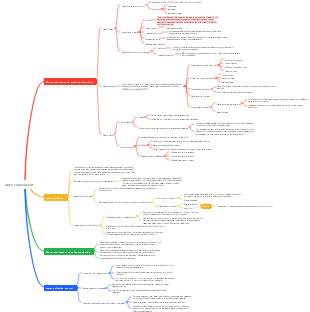
Environmental soil mind map, including composition, form, point porosity, Types of colloids, buffering, redox, mineralization, Humification, etc.
Edited at 2023-11-27 17:24:40This is a mind map about bacteria, and its main contents include: overview, morphology, types, structure, reproduction, distribution, application, and expansion. The summary is comprehensive and meticulous, suitable as review materials.

This is a mind map about plant asexual reproduction, and its main contents include: concept, spore reproduction, vegetative reproduction, tissue culture, and buds. The summary is comprehensive and meticulous, suitable as review materials.
This is a mind map about the reproductive development of animals, and its main contents include: insects, frogs, birds, sexual reproduction, and asexual reproduction. The summary is comprehensive and meticulous, suitable as review materials.
This is a mind map about bacteria, and its main contents include: overview, morphology, types, structure, reproduction, distribution, application, and expansion. The summary is comprehensive and meticulous, suitable as review materials.
This is a mind map about plant asexual reproduction, and its main contents include: concept, spore reproduction, vegetative reproduction, tissue culture, and buds. The summary is comprehensive and meticulous, suitable as review materials.
This is a mind map about the reproductive development of animals, and its main contents include: insects, frogs, birds, sexual reproduction, and asexual reproduction. The summary is comprehensive and meticulous, suitable as review materials.
soil
composition
solid matter
Minerals
raw matter
secondary matter
organic matter
intergranular material
gas phase
Atmosphere enters oxygen, nitrogen
Carbon dioxide and water vapor are produced inside the soil
liquid phase
Intergranular moisture and various soluble substances dissolved in it
organism
soil microorganisms
Bacteria, actinomycetes, fungi and algae
soil animals
Invertebrates
form
major factor
parent material
Basic material that makes up soil minerals and provides essential nutrients to plants
climate
Influence the direction and process of physical, chemical and biological effects in soil
biology
The most important factor in soil formation. Soil can only be formed after organisms appear on the basis of the parent material
terrain
Affects the redistribution of heat and water; affects the distribution of parent material
time
The longer the time, the greater the change in soil properties.
Human Factors
The most profound influencing factor in the soil formation process, by changing a certain soil formation factor Or the contrasting relationship between various factors to control the soil formation process and direction
Classification
Level 4
soil outline
Subclass
Soil
subcategory
porosity
Meaning: refers to the distribution and proportional characteristics of soil pore quantity
Invalid gap
More in clay soils, less in sandy soils and well-structured soils
Capillary space
Pores that retain capillary moisture
ventilation gap
refers to the passage of soil moisture and air
Types of colloids
Inorganic colloids (mineral colloids, which are soil clay particles)
1:1 type: larger crystal grains, smaller specific surface area, correspondingly smaller surface energy, and weaker adsorption capacity
2:1 type: The formed crystal grains are smaller, the specific surface area is larger, the surface energy is correspondingly higher, and the adsorption capacity is stronger.
Organic colloids (humic colloids)
It has large charge, large specific surface area, strong coordination ability and certain hydrophilicity, which makes it have strong adsorption effect on water and ions in soil solution.
Organic-inorganic complex (organic mineral complex or organic clay particle complex)
The cation exchange capacity is less than the sum of the two before compounding. This compound forms a stable aggregate structure, which can improve the conditions of water, fertilizer, gas, and heat.
acidity
Meaning: A chemical property that reflects the concentration of hydrogen ions in the soil solution and the quantity of exchangeable hydrogen and aluminum ions on the soil colloid, also known as acidity or alkalinity or soil pH.
Impact on soil
1. Affect the effectiveness of nutrients
2. Affect the fixation, release and leaching of metal elements
3. Affect the activity of microorganisms in the soil.
buffering
Meaning: Refers to the soil's ability to resist changes in pH, or a characteristic of soil that resists changes in ion concentration in the soil solution.
redox
system
Inorganic systems: oxygen, iron, manganese, sulfur
Organic systems; organic acids, phenolics and sugars
Influence
Status and availability of nutrients in soil
The valence state of element ions, thus affecting their migration and transformation
mineralization
Refers to the general term for the process of converting organic compounds in the soil into inorganic compounds under the action of soil microorganisms.
Mineralization is very important in the biological cycle of C, N, P, and S in nature.
Influencing factors
soil properties
The influence of element content ratio
humification
Meaning: refers to the process in which animal and plant residues are transformed into humus under the action of microorganisms
humification coefficient
The ratio of the residual amount (measured in carbon) of a specified amount of plant residues (measured in carbon) added to the soil after one year of decomposition to the original amount added.
Influencing factors
Chemical composition of biological residues
Environmental hydrothermal conditions
Soil properties, especially soil acidity
Wastewater land treatment system
Slow irrigation (slow percolation)
rapid percolation
surface runoff
Artificial wetland
Pollution prevention and control measures
Control of pollution sources
Remediation of contaminated soil
Control of pesticide pollution
Bioremediation
chemical additives
agronomic measures
Treatment of heavy metal pollution
Apply amendments
Hakka
water washing method
electrochemical method
Thermal desorption method
Bioremediation
Classification and grading of environmental standards
Category three
Category I
Mainly applicable to nature reserves specified by the state (except those with high original background heavy metal content), Soil from centralized drinking water sources, tea gardens, pastures and other protected areas, Soil quality remains essentially at natural background levels.
Category II
I is mainly suitable for general farmland, vegetable fields, tea gardens, orchards, pastures and other soils. Soil quality basically does not cause harm or pollution to plants and the environment.
Class III
It is mainly suitable for forest soil, high background value soil with large pollutant capacity and farmland soil near minerals (except vegetable fields). Soil quality basically does not cause harm or pollution to plants and the environment.
Level three
First level standard
It is a limit value to protect the natural ecology of the region and maintain the soil environmental quality of the natural background.
Secondary standard
It is the soil limit value to ensure agricultural production and maintain human health.
Level 3 standard
It is the soil critical value to ensure agricultural and forestry production and normal plant growth.
Migration and transformation rules of pollutants (Materials in soil are always in motion)
Organic matter: pesticides
Migration and conversion methods
diffusion
mass flow
Factors affecting migration
pesticide
Molecular Structure
Charge characteristics
water soluble
soil
precipitation
Flooding conditions
soil initial moisture content
soil acidity
Organic matter content
Soil clay mineral composition
Inorganics: heavy metals
migration form
Physical relocation
Heavy metal ions or complex ions in soil solutions can migrate to surface water bodies with water
Physicochemical migration and chemical migration
Heavy metal pollutants in the soil environment can be adsorbed through ion exchange. Or combined with soil colloids in the form of coordination, chelation, etc. or dissolution and precipitation reactions may occur
biological migration
Mainly refers to the absorption of certain chemicals from the soil by plants through their roots. form of heavy metals and accumulate in plants.
Characteristics of pollution
concealment or latent
Soil pollution is not as intuitive as water pollution and air pollution. It needs to be reflected by the health status of agricultural products and the people or animals who eat them. There is a gradual accumulation process from pollution to serious consequences.
Irreversibility and durability
The entry of heavy metals into the soil is an irreversible process
seriousness of harm
Soil pollution not only affects food production, but its pollutants often harm the health of animals and humans through the food chain.