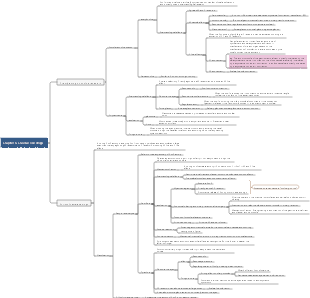
MindMap Gallery Pharmacology 9th Edition Chapter 7 Anticholinesterase Drugs and Cholinesterase Reactivating Drugs
Anticholinesterase drugs and cholinesterase reviving drugs, acetylcholinesterase mainly exists in the terminal synaptic gap of cholinergic nerves, and also exists in cholinergic neurons and red blood cells.
Edited at 2023-11-25 16:16:41This is a mind map about bacteria, and its main contents include: overview, morphology, types, structure, reproduction, distribution, application, and expansion. The summary is comprehensive and meticulous, suitable as review materials.

This is a mind map about plant asexual reproduction, and its main contents include: concept, spore reproduction, vegetative reproduction, tissue culture, and buds. The summary is comprehensive and meticulous, suitable as review materials.
This is a mind map about the reproductive development of animals, and its main contents include: insects, frogs, birds, sexual reproduction, and asexual reproduction. The summary is comprehensive and meticulous, suitable as review materials.
This is a mind map about bacteria, and its main contents include: overview, morphology, types, structure, reproduction, distribution, application, and expansion. The summary is comprehensive and meticulous, suitable as review materials.
This is a mind map about plant asexual reproduction, and its main contents include: concept, spore reproduction, vegetative reproduction, tissue culture, and buds. The summary is comprehensive and meticulous, suitable as review materials.
This is a mind map about the reproductive development of animals, and its main contents include: insects, frogs, birds, sexual reproduction, and asexual reproduction. The summary is comprehensive and meticulous, suitable as review materials.
Chapter 7 Anticholinesterase Drugs and Cholinesterase Reviving Drugs
Overview: Acetylcholinesterase mainly exists in the synaptic cleft of cholinergic nerve terminals, but also in cholinergic neurons and red blood cells.
Section 1 Cholinesterase (ChE)
Classification
Acetylcholinesterase (AChE): also known as true cholinesterase. Neurons red blood cells High specificity for ACh
Butyrylcholinesterase (BChE): also known as pseudocholinesterase. plasma Liver, kidney, intestines Low specificity for AChE
Section 2 Anticholinesterase Drugs
Overview: This type of drug can combine with AChE, and the binding is relatively strong, which inhibits the activity of AChE, leading to the accumulation of ACh released from cholinergic nerve terminals, resulting in a cholinomimetic effect.
1. Refractory anticholinesterase drugs (physostigmine, neostigmine)
neostigmine
internal processes
Poor oral effect
Difficult to enter the nervous system
Not easy to penetrate the cornea
Pharmacological effects
Exciting skeletal muscles has powerful effects: (-)AChE ( )N2-R ( ) Motor nerve terminals release ACh
It has a strong effect on stimulating the smooth muscle of the gastrointestinal tract and bladder muscles, promoting exhaust and urination.
Depresses the heart: slows heart rate, decreases cardiac output
Clinical application
1. Myasthenia gravis: an autoimmune disease in which the body produces an immune response to its own Nm receptors on the postsynaptic motor end plate.
2. Abdominal bloating and urinary retention (mostly after surgery)
3. Detoxification of overdose of competitive neuromuscular blocking drugs
Expansion: Is neostigmine detoxification contraindicated in succinylcholine poisoning? Answer: Succinylcholine - hydrolysis by pseudocholinesterase - muscle relaxant effect Neostigmine – which inhibits cholinesterase – greatly prolongs its muscle relaxant effect
Physostigmine
Process in the body: It is highly fat-soluble and easily penetrates the cornea. Its effect on the eyes is more durable than pilocarpine, but it is highly irritating and can be used to treat glaucoma.
Pharmacological effects
Opposite eyes: cholinergic receptor agonists. Conjunctival use of this class of drugs can cause conjunctival congestion and contraction of the pupillary sphincter and ciliary muscles located at the edge of the iris, resulting in miosis and ciliary muscle accommodation spasm.
Expansion: Detoxification Treatment
Competitive muscle relaxant poisoning: neostigmine
M-R blocker (atropine) poisoning: physostigmine
2. Irreversible anticholinesterase drugs (organophosphates)
Poisoning mechanism: Organophosphates strongly bind to AChE, causing AChE to lose its ability to degrade ACh. ACh accumulates in large amounts in the body, causing poisoning.
Poisoning manifestations: acute cholinergic crisis
acute poisoning
Chronic poisoning: AChE activity in the blood continues to decrease significantly
Treatment of acute poisoning
(1) Eliminate poisons: When oral poisoning occurs with metrelfosate (trichlorfon), gastric lavage with alkaline solution cannot be used because it can be converted into the more toxic dichlorvos in the alkaline solution.
(2) Detoxification drugs: 1) Atropine: quickly antagonizes the M-like effect of ACh in the body (linked with pralidoxime chloride) 2) AChE reactivation drugs: such as pralidoxime chloride and pralidoxime iodide. Restore activity of AChE inhibited by organophosphates
Section 3 Cholinesterase Reactivation Drug
Overview: Drugs that can restore activity to AChE inhibited by organophosphates. Not only can it rescue severe poisoning that cannot be controlled by atropine alone, but it can also significantly shorten the poisoning process.
Pralidoxime chloride (relieves N-like symptoms)
Pharmacological effects
1. Restore the activity of AChE
2. Direct detoxification: directly combines with free organic phosphates in the body
Clinical application: It can significantly reduce N-like symptoms and inhibit muscle tremors. Combined with atropine (to reduce M-like effects) to control symptoms (adequate, early, and combined use should be noted)
pralidoxime iodide