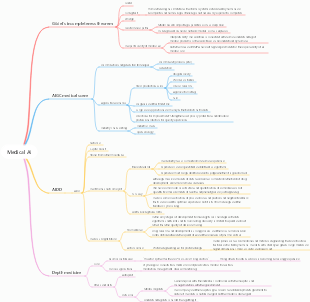
MindMap Gallery protein engineering
This is a mind map about protein engineering, full of useful information, interested friends can refer to it!
Edited at 2023-11-24 01:39:34This is a mind map about bacteria, and its main contents include: overview, morphology, types, structure, reproduction, distribution, application, and expansion. The summary is comprehensive and meticulous, suitable as review materials.

This is a mind map about plant asexual reproduction, and its main contents include: concept, spore reproduction, vegetative reproduction, tissue culture, and buds. The summary is comprehensive and meticulous, suitable as review materials.
This is a mind map about the reproductive development of animals, and its main contents include: insects, frogs, birds, sexual reproduction, and asexual reproduction. The summary is comprehensive and meticulous, suitable as review materials.
This is a mind map about bacteria, and its main contents include: overview, morphology, types, structure, reproduction, distribution, application, and expansion. The summary is comprehensive and meticulous, suitable as review materials.
This is a mind map about plant asexual reproduction, and its main contents include: concept, spore reproduction, vegetative reproduction, tissue culture, and buds. The summary is comprehensive and meticulous, suitable as review materials.
This is a mind map about the reproductive development of animals, and its main contents include: insects, frogs, birds, sexual reproduction, and asexual reproduction. The summary is comprehensive and meticulous, suitable as review materials.
protein engineering
protein
Physiological function
Catalytic function
enzyme
Adjustment function
hormone
structural function
Cytoskeleton
Transport function
hemoglobin
Immune Function
Immunoglobulin
Motor function
flagella, muscle protein
Storage function
Casein
Biofilm function and nerve conduction, etc.
importance in human life
Basic substances necessary to sustain life.
Using proteins to diagnose and treat certain diseases.
The food industry uses proteins to manufacture a variety of products.
Limitations of practical applications
To function: under physiological conditions
protein engineering
concept
On the molecular structure of existing proteins or on the genes encoding proteins → Transform or newly design proteins → Obtain new protein products suitable for human needs.
Food protein modification technology
Functional properties of proteins
Hydration properties
Solubility
Dispersion
Swellability
Thickening
Emulsifying properties
emulsifying
Foamability
water holding capacity
Oil retention
Rheological & Textural Properties
Gellability
Adhesion
elasticity
concept
Chemical, physical, biological (enzyme) means → essentially change the functional properties of protein → the quality properties required for food.
method
chemical modification
Targeting: amino, hydroxyl, sulfhydryl & carboxyl groups → chemical modification → changing protein structure, electrostatic charge, hydrophobic groups → changing the functional properties of the groups.
Enzymatic modification
Enzymatic hydrolysis modification
Protease → degrade: food protein → improve: solubility, dispersion, emulsification.
Enzymatic polymerization modification
Transglutaminase → protein: polymerization modification → improve the functional properties of food proteins.
Physical modification
Various physical field effects → change the functional properties of proteins.
like
Textured extrusion modification
High voltage electrostatic modification
High heat and high pressure modification
Ultrasonic modification
High frequency electric field modification
Microwave modification
…
technical means
protein level
chemical modification
Enzymatic hydrolysis or polymerization modification
Physical modification
Modify existing proteins
gene level
Rational molecular design & site-directed mutagenesis
rational molecular design
concept
On the basis of the known three-dimensional structure and function of a protein, targeted mutations are carried out on a gene sequence that is most likely to affect the function and properties of the protein, and one or two amino acid residues or modules of the protein are purposefully changed to construct a new protein molecule. .
The basic steps
Isolate and purify the target protein, crystallize it, and learn as much information as possible about its spatial structure.
Determine its functional domain.
Analyze the interrelationship between structure & function and find out the key structure & groups.
Focusing on these key groups & structures → propose a plan to modify the protein & use genetic engineering methods (sited mutation) → implement it.
For modified proteins → functional assay, site-directed mutagenesis.
Positioned mutagenesis
concept
According to the rational molecular design scheme → the DNA sequence encoding the protein is known → substitution, insertion or deletion: the selected nucleotide.
Commonly used techniques
Oligonucleotide primer-mediated site-directed mutagenesis
principle
Oligonucleotide fragment containing mutated base → Primer → Polymerase action → Start DNA molecule → Replication
include
Kunkel mutation method
Antibiotic-based “resistance recovery” mutation method
Mutation method based on removal of specific restriction enzyme cutting sites
Advantages and Disadvantages
advantage
Higher fidelity than recombinant PCR mutation method
shortcoming
The operation process is complex and the cycle is long
Cloning of the gene to be mutated will be restricted by restriction enzyme sites
PCR-mediated site-directed mutagenesis
principle
PCR → insertion & deletion of mutated bases → primers → two pairs of primers → nucleic acids: PCR amplification → overlapping extension → two PCR products with partially overlapping sequences → mixing, denaturation, renaturation and chain extension → one pair and two Complementary primers on the outside of the fragment to be spliced → second amplification → full-length heterologous hybrid double-stranded DNA.
Advantages and Disadvantages
advantage
easy to use
Mutation rate 100%
shortcoming
Fidelity is low
Follow-up work is complicated
cassette mutation
principle
Also known as: fragment substitution method
Target gene sequence: appropriate restriction enzyme site → insertion: various suitable mutated DNA fragments → substitution: specific DNA fragment in the target gene.
include
cassette substitution mutagenesis
Mixed oligonucleotide mutagenesis
Advantages and Disadvantages
advantage
Simple and easy
High mutation efficiency
Change multiple sites or one fragment at a time
shortcoming
Synthetic DNA fragments are expensive
Requires appropriate restriction enzyme sites
Application: Enzyme structure modification
Enhance stability↑
Improve enzyme activity↑
Change enzyme selectivity
Eliminate the antioxidant properties of enzymes
Introduce disulfide bonds
Convert amino acid residues
Improve protein thermal stability
Change the pH conditions optimal for the enzyme
Cassette mutation → glucose isomerase molecule
Modify the catalytic specificity of the enzyme
Site-directed mutagenesis technology→glucoamylase
directed evolution in vitro
Irrational molecular design
Theoretical source
Utilize genetic engineering principles → Laboratory: simulate the biological evolution process.
concept
In vitro directed evolution of proteins: also known as molecular evolution,
That is: laboratory conditions → simulate the natural evolution mechanism: mutagenesis and recombination of genes encoding proteins → high-throughput screening → select proteins with better performance.
Not required: Structural information about the protein is known
Random mutation directional selection = target mutant
Vs natural evolution
Different evolutionary dynamics
Different directions of evolution
Different rates of evolution
VS
directed evolution
Mutation sites: random, uncertain, & number: uncertain
Mutational effects: unpredictable
fixed point evolution
Mutation site: determined, & number: predicted
Mutational effects: probably known
How to obtain random mutants (Commonly used directed evolution technology)
Reorganization
DNA shuffling
A group of closely related DNA sequences → DNaseI → Random digestion → Many fragments → Partially overlapping base sequences → Self-guided PCR recombination → Full-length genes → Diversity library → Screening of mutation libraries → Improved mutants → Next round of templates → Repeat Multiple rearrangements and screening → Obtain mutants with satisfactory characteristics
principle
Exon shuffling
Random in vitro priming shuffle
Synthesis Reorganization
mutation
fault-tolerant PCR
Taq polymerase → PCR amplification of the target gene, while introducing base mismatch → random mutation of the target gene
principle
Randomly positioned mutations
Staggered extension
…
Application: Enzyme preparation transformation
L-aspartase: Improve enzyme heat resistance & enzyme activity
Phospholipase A1 mutants: resistant to organic solutions
Hydantoinase: D-form substrate mutates to L-form substrate
Fusion protein technology
concept
Purpose → connect two/multiple gene coding regions that encode functional proteins together → end to end → the same regulatory sequence: control the composed gene expression product → express the required protein.
method
Formation of PCR-Mediated Protein Molecular Chimeras
Intron-mediated formation of protein molecular chimeras
Ligase direct ligation
application
bifunctional enzyme
Retain the respective enzymatic activities of the constituted enzyme molecules
Can produce: "proximity effect"
Targeted drugs/directed drugs
composition
drug
Ligand that can bind specifically to lesions
Can form: proteins with unique ideas & functions
Antimicrobial peptides
Peptide antibiotics
Naturally produced by the body / an important component of innate immunity
Powerful antibacterial effect against drug-resistant bacteria
A class of cationic small molecule peptides with broad-spectrum antibacterial activity
New protein design
concept
According to the desired protein structure & function → design the amino acid sequence,
Name: anti-folding research
Need to understand: the relationship between protein structure & function
The basic steps
Propose basic structural drawings
Determine the amino acid sequence
Structural optimization
progress made
Create new proteins
Protein engineering at the genetic level three levels
primary renovation
Changes in individual amino acids
Deletion, substitution or insertion of an entire amino acid sequence
Advanced makeover
Tailoring of protein molecules
Such as: domain splicing, fusion protein technology
Design and synthesize new proteins from scratch
List 3 examples of protein engineering applications in food
Introduce disulfide bonds → improve the thermal stability of proteins
Convert amino acid residues → improve protein thermal stability
Change the optimal pH value of the enzyme → increase the lysine content in corn