MindMap Gallery Chemistry - Redox Reactions (1)
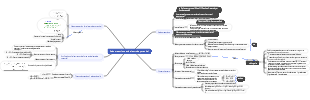
This is a mind map about redox reaction (1), including the basic concepts of redox reaction, primary battery and electrode potential, factors affecting electrode potential, etc.
Edited at 2023-11-23 15:13:03This is a mind map about bacteria, and its main contents include: overview, morphology, types, structure, reproduction, distribution, application, and expansion. The summary is comprehensive and meticulous, suitable as review materials.

This is a mind map about plant asexual reproduction, and its main contents include: concept, spore reproduction, vegetative reproduction, tissue culture, and buds. The summary is comprehensive and meticulous, suitable as review materials.
This is a mind map about the reproductive development of animals, and its main contents include: insects, frogs, birds, sexual reproduction, and asexual reproduction. The summary is comprehensive and meticulous, suitable as review materials.
This is a mind map about bacteria, and its main contents include: overview, morphology, types, structure, reproduction, distribution, application, and expansion. The summary is comprehensive and meticulous, suitable as review materials.
This is a mind map about plant asexual reproduction, and its main contents include: concept, spore reproduction, vegetative reproduction, tissue culture, and buds. The summary is comprehensive and meticulous, suitable as review materials.
This is a mind map about the reproductive development of animals, and its main contents include: insects, frogs, birds, sexual reproduction, and asexual reproduction. The summary is comprehensive and meticulous, suitable as review materials.
Redox reactions
Basic concepts of redox reactions
Oxidation number (oxidation value)
Rules for determining oxidation number
The oxidation number of an element in an element is zero
In neutral molecules, the algebraic sum of the oxides of each element is zero.
Except for peroxides, superoxides, etc., the oxidation number of oxygen is generally -2
The oxidation number of hydrogen in compounds is generally 1, only in active metal hydrides The oxidation number of hydrogen is -1
The oxidation numbers of alkali metals and alkaline earth metals in compounds are 1 and 2 respectively; The oxidation number of fluorine is -1. Other halogens except oxygen-containing compounds and electrostatic Except for the more negative halogens that form halogen compounds, they are generally -1
redox couple
Usually due to the transfer of electrons, The reaction in which the oxidation number of an element changes is called a redox reaction
In a redox reaction, the reducing agent provides electrons, oxidizing agent acquires electrons, electronic Gains and losses occur simultaneously
Oxidizing agent and reducing agent are the oxidation of the same substance reduction reaction, called autoredox reaction
In an autoredox reaction, the oxidation number increases and What is reduced is the same element in the same substance. This A redox-like reaction is called a disproportionation reaction.
In a redox reaction, the gain and loss of electrons occur simultaneously. Similar to proton transfer in the acid-base conjugation relationship of acid-base reactions, The conjugation relationship between the oxidizing agent and the reducing agent involves electron transfer.
Balancing redox reaction equations
Oxidation number method
Write the chemical formulas of the reactants and products.
Mark the change in the oxidation number of the element and find the increase or decrease in the oxidation number.
Multiply the corresponding coefficients before the chemical formulas of the oxidant and the reducing agent to reduce the oxidation number of the oxidant by the oxidation number of the reducing agent. The raised values are equal.
Balance the number of atoms whose oxidation number has not changed, check whether the number of atoms on both sides of the chemical equation is equal, Change arrow to equal sign
Ion electron method
It can more clearly point out the nature of redox reactions in aqueous solutions.
Galvanic cell and electrode potential
Primary battery
The composition and working principle of primary battery
Concept: Using redox reactions to generate electric current, A device that converts chemical energy into electrical energy is called a primary battery
Electrons flow directionally from the negative electrode to the positive electrode, forming an electron flow (The direction of electron flow is exactly opposite to the direction of current)
A galvanic cell consists of two half cells (electrodes) and a salt bridge.
In the primary battery, the first stage (negative electrode) where electrons flow out is oxidized. Reduction reaction, the first stage where electrons flow into and the reduction reaction occurs is the positive electrode.
Type of electrode
Metal-metal ion electrode
Non-metal-Non-metal ion electrode
Oxidation-reduction electrode
Metal-metal refractory salt electrode
How to express primary battery
The negative electrode is on the left and the positive electrode is on the right, represented by (-) and ( ) respectively. The corresponding compositions and phases are arranged in actual order from left to right.
A single vertical line is used to represent the phase interface, and a double vertical line "‖" is used to represent the salt bridge.
Indicate the concentration of the solution and the pressure of the gas.
If the solution contains two ions participating in the electrode reaction, they can be separated by commas. If there is no conductive substance in the electrode, an inert electrode must be added.
The relationship between electromotive force and Gibbs free energy change
The electromotive force of the primary battery is equal to the potential difference between the positive and negative electrodes of the primary battery. The electromotive force of the primary battery can be measured using a potential difference meter.
The primary battery converts chemical energy into electrical energy by using the flow of electrons to generate current. And do the electrical work. Under constant temperature and constant voltage, the maximum electrical work done by the primary battery is equal to The product of the amount of electricity passing through and the electromotive force of the battery.
Electrode potential
Generation of electrode potential
The primary battery can produce current, which means that there is a potential difference between the two poles of the primary battery, that is, each electrode Each has its own certain potential, which is called the electrode potential.
Standard hydrogen electrode
Determination of standard electrode potential
The electrode potential when all substances making up the electrode are in the standard state is called the standard electrode potential.
Factors affecting electrode potential
Nernst equation
The Nernst equation, also known as the Nernst equation and the Nernst formula, was invented by the German chemist and physicist W.H. Nernst in 1889. An equation derived from thermodynamics. It represents the relationship between the battery electromotive force and the activity of various substances participating in the battery reaction.
Effect of concentration on electrode potential
The influence of concentration on electrode potential is mainly reflected in the influence of concentration changes of oxidized substances and reducing substances on electrode potential. For oxidized substances, when their concentration increases, the electrode potential will increase and their oxidizing ability will also increase. For reducing substances, When its concentration increases, the electrode potential will decrease and its reducing ability will increase. In addition, after reaching equilibrium in a solution of a certain concentration, an oppositely charged phase will be formed at the interface between the metal and the solution. electrical double layer. In addition, the effect of concentration on the electrode potential can also be described according to the Nernst equation. The Nernst equation describes any state The relationship between the electrode potential and the standard electrode potential, temperature and oxidation state and reduction state concentration. The size of the electrode potential and the properties of the electrode It is related to quality, temperature and concentration in the solution.
Effect of acidity on electrode potential
Effects of precipitation reaction and coordination reaction on electrode potential
In the electrode reaction, the ions in the solution form precipitation or form complexes, which will reduce the concentration of the ions. Therefore, the electrode potential changes, thereby affecting the oxidation and reduction capabilities of the oxidant and reducing agent.
Application of electrode potential
Determine the relative strength of oxidizing agent and reducing agent
The size of the electrode potential reflects the strength of the redox pair's ability to gain electrons in the oxidation state or lose electrons in the reduction state. An oxidized substance with a high electrode potential is a stronger oxidant than an oxidized substance with a small electrode potential. A reduced substance with a small electrode potential is a stronger reducing agent than a reduced substance with a large electrode potential.
Determine the direction of redox reactions
The oxidized substance with a large electrode potential is used as an oxidant, and the reduced substance with a small electrode potential is used as a reducing agent to generate the electrode potential. Large reduced species and oxidized species with small electrode potential.
The direction in which a redox reaction proceeds must be that the electrode potential of the positive electrode is greater than the electrode potential of the negative electrode.
In the standard state, the direction of the reaction can be judged directly by the standard electrode potentials of the two electric pairs. If it is not a standard state, the electrode potential should first be calculated using the Nernst equation.
Choose appropriate oxidizing and reducing agents
The size of the electrode potential is the basis for selecting the oxidant or reducing agent
Determine the extent of redox reactions
(When the redox reaction reaches equilibrium, the ratio of the relative concentration of the products to the relative concentration of the reactants)
Determine the order of redox reactions
When a reducing agent can reduce several oxidants that exist at the same time, the strongest oxidant is reduced first. What is reduced last is the weakest oxidant. When an oxidant can oxidize several reducing agents that exist at the same time, the strongest reducing agent is oxidized first. The weakest reducing agent is the last to be oxidized.
Element potential diagrams and their applications