MindMap Gallery General Psychology Chapter 2 Attention
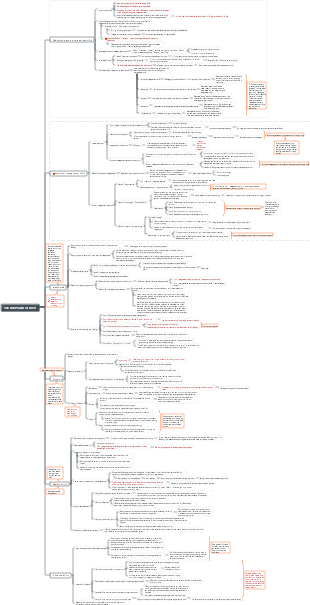
Regarding the mind map of attention in Chapter 2 of "General Psychology", attention is an important regulation for the smooth progress of psychological activities. It is the beginning of psychological activities and is accompanied by the psychological process from beginning to end.
Edited at 2023-11-22 22:29:50This is a mind map about bacteria, and its main contents include: overview, morphology, types, structure, reproduction, distribution, application, and expansion. The summary is comprehensive and meticulous, suitable as review materials.

This is a mind map about plant asexual reproduction, and its main contents include: concept, spore reproduction, vegetative reproduction, tissue culture, and buds. The summary is comprehensive and meticulous, suitable as review materials.
This is a mind map about the reproductive development of animals, and its main contents include: insects, frogs, birds, sexual reproduction, and asexual reproduction. The summary is comprehensive and meticulous, suitable as review materials.
This is a mind map about bacteria, and its main contents include: overview, morphology, types, structure, reproduction, distribution, application, and expansion. The summary is comprehensive and meticulous, suitable as review materials.
This is a mind map about plant asexual reproduction, and its main contents include: concept, spore reproduction, vegetative reproduction, tissue culture, and buds. The summary is comprehensive and meticulous, suitable as review materials.
This is a mind map about the reproductive development of animals, and its main contents include: insects, frogs, birds, sexual reproduction, and asexual reproduction. The summary is comprehensive and meticulous, suitable as review materials.
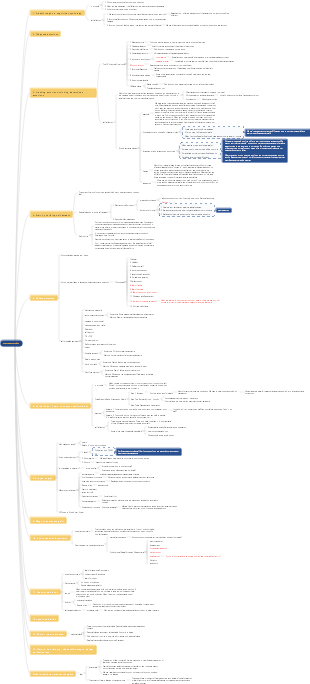
Chapter 2 Attention
Section 1 Note Overview
concept
Features
Directivity
eg When reading a novel, you turn a blind eye to everything happening around you.
centralization
Sequence: first point and then focus Directionality does not necessarily mean concentration; concentration does not necessarily mean directionality.
The two are closely linked
Function
Select function
Maintain function
Adjustment function
Attention is an important regulation for the smooth progress of mental activities It is the beginning of psychological activities and is accompanied by the psychological process from beginning to end.
external manifestations of attention
Sensory activities eg focus your eyes and listen attentively
Body movements eg students listen carefully to the lesson, look at the teacher, and stop other movements
Physiological activities
Section 2 Types of Attention
Inadvertent attention (not paying attention casually)
eg In a quiet classroom, the pencil case fell to the ground and I couldn’t help but look at it
Features
No booking purpose, poor consciousness, short retention time
objective causes
stimulus intensity
Exciting novelty
The contrast of stimuli eg a little green among thousands of flowers
changes in stimulus activity
subjective reasons
People's subjective psychological state eg things that meet people's needs and direct interests
intentional attention (casual attention)
eg. Students’ attention when comparing the characteristics of two plants as required by the teacher.
Features
Have a clear purpose
Have strong willpower
maintain conditions
Deepen understanding of purpose tasks
Organize activities reasonably, e.g. use performance method for class content
Compliance with interests, e.g., direct interest is cultivated in higher grades, and indirect interest is cultivated in lower grades.
Check for interference from internal and external factors
Attention after intention (attention after intention) Advanced Note
eg Proficient in reading texts and proficient in riding a bicycle
forming conditions
Have a strong interest in activities
Automation of activities
Features to note in Section 3
attention span (range of attention)
Influencing factors
Characteristics of objects: Objects that have practical significance and are easy to be understood will have a larger scope of attention; otherwise, the scope of attention will be smaller. The arrangement is regular and can form an interconnected whole, with a larger scope; otherwise, it will be smaller.
individual experience and knowledge
How to grasp objects
individual's emotional state
Perceptual tasks, such as editing tasks and people engaged in proofreading tasks, the attention span of the former is larger, while the attention span of the latter is smaller.
Stability of attention (persistence of attention)
narrow sense
Pay attention to the time you stay on a certain object
broad sense
Focus on a certain activity and change the specific objects of attention as the activity progresses
Influencing factors
The subjective state of the individual: the deeper the understanding of the activity, the more positive the attitude, the stronger the interest, and the more stable the attention.
Characteristics of attention objects: The richer the content, the more lively and diverse the activity forms, and the higher the stability of attention.
Pay attention to ways and means
The phenomenon of distraction of attention (the ups and downs of attention, the wavering of attention) The phenomenon of periodic strengthening and weakening of attention often occurs
allocation of attention
The characteristic of individual psychological activities directed at different objects at the same time (multitasking)
Pay attention to the conditions of distribution
1. When only one of the various activities is unfamiliar and the rest of the activities have reached "automation" or semi-automation, attention can be better allocated to these activities.
2 There are close relationships between several activities
3 Have skilled distribution skills
Shift of attention
The individual actively shifts attention from one object to another according to the new task.
Difference from distraction of attention
1. Shifting requires purposefully turning attention to a new object, while dispersion involves diverting attention away from the object to be paid attention to when concentration is required.
2. Diversion is a good quality of attention, and distraction is a bad quality of attention.
Factors affecting the speed and difficulty of attention transfer
It turns out that the smaller the intensity of attention, the easier it is to transfer; vice versa.
Characteristics of new attention: If the new object of attention meets people's needs and interests, it will be easy to transfer; vice versa.
The flexibility of mutual conversion between neural excitation and inhibition processes in the cerebral cortex. People with high flexibility can transfer more easily.
The purpose of each activity or the conditioning effect of the secondary number system. The purpose is unclear, the adjustment ability is weak, and the transfer is inflexible.
Section 4 Cultivating students’ attention
Development characteristics of students’ attention
Pay attention to the characteristics of purposeful development
The purpose of attention of primary and secondary school students continues to increase
Pay attention to the characteristics of stable development
********* The stability continues to increase, and the growth rate gradually slows down in high school.
Characteristics of attention span development
****growing
Development characteristics of distribution capabilities
****Growing
Characteristics of Transfer Capability Development
Relatively speaking it is much slower
Pay attention to rules and teaching
Unintentional rules
The greater the intensity of stimulation, the easier it is to attract unintentional attention
The more significant the difference between stimuli, the more likely it is to attract unintentional attention.
Changes in stimuli: moving ones are more likely to attract unintentional attention than static ones.
Novelty of the stimulus: Novel stimuli are more likely to attract unintentional attention than familiar stimuli.
An individual's subjective state, needs and interests
Patterns of intentional attention
Understanding of activity tasks. The clearer the task, the better it can attract and maintain intentional attention.
The stronger the indirect interest in the activity, the more concentrated it is.
individual volitional effort
Careful organization of activities
Rules to pay attention to after being intentional
Strong interest in activities
Automation of activities Cycling
Use the rules of attention to organize teaching activities
1 Understand the students’ listening status based on the external manifestations of attention
2. Use unintentional rules to organize teaching activities
Create good teaching activities
Outdoor interference to the classroom, such as closing windows and drawing curtains
Indoor environment eg whether the floor is clean, whether the tables and chairs are arranged neatly, and whether the classroom decoration is simple and plain
Teachers’ clothing and hairstyle should not be dazzling
Properly handle unexpected events
Pay attention to lectures, blackboard writing skills and the use of teaching aids
Teacher’s volume, voice, intonation, gestures and expressions
The writing on the blackboard is clear and eye-catching
Novel and intuitive teaching aids
Pay attention to the organization of teaching content and the diversification of teaching forms
Specific examples, interspersed with demonstrations using teaching aids, individual questions, role plays, group discussions, and hands-on operations
3 Organize teaching activities using the rules of intentional attention
Improve the purpose of activities
Stimulate learning motivation and train good attention habits
4. Organize teaching activities using the law of alternation between unintentional and intentional attention.
Educational methods to cultivate students' attention
develop indirect interest
Develop good study habits
maintain a good mental state
Pay attention to self-training of concentration