MindMap Gallery Pathology-Respiratory Diseases
This is a mind map about pathology-respiratory system diseases, including pneumonia, chronic bronchitis, lung cancer, etc. It’s full of useful information, interested friends can refer to it!
Edited at 2023-11-18 19:34:42This is a mind map about bacteria, and its main contents include: overview, morphology, types, structure, reproduction, distribution, application, and expansion. The summary is comprehensive and meticulous, suitable as review materials.
This is a mind map about plant asexual reproduction, and its main contents include: concept, spore reproduction, vegetative reproduction, tissue culture, and buds. The summary is comprehensive and meticulous, suitable as review materials.
This is a mind map about the reproductive development of animals, and its main contents include: insects, frogs, birds, sexual reproduction, and asexual reproduction. The summary is comprehensive and meticulous, suitable as review materials.
This is a mind map about bacteria, and its main contents include: overview, morphology, types, structure, reproduction, distribution, application, and expansion. The summary is comprehensive and meticulous, suitable as review materials.
This is a mind map about plant asexual reproduction, and its main contents include: concept, spore reproduction, vegetative reproduction, tissue culture, and buds. The summary is comprehensive and meticulous, suitable as review materials.
This is a mind map about the reproductive development of animals, and its main contents include: insects, frogs, birds, sexual reproduction, and asexual reproduction. The summary is comprehensive and meticulous, suitable as review materials.
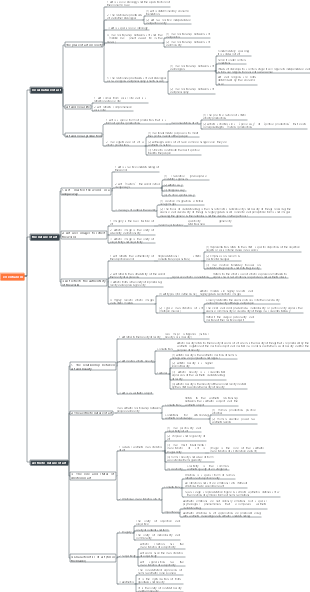
Respiratory diseases
pneumonia
bacterial pneumonia
Lobar pneumonia
definition
Inflammation caused by pneumococcal bacteria and characterized by diffuse fibrin exudation in the alveoli More common in young adults
Involves all or most of the lung lobes
Cause
Pneumococcal types 1, 2, 3, and 7
Type 3 is the most virulent
Pathological changes clinical connections
congestive edema stage
Day 1-2
To the naked eye: The lung lobes are swollen, congested, and dark red.
Microscopically: the capillaries in the alveolar wall are diffusely dilated and congested; there is a large amount of serous fluid exuding in the alveolar cavity, and a small amount of red blood cells, neutrophils and macrophages.
Contact: Chills, high fever, X-ray shows flaky blurry shadows in the lungs
Red liver metamorphosis stage
Day 3-4
To the naked eye: The texture of the lung lobes becomes solid and the cut surface is gray-red, resembling the appearance of a liver.
Microscopically: there are a large number of red blood cells, fiber, and a small amount of neutrophils and macrophages in the alveolar cavity (fibrinitis)
Contact: rust-colored sputum, chest pain, X-ray shows large shadows in the lungs
Gray liver metamorphosis
Day 5-6
To the naked eye: Lung congestion is reduced, gray-white, and solid like liver
Microscopically: the alveolar cavity contains a large amount of cellulose, and there are a large number of neutrophils and a small amount of red blood cells in the fibrous network (fibrinitis and purulent inflammation)
Contact: The sputum changes from rust-colored to thick mucus, and X-ray shows large dense shadows in the lungs
Dissolution and dissipation period
About 7 days, lasting 1-3 weeks
To the naked eye: The texture of the consolidated lung tissue becomes softer
Under the microscope: neutrophil degeneration and necrosis → proteolytic enzyme → cellulose dissolution, the pathogen is engulfed and dissolved
Contact: Body temperature dropped, X-ray showed return to normal
complication
Lung fleshy changes, purulent pleurisy and empyema, lung abscess, sepsis/septic sepsis, septic shock
Lobular pneumonia
definition
Acute purulent inflammation caused by purulent bacteria, with pulmonary lobules as the lesion unit More common in children, the elderly, and those who have been bedridden for a long time
Cause
pneumococci
In severe cases, it involves the large lobes of the lungs and develops into confluent bronchopneumonia, which generally does not involve the pleura.
Pathological changes
Gross eye: mostly in the lower lobes and dorsal side, generally not involving the pleura
Microscopically: early stage—mucosal congestion, edema, and surface mucus exudate coverage; Middle and late stage - neutrophils, a small amount of red blood cells and shed alveolar epithelial cells in the lumen and alveolar space; In severe cases - increased infiltration of neutrophils in the lesion, destruction of bronchial and lung tissue, and complete suppurative inflammation.
complication
Heart failure, respiratory failure, lung abscess and empyema, sepsis, bronchiectasis
the difference
chronic bronchitis
Chronic non-specific inflammatory disease of bronchial mucosa and surrounding tissues
More common in the elderly
Clinical features
Chronic cough, sputum production or wheezing symptoms, lasting for 3 months every year for more than 2 consecutive years
Etiology and pathogenesis
viral and bacterial infections
smoking
Air pollution and allergy factors
intrinsic factors
Pathological changes
The respiratory mucus-ciliary drainage system is damaged and squamous metaplasia occurs
Submucosal glandular hypertrophy and mucinous gland metaplasia of serous epithelium
Congestion and edema of the vessel wall, infiltration of lymphocytes and plasma cells
Smooth muscle rupture and atrophy in the wall, cartilage variability, atrophy or ossification
Bronchiolitis and peribronchiolitis are the underlying causes of chronic obstructive emphysema
clinicopathological link
Cough - inflammation irritates the bronchial tubes
Coughing up phlegm - Coughing up a large amount of white sticky sputum or serous foam, accompanied by bacterial infection and purulent
asthma
lung cancer
Cause
smoking
Air pollution: 3,4-benzopyrene, diethylnitrosamine
Occupational factors: long-term exposure to radioactive substances or inhalation of industrial dust, etc.
Molecular genetic changes: gradual accumulation of genetic abnormalities
Pathological changes
General type
Central type (hilar type)
Occurs in the main bronchus or lobar bronchi, forming a mass in the hilus
60~70%
In the early stage of disease, the tracheal wall may thicken diffusely or form polypoid or papillary tumors protruding into the tracheal lumen, causing the tracheal lumen to be narrowed or occluded.
As the disease progresses, the tumor destroys the tracheal wall, infiltrates into the surrounding lung tissue, expands, and forms a huge mass surrounding the bronchus in the hilum of the lung.
peripheral lung cancer
Originating from the lung segment or its distal bronchi, forming isolated nodular or spherical cancer nodules at the periphery of the lung close to the lung membrane
30~40%
Lymph node metastasis occurs later than in the intermediate type, but can invade the pleura
diffuse lung cancer
Rare, 2~5%
Originating from the peripheral lung tissue, it diffusely infiltrates and grows along the alveolar ducts and alveoli, forming a majority of corn-sized nodules covering part of the large lobes or the entire lung lobes.
Histological type
Adenocarcinoma
The most common type of lung cancer in women, mostly non-smokers
Slow growth, metastasis can occur early
Usually occurs peripherally, subpleurally
squamous cell carcinoma
Middle-aged and elderly men, most of whom have a history of smoking
Mainly occurs in the center of the main bronchus, eventually spreading to local hilar lymph nodes, and spreads outside the chest relatively late
Well differentiated - keratinized beads, intercellular bridges; poorly differentiated - few squamous cell features
neuroendocrine cancer
small cell carcinoma
15%-20%
The highest degree of malignancy, more sensitive to radiotherapy and chemotherapy
The central type is common, occurs in the large bronchi, infiltrates and grows into the lung parenchyma, and forms a huge mass.
Under the microscope, the cancer cells are small, round or oval; or spindle-shaped or oat-shaped, with little cytoplasm like naked nuclei, diffuse distribution or lamellar cord-like arrangement (oat cell carcinoma)
large cell carcinoma
10%
Large cell undifferentiated carcinoma
Cancer cells are solid masses or sheets, large in size, rich in cytoplasm, homogeneous and lightly stained, and mitotic figures are common.
No histological, morphological, or immunophenotypic features of adenocarcinoma, squamous cell carcinoma, or neuroendocrine carcinoma differentiation
The prognosis is poor and there is a tendency to spread to distant places in the early stage.
adenosquamous carcinoma
Squamous cell carcinoma and adenocarcinoma each account for more than 10%
Diffusion pathway
direct diffusion
transfer
lymphatic metastasis
Occurs earlier and spreads faster
Parabronchial, hilar-mediastinal, supraclavicular, axilla, neck
Peripheral type can enter the subpleural lymph node plexus
Hematogenous metastasis
Brain (20%), liver (30-50%), bone (20%), adrenal glands
clinicopathological link
Cough, expectoration with blood, chest pain
Collapse of the lung or emphysema, lung infection
Bloody pleural effusion
Superior vena cava syndrome: facial edema and cervical and thoracic varicose veins
Horner syndrome: compression or erosion of cervical sympathetic nerves and cervical nerve roots → ptosis, miosis of the pupil on the affected side, and no sweat on the skin of the chest wall
carcinoid syndrome
pulmonary silicosis
It is mainly caused by a large amount of silicon-containing dust in the environment, which is deposited in the lungs and generally occurs more among working people.
Cause
SiO2, <5μm, 1-2μm particles are the most pathogenic
Pathogenesis
SiO2 H20 → Silicic acid → Macrophage phagocytosis → Macrophage autolysis → Chronic inflammation → Pulmonary fibrosis Release silica dust (swallowed up again)
Basic lesions
Formation of silica nodules, diffuse fibrosis of lung tissue
Pathological changes
Silicon nodules, diffuse fibrosis of lung tissue
Naked eyes: round or oval nodules, 3-5mm in diameter, gray-white, hard, and gritty. Under the microscope: cellular silica nodules (silica nodules can be seen within cells) → fibrous silica nodules: collagen fibers arranged in concentric circles or swirls (hyalinization may occur); degeneration and degeneration may occur in the center of fused nodules. Necrosis and liquefaction form silicotic cavities, and hilar lymph nodes can also be seen.
Stage I scattered pulmonary nodules, with no obvious fibrosis, in the middle and lower lobes of both lungs near the hilus, due to lymphatic reflux after macrophage phagocytosis (silicone nodules are obvious near the hilar lymph nodes) Stage II has obvious fibrosis, less than 1/3, and the lesions are in the perihilar lung tissue. Stage III diffuse fibrosis>1/3
Staging: according to the size, number and distribution of silicon nodules
complication
tuberculosis
chronic cor pulmonale
Lung infections and obstructive emphysema
Emphysema
A disease in which peripheral lung tissue (respiratory bronchioles, alveolar ducts, alveolar sacs, and alveoli) contains too much air and is accompanied by destruction of alveolar intervals and weakened elasticity of lung tissue, leading to expansion of lung volume and reduced ventilation function.
Cause
The most common is chronic bronchitis
Pathogenesis
Obstructive ventilatory disorders, reduced elasticity of respiratory bronchioles and alveolar walls, reduced a1-antitrypsin levels
type
alveolar emphysema
interstitial emphysema
Other types of emphysema
paracicatric emphysema
Pathological changes
Naked eyes: The lungs are enlarged, gray in color, with blunt edges, soft and lack of elasticity, and the indentation does not fade easily after acupressure.
Microscopically: the alveoli expand, the intervals narrow and break, and adjacent alveoli fuse into larger cysts
clinicopathological link
In addition to coughing and sputum, patients also have symptoms of hypoxia; in severe cases, they develop "barrel chest"