MindMap Gallery Nucleus and Chromatin
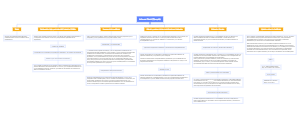
About Cell Biology (Fifth Edition Nucleus and Chromatin) edited by Ding Mingxiao, including nuclear structure and function, chromatin, chromosomes, etc.
Edited at 2023-11-18 16:35:50This is a mind map about bacteria, and its main contents include: overview, morphology, types, structure, reproduction, distribution, application, and expansion. The summary is comprehensive and meticulous, suitable as review materials.
This is a mind map about plant asexual reproduction, and its main contents include: concept, spore reproduction, vegetative reproduction, tissue culture, and buds. The summary is comprehensive and meticulous, suitable as review materials.
This is a mind map about the reproductive development of animals, and its main contents include: insects, frogs, birds, sexual reproduction, and asexual reproduction. The summary is comprehensive and meticulous, suitable as review materials.
This is a mind map about bacteria, and its main contents include: overview, morphology, types, structure, reproduction, distribution, application, and expansion. The summary is comprehensive and meticulous, suitable as review materials.
This is a mind map about plant asexual reproduction, and its main contents include: concept, spore reproduction, vegetative reproduction, tissue culture, and buds. The summary is comprehensive and meticulous, suitable as review materials.
This is a mind map about the reproductive development of animals, and its main contents include: insects, frogs, birds, sexual reproduction, and asexual reproduction. The summary is comprehensive and meticulous, suitable as review materials.
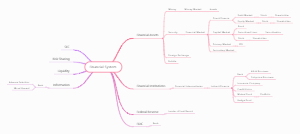
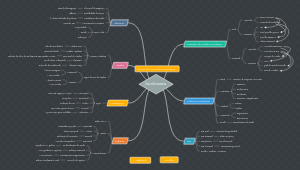
Nucleus and Chromatin
Nucleus structure and function
Definition and function of the nucleus: the storage place for genetic material in eukaryotic cells and the regulatory center of genetics and metabolism
nuclear envelope
outermost layer of cell nucleus
nuclear pore complex
A complex structure embedded in the fusion of the inner and outer nuclear membranes into nuclear pores
Structural components
nucleocytoplasmic ring
cytoplasmic loop
spoke
central hitch
Function (dual function bidirectionality)
passive diffusion
active transport
Transport of nucleophilic proteins across the nuclear pore complex
combine
transfer
Dual function: mediates the nuclear transport of proteins and the nuclear export of RNA and RNPs
double nuclear membrane
outer nuclear membrane
There are often ribosome particles attached to the surface, often continuous with the rough endoplasmic reticulum.
inner nuclear membrane
The surface is smooth, no ribosome particles are attached, and the inner surface is in close contact with the nuclear lamina
perinuclear space
nuclear lamina
The inner side of the inner nuclear membrane is a fibrous network structure assembled from V-shaped intermediate filament proteins. It is connected to the nuclear matrix inside the nucleus and to the intermediate filaments outside the nucleus.
composition
3 lamin proteins (mainly found in mammals): laminA, laminB, and lamin C
Function
① Structural support function: supports the inner side of the cell nucleus: ②Regulate gene expression: silent genes are more likely to be distributed near the nuclear lamina: ③Regulate DNA repair: laminA lamin is an essential substance for repairing double-stranded DNA breaks.
Nucleolus and nuclear body
The nucleolus is the most prominent spherical body structure in interphase
structure
Fiber center FC, contains rDNA, RNA polymerase 1 and transcription factors
The dense fiber component DFC contains RNA as its transcription site
Granule component GC: main structure of nucleolus, ribosomal subunit unit assembly, maturation, composition site
nucleolar skeleton
nucleolar chromatin
Function
①Synthesis and processing of rRNA; ②Assembly and maturation of ribosomes; ③Export and degradation of mRNA
nuclear body
Nuclear body: subnuclear domain other than chromatin and nucleolus, including Cajal bodies, GEMS, and interchromatin granules
nuclear matrix
Chromatin
Chromatin
The nucleus of interphase cells consists of DNA, Histones, non-histones, and A linear complex structure composed of a small amount of RNA, It is the form in which genetic material exists in interphase cells.
chromatin DNA
Genome size comparison
Genomic DNA type
protein coding sequence Tandem repeats encoding rRNA, tRNA, snRNA, and histones DNA containing repetitive sequences unclassified spacer DNA
Three configurations of DNA secondary structure
Type A
Type B (right-handed double helix)
Z type
chromatin proteins
Histones
Classification (according to function)
nucleosomal histones
H2A
H2B
H3
H4
H1 histone (larger molecule)
non-histone proteins
nucleosome
The basic unit of chromatin assembly
structure
(1) Each nucleosome unit includes about 200 bp of DNA supercoil, a histone octamer and a molecule of histone H1. (2) Histone octamers constitute the disc-shaped core particle of the nucleosome (3) The 146 bp DNA molecule is supercoiled and coiled around the histone octamer to form 1.75 turns. Histone H1 binds an additional 20 bp of DNA outside the core particle, Locks the entry and exit ends of nucleosome DNA and stabilizes nucleosomes. (4) Two adjacent nucleosomes are connected by linker DNA. The typical length is 60bp, and the value varies from 0 to 80bp in different species. Chromosome, electron microscopy, about 5.0kb. (5) The interaction between histones and DNA is mainly structural and basically does not depend on the specific sequence of nucleotides. DNA that does not bind to histones under normal circumstances (such as phage DNA or synthetic Polymeric DNA of histones), when incubated with histones isolated and purified from plants and animals, are just long enough to assemble into nucleosomal units in vitro. (6) The positioning of nucleosomes along DNA is affected by different factors.
Chromatin assembly
Preliminary process of assembly
Assembled into a solenoid with a diameter of 3 0nm
Multilevel spiral model
DNA→nucleosome-solenoid-supersolenoid→chromatids
Chromatin type
Euchromatin and heterochromatin
Active chromatin and inactive chromatin
Active chromatin: Transcriptionally active Histone acetylation is high Histone H1 rarely associates with active chromatin Methylation of the 4th lysine at the N-terminus of H3: 9th and 14th lysine acetylation: phosphorylation of the 10th serine Sensitive to DNase1
Inactive chromatin: Inactive H3 N-terminal lysine 9 is methylated instead of acetylated
Chromatin replication and expression
Chromatin replication and repair
Chromatin activation and deactivation
activation
DNA structure and phase changes of nucleosomes
Histone modifications
Acetylation of lysine residues in core histones
Histone H1 phosphorylation
Different histone modifications
The influence of HMG protein
HMG protein binds to the DNA double helix, selecting pyrimidine-rich nucleotide originals with a 40-fold advantage, which is related to DNA bending and the formation of higher-order structures of DNA-protein complexes.
inactivate
Inactivation of the X chromosome
positional mottling effect
Gene expression has position effects. Some active genes will be inactivated when transferred near chromatin regions.
Chromatin and gene expression regulation
Chromatin-templated transcription
nucleosome plow
Transcription factor-mediated regulation of gene expression
DNA binding domain
activation domain
repressing transcription factors
DNA methylation-mediated regulation of gene expression
inhibit transcription
Interfere with recognition of DNA binding sites by transcription factors
The DNA sequence recognized by the transcriptional activator is transcribed into a binding site for the inhibitory factor.
Genomic imprinting
Three-dimensional dynamic distribution of chromatin and cell ID
chromosome
form and structure
Centromere and kinetochore
central domain
Kinetochore domains along the outer surface of mitochores
Inner plate (associated with centromere central domain)
middle gap
Outer panel
Fiber crown (covers the 4th zone of the outer panel)
paired domain
Secondary constriction scar
The main component is the nucleolar tissue area
nucleolar organizing zone
Follow the body
telomeres
functional elements of chromosomes
at least one origin of DNA replication
a centromere
Chromosomes must have telomeres at both ends
Chromosome banding pattern
Band pattern and karyotype discovery experiments
special chromosomes
Polytene chromosomes: Diptera chironomid larvae salivary gland cells
Lamp brush chromosomes: shark oocytes, amphibian oocytes