MindMap Gallery Metabolic regulation at cellular level
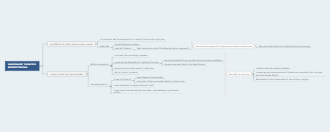
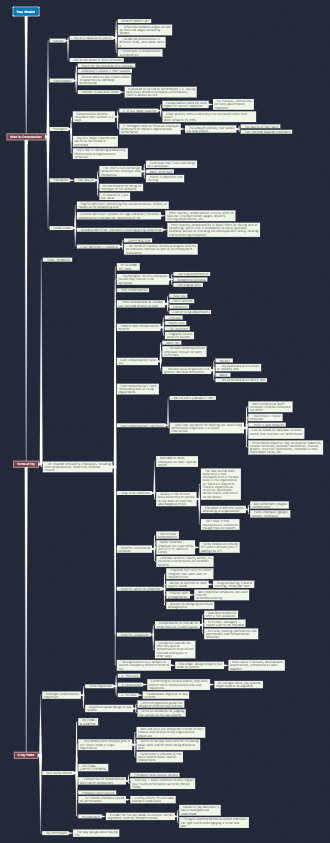
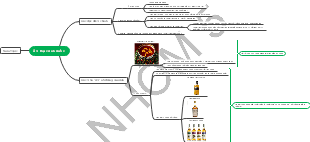
This is a mind map about metabolic regulation at the cellular level, including key enzymes, enzyme allosteric regulation, chemical covalent modification, enzyme content regulation, etc.
Edited at 2023-11-17 17:46:58This is a mind map about bacteria, and its main contents include: overview, morphology, types, structure, reproduction, distribution, application, and expansion. The summary is comprehensive and meticulous, suitable as review materials.
This is a mind map about plant asexual reproduction, and its main contents include: concept, spore reproduction, vegetative reproduction, tissue culture, and buds. The summary is comprehensive and meticulous, suitable as review materials.
This is a mind map about the reproductive development of animals, and its main contents include: insects, frogs, birds, sexual reproduction, and asexual reproduction. The summary is comprehensive and meticulous, suitable as review materials.
This is a mind map about bacteria, and its main contents include: overview, morphology, types, structure, reproduction, distribution, application, and expansion. The summary is comprehensive and meticulous, suitable as review materials.
This is a mind map about plant asexual reproduction, and its main contents include: concept, spore reproduction, vegetative reproduction, tissue culture, and buds. The summary is comprehensive and meticulous, suitable as review materials.
This is a mind map about the reproductive development of animals, and its main contents include: insects, frogs, birds, sexual reproduction, and asexual reproduction. The summary is comprehensive and meticulous, suitable as review materials.
Metabolic regulation at cellular level
Subcellular structural basis of metabolic regulation at cellular level
compartmental distribution
Concept: Enzymes involved in the same metabolic pathway are relatively independently distributed in specific regions or subcellular structures of cells.
Significance: It can avoid interference between different metabolic pathways, so that a series of enzymatic reactions in the same metabolic pathway can proceed more smoothly and continuously, which not only improves the speed of metabolic pathways, but also facilitates regulation.
key enzyme
Features
① Often catalyzes the first step reaction or the reaction at the branch point of a metabolic pathway, which is the slowest. Its activity can determine the overall speed of the entire metabolic pathway.
② Often catalyzes one-way reactions, and its activity can determine the direction of the entire metabolic pathway
③ In addition to being controlled by substrates, enzyme activity is also regulated by a variety of metabolites or effectors.
divided by speed
Quick adjustment
Change the molecular structure and activity of enzymes
allosteric adjustment
chemical modification regulation
slow adjustment
Change the synthesis or degradation rate of enzyme protein molecules and change the content of enzymes in cells
allosteric regulation of enzymes
Concept: Some small molecule compounds can specifically bind to specific parts outside the active center of the enzyme protein molecule, changing the conformation of the enzyme protein molecule, thereby changing the activity.
mechanism
1. "Pseudosubstrate" sequence (regulatory subunit) The active site of the catalytic subunit → prevents substrate binding and inhibits enzyme activity. 2. After the effector molecule binds to the subunit, the "pseudo-substrate" sequence conformation changes, releasing the catalytic subunit and exerting a catalytic effect.
Allosteric effectors regulate subunits → the tertiary and quaternary structures of enzyme molecules interconvert between the "T" conformation and the "R" conformation, affecting enzyme activity
significance
Changes in intracellular concentration can sensitively reflect the intensity of related metabolic pathways and corresponding metabolic needs. It can also change the conformation of key enzymes to affect enzyme activity, thereby regulating the intensity and direction of corresponding metabolism to coordinate related metabolism and meet corresponding metabolic needs. .
Feedback mechanism - The accumulation of metabolic end products indicates that the metabolism is too strong and exceeds the demand. The key enzymes of the metabolic pathway can often be allosterically inhibited, thereby reducing the intensity of the entire metabolic pathway and avoiding the production of more products than needed.
Some metabolic intermediates can allosterically regulate the key enzymes of multiple related metabolic pathways, so that these metabolic pathways can proceed in a coordinated manner.
chemical covalent modification
Concept: The side chains of certain amino acid residues on the peptide chain of enzyme proteins can be reversibly covalently modified under the catalysis of another enzyme.
Mainly: phosphorylation and dephosphorylation
Features
① The vast majority of key enzymes regulated by chemical modifications have two forms, inactive and active. They can be covalently modified and transformed into each other under the catalysis of two different enzymes. Enzymes that catalyze interconversion are controlled in vivo by upstream regulatory factors such as hormones.
② The chemical modification of enzymes is an enzymatic reaction catalyzed by another enzyme. One molecule of catalytic enzyme can catalyze the covalent modification of multiple substrate enzyme molecules, with strong specificity and amplification effect.
③Phosphorylation and dephosphorylation are the most common enzymatic chemical modification reactions.
④ Enzymes that catalyze covalent modifications themselves are often subject to allosteric regulation and chemical modification, and are coupled to hormone regulation to form signaling molecules (hormones, etc.), signal transduction molecules and effector molecules (key enzymes regulated by chemical modifications). ), making the regulation of intracellular enzyme activity more precise and coordinated.
Enzyme content regulation
Change its synthesis or degradation rate, consume more ATP, take a long time, and slow regulation
Induces or represses enzyme protein-coding genes (enzyme substrates, products, hormones or drugs)
Affects transcription
Enzyme inducers (substrates or analogues)
Enzyme inhibitors (metabolites)
Change enzyme protein degradation rate
way
Lysosomal proteolytic enzymes nonspecifically degrade enzymatic proteins
ATP-dependent ubiquitin-proteasome pathway