 Wondershare EdrawMind
MindMap Gallery Journalism-Gerbner Growing up with television The process of acculturation
- 40
Journalism-Gerbner Growing up with television The process of acculturation
News communication-mass communication effects-"acculturation theory" includes training theory, television in society, cultural indicators, methods of acculturation analysis, international acculturation analysis, etc.
Edited at 2023-12-14 09:56:38
Journalism-Gerbner Growing up with television The process of acculturation
- Recommended to you
- Outline

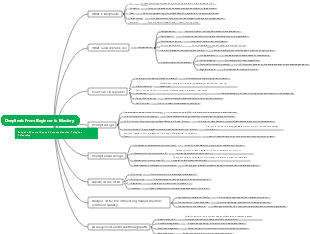

Gerbner: Growing up with television: The process of acculturation
"Cultivation" theory
Questions raised
Lippmann
The first is the actual “objective reality”
The "symbolic reality" selectively prompted by the media, that is, the mimetic environment
The "image about the external world" that people recall in their minds, that is, "subjective reality"
So what impact does the media have on people’s reality research?
How does this effect occur?
What tendencies does the media have in presenting “reality”?
The Origin and Background of “Cultivation” Theory
Originated in the late 1960s, targeting violence and crime issues in American society
The first is to analyze the relationship between murder and violent content on TV screens and social crime
Examine the impact of these contents on people's understanding of social reality
Consequences of the "Cultivation" Theory
The "symbolic reality" prompted by mass media exerts a huge influence on people's knowledge and understanding of the real world.
Subjective reality does not correspond to reality
This influence is not short-term, but a long-term, subtle, and "cultivation" process. It unconsciously restricts people's view of reality.
Basic point
"Cultivation Analysis" is based on a certain social outlook and communication outlook.
Providing this "consensus" is an important task of social communication
The Unique Advantages of Cultivation Analytics
Television has the largest audience and the longest daily exposure
Literacy skills necessary for exposure to print media are not required
TV combines visual and auditory means to have a strong sense of witnessing, presence and impact
Modern people have been living with television since childhood, and it is difficult to distinguish between the "world on television" and reality.
Television widely engages all segments of society
The "real life" described by the media makes it difficult for the audience to distinguish between fiction and reality
The periphery of the theory: "Cultivation Analysis" is not an isolated study. On the contrary, it is a mailing component of a comprehensive and systematic study called "Cultural Indicators Study"
"Institutional analysis": Its main purpose is to analyze various institutional pressures and constraints in the production, transmission and consumption of mass communication information, and to reveal the reasons for the formation of specific tendencies in mass communication content.
The country’s legislative, judicial and administrative departments’ legal and policy provisions on the communication system and media activities
The intervention and influence of the operating departments of media companies, external bank capital, advertisers, etc. on the information production and dissemination process
Competition within the industry and pressure from various interest groups
The impact of general audiences on the information dissemination process
"Message System Analysis"
Message system analysis reveals that messages are not a random combination of symbols, but a system with a complete meaning structure that is processed and organized according to certain viewpoints and ideologies.
The specific manifestation is that most of the protagonists in TV programs are holders of the core values of the local country. For example, they are all young and middle-aged men, and elderly people are rarely the protagonists. This shows that most of the messages are based on a certain value system. realize arrangement combination
"Cultivation Analysis"
Communication content has specific values and ideological tendencies. These tendencies are usually conveyed to the audience not in the form of preaching, but in the form of reporting facts and providing entertainment. They form people's view of reality and society in a subtle way. This is " The core idea of "cultivating analysis"
television in society
How does television work?
The special form of television lies in "industrial operation", so the content produced by television is almost the same kind, and this kind of thing is in line with the current social order.
What is the essence of what television conveys?
TV seems to have a lot of programs, but generally speaking, the content expressed is consistent, and for a long time, most audiences will have to accept the content conveyed by TV. The method that television relies on is the "programming model"
The premise of "acculturation" is "the overall model of program arrangement"
The easiest way to form a solid consensus on social reality is the overall model of programming, and the entire society has been exposed to this programming model on a long-term and regular basis. Audiences born into such a symbolic world will inevitably be exposed to various recurring patterns in the world, perhaps multiple times a day. Taken as a whole, what we call "cultivation analysis" focuses on the consequences of long-term exposure to the entire information system.
cultural indicators
Cultural Indicators Project
Stereotypes of gender, minority and age roles, health, science, family, educational achievement and goals, politics, religion, environment and a host of other topics
What is “Institutional Process Analysis”?
One such trend, called "institutional process analysis," is designed to investigate the formation and systematization of policies that govern the flow of mass media messages. We call this information system analysis and cultural analysis. This analysis involves a systematic review of a sample of TV series aired by the network over a week-long period each year, delineating characteristics and trends that are unique to the world television presents to its viewers.
What are "cultivation analysis" and "cultivation difference"?
The former is to see if people who watch more TV will be more average; The latter is a control variable, proving whether people who watch more TV will be more middle-class.
Shift from "effect" research to "cultivation" research
“Effectiveness” Research Methods
Traditional "effect" research is based on assessment in specific fields, and they tend to conduct research between groups that are "exposed to certain types of information" and "not exposed to certain types of information."
Reasons for turning to “acculturation research”
"Cultivation research" focuses not on how they view it, but on what changes will occur after long-term viewing. From the perspective of acculturation research, what the audience sees is a constant content. The reason why "acculturation research" is adopted is that it is difficult to refine which symbols have an impact on us, so we simply do not study them. On the other hand, it is not meaningful to study this in detail. More importantly, most groups will understand it. Watching television, and whether continued exposure will have an impact on people is more worthy of attention. The audience is not completely carried away, but continues to interact under the conditions of the integration of the message conveyed by the TV, the audience themselves, and the environment in which the audience is located.
Cultivation Analysis Methods
Specific design of the acculturation analysis
The design of cultivation analysis questions includes the format of mental projection, forced choice, and forced judgment. Test based on 3 different levels
The practical effects of acculturation analysis
A comprehensive two-system revalidation of hundreds of cultivation studies conducted over more than 20 years (using statistical methods of integrated analysis) showed that: if measured by public institutions such as Pearson correlation coefficients, the unique characteristics of the cultivation relationship The intensity value reaches about 0.1. The unique intensity value of cultivation analysis reached 0.1. At the same time, the small effects also require sufficient attention.
mainstream
what is mainstreaming
A society's attitudes, beliefs, values, customs and other contents that are general, functional and stable are the mainstream "similar to the core values of socialism"
Why TV is the “melting pot” for “mainstreaming”
As a very important medium, television will gradually unify people's various views and values over a long enough period of time. It is somewhat similar to the long-term erosion of dam stones by river water. As long as it lasts long enough, no matter what the stones are, they will eventually be ground into round pebbles.
Findings from the Cultivation Analysis
'Despicable World' Survey
"Gender" survey
"Marriage and Work" Survey
"Political Views" Survey
"Foreign Policy" Survey
international acculturation analysis
Pingree and Hawkins
More people watching US programs will see Australia as a dangerous and evil world
Bowman
Dutch programs are very similar to American TV programs, but heavy viewers will prefer "informational" programs, which is completely different from the situation in the United States.
kong and morgan
Female viewers exposed to American television are more American in terms of gender and family values, and tend to be more liberal. At the same time, Korean male students who watch more American TV will have a stronger awareness of American hostility and Korean cultural protection. This illustrates a nationalistic "violent reaction" among the more political Korean college students
Morgan and Shanahan
In Argentina, Party A’s father is an advertiser, so American programs will have a prominent place, and long-term viewing will cultivate a sense of traditional gender roles and totalitarian views. In Taiwan, the media is more under official control and there are very few American programs, so the acculturation effect is not obvious.
american and soviet tv shows
America’s heightened anxiety about neighborhood safety is linked. In the Soviet Union, viewers would assume that housework was primarily a woman's responsibility. In the United States, heavy viewers are much less satisfied with life than light viewers, but not in the former Soviet Union. The Soviet Union lacked regular prime-time TV dramas, so it would present a more fragmented model that relied on movies, dramas, documentaries, and classics. In this way, Soviet TV was indeed more diverse than American TV, and because of this, the mainstreaming effect It was even more obvious in the United States, and the different Soviet republics had programs in different languages, which gave their televisions a relative diversity, and ultimately became a centrifugal force that split the former Soviet Union.
Cultivation Theory in the 21st Century
The three major television networks attracted more than 90% of the audience
The development of technology has changed the situation in which radio and television networks dominate the world.
Computers and the Internet appear to threaten the stability of the traditional media landscape