MindMap Gallery Enzymes and enzymatic reactions mind map
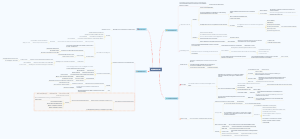
This is a mind map about enzymes and enzymatic reactions, including enzymatic reaction kinetics, enzyme regulation, enzyme molecular structure and function, etc.
Edited at 2023-11-16 17:38:40This is a mind map about bacteria, and its main contents include: overview, morphology, types, structure, reproduction, distribution, application, and expansion. The summary is comprehensive and meticulous, suitable as review materials.
This is a mind map about plant asexual reproduction, and its main contents include: concept, spore reproduction, vegetative reproduction, tissue culture, and buds. The summary is comprehensive and meticulous, suitable as review materials.
This is a mind map about the reproductive development of animals, and its main contents include: insects, frogs, birds, sexual reproduction, and asexual reproduction. The summary is comprehensive and meticulous, suitable as review materials.
This is a mind map about bacteria, and its main contents include: overview, morphology, types, structure, reproduction, distribution, application, and expansion. The summary is comprehensive and meticulous, suitable as review materials.
This is a mind map about plant asexual reproduction, and its main contents include: concept, spore reproduction, vegetative reproduction, tissue culture, and buds. The summary is comprehensive and meticulous, suitable as review materials.
This is a mind map about the reproductive development of animals, and its main contents include: insects, frogs, birds, sexual reproduction, and asexual reproduction. The summary is comprehensive and meticulous, suitable as review materials.
Enzymes and enzymatic reactions
regulation of enzymes
Purpose
Regulate metabolic activity
rate limiting enzyme/key enzyme
An enzyme that changes the speed or direction of an entire metabolic reaction by changing its catalytic activity
Adjustment method
Enzyme activity regulation (quick regulation)
Activation of zymogens and zymogens
zymogen
inactive precursor of enzyme
zymogen activation
The process of converting an inactive zymogen into an active enzyme
Zymogen → (under specific conditions) hydrolyzes one or several short peptides → changes the molecular conformation → forms or exposes the active center of the enzyme
substance
The active center of the enzyme is formed or exposed
physiological significance
Allow enzymes to function in specific parts and environmental conditions to ensure normal physiological functions
Prevents cells from digesting themselves and has a protective effect on the body
pancreatitis
Caused by autodigestion of trypsin
enzyme storage form
Regulation of isoenzymes
Refers to a group of enzymes that catalyze the same chemical reaction but have different molecular structures, physical and chemical properties and even immunological properties of the enzyme proteins.
Features
There are differences in the primary structure, but the spatial structure is the same or similar
adjust
physiological significance
Isoenzymes can be used as genetic markers for genetic analysis and research
Changes in isozyme profiles help diagnose diseases
Regulation of allosteric enzymes
allosteric regulation
definition
Some metabolites can reversibly bind to parts other than the active center of certain enzyme molecules, causing the enzyme conformation to change, thereby changing the enzyme's catalytic activity.
allosteric enzyme
Enzymes capable of changing activity through allosteric regulation
branch
catalytic site
Contains catalytic groups (active centers)
Adjustment part
Combine with allosteric agents to change the conformation of the enzyme
Allosteric enzymes are classified as oligomeric or polymeric enzymes
The active center can be located independently on one subunit (catalytic subunit)
The regulatory site can be independent of one subunit (regulatory subunit)
eg: Allosteric regulation of protein kinase A
allosteric agent
Substances that cause enzyme molecules to undergo allosteric reactions
Nature
Small molecule metabolites or cofactors, a few of which are proteins
Classification
allosteric activator
allosteric inhibitor
Synergistic effects of allosteric regulation
Synergistic effect of allosteric enzymes
positive synergy
negative synergy
Characteristics of allosteric regulation
Changes in enzyme activity are achieved through changes in the conformation of the enzyme molecule
Allostery of enzymes involves only changes in non-covalent bonds
Factors that regulate enzyme activity are metabolites
is a non-energy consuming process
No amplification effect
covalent modification regulation
type
Phosphorylation and dephosphorylation
Acetylation and deacetylation
Methylation and demethylation
Adenylation and deadenylation
-SH and -S-S interchange
Features
Enzymes exist in two differently modified and differently active forms
There are changes in covalent bonds
There are other mediating factors (such as hormones)
energy consuming process
There is an amplification effect
Enzyme content regulation (slow regulation)
definition
By changing the rate of enzyme protein synthesis or degradation in cells, the absolute content of enzyme molecules is adjusted, affecting its catalytic activity, thereby regulating the speed of metabolic reactions.
Enzyme protein synthesis can be induced or repressed
inducer
Accelerate enzyme synthesis
repressor
Reduce enzyme synthesis
induced enzyme
enzymes that can be inducibly expressed
Enzymatic protein degradation
Change the degradation rate of enzyme protein molecules
lysosome
Releases proteolytic enzymes to degrade proteins
proteasome
Ubiquitin recognition, protein binding
Proteolytic enzymes degrade proteins
Enzymatic reaction kinetics
Study the speed of enzymatic reactions and their influencing factors
Influencing factors
Substrate concentration (S)
intermediate product theory
Michaelis-Menten equation
Substrate concentration and rate relationship
Km is equal to the substrate concentration at which the enzymatic reaction rate reaches half of its maximum value
The meaning of Km and Vmax
Km: substrate concentration at half the maximum reaction rate
Km can reflect the affinity between enzyme and substrate
The smaller the Km, the greater the affinity between the enzyme and the substrate.
Can be used to determine reaction series
Km is the characteristic constant of the enzyme
Judge different enzymes based on different values of Km
Km can be used to determine the optimal substrate for an enzyme
By assay when an enzyme has several different substrates present. .
Vmax can be used to calculate the conversion number of enzymes
Enzyme turnover number (= kinetic constant K3)
When an enzyme is completely saturated with substrate, the number of molecules that each enzyme molecule catalyzes to convert the substrate into product per unit time is called the conversion number of the enzyme.
Vmax=K3【E】
significance
Can be used to compare catalytic capacity per unit of enzyme
Double reciprocal graphing method
Enzyme concentration (E)
enzyme concentration on reaction rate
temperature reflex
pH value
effect
pH affects enzyme conformation
pH affects the dissociation state of the catalytic group of the enzyme
pH affects the dissociation state of substrate molecules
Enzyme protein denaturation
Optimum pH value
The pH of the solution when the enzyme catalytic activity is highest
Most enzymes are optimal between 6.5 and 8.0
Pepsin 1.8
is not a fixed constant
Inhibitor I
reversible inhibition
Features
Non-covalently bound to the enzyme - removed by physical methods (dialysis/ultrafiltration) - enzyme activity restored
Classification
competitive inhibition
Competitive inhibitors and substrates compete for binding to the active center of the enzyme
reason
Inhibitors are structurally similar to substrates
Increasing [S] can reduce or eliminate the inhibitory effect
e.g.
Malonate competes with succinate for succinate dehydrogenase
Antibacterial mechanism of sulfa drugs
Competes with para-aminobenzoic acid for dihydrofolate synthase
noncompetitive inhibition
Inhibitors bind to essential groups other than the active center of the enzyme
There is no competitive relationship between I and S, but the inhibitor-enzyme-substrate complex cannot release the product → the enzyme activity is reduced
Vmax decreases, Km remains unchanged
Features
anticompetitive inhibition
Inhibitors can only bind to the intermediate complex between enzyme and substrate, inhibit enzyme activity, and reduce the amount of intermediate products.
Vmax decreases, Km decreases
Features
irreversible inhibition
Covalently bonded to the enzyme—cannot be removed by physical methods—enzyme activity cannot be restored
Activator A
reaction speed and initial speed
enzymatic reaction speed
Under specified reaction conditions, it is expressed by the consumption of substrate and the production of product per unit time.
initial speed
The consumption of substrate is very small (generally within 5%), and the reaction speed when the substrate concentration is much greater than the enzyme concentration
enzyme
definition
Enzymes are biological macromolecules that have catalytic effects and are chemically composed of proteins and nucleic acids. Enzymes are biological catalysts.
importance
Ensure a highly orderly metabolism
Abnormal enzyme activity causes disease
Participate in cell transduction and metabolic regulation
Participate in the regulation of material metabolism and energy metabolism
Practical application
Used in industrial and agricultural production and daily life
guide disease treatment
develop drugs
Molecular structure and function of enzymes
Type of enzyme
monomeric enzyme
single polypeptide chain
Oligomerase
Composed of multiple identical or different subunits linked by non-covalent bonds
multi-enzyme system
Several enzymes with different catalytic functions polymerize with each other
The molecular composition of enzymes
simple enzyme
holoenzyme (conjugated enzyme)
protein part
Enzyme protein
Cofactor
include
Metal ion
type
Metalloenzymes
Metal ions bind tightly to enzymes
metal activating enzyme
Metal ions are not tightly bound to enzymes
effect
Participate in catalytic reactions and transfer electrons
Cytochrome C oxidase →Fe, Cu
Serves as a bridge between enzyme and substrate
Hexokinase→Mg-ATP complex
Stabilize enzyme conformation
Carboxypeptidase→Zn
Neutralize anions and reduce electrostatic repulsion in reactions
Amylase Cl neutralizes the charge
small molecule organic compounds
Classification (how tightly it binds to the enzyme protein)
coenzyme
Loosely bound, can be removed by dialysis or ultrafiltration
prosthetic base
Tightly bound and cannot be removed by dialysis or ultrafiltration
Features
Limited types, usually vitamins or derivatives
Some enzymes contain organic molecules, coenzymes and metal ions
effect
Cofactors determine the type of enzyme catalyzed (reaction specificity)
The enzyme protein determines the type of substrate it catalyzes (substrate specificity)
Features
There are many types of enzyme proteins and few types of cofactors
The same coenzyme can combine with many different enzyme proteins to form different holoenzymes.
An enzyme protein often binds only to specific cofactors
enzyme active center
The primary structure of an enzyme protein is the most important chemical structure that determines its specific three-dimensional structure and catalytic function. It is the structural basis for the enzyme to perform its catalytic function.
definition
The local spatial region of the enzyme molecule that directly binds to the substrate and catalyzes it to produce the product is the part of the enzyme molecule that performs the catalytic function.
Active center = substrate binding site catalytic site
Features
The active site accounts for only a small part of the total enzyme molecule
Three-dimensional space structure, certain flexibility and movement
Prosthetic groups and coenzymes also participate in the composition of the active center
The active site is located in a cleft on the enzyme surface, creating a hydrophobic environment that facilitates substrate binding.
Secondary bond → enzyme-substrate intermediate complex
Determine the specificity and activity of enzymes
essential group for enzyme
essential group
definition
A group in an enzyme molecule that participates in forming the active center of the enzyme and is necessary to maintain the specific conformation of the enzyme.
distributed
active center
binding group
combine with substrate
catalytic group
Catalyzes the conversion of substrates into products
outside active center
Maintain the proper spatial conformation of the enzyme active center
Acts as a modulator to regulate binding sites
Enzyme properties
Highly specific (highly specific for substrate)
Classification
Stereochemical specificity
Stereospecificity
Can only catalyze the reaction of one stereoisomer
L-glutamic acid dehydrogenase → only catalyzes L-glutamic acid
Only one stereoisomer can be produced
Lactate dehydrogenase catalyzes pyruvate to produce only L-lactic acid
geometric isomerism specificity
Acts only on one of the cis-trans isomers
Fumarate enzyme only catalyzes fumaric acid (fumaric acid) to produce L-malic acid
Non-stereochemical specificity
relative specificity
key specificity
Lipase, phosphatase, aminopeptidase
group specificity
Proteolytic enzymes
absolute specificity
An enzyme acts on only one substrate, undergoes a specific reaction, and produces one product
Urease
mechanism
lock and key theory
can only explain absolute specificity
induced fit theory
When enzyme and substrate are close to each other, they induce each other structurally, deform and adapt to each other, and then combine to form an enzyme-substrate complex.
Enzymes have distinctive characteristics that are different from ordinary catalysts
Enzymes have characteristics of general catalysts
Reduce activation energy
Enzymes are biological catalysts: enzymatic reactions are extremely efficient
Greatly reduces the activation energy of the reaction
Enzymes increase reaction efficiency by promoting the formation of transition states from substrates
Enzymes combine with substrates to form intermediates
Induced fit binds the enzyme closely to the substrate
enzyme-substrate complex
E S=【E-S】→P E
The enzyme-substrate intermediate complex puts the substrate structure in an unstable or transitional state, greatly reducing the activation energy of S
Affinity of enzyme to transition state > Affinity of enzyme to substrate or product
Proximity effect and directional arrangement position the substrate correctly at the active center of the enzyme
proximity effect
After the enzyme and the substrate form a complex, the substrate and the substrate, the catalytic group and the substrate are combined in a small area on the surface of the same molecule (enzyme), and the reactive groups are close to each other, thereby increasing the effective concentration
→High substrate concentration determines high reaction rate
Orientation effect
The effect of correct positioning between the reactive groups of the reactants and between the catalytic groups of the enzyme and the reactive groups of the substrate
The influence of proximity effect and orientation effect on reaction speed
Increase effective concentration
Make substrate concentration higher near the active center
Correct positioning
Enzymes guide the electron orbitals of substrate molecules
intramolecular reaction
Enzymes convert intermolecular reactions into intramolecular reactions
fixed effect
Surface effects desolvate substrate molecules
The catalytic mechanism of enzymes presents multi-catalytic effects
covalent catalysis
nucleophilic catalysis
electrophilic catalysis
Acid-base catalysis
Histidine imidazolyl—the most active catalytic group
Diversity of enzyme catalytic mechanisms
Enzymes reduce the activation energy of reaction systems through various mechanisms
Different enzymes have different catalytic mechanisms
The same enzyme often acts synergistically through several mechanisms