MindMap Gallery Mind map of the structure and function of nucleic acids
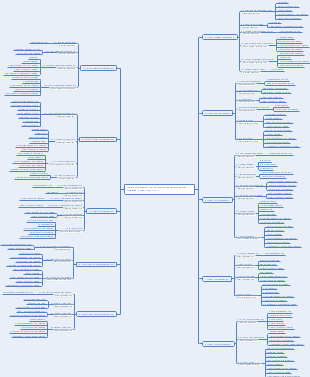
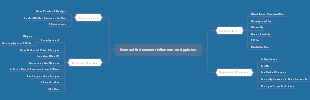
This is a mind map about the structure and function of nucleic acids. Nucleotides are biological macromolecules whose basic building blocks have complex spatial structures and important biological functions.
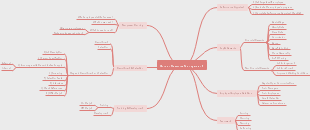
Edited at 2023-11-16 17:37:00This is a mind map about bacteria, and its main contents include: overview, morphology, types, structure, reproduction, distribution, application, and expansion. The summary is comprehensive and meticulous, suitable as review materials.
This is a mind map about plant asexual reproduction, and its main contents include: concept, spore reproduction, vegetative reproduction, tissue culture, and buds. The summary is comprehensive and meticulous, suitable as review materials.
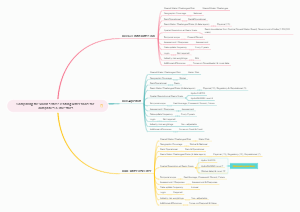
This is a mind map about the reproductive development of animals, and its main contents include: insects, frogs, birds, sexual reproduction, and asexual reproduction. The summary is comprehensive and meticulous, suitable as review materials.
This is a mind map about bacteria, and its main contents include: overview, morphology, types, structure, reproduction, distribution, application, and expansion. The summary is comprehensive and meticulous, suitable as review materials.
This is a mind map about plant asexual reproduction, and its main contents include: concept, spore reproduction, vegetative reproduction, tissue culture, and buds. The summary is comprehensive and meticulous, suitable as review materials.
This is a mind map about the reproductive development of animals, and its main contents include: insects, frogs, birds, sexual reproduction, and asexual reproduction. The summary is comprehensive and meticulous, suitable as review materials.
Structure and function of nucleic acids
Physical and chemical properties of nucleic acids
Nucleic acid molecular size
DNA
Eukaryotes are large, prokaryotes are small
RNA
Generally small and uneven in size
settling behavior
Nucleic acid molecules of different sizes have very different sedimentation rates
Ultracentrifugation
Solubility and Viscosity
Nucleic acid molecules have strong UV absorption
conjugated double bonds of bases
260nm
application
DNA/RNA quantitative analysis
Determine the purity of nucleic acid samples
Denaturation, renaturation and hybridization
transsexual
definition
Under the action of certain physical and chemical factors, the higher-order structure of nucleic acids is destroyed, resulting in changes in their physical and chemical properties and biological functions.
Nature
Hydrogen bonds and base stacking forces are destroyed, but the primary structure does not change.
Influencing factors
physics
Heating, stirring, ultrasonic, radiation
Chemical
Strong acid, strong alkali, urea, organic solvent
feature
Enhanced light absorption
Color enhancement effect
When DNA is denatured, the OD260 of its solution increases
melting curve
Solubility and viscosity reduced
Easily digested by nucleases
inactivate
DNA renaturation
definition
When the denaturing conditions are slowly removed, the two dissociated complementary strands can re-pair and restore their original structure, physical and chemical properties and biological activity.
subtractive color effect
When DNA is renatured, the OD260 of its solution decreases.
annealing
Thermal denatured DNA can be renatured after slow cooling
Nucleic acid molecule hybridization
definition
The process in which denatured nucleic acids from different sources form complementary double strands according to the principle of complementary base pairing during renaturation.
application
in situ hybridization
Study the location of a gene in a DNA molecule
Identify sequence similarities between two nucleic acid molecules
Detect whether certain specific sequences are present in the test sample
chip gene technology
Classification
Southern hybridization-DNA hybridization
Northern hybridization-RNA hybridization
Western hybridization-protein hybridization
RNA spatial structure and function
Linear macromolecules with 3’,5’-phosphodiester bonds
Directionality
5’→3’
Structural features
Many types and diverse structures
Smaller than DNA molecules
Mostly single chain, with local card issuance structure
basic structural unit
AMP, GMP, CMP, UMP (phosphodiester bond)
Contains more rare bases
Classification
coding RNA
mRNA
Function
The mRNA directs the synthesis of protein amino acid sequence according to its own base sequence.
genetic code table
Features
Versatility
Directionality
continuity
non-overlapping
degeneracy
Swingability
precursor
Nuclear heterogeneous RNA (hnRNA)
Contains introns (non-coding sequences) and exons (coding sequences), and is inactive (prokaryotic mRNA does not need to be processed or modified to be active)
Eukaryotic hnRNA becomes mature mRNA after splicing
structure
(The role of 5’ cap and 3’ poly A tail)
Maintains mRNA stability and regulates translation initiation
Transport of mRNA from nucleus to cytoplasm
5’ cap
composition
7-Methylguanine triphosphate nucleoside (m7GpppNm)
Can bind to cap-binding protein (CBP)
Guanylyltransferase is responsible for capping
3’ Poly A (adenosine) tail
polyA binding protein
Poly(A) polymerase is responsible for tailing
effect
Reverse transcription using the structural characteristics of the polyA tail of eukaryotic mRNA
5’ untranslated region (5’-UTR)
3’ untranslated region (3’-UTR)
Coding region (open reading frame ORF)
Determine the amino acid sequence of a polypeptide chain
non-coding RNA
Constitutive (key factor to ensure the transmission of genetic information)
tRNA
Function
Amino acid carriers in protein synthesis
Features
stability
Contains a variety of rare bases
structure
Secondary Structure-Clover Shape
The 3’ end of tRNA ends with CCA and is covalently linked to an amino acid
Different tRNAs can bind different amino acids
Aminoacyl-tRNA synthetase catalyzes specific binding
The anticodon on tRNA recognizes the codon on mRNA according to the principle of base complementarity.
Tertiary Structure - Inverted "L"
rRNA
Function
Ribosomes composed of rRNA are the site of protein synthesis
The most abundant RNA in cells (>80%)
Limited variety
structure
Secondary structure-flower shape
Ribozyme - catalyze small RNA
snRNA (small nuclear RNA)
Responsible for the processing, cutting and transport of hnRNA
snoRNA (small nucleolar RNA)
Participate in the processing and modification of rRNA
scRNA (small cytoplasmic RNA)
Guide proteins containing signal peptides into the endoplasmic reticulum for synthesis
Regulatory (involved in the regulation of gene expression)
IncRNA
miRNA
circRNA
as a miRNA sponge
Bind to protein
translated into protein
siRNA
piRNA
The spatial structure and function of DNA
structure
The secondary structure of DNA is a double helix
Research Background
Chargaff rules
The base composition of DNA is species-specific
DNA base composition remains unchanged
A G=C G
A=T,G=C
DNA base composition is not tissue or organ specific
DNA X-ray diffraction analysis results
Data on the chemical structure of nucleic acids and nucleotides
Structural features
Antiparallel double strands, right-handed helix (major and minor grooves alternate on the surface)
Diameter 2.37nm, pitch 3.4nm, 10 base pairs per turn
The hydrophilic deoxyribose and phosphate group backbone are located on the outside of the double helix structure, and the hydrophobic bases are located on the inside.
complementary base pairs
AT has two hydrogen bonds and CG has three hydrogen bonds.
The base pair plane is perpendicular to the helix axis
Hydrophobic forces and hydrogen bonds maintain its stability
The overlapping of two base pairs creates a base stacking force
significance
Revealed the molecular mechanism of genetic information replication and transmission
semi-preservative copy
definition
In the DNA of the daughter cells, one single strand is completely inherited from the parent, and the other strand is completely resynthesized. The DNA of the two daughter cells has the same base sequence as the parent DNA.
ushered in a new era of molecular biology
Polymerase chain reaction (PCR technology)
Diversity
right hand spiral
Type A
Type B
left-handed spiral
Z type
DNA double strands are coiled and folded to form a higher-order structure
The highly ordered and dense structure of eukaryotic DNA
DNA chromatin exhibits a bead-like structure under an electron microscope
basic unit of chromosome
nucleosome
Composition
DNA
About 200bp
Histones
linker histones
H1
nucleosomal histones
H2A, H2B, H3, H4
Formation
The 150bp DNA double strand coils about 1.75 times on the nucleosome histone to form the core particle.
The connecting region between core particles consists of 60bp DNA and H1
folding process
The first level of folding forms nucleosomes
DNA length compressed 6 to 7 times
The second fold forms a hollow spiral tube
6 nucleosomes per turn, H1 is on the inside
DNA length is compressed 40 to 60 times
The third fold forms a supercoiled tube
Superhelical structure
The DNA double helix is then coiled to form
Classification
positive supercoil
Coils in the same direction as the DNA double helix
negative supercoil
The coiling direction is opposite to the direction of the DNA double helix
Prokaryotic DNA circular supercoils
negative supercoil
DNA length compressed 40 times
The fourth fold forms chromosomes
Function
DNA is the material basis of genetic information
A gene is a specific segment of a DNA molecule
The order of nucleotides determines the function of a gene
The primary structure of nucleic acids is the sequence of nucleotides
primary structure of DNA
The order of the deoxynucleotides that make up the DNA chain
key
3’, 5’ phosphodiester bond
main chain
alternating phosphate groups pentose sugar
side chain
base
end
5’ and 3’ ends
Writing method
How to express the size of nucleic acid molecules
Single chain: nt
Double stranded: bp
Double strand length >1000: kb
Small nucleic acid fragments (<50bp): oligonucleotides
Definition of nucleic acid
Nucleotides are biological macromolecules whose basic building blocks have complex spatial structures and important biological functions.
Classification of nucleic acids
DNA
distributed
More than 90% is distributed in the nucleus
Mitochondria, chloroplasts, plasmids
effect
Carry genetic information and determine genotype
RNA
distributed
Nucleus, cytosol, mitochondria
effect
Participate in the expression of DNA genetic information
Certain viral RNAs can also serve as carriers of genetic information
Biological functions of nucleic acids
The material basis of genetic variation
transmitter of biological genetic information
Definition of genes
A specific segment of DNA that contains the information needed to synthesize a functional molecule
Generates the entire nucleotide sequence of a polypeptide chain or functional RNA
biological regulation
microRNA
lncRNA
circRNA
Some have enzymatic activity
ribozyme
chemical composition of nucleic acids
element
C, H, O, N, P (stable content)
A small amount of inorganic salt ions: Na, K, Mg, Mn, etc.
molecular
Nucleotides are the basic building blocks of nucleic acids
composition
Phosphoric acid
Nucleosides (deoxynucleosides)
composition
Pentose
Ribose
Deoxyribose
base
Purine
A
G
pyrimidine
C
T (only in DNA)
U (in RNA only)
form
Glycosidic bond (1*C of pentose sugar)
nucleoside
AR, GR, CR, UR
deoxynucleoside
dAR, dGR, dCR, dTR
form
Phosphate bond (5*C connecting pentose) → hydroxyl group of pentose phosphate
Free nucleotides in the body
polyphosphate nucleotides
NDP,NTP
Cyclic nucleotides (second messengers)
cAMP, cGMP
bioactive substances
NAD, NADP, FAD, etc. all contain AMP
Nucleic acids are polynucleotide chains formed by 3’, 5’ phosphodiester bonds.
Directionality: 5’→3’