MindMap Gallery Talent inventory review mind map
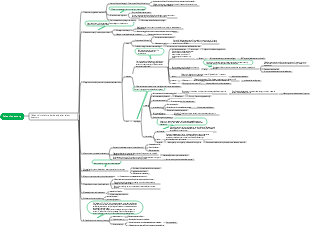
Regarding the talent inventory review mind map, it includes 8 questions that must be solved during the talent inventory, 10 key points before, during and after the talent inventory, etc.
Edited at 2023-11-16 12:00:02This is a mind map about bacteria, and its main contents include: overview, morphology, types, structure, reproduction, distribution, application, and expansion. The summary is comprehensive and meticulous, suitable as review materials.

This is a mind map about plant asexual reproduction, and its main contents include: concept, spore reproduction, vegetative reproduction, tissue culture, and buds. The summary is comprehensive and meticulous, suitable as review materials.
This is a mind map about the reproductive development of animals, and its main contents include: insects, frogs, birds, sexual reproduction, and asexual reproduction. The summary is comprehensive and meticulous, suitable as review materials.
This is a mind map about bacteria, and its main contents include: overview, morphology, types, structure, reproduction, distribution, application, and expansion. The summary is comprehensive and meticulous, suitable as review materials.
This is a mind map about plant asexual reproduction, and its main contents include: concept, spore reproduction, vegetative reproduction, tissue culture, and buds. The summary is comprehensive and meticulous, suitable as review materials.
This is a mind map about the reproductive development of animals, and its main contents include: insects, frogs, birds, sexual reproduction, and asexual reproduction. The summary is comprehensive and meticulous, suitable as review materials.
Talent inventory
8 questions that must be solved in talent inventory
1. Why should we conduct talent inventory? 2. Talent inventory method 3. Select talent evaluation criteria based on inventory purposes 4. Commonly used tools for talent inventory 5. Commonly used tools for talent assessment 6. Talent calibration meeting 7. Key links and results output of talent inventory 8. Key factors for successful talent inventory
10 key points before, during and after talent inventory
Early stage
1. Clarify the goals and objectives of the inventory (why a talent inventory is needed)
Definition: Talent inventory is a process of assessing the quantity and quality of organizational talent and formulating and implementing plans to bridge the gap in quality and quantity of talent in order to meet organizational development needs. (Talent inventory drives the solution of talent issues)
Business context driving talent inventory
Business stagnation/development/retreat
The core point of talent inventory is to find the gap between talent and business needs/strategy, and develop a plan to fill the gap.
Need to understand and clarify business goals
core positions
Strategy-Business-Organizational Capabilities-Key Competencies-Talent Standards
key capabilities
Capability transformation
The relationship between talent inventory and business development
Understand business strategy
Develop human resources strategies based on business strategies
Whether existing talent can meet business strategy
three dimensions of organization
Are you willing/can/allowed?
Organizational structure is the working environment in which employees live
Does the organizational structure support the implementation of our strategy?
Talent inventory goals and objectives
The goals are divided into 2 categories - disk quantity and quality
Is the quantity sufficient? Is there room for improvement in performance?
With limited resources and energy, who are the talents?
How much supply of core talents do we have to support the strategy and ensure the healthy development of the organization?
Whether the structure is reasonable, how well it matches the business, and the proportion of high-potential talents
Purpose: short and long term
Different purposes determine how to set your previous goals.
Short term: Team member status
Long-term: whether the personnel should be changed, the business situation, and hope to achieve long-term cooperation with the business
Find the stakeholders involved in the inventory
Who initiates, who applies, and who judges
2. Assess the company’s inventory environment
It can take inventory of companies at different stages, but the depth and direction of your inventory are different.
The stage the company is in
Small companies focus on each individual and their strengths, weaknesses and characteristics
Large companies focus more on setting systematic inventory standards.
Manager’s mentality/employee’s perception
Frequency and method of communication
Not suitable for inventory
We don’t have a clear business strategy, we don’t know what our key positions are, and our key capabilities are unclear.
Management maturity is low and senior management does not pay attention to it
3. Target the group of people, clarify the inventory standards, and select tools (talent inventory methods, talent evaluation standards, tools)
type
Open the door and take inventory
Closing inventory
the difference
crowd
Do you want a full board?
Look at the purpose and direction
Management maturity
The middle-level managers may still not be able to do a thorough job of taking inventory and managing people. Doing an inventory of all employees can easily cause your guns to fall apart.
Do all senior executives have to have echelons?
Lock key positions into echelons and calculate echelon rate
standard
How to choose good standards or tools, we must first understand that human beings are complex entities with many dimensions. What dimensions does human beings have?
Before choosing a tool, you must first understand what level each tool corresponds to.
Look at past experiences
environment
Maybe it's his platform that gives him
The structured interview explores what specific behaviors he has done to predict whether this person will produce high performance in the future?
Behavior
Performance depends on the behavioral layer
360° behavioral assessment and cultural fit
Behind behavior is ability, people with what kind of ability do what kind of things
ability
Not showing this behavior does not mean that he does not have this ability. Determined by ability, mentality and cultural atmosphere
Knowledge, skills and traits constitute abilities, and traits are the catalysts of abilities.
We all say that whether he will do something, we must first see if he knows it, and then see if he will do it. Whether he does well or poorly is related to his characteristics.
Traits are innate potentials
Core job competencies and potential assessment
values
What kind of relationship do I have with the world? I generally don’t have such in-depth conversations with employees.
value observation evaluation
identity
HR, lecturer
What kind of person am I? The role determines what kind of values you will have. The values will determine where I can accumulate abilities.
professional personality traits
mission
Why did you come to this world?
Motivational factors/motivation assessment
When resources and time are limited, mentality and abilities can be empowered
tool
Jiugongge
The use of Jiugongge must be classified and graded
type
Performance ability (knowledge and skills)
Taking stock of the present, this person cannot see any development potential in the future.
The difference between a and b is that a measures cognition, and b measures behavior that has already occurred.
Measuring the comprehensiveness of cognition
for development
performance ability (behavior)
360 evaluation
Thinking - Does knowing equal doing?
For promotion
performance potential
Performance: His past and current results
Potential: a space for future development
Staff reserve
potential ability
Your current ability
Potential is your future development space
Do future talent development
Suggest performance as a threshold
Performance Behavior (Cultural Competency)
Cultural fit: The ability, ability and behavior that the company needs you to demonstrate
For personnel optimization
Three-dimensional nine-square grid
How to play
performance
In addition to quantitative indicators, performance appraisal also adds the dimensions of "ability" and "values", and refines the evaluation standards and mechanisms.
The performance of the long-term selection period shall prevail. Because you are selecting talents for sustainable development in the future, they must be able to have stable performance output.
ability
Aiming at the assessment of ability, there are qualifications and competencies. Qualifications are more technical positions and are highly standardized; competency models are used to model the difference between high performance and poor performance.
potential
Learning ability, thinking ability, influence, self-driving force
The potential in talent inventory focuses more on leadership potential
Talent map
Job experience map
Assessment Tools: 360 Assessment/Assessment Tools
4. Set up inventory process and mechanism
The specific implementation part of process (scientific)
Establish talent files (talent management platform)
Kick-off meeting
Talent assessment
Talent pool
Talent development
Mechanized (application) personnel empowerment/linkage with other modules/management personnel requirements
Mechanically ensure project implementation
Systematization (continuity): Is it done continuously? Is there systematic thinking and support? How to do data precipitation and inventory system?
Can the inventory results be used after one year?
medium term
5. Internal publicity and implementation, reaching consensus with business departments
Learn more about what the business needs are
Formal and informal channels of communication
targeted communication
Foreshadowing in advance
6. Carry out inventory and carry out process intervention
Do a good job in risk management and control
7. Data collection, inventory results calibration (calibration meeting)
When will the calibration meeting be held?
process
Without calibration, the scope of use of the inventory results is limited.
Without calibration meetings, the preliminary work of talent inventory is just a bunch of data, reflecting the situation of talents.
The core purpose of the calibration meeting is to build consensus among managers on the matter of talent.
Person-post matching, person-post separation, behavioral events, process guidance
later stage
8. Data analysis and result presentation (result output)
granularity of results
different presentation methods
Ability detonation: talent development/communication feedback/cultivation of managers’ ability to recognize and employ people
ability to buy
9. Application of inventory results
personal company
short term/long term
10. Develop continuous inventory of results
The "evaluation" & "profile" functions are embedded in the talent development project, and the trial is started with a small group of people, and concepts such as talent data comparison, ability analysis, and selection criteria are established, and gradually have an impact. Embed "team building" related themes in manager training to cultivate the concept of "talent inventory" among managers, and promote managers to conduct preliminary inventory of their own teams through learning tasks.
static inventory
HR-led and systematic focus
Dynamic inventory
Business-led, focusing on timeliness
Extreme inventory
Informal stocktaking to build awareness among managers
From the epidemic
What are the core resources? Core force and incremental force