MindMap Gallery Medical Immunology—Chapter 2 Antigens
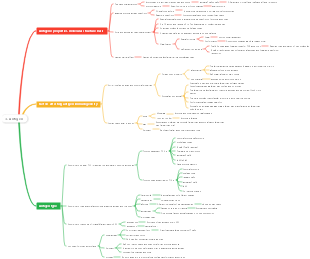
Antigens have many properties, such as immunogenicity and reactogenicity, foreign body properties, and specificity, and their properties have deep molecular basis. The main function of an antigen is to cause an immune response. The physical and chemical properties of the antigen itself, individual host factors, and the way the antigen enters the body are all closely related to this. Antigens are classified according to their reaction process, relationship with the body, production method, etc.; various antigens have different clinical medical significance. Non-specific immune stimulants, as their name suggests, are "non-specific" and are mainly divided into three categories: superantigen SAg, immune adjuvants, and mitogens. Reference textbook: "Medical Immunology and Pathogenic Microbiology" (Fifth Edition)
Edited at 2023-11-15 23:14:28This is a mind map about bacteria, and its main contents include: overview, morphology, types, structure, reproduction, distribution, application, and expansion. The summary is comprehensive and meticulous, suitable as review materials.

This is a mind map about plant asexual reproduction, and its main contents include: concept, spore reproduction, vegetative reproduction, tissue culture, and buds. The summary is comprehensive and meticulous, suitable as review materials.
This is a mind map about the reproductive development of animals, and its main contents include: insects, frogs, birds, sexual reproduction, and asexual reproduction. The summary is comprehensive and meticulous, suitable as review materials.
This is a mind map about bacteria, and its main contents include: overview, morphology, types, structure, reproduction, distribution, application, and expansion. The summary is comprehensive and meticulous, suitable as review materials.
This is a mind map about plant asexual reproduction, and its main contents include: concept, spore reproduction, vegetative reproduction, tissue culture, and buds. The summary is comprehensive and meticulous, suitable as review materials.
This is a mind map about the reproductive development of animals, and its main contents include: insects, frogs, birds, sexual reproduction, and asexual reproduction. The summary is comprehensive and meticulous, suitable as review materials.
Chapter 2 Antigen
concept
Recognized and bound by TCR/BCR → causing TB cells to produce an immune response → a substance that specifically binds to immune response products
characteristic
Basic features
Immunogenicity
Stimulate specific immune cells to activate, proliferate, differentiate and produce immune effector substances
Reactogenicity/Antigenicity
Specific binding to corresponding immune effector substances
Antigen classification
complete antigen
Immunogenicity + reactogenicity
hapten/incomplete antigen
Reactogenicity ✓; Immunogenicity ×
Combined with macromolecular proteins/non-antigenic substances, etc.→complete antigen
Foreign body property
The primary condition that determines whether a substance can become an antigen
xenogeneic substance; allogeneic substance; self-tissue component
Foreign body: a substance that has not fully come into contact with developing immature lymphocytes during the embryonic/neonatal period
specificity
Performance
①Specificity of immunogenicity; ②Specificity of reactogenicity
Material basis: antigenic epitope/antigenic determinant
A special chemical group on an antigen molecule that determines its specificity
Function: specifically binds to antibodies and TCR/BCR
Composition: 5-15 amino acid residues; 5-7 polysaccharide residues; 6-8 nucleotides
Basis of specificity: nature, number, position, and spatial conformation of chemical groups
Classification
Structure: conformational epitope; linear epitope (sequential epitope)
Inside and outside the molecule: functional epitope (external); cryptic epitope (internal)
identified cells
T cell epitope
Recognize TCR; the epitope is a polypeptide, a linear epitope, requires APC and MHC molecules, and can be located at any position on the antigen
B cell epitope
Recognize BCR; epitope is (polypeptide, polysaccharide, lipid), conformational/linear epitope, does not require APC and MHC molecules, located in the antigenic epitope
special circumstances
specific epitope
Among different antigens (≥2), the antigenic epitopes are unique to each
common epitope
In different antigens (≥2), the antigenic epitopes are the same/similar in configuration
Common Antigen/Cross Antigen
Different antigens with common epitopes
cross-reactivity
An antibody induced by an antigen that binds to that antigen cross-antigen
Factors Affecting Antigen-Induced Immune Responses
Resistance to chemical properties
chemical properties
Protein, polysaccharide→immunogenicity
Nucleic acids, lipids → hapten
Molecular mass size
Generally positively correlated with immunogenicity
Antigenic advantages of macromolecular substances
Quality↑→Antigenic epitope↑→Activation (lymphocyte) effect↑
Stable chemical structure of macromolecular substances → destruction and removal ↓ → continuous stimulation (lymphocytes)
chemical structural complexity
The macromolecular substance has a simple structure/easy to hydrolyze → not immunogenic eg. Gelatin (protein-linear amino acid)
Proteins containing aromatic amino acids – highly immunogenic
Number and type of monosaccharides↑→Polysaccharide immunogenicity↑
molecular conformation
The basis for deciding to initiate an immune response by binding to the corresponding BCR
accessibility
Definition: The ease with which a molecular surface epitope binds to BCR
Influencing factors: distance between side chains where the antigenic epitope is located, distance from the end of the side chain
physical properties
Polymerization state > monomer; particulate antigen > soluble antigen
host factors
Species, individual, age, gender, health status, stress or not
Young adults>Infants, the elderly
Female > Male (except during pregnancy)
Stress reduces immunity: surgery, invasive examinations, mental shock, psychological trauma
How antigens enter the body
The same substance: intradermal injection > subcutaneous injection > intramuscular injection > intraperitoneal injection > intravenous injection
Clinical: Oral administration of antigens to establish immune tolerance (enzymes in the digestive tract)
Types and medical significance of antigens
Antigen classification
Are Th cells needed?
Thymus-dependent antigen/T cell-dependent antigen TD-Ag
Stimulating B cells to produce antibodies relies on the help of Th cells
Complete antibody, both B/T cell receptor
Thymus-independent antigen/T cell-independent antigen TI-Ag
Stimulating B cells to produce antibodies does not rely on the help of Th cells
Divided into TI-1 Ag, TI-2Ag
The relationship between antigen and body
xenoantigen
alloantigen
autoantigen
idiotype antigen
Other categories
Source of antigens within APC
exogenous; endogenous
Antigen production method
artificial antigen; natural antigen
Antigen chemical composition
Protein antigen; Polysaccharide antigen; Nucleic acid antigen
The relationship between antigen sources and diseases
Transplantation antigen; tumor antigen; autoantigen; allergen; tolerogen
medical significance
Pathogens and their metabolites
Microorganisms - complex chemical composition → natural antigens with multiple epitopes
Such as: bacteria-surface antigen, flagellar antigen,
Exotoxins - proteins, bacterial anabolites → complete antigens
Exotoxins stimulate the body → antitoxin (prevent reinfection)
Exotoxins formaldehyde → toxoid (non-toxic and immunogenic) → antitoxin
Parasite
parasite antigen; secreted antigen; metabolic antigen
In vivo—protective/pathological immune response
Immunodiagnosis of ecto-parasitic diseases
animal immune serum
Toxoid-Animal → Antibody (animal immune serum) → Disease-specific treatment/prevention
Such as: Tetanus bacilli Horse→tetanus antitoxin
duality of action
Specific antibodies—neutralize the toxicity of the corresponding exotoxins
Xenogeneic antigen - the body produces anti-horse serum antibodies → hypersensitivity reaction
alloantigen
Antigens that exist between different individuals of the same species
Common in humans: ABO/Rh antigen system; HLA
autoantigen
self-components that trigger an immune response
Normal situation - self-tolerance
No immune response to own tissue cells
Abnormal conditions - autoimmune response
"Immune pardon zone" barrier destruction → release of isolated hidden antigens → self-antigens
Lens protein, thyroglobulin
Physicochemical biological factors → self-components are changed and modified → self-antigens
Heterophilic antigen (Forssman antigen)
Common antigens that exist among different species of animals, plants, and microorganisms
Group A Streptococcus↔Human glomerular basement membrane↔Human myocardial tissue→Common antigen
Group A Streptococcus infects the human body → Antibodies → Cross-reaction of heart and kidney tissues → Glomerulonephritis, myocarditis
Escherichia coli type O14 lipopolysaccharide↔human colon mucosa→common antigen
ulcerative colitis
tumor antigen
TSA: only exists on the surface of certain cancerous cells
TAA: present in both normal cells and cancerous cells, the content is when cells become cancerous ↑↑↑
other antigens
Hapten protein in body→complete antigen→hypersensitivity reaction
Haptens: certain drugs such as antibiotics and sulfonamides; chemicals such as paints, dyes, and plastics
Plant pollen, some traditional Chinese medicine → Antigen → Hypersensitivity reaction
non-specific immune stimulants
Concept: Non-specific activation of T and B cells
Classification
Superantigen SAg
Polyclonal activator; very small amount of superantigen → non-specific activation → large number of TB cells → strong immune response
Activate features
T cells
Binds mostly to CD4 T cells
Mode of action: MHC class II molecule-superantigen-TCR Vβ on APC
Attachment: General antigen: the antigen of the MHC molecule on APC and the binding groove-CD3 complementarity determining region of TCRVβ
Effect: Non-specific activation of polyclonal T cells → Cytokines ↑↑↑ → Involved in certain pathological processes
Such as: heat shock protein HSP
Outside the non-polymorphic region of MHC class II molecules on APC-HSP-[TCR Vβ CD1, CD2]
Does not bind to the antigen peptide binding groove; does not require APC processing and directly binds to MHC class II molecules
B cells
Such as: SPA, gp120 (Staphylococcus aureus protein A) and human immunodeficiency virus: directly bind to the VH region of the BCR H chain
A B cell superantigen selectively binds to the VH subtype → activates only B cells with BCRVH of that subtype → antibody ↑↑↑
biological significance
Activate large numbers of T cells
Induces the production of pro-inflammatory cytokines → shock, multiple organ failure
Excessive proliferation and exhaustion → inducing an immunosuppressive state in the body
Activate autoreactive T cells in the body → autoimmune disease
Endogenous SAg-thymocytes→clonal selection to eliminate SAg-responsive cells→immune tolerance
Activate a large number of CTL → kill tumor cells → anti-tumor biological therapy
immune adjuvant
Features
Timing of injection into the body: before the antigen or together with the antigen
Non-specific enhancement of antigen immunogenicity; the body's specific immune response to the antigen
Change the type of immune response
Classification
Inorganic adjuvants: aluminum hydroxide, alum
Organic adjuvants: microorganisms and their metabolites—Bacillus Calmette-Guérin, Corynebacterium parvum, Bordetella pertussis, G-endotoxin
Synthetic adjuvants: poly:C, polyA:U, MDP
Oil: Freund's adjuvant, peanut oil emulsified adjuvant, mineral oil, vegetable oil
New adjuvants under research - powerful, easy to prepare, no adverse reactions to the body
Principle of action
Residence time in the body ↑: Change the physical properties of the antigen → Form an antigen reservoir → Slowly release the antigen
Easily phagocytized by macrophages: adjuvant adsorbs antigen → macrophage phagocytosis → local inflammatory response → processing and presentation of antigen
Co-stimulatory signal ↑ (required for cell activation)
Stimulate lymphocyte proliferation and differentiation → immune effect ↑
application
Immunize animals with high-titer antibodies: Preparation of antiserum Freund's adjuvant
Enhance immune response to vaccination: Aluminum hydroxide in inactivated COVID-19 vaccine
Non-specific immune enhancer: adjuvant treatment for patients with tumors/chronic infections: BCG vaccine
Mitogen (mitogen)
Non-specific lymphocyte polyclonal activator: all clones of a certain group of lymphocytes → are activated and transformed into lymphoblasts → mitotic proliferation
T cell mitogens: phytohemagglutinin PHA, concanavalin A (ConA) → Determination of T cell function
B cell mitogens: SPA, lipopolysaccharide → Determination of B cell function (human/mouse)
T/B cell mitogen: pokeweed → test T and B cell immune function
Reaction to mitogen↓→T/B cell dysfunction