MindMap Gallery Esophageal cancer mind map
Regarding the mind map of esophageal cancer and the pathology of esophageal cancer, the typical symptoms of esophageal cancer are progressive dysphagia. First it is difficult to swallow dry food, then semi-liquid food, and finally water and saliva cannot be swallowed.
Edited at 2023-11-15 12:13:23This is a mind map about bacteria, and its main contents include: overview, morphology, types, structure, reproduction, distribution, application, and expansion. The summary is comprehensive and meticulous, suitable as review materials.

This is a mind map about plant asexual reproduction, and its main contents include: concept, spore reproduction, vegetative reproduction, tissue culture, and buds. The summary is comprehensive and meticulous, suitable as review materials.
This is a mind map about the reproductive development of animals, and its main contents include: insects, frogs, birds, sexual reproduction, and asexual reproduction. The summary is comprehensive and meticulous, suitable as review materials.
This is a mind map about bacteria, and its main contents include: overview, morphology, types, structure, reproduction, distribution, application, and expansion. The summary is comprehensive and meticulous, suitable as review materials.
This is a mind map about plant asexual reproduction, and its main contents include: concept, spore reproduction, vegetative reproduction, tissue culture, and buds. The summary is comprehensive and meticulous, suitable as review materials.
This is a mind map about the reproductive development of animals, and its main contents include: insects, frogs, birds, sexual reproduction, and asexual reproduction. The summary is comprehensive and meticulous, suitable as review materials.
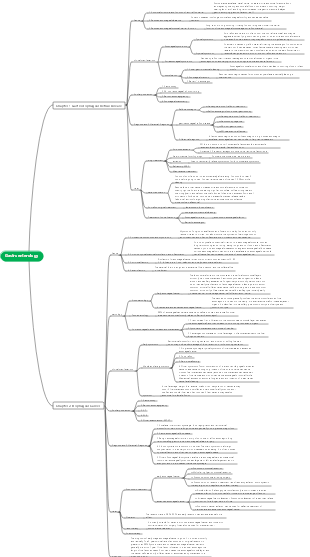
Esophageal epithelial malignant tumors and precursor lesions
pleomorphic giant cell carcinoma
It is composed of significantly pleomorphic epithelioid cells and tumor giant cells, with poor cell adhesion, and phagocytosis can be seen in the tumor cells.
Positive for CK and Vimentin, CD68 and Syn can be expressed in a few cases
lymphoepithelioma-like carcinoma
Analogous to undifferentiated nonkeratinizing carcinoma of the nasopharynx
Primarily differentiated cells are arranged in fuzzy nests with unclear cell boundaries. The nuclei are vacuolated and mitotic figures are easily visible. The interstitium is rich in lymphocytes and varying amounts of plasma cells. The cells are CK positive.
Adenocarcinoma (5%-10%)
Barrett's esophagus: columnar metaplasia of the squamous epithelium at the lower end of the esophagus, an acquired lesion, which is a complication of gastroesophageal reflux disease. The esophagogastric junction is covered by at least 3cm of columnar epithelium and is called Barrett's esophagus.
Esophageal adenocarcinoma occurs on the basis of Barrett's esophagus; its morphology is similar to gastrointestinal adenocarcinoma; the adjacent Barrett's esophageal mucosal epithelium is often accompanied by varying degrees of dysplasia.
Usually positive for CK7 and CK19, positive for AMACR, negative for CK20, and positive for mucus stains (AB, PAS, mucus carmine)
Other rare cancers
adenoid cystic carcinoma
mucoepidermoid carcinoma
adenosquamous carcinoma
undifferentiated carcinoma
other
Squamous cell carcinoma (90%)
Grading (Principle: Cytological atypia, mitotic figures, and degree of keratinization)
Highly differentiated
Small cell atypia, few mitoses, good pole orientation, pushing edges, obvious keratinized beads and intercellular bridges
Moderately differentiated
Large atypia of cells, easily visible mitoses, irregular polarity, parakeratosis, rare keratinized beads
Poorly differentiated
Basal-like cells, solid sheet-like arrangement, rare keratinized beads Immunohistochemistry: CK, P63, P40
Early infiltration manifestations: abnormal epithelial angles extend downward, with irregular or sharp borders, often manifesting as pushing infiltration and damaging infiltration.
1. Esophageal squamous cell carcinoma usually consists of moderately to well-differentiated cells, polygonal in shape, with visible intercellular bridges and keratinization; 2. Poor differentiation is rare and can be solid or sarcomatous; 3. Tumor cells occasionally display a Paget disease-like distribution;
basaloid squamous cell carcinoma
In solid nests, it is often seen that the cancer nests are connected to the surface squamous epithelium. The cancer cells are arranged in a palisade shape around the cancer nests. Comedo-like necrosis can be seen in the center, and basophilic substances can be seen in the microcystic structure.
sarcomatoid carcinoma
Squamous cell carcinoma with spindle cell component (mainly), also known as spindle cell carcinoma, has a better overall stage than squamous cell carcinoma
The epithelial component and some spindle cell components can express CK, the spindle cell component is Vimentin positive, and the tumor cells are p63 positive. Reticular fiber staining shows that reticular fibers surround a single tumor cell.
verrucous carcinoma
Well-differentiated subtype of squamous cell carcinoma. The surface is well-differentiated squamous epithelium with a papillary structure. Cellular atypia is not obvious. Hyperkeratosis and parakeratosis can be seen, and a pushing growth pattern is seen.
intraepithelial lesions (Cellular and structural abnormalities)
low level
Only the lower 1/2 of the epithelial layer is involved, with mild cellular atypia.
high-level
has exceeded the lower 1/2 of the epithelial layer, or severe cellular atypia is present regardless of the degree of epithelial involvement (Ki-67 and p53 aid in diagnosis)
Full thickness involvement, carcinoma in situ