MindMap Gallery Microbial nutrients and culture media
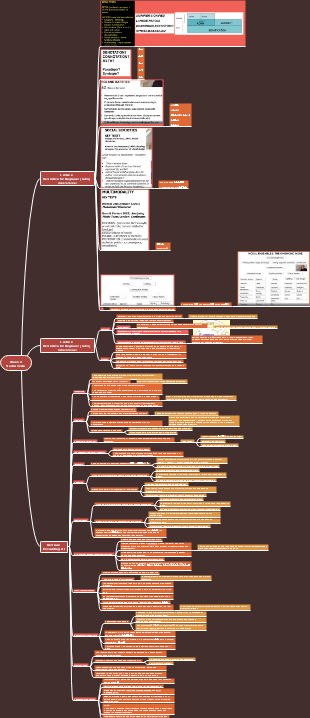
This is a mind map about the nutrition and culture medium of microorganisms, including the culture medium, the way nutrients enter cells, the nutritional types of microorganisms, etc.
Edited at 2023-11-14 00:33:03This is a mind map about bacteria, and its main contents include: overview, morphology, types, structure, reproduction, distribution, application, and expansion. The summary is comprehensive and meticulous, suitable as review materials.

This is a mind map about plant asexual reproduction, and its main contents include: concept, spore reproduction, vegetative reproduction, tissue culture, and buds. The summary is comprehensive and meticulous, suitable as review materials.
This is a mind map about the reproductive development of animals, and its main contents include: insects, frogs, birds, sexual reproduction, and asexual reproduction. The summary is comprehensive and meticulous, suitable as review materials.
This is a mind map about bacteria, and its main contents include: overview, morphology, types, structure, reproduction, distribution, application, and expansion. The summary is comprehensive and meticulous, suitable as review materials.
This is a mind map about plant asexual reproduction, and its main contents include: concept, spore reproduction, vegetative reproduction, tissue culture, and buds. The summary is comprehensive and meticulous, suitable as review materials.
This is a mind map about the reproductive development of animals, and its main contents include: insects, frogs, birds, sexual reproduction, and asexual reproduction. The summary is comprehensive and meticulous, suitable as review materials.
Microbial nutrients and culture media
6 types of nutritional elements of microorganisms
carbon source
Concept: All nutrient sources that can satisfy the carbon elements required for the growth and reproduction of microorganisms
is a macronutrient
Carbon source spectrum
organic carbon
Heterotrophic microorganisms: Microorganisms that must utilize organic carbon sources
Inorganic carbon
Autotrophic microorganisms: microorganisms that use inorganic carbon sources as their sole or main carbon source
Dual Functional Nutrients
For all heterotrophic microorganisms, their carbon source also serves as a carbon source for energy.
Nitrogen source
Concept: any nutrient source that can provide nitrogen required for the growth and reproduction of microorganisms
Nitrogen source spectrum
amino acid autotroph
amino acid heterotroph
energy
Concept: Nutrients or radiant energy that can provide the initial source of energy for microbial life activities
energy spectrum
Chemical substances (chemotrophic)
Organic matter: energy source for chemoheterotrophic microorganisms (same carbon source)
Organic matter: energy source for chemoautotrophic microorganisms (different carbon sources)
Radiant energy (phototrophic type)
Energy sources for photoautotrophic and photoheterotrophic microorganisms
Monofunctional nutritional "matter" (energy): light radiant energy
Bifunctional nutrients (energy, nitrogen source)
Trifunctional nutrients (carbon source, nitrogen source, energy)
growth factors
concept
Growth factors for autotrophic microorganisms
growth factors heterotrophic microorganisms
Growth factor over-synthesizing microorganisms
Inorganic salt
Lots of elements
General functions
General molecular components in cells (P, S, Ca, Mg, Fe, etc.)
Physiological regulating substances
Maintenance of osmotic pressure (Na⁺, etc.)
Enzyme activators (Mg²⁺, etc.)
Maintain spore heat tolerance (Ca²⁺)
pH stability
special function
Energy sources of chemoautotrophic bacteria (S⁰, Fe²⁺, NH₄⁺, NO₂⁻, etc.)
Hydrogen receptors during anaerobic respiration (NO₃⁻, SO₄²⁻, etc.)
trace elements
Enzyme activators (Cu²⁺, Mn²⁺, Zn²⁺, etc.)
Special molecular structure components (Co, Mo, etc.)
water
nutritional types of microorganisms
Photoinorganotrophic type (photoautotrophic type)
Photoorganotrophic (photoheterotrophic)
Chemolithotrophic type (chemoautotrophic type)
Chemoorganotrophic (chemoheterotrophic)
facultative microorganisms
How nutrients enter cells
Not passing through the carrier protein on the membrane: simple diffusion
through membrane carrier proteins
No energy consumption: promotes diffusion
Energy consumption
Solute molecules remain unchanged before and after transport: active transport
Changes in solute molecules before and after transport: gene translocation
medium
concept
Principles and methods for selecting and designing culture media
4 principles
clear purpose
nutritional coordination
Physically and chemically suitable
Economical savings
4 ways
ecological simulation
Learn from the literature
Well-designed
Test comparison
Type of culture medium
Classification by knowledge of culture medium components
natural culture medium
Combined medium
Semi-combined medium
Classification by physical state of culture medium appearance
liquid culture medium
solid medium
solidification medium
Irreversible solidification medium
natural solid culture medium
filter membrane
semi-solid medium
dehydrated medium
Functional classification of microorganisms according to culture medium
Select media
Yeast enrichment medium
Ashby nitrogen-free medium
Martin medium
Sugary yeast extract medium
identification medium