 Wondershare EdrawMind
MindMap Gallery Climbing skills (wrong posture, ruined knees)
- 43
Climbing skills (wrong posture, ruined knees)
This is a mind map about mountaineering skills (wrong posture, ruined knees). It summarizes the easily injured parts, going up and down the mountain, recovery skills after returning home, etc.
Edited at 2023-11-13 17:36:05
- bacteria
This is a mind map about bacteria, and its main contents include: overview, morphology, types, structure, reproduction, distribution, application, and expansion. The summary is comprehensive and meticulous, suitable as review materials.
- Plant asexual reproduction
This is a mind map about plant asexual reproduction, and its main contents include: concept, spore reproduction, vegetative reproduction, tissue culture, and buds. The summary is comprehensive and meticulous, suitable as review materials.
- Reproductive development of animals
This is a mind map about the reproductive development of animals, and its main contents include: insects, frogs, birds, sexual reproduction, and asexual reproduction. The summary is comprehensive and meticulous, suitable as review materials.
Climbing skills (wrong posture, ruined knees)
- bacteria
This is a mind map about bacteria, and its main contents include: overview, morphology, types, structure, reproduction, distribution, application, and expansion. The summary is comprehensive and meticulous, suitable as review materials.
- Plant asexual reproduction
This is a mind map about plant asexual reproduction, and its main contents include: concept, spore reproduction, vegetative reproduction, tissue culture, and buds. The summary is comprehensive and meticulous, suitable as review materials.
- Reproductive development of animals
This is a mind map about the reproductive development of animals, and its main contents include: insects, frogs, birds, sexual reproduction, and asexual reproduction. The summary is comprehensive and meticulous, suitable as review materials.
- Recommended to you
- Outline
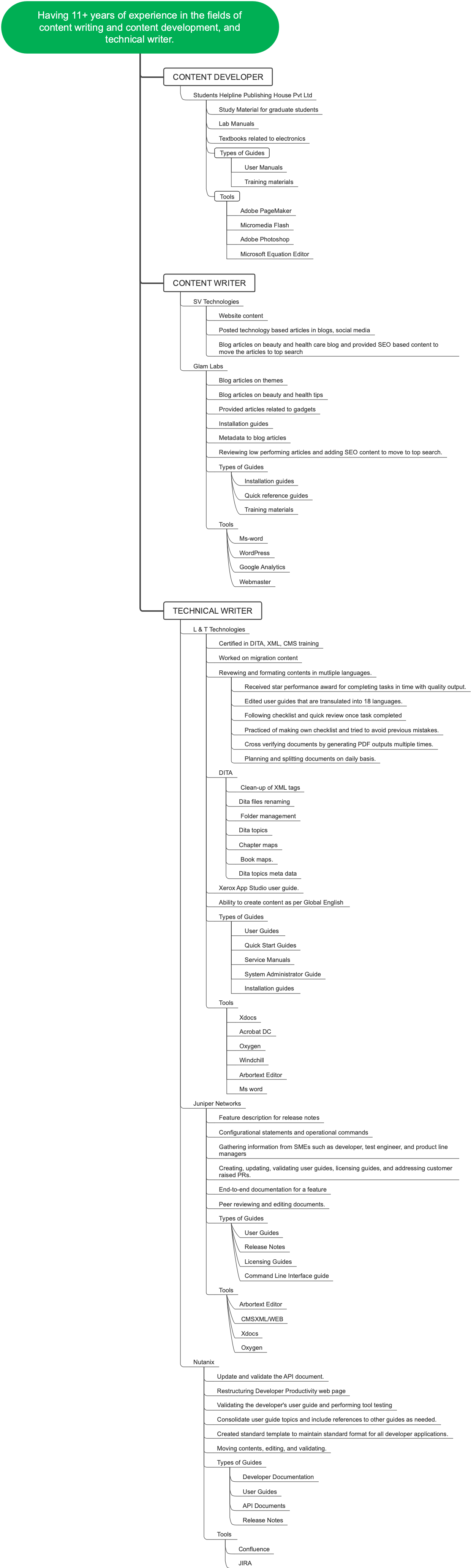

Mountain climbing skills (Wrong posture, ruined knees)
Pay attention to easily injured areas
knee
The knee joint is the largest joint in the human body with the most complex structure and more chances of injury. When a person climbs a mountain, bending the knee joint will bear the weight of the whole body. Especially when going downhill, the force between the cartilage surfaces can reach 3 to 6 times your own body weight. Regular activities that require knee bending, such as mountain climbing, may put too much pressure on the knee joints.
toe
When going down the mountain, your feet rush forward, and your toes constantly collide with the tips of your shoes, causing your toes to become bruised or worn.
Method: Up the mountain
1. Rest steps
When going uphill, When one foot steps upward, the knee will bend appropriately. At this time, do not step down one foot immediately, but transfer your weight completely to the bent leg. Then gently extend your bent knees. In this way, the back leg will get 0.2~0.3 seconds of rest time. When you take another step, shift your weight to the other leg, and repeat until you reach the top.
2. Take small steps uphill
Taking small steps up the mountain saves effort Keeping small steps uphill can shorten the exercise time of each step of the leg muscles and help maintain body balance. Therefore, when you encounter steeper sections when going uphill, you should use Move forward in smaller steps.
3. Step forward in a horoscope
Stepping out in a figure-eight stance helps put weight on the heel and reduces the angle between the instep and the calf, making the tendons more comfortable. Although he doesn't walk very fast, he doesn't stop. His knees straighten every step he takes, as if he takes a step.
4. Use more hands to climb
Hands should be used whenever hands-free help is available. Using your hands can take the weight off your legs. When climbing a mountain, your hands are mostly idle and you have already recuperated your strength. When you can use your hands a little, you should put your forelimbs on the ground and use force. Why are four-legged animals better than humans at climbing mountains? Because they distribute their strength evenly. When climbing a mountain, as long as the slope exceeds 45 degrees, use both hands and feet, which saves effort and is effective. It is not inelegant and is considered a return to simplicity.
5. Equipment
***Water and fruits: The most important thing when climbing mountains. Climbing a mountain will cause you to sweat. Proper hydration, in and out, is also a new metabolism. In fact, people who really climb mountains understand that food such as bread and biscuits cannot be eaten on the mountain. The best food is water. , and fruits. ** Trekking poles: At least one, preferably two. Use them well and you can save 20% of your energy. Trekking poles can balance, support, and protect the body, reducing the risk of slipping due to unstable terrain. It can also reduce the burden on legs, save energy, explore paths, serve as a self-defense tool, support tents, and dry clothes. ** Hat: It is very important to choose a mountaineering sun hat. If it is a sunny day and the sun is strong, wearing a hat or not wearing a hat will have completely different effects. It can prevent the head, neck and face from sweating too much due to excessive sun exposure; in addition, protect the forehead and Eyes, if the outdoor light is too strong, the optic nerve will be uncomfortable, the mood will be unstable, and you may be upset, and you may want to give up and go down the mountain. At this time, a hat can cover the forehead and block the strong light. The eyes will be very comfortable and the patience of climbing will be enhanced. **Sun protection and rain protection: There are unpredictable weather conditions on the mountain. Just in case, prepare disposable raincoats and umbrellas. UPF>30 can effectively protect you from the sun. ** Towel: It can be used to wipe sweat, wash your face, and put a wet towel on your hat to protect yourself from the sun. It has two uses. Makes you feel refreshed. When resting, you can also place a towel on your back to prevent cold wind from intruding. Or put it on your back before strenuous exercise to absorb sweat. Used to wipe sweat during mountain climbing. Alternative uses: It can be used to collect water in dry areas (tied to the feet to soak in the dew on the grass in the morning). **Road-finding artifact: Mobile APP: two-step road or six-foot, download it as soon as possible and become familiar with their use. In the wilderness without signal, it is your trustworthy partner, but you must download it in advance before traveling. Use offline maps, and strictly follow the successful tracks published by predecessors. Do not make your own decisions and open new roads at will. Gloves: Gloves are required when hiking in the wild. When you are approaching the top of a wild mountain, the road is often very narrow or there is no road. When it is full of thorns, you have to use your hands to open the branches. Gloves can prevent your hands from being scratched by stabbing skills. When encountering steep slopes, gloves are equivalent to shoes. ah. The more summer comes, the more you need to prepare gloves. The "thorn bushes" (thorn bushes) in summer are much denser than those in winter. ** Clothes: It is recommended to wear jackets and pants that are quick-drying and quick-drying. In order to prevent wind and colds, bring at least one change of clothes. Once your body adapts and sweats enough and the sweat becomes less and less, you can put on wet clothes. After changing clothes, hiking in dry clothes is a pleasure. Don't wear pure cotton thermal underwear when climbing mountains. It will be really uncomfortable when you sweat and get wet. Specialized sweat-wicking underwear is best, and quick-drying shirts are recommended. Say no to jeans and opt for hard-wearing, quick-drying, stretchy pants. In fact, cotton products are neither strong nor wear-resistant, and their physical properties are not suitable for outdoor sports. Once it rains, wades in water, or sweats a lot, you know the downside to jeans. Take it off quickly, even wearing a pair of cheap chemical fiber trousers worth more than 20 yuan is better than these. ** Shoes: Hard-soled hiking shoes are recommended. It is best to wear hard-soled high-waisted hiking shoes when climbing. The hard soles are not afraid of rocks rubbing your feet. You can stretch your feet even when walking on rocks, and your toes will not hurt even if they are kicked against rocks. The high waistband serves as an ankle support, allowing the foot and calf to be more flexibly connected. Casual shoes are not suitable for climbing mountains. The soles are almost as light as the soles of your feet. If you hit the shoes, you will hit your feet. If you accidentally kick a stone, it will be like a stone hitting your toes.
drug
Band-aid, anti-mosquito medicine, Yunnan Baiyao, iodophor, electrical tape, lighter, Potassium permanganate: This stuff has many uses. In addition to disinfecting, it is also an emetic. If you eat something poisonous, dissolve it in a little water and drink it to cause vomiting immediately. In addition, few people know that it is also a very effective topical snake medicine that can quickly neutralize snake venom (effective against nerve venom and blood venom). After being bitten by a snake, immediately bandage and remove the broken tooth, use a knife to expand the wound (not too deep!), then fill the wound with potassium permanganate powder (a small amount is enough), and then continue other first aid for a while.
Method: Descend the mountain
Preface
"It's easy to go up the mountain but hard to go down the mountain." The impact force going down the mountain is twice that of going up the mountain, and the load on the knees is also heavier. After reaching the top, we need to learn how to descend correctly.
1. Lose weight
The impact force endured during the descent is more than twice the weight of the body. How to Lose Weight – The food and water left in your backpack are targets for weight loss. Before going down the mountain, you can have a hearty meal with everyone and consume the extra food; If you carry excess water, you can dump it before going down the mountain. But remember, garbage is not the object of weight loss.
2. Fasten your backpack
Make sure your backpack is buckled before going down the mountain. This can prevent the backpack from shaking and affecting the stability of your body's center of gravity when going down the mountain. How to buckle the backpack - If the backpack is loose, you need to buckle these adjustment straps one by one: buckle and tighten the waist belt, tighten the outside tightening strap of the waist belt, pull the shoulder straps to the shoulders, buckle and tighten the chest straps. bring.
3. Tighten your shoelaces
Check your shoelaces - if you determine they are loose, untie them immediately, retighten them and tie them into a secure knot. If you feel pressure on your toes, you can completely remove the shoelaces from top to bottom, skip the bottom shoelace loop, put the shoelaces back on, and tighten the shoelaces appropriately at the ankle. Loose shoelaces, squeezing the toes - If the shoelaces are not tightened, the feet will wobble in the shoes when going down the mountain, and the toes will hit the front of the shoes, causing the toes to be continuously squeezed, causing pain, and gradually Aggravated. During the descent, in order to prevent the climber's weight from causing too much impact on the ankles or toes, shoelaces should be used to secure the instep and ankles tightly. (Source: "My First Mountaineering Book" [Korean] Kim Sung-ki)
4. Stand tall and bend your knees
Don't bend over, lower your center of gravity, lower your center of gravity. When going down the mountain, keep your body with your chest up and your knees bent, bend your legs as much as possible, and relax your knees. Never bend forward, walk slowly with small steps, and maintain a stable center of gravity.
5. Walk slowly and in small steps
Sprinting can injure your muscles and knees - avoid sprinting when descending a mountain. If you rush down the mountain like running, you are prone to falling and other dangers. Your knee joints will also be affected by a greater impact, and your muscles may also be damaged. The impact force on your knees will be greater when going down the mountain than when going up the mountain. It is best to walk slowly and with small steps to ensure the stability of the body's center of gravity and reduce the impact on the knee joint, thereby reducing injuries.
6. Use trekking poles
How to use - When going down the mountain, it is best to adjust the length of the trekking pole so that when a person holds the handle of the trekking pole upright, the elbow can form a 90-degree angle. When going downhill, adjust the trekking pole according to the inclination angle and stride length. It has to be a little longer. Trekking poles can effectively absorb shock - when going downhill, using trekking poles can withstand the downward impact of the body at the same time as the legs, easing the impact on the knees; at the same time, using trekking poles allows you to keep at least your feet and poles The state of the top three points touching the ground greatly increases the stability of the body. Experts claim that trekking poles can reduce the load on a hiker's legs by 4.5 to 8.2 kilograms per step. (Source: "Backpacker's Handbook" [US] Chris Townsend) Not using trekking poles will compress the knees - when going downhill, without the assistance of trekking poles, the downward impact of the body will be concentrated on the legs. The knees, which play a buffering role, will be subject to repeated friction and extrusion for a long time. Overwhelmed, pain appears.
7. Go down the mountain in a roundabout way
If the descent is too steep, we can use: Take a circuitous route down the mountain and slow down the slope to reduce the impact on your knees. The "Z" or "S" shaped circuitous route can effectively buffer the downward impact caused by the body and its own force, thus protecting the knees.
Calf muscle soreness relief methods
1. Rest in place
Take a rest, do some leg stretching exercises, and walk diagonally when going down the mountain, and you will feel better.
2. Massage
Appropriate light massage can help repair soft tissue injuries. Calf muscle soreness after climbing is mainly due to damage to the calf gastrocnemius muscle during strenuous physical activities. Tiny bleeding caused by tearing of muscle fibers leads to pain, which is caused by aseptic inflammation. After treatment, the symptoms will disappear in about a week, and you can perform normal physical activities. However, you need to avoid excessive injury and pay attention to the intensity and time of physical exercise.
3. Soak in hot water
Use water around 40℃ to soak the ankle joints To promote blood circulation in the lower limbs and help reduce swelling and pain in the lower legs
4. Drug treatment
Plaster can be applied locally to promote blood circulation, remove blood stasis, and dredge meridians. If the pain is obvious, you can take oral non-steroidal anti-inflammatory drugs such as ibuprofen, diclofenac sodium, loxoprofen sodium, celecoxib or etoricoxib to make the inflammation subside faster and avoid further aggravation of the pain;
Analysis on the causes of trembling legs when going downhill
1. Excessive fatigue
People who usually do little exercise suddenly participate in high-intensity mountain climbing exercises. At this time, the contraction and relaxation of leg muscles are strengthened, and local nerves are over-excited, which may lead to trembling legs when going down the mountain, accompanied by symptoms such as leg weakness, soreness, and heavy sweating. You should climb mountains moderately according to your own conditions, exercise step by step, and never engage in high-intensity exercise suddenly;
2. Malnutrition
Some people have long-term partial eclipses and picky eaters, resulting in insufficient nutritional intake by the body, which can easily lead to deficiencies in vitamins, minerals and other nutrients, such as hypocalcemia, protein malnutrition, etc., which can lead to increased muscle and nerve excitability. Such people will go down the mountain. Symptoms of leg trembling may occur. It is recommended to adjust the diet structure and appropriately increase the intake of various nutrients;
3. Parkinson’s disease
This disease is a neurodegenerative disease that is common in middle-aged and elderly people and can cause symptoms such as resting tremor and bradykinesia. The patient himself has discomforts such as tremor. When performing physical exercises such as going down and up the mountain, the nerves can be stimulated and cause the symptoms of leg shaking when going down the mountain, accompanied by unstable gait, muscle rigidity and other symptoms. You can take trihexyphenidyl hydrochloride tablets, amantadine hydrochloride tablets and other drugs as directed by your doctor.
Recovery tips after returning home
1. Replenish energy
After returning home, drink water to rehydrate. Remember not to drink cold water, because the body cannot absorb cold water and will directly turn into urine. Drinking cold water only has a cooling effect and will also take away a large amount of trace elements from the human body. Drink hot water. , tea, soup and the like can be absorbed by the body and turned into body fluids.
2. Use warm or hot water for bathing, and do not soak your feet.
When you get home after hiking, take a shower with warm or hot water to wash away the sweat on your skin. After a long hike, your feet will become congested. Soaking your feet in hot water can easily lead to edema. Soaking your feet in hot water and kneading them after hiking will cause secondary damage. Foot washing and massage are okay as long as there is no swelling or pain, but remember not to do it. Knead vigorously, and the massage time should not be too long, 10-20 minutes for each part is appropriate. Do not massage or apply heat if there is swelling or pain! After 24 hours, start soaking your feet or alternating hot and cold water.
3. Shake your body more and don’t drink alcohol.
4. Drugs
Use Futanine to massage the sore areas. Do not massage the swollen areas.
5. Elevate your legs when sleeping.
6. Jog for active recovery or swim to relax the next day.
Method: Up the mountain