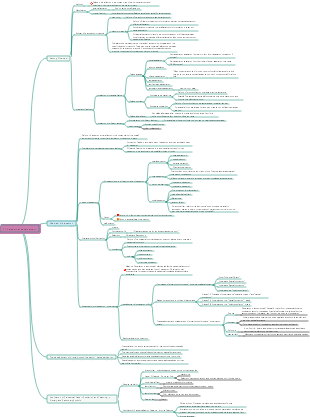
MindMap Gallery Child development psychology mind map
This is a mind map about the psychology of child development, the development of preschool children's senses, the development of preschool children's perception, the rules of preschool children's sensory perception, etc.
Edited at 2023-11-13 14:09:46This is a mind map about bacteria, and its main contents include: overview, morphology, types, structure, reproduction, distribution, application, and expansion. The summary is comprehensive and meticulous, suitable as review materials.

This is a mind map about plant asexual reproduction, and its main contents include: concept, spore reproduction, vegetative reproduction, tissue culture, and buds. The summary is comprehensive and meticulous, suitable as review materials.
This is a mind map about the reproductive development of animals, and its main contents include: insects, frogs, birds, sexual reproduction, and asexual reproduction. The summary is comprehensive and meticulous, suitable as review materials.
This is a mind map about bacteria, and its main contents include: overview, morphology, types, structure, reproduction, distribution, application, and expansion. The summary is comprehensive and meticulous, suitable as review materials.
This is a mind map about plant asexual reproduction, and its main contents include: concept, spore reproduction, vegetative reproduction, tissue culture, and buds. The summary is comprehensive and meticulous, suitable as review materials.
This is a mind map about the reproductive development of animals, and its main contents include: insects, frogs, birds, sexual reproduction, and asexual reproduction. The summary is comprehensive and meticulous, suitable as review materials.
Development of sensory perception in preschool children
Overview of perception
Feel
Concept: The human brain's reflection of the individual attributes of objective things that directly act on the sensory organs
Classification
External senses: vision, hearing, taste, smell, touch
Internal senses: movement sense, balance sense, body sense
perception
Concept: The human brain's reflection of the overall attributes of objective things that directly act on the sensory organs
Classification
Differences in sensory organs: visual perception, hearing perception, smell perception, taste perception
Differences in perceived objects
object perception
social perception
According to the relationship between perceptual content and objective reality
correct perception
illusion
The relationship between the two
the difference
Produced from different sources
The specific content reflected is different
Different physiological mechanisms
Perception is a mental activity higher than feeling
connect
They are all objective things that directly act on the sensory organs, and the sensory understanding of objective reality
Feeling is the basis of perception. Without feeling, there is no perception.
Perception is the main form of sensory existence
effect
Perception is the earliest cognitive process and the source of knowledge.
Perception plays a dominant role in the cognitive process. Children before the age of 2 rely on perception to understand the world.
Development of senses in preschool children
Vision
visual acuity
The visual acuity of children aged 1 to 2 years old is: 0.5~0.6
Vision at 3 years old was 1.0
Vision tends to stabilize after 4 to 5 years of age
Color vision: There are only three colors in the color world of newborn children: black, white and gray.
hearing
produce
Fetal auditory response (the most attractive thing to the fetus is the mother’s voice)
Newborn hearing ability
develop
Taste: Human taste is most developed in infancy and gradually declines later.
sense of smell
touch
Production: Touch is an important means for preschool children to understand the world
Classification
Oral touch
hand touch
Kinesthesia (kinesthetic sense): It is the subject’s internal sense of movement throughout its own posture and a certain part of the body.
Balance sense (quiet sense): It is a feeling caused by changes in the direction of the human body's gravity that stimulate the vestibular receptors.
Body sense: acquired through joints, muscles, tendons, viscera, and kinesthetic systems
Development of perception in preschool children
spatial perception
Concept: refers to the perception of objective spatial position, visual characteristics and spatial relationships.
Classification
Orientation perception
depth perception
shape perception
size perception
time perception
Concept: a response to the continuity and sequence of objective phenomena
Features
Observation
The concept of observation and observation ability
Characteristics of observation
purpose of observation
accuracy of observation
Continuity of observation
generalization of observations
conceptual organization
Evaluation
standard
method
Observation
search method
comparative method
Find the shadow method
Error finding method
nourish
Guide preschool children to clarify the purpose and tasks of observation, and stimulate preschool children’s interest in observation.
Teach preschool children correct observation methods and mobilize their multiple senses to participate in observation
factor
children's activities
knowledge experience
words
The rules of sensory perception of preschool children
the pattern of feeling
sensory adaptation
contrast of feelings
sensory afterimage
Compensation of different feelings
synesthesia
laws of perception
Perceptual selectivity
perceptual intelligibility
the wholeness of perception
perceptual constancy
floating theme