 Wondershare EdrawMind
MindMap Gallery Fiber Optic Sensor(1)Mind Map
- 81
Fiber Optic Sensor(1)Mind Map
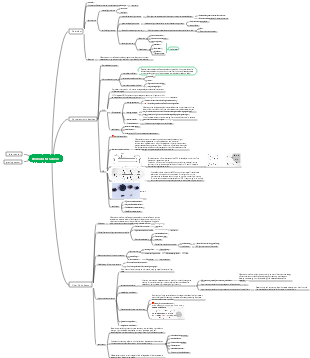
This is a mind map about optical fiber sensors (1), including the light penetration principle and characteristics of optical fibers, phase modulation optical fiber sensors, intensity modulation optical fiber sensors, etc.
Edited at 2023-11-11 14:54:39
- bacteria
This is a mind map about bacteria, and its main contents include: overview, morphology, types, structure, reproduction, distribution, application, and expansion. The summary is comprehensive and meticulous, suitable as review materials.
- Plant asexual reproduction
This is a mind map about plant asexual reproduction, and its main contents include: concept, spore reproduction, vegetative reproduction, tissue culture, and buds. The summary is comprehensive and meticulous, suitable as review materials.
- Reproductive development of animals
This is a mind map about the reproductive development of animals, and its main contents include: insects, frogs, birds, sexual reproduction, and asexual reproduction. The summary is comprehensive and meticulous, suitable as review materials.
Fiber Optic Sensor(1)Mind Map
- bacteria
This is a mind map about bacteria, and its main contents include: overview, morphology, types, structure, reproduction, distribution, application, and expansion. The summary is comprehensive and meticulous, suitable as review materials.
- Plant asexual reproduction
This is a mind map about plant asexual reproduction, and its main contents include: concept, spore reproduction, vegetative reproduction, tissue culture, and buds. The summary is comprehensive and meticulous, suitable as review materials.
- Reproductive development of animals
This is a mind map about the reproductive development of animals, and its main contents include: insects, frogs, birds, sexual reproduction, and asexual reproduction. The summary is comprehensive and meticulous, suitable as review materials.
- Recommended to you
- Outline
Fiber Optic Sensor
Introduction
Fiber optic sensors began in 1977. After more than 20 years, they have now entered a stage of equal emphasis on research and application.
advantage
High sensitivity, good electrical insulation performance, anti-electromagnetic interference, flexibility, and can realize an uncharged all-optical probe
Frequency bandwidth and large dynamic range
Sensors that sense different physical quantities can be constructed using very similar technical foundations.
Easy to connect to computers and optical fiber transmission systems, easy to realize system telemetry and control
Can be used in harsh environments such as high pressure, high temperature, strong electromagnetic interference, corrosion, etc.
Simple structure, small size, light weight and low energy consumption
application
Measurement of physical quantities such as magnetism, sound, pressure, temperature, acceleration, gyroscope, displacement, liquid level, torque, photoacoustic, current and strain
The light penetration principle and characteristics of optical fiber
The structure of optical fiber
core
Quartz glass, diameter 5~75um, mainly made of silicon dioxide, doped with trace elements
layers
Diameter 100~200um, refractive index slightly lower than the core
coating layer
Silicone or acrylic hydrochloric acid to isolate stray light
jacket
Nylon or other organic materials to improve mechanical strength and protect optical fibers
Classification of optical fibers
Classification by type of refractive index change from core to cladding
step index fiber
Graded Index Fiber
Classification by type of communication mode
single mode fiber
The fiber core diameter is small, can only transmit one mode, has good transmission performance, and is difficult to manufacture, link, and couple.
multimode optical fiber
The core diameter is larger, there are more propagation modes, the performance is poor, the bandwidth is narrow, it is easy to manufacture, and it is easy to couple.
According to material
High purity quartz glass fiber
Small optical loss rate
Multicomponent glass fiber
Made of regular glass, loss is also very low
plastic optical fiber
Made of synthetic light-guiding plastic, which has greater loss, but is light in weight, low in cost and good in flexibility.
Light transmission principle of optical fiber
refraction and reflection of light
Transmission of light in fibers
Light transmission characteristics of optical fiber
Numerical Aperture (NA)
NA=sinθ=√(n₁²-n₂²)
It reflects the amount of light received by the fiber core and marks the fiber receiving performance.
significance
No matter how large the emitted power of the light source is, only the optical power within the opening angle of 2θi can be accepted and propagated by the optical fiber.
If the incident angle is too large, light will escape from the cladding and cause light leakage. The larger the NA of the fiber, the It shows that the stronger its light-gathering ability, it is generally hoped to have a large numerical aperture, which is conducive to improving High coupling efficiency; however, if the numerical aperture is too large, it will cause optical signal distortion. So be appropriate Select the numerical aperture value. For example, the numerical aperture of quartz fiber is generally 0.2~0.4.
propagation loss
α=(10/L)㏒(Pi/Po)(dB/km)
Light is input from one end of the fiber and output from the other end, and the light intensity is attenuated.
Classification
absorption loss
Scattering loss
radiation loss
dispersion
Classification
material dispersion
waveguide dispersion
multimode dispersion
Modulation technology for transmitted light
The modulation of transmitted light refers to loading the measured light wave on the light wave, which affects certain performance parameters of the transmitted light. This technology is the physical basis and key technology of optical fiber sensors.
Structural principles of fiber optic sensors
A device that converts the measured state into a measurable optical signal
The role of optical fibers in sensors
Functional (all-fiber type) fiber optic sensor
Optical fiber is not only a light-guiding medium, but also a sensitive element. The light is modulated by the measured value in the optical fiber.
advantage
Compact structure and high sensitivity
shortcoming
Special optical fiber is required and the cost is high
example
Fiber optic gyroscope, fiber optic hydrophone, etc.
Non-functional fiber optic sensors
The optical fiber only plays a role in guiding light, and the light is modulated by the measurement on the optical fiber-type sensitive element.
advantage
No need for special optical fibers and other special technologies, relatively easy to implement and low cost
shortcoming
Lower sensitivity
Most of the practical optical fiber sensors are non-functional fiber optic sensors.
Light-picking fiber optic sensor
Use optical fiber as a probe to receive the light radiated by the object under test or the light reflected or scattered by it.
example
Fiber laser Doppler velocity meter, radiation fiber temperature sensor
light intensity modulation
A sensor that uses changes in the measured object to cause parameter changes in the sensitive element, resulting in changes in light intensity, to achieve sensitive measurement
internal modulation
Functional fiber optic sensors
external modulation
Non-functional optical fiber sensor or light-transmitting optical fiber sensor
Modulation
microbend modulation
reflection modulation
projection modulation
advantage
Simple structure, easy to implement, low cost
shortcoming
Susceptible to light source fluctuations and sensor loss changes, etc.
Optical phase modulation
mechanism
The phase φ of the light wave is determined by the wavelength λ of the light, the refractive index of the medium n and the length L of the medium. φ=2πnL/λ. When the optical fiber receives the action of the measured object, the structure size will When the change of and internal stress changes, the refractive index n and length L of the fiber will change. changes, causing phase modulation of the light wave.
interferometry
A²=A₁²+A₂²+2A₁A₂cos(Δφ)
advantage
high sensitivity
shortcoming
Special optical fiber and high-precision detection device, high cost
polarization modulation
Faraday effect (magneto-optical effect)
Pockels effect (electro-optical effect)
photoelastic effect
Polarized fiber (low birefringence single mode fiber)
Polarization-maintaining fiber (high birefringence fiber)
advantage
It can avoid the influence of changes in light source intensity and has high sensitivity.
frequency modulation
Intensity modulated fiber optic sensor
Fiber optic water depth detector
Using the principle of optical fiber micro-bend modulation, optical fiber displacement sensors, optical fiber pressure sensors, etc. can be formed. When the optical fiber sinks to the bottom of the water with the aluminum tube, the optical fiber bears the water pressure P at the bottom of the water. Obviously, the deeper the water, the greater the water pressure P, the greater the degree of microbending of the optical fiber at the longitudinal opening groove, the smaller the conduction mode Io, and the greater the radiation mode Ir. By detecting the conduction mode Io or the radiation mode Ir, the water Depth detection.
Bright field microbend sensor
A sensor that detects the relative change of the conduction mode Io in the fiber core.
Demolding: Absorb radiation mode and reduce the impact of radiation mode on the photodetector.
The simplest demoulding method: coating the outside of a few centimeters of optical fiber with black paint can effectively absorb the radiation mode.
The bright field detection method requires the addition of a stripper before and after the microbending of the optical fiber. The role of the stripper before microbending is to absorb all the radiation modes injected into the cladding before the microbending deformation of the optical fiber. The optical fiber microbends The bent stripper absorbs the radiation mode caused by micro-bending to reduce the interference of the radiation mode to the photodetector.
The transmitted light intensity of bright field detection is very large, and its relative change is very small, so the detection sensitivity is low, and a high-sensitivity light detector is required.
Dark field microbend sensor
A sensor that detects the relative change of the radiation mode Ir in the optical fiber cladding.
Dark field detection can achieve higher sensitivity. At this time, the background light becomes very small after being absorbed by the stripper. The radiation mode in the cladding is basically caused by the microbending effect. Solid microbending modulation causes changes in the radiation mode. The amount is significant, so the detection sensitivity is high.
The photodetector should be a sealed box with photoelectric elements installed around the inner wall of the box to absorb the radiation mode in the envelope and convert it into a corresponding electrical signal.
Transmission fiber optic temperature sensor
The light absorption capacity of some semiconductor materials increases with the increase of temperature. The reason is that the bandgap width of this semiconductor material narrows almost linearly with the increase of temperature, and the light excitation function is enhanced. At this time, when the light wave passes through the semiconductor material, the absorbed optical power increases, and the corresponding optical power transmitted through the semiconductor will decrease. The transmitted light intensity decreases almost linearly as the temperature increases.
Between the transmitting fiber and the receiving fiber, there is a piece of semiconductor temperature-sensitive material with a thickness of about a few tenths of a millimeter, such as cadmium telluride and gallium arsenide. Their light absorption function is most sensitive to light waves with a wavelength of about 900nm. That is to say, this Light waves with wavelengths that are far away from 900nm are very difficult to pass through.
Reflective fiber optic displacement sensor
Fundamental
When the laser source emits a certain amount of light to the reflective surface through the emitting optical fiber, part of the reflected light from the reflective surface enters the receiving optical fiber. The smaller the distance X to be measured, the more reflected light enters the receiving fiber. Therefore, the size of X can be known based on the measurement value of the light detector, and the displacement can be measured.
Features
The dynamic measurement range is large and the sensitivity is low.
Frustrated total reflection fiber optic displacement sensor
Modulation mechanism
When two optical fibers whose end faces are ground at a specific angle are far apart, all modes of light emitted from the transmitting optical fiber are totally reflected and cannot be transmitted to the receiving optical fiber. Only when the polished surfaces of the two optical fibers are sufficiently close together, total reflection is suppressed and most of the emitted light is coupled to the receiving fiber.
When the distance is far away: the light wavelength is within a distance of air and returns to the emitting fiber after reflection;
When the distance is relatively close: the receiving optical fiber is within the distance of the order of the light wavelength, and the light wave enters the receiving optical fiber.
Features
Has high displacement sensitivity
Benefit from Total Reflection Fiber Displacement Sensors
The position of the transmitting optical fiber is fixed, and the position of the receiving optical fiber can be moved up and down (at the nanometer level) with the help of a spring leaf. When the pressure P acts on the diaphragm, the polished surface of the receiving optical fiber moves downward. When the two polished surfaces are close to each other, the transmitting optical fiber The emitted light is received by the receiving optical fiber, and the displacement of the diaphragm is measured by detecting the intensity of the light wave in the receiving optical fiber.
Phase modulated fiber optic sensor
Mach-Zehder fiber optic temperature sensor
principle
A beam splitter splits the laser's output beam into two beams. They are re-coupled after being transmitted through the upper and lower optical paths, causing them to interfere with each other at the photodetector.
advantage
Only a small amount or no light returns directly to the laser, which avoids feedback light that could destabilize the laser and generate noise.
Specific applications: fiber optic pressure sensor, fiber optic force sensor, fiber optic acceleration sensor, fiber optic magnetic sensor
Fiber optic weak magnetic field sensor
When measuring weak magnetic fields, the signal fiber is bonded or wrapped around the magnetostrictive material to form a magnetically sensitive arm to enhance magnetic sensitivity.
Magnetic rod type
Wrap the signal fiber around the magnetic cylindrical rod
Magnetic sleeve type
Embed the signal fiber in a magnetic sleeve with uniform wall thickness
Tape type
Glue the signal fiber to the magnetic metallic glass tape
Fabry-Perot temperature sensor
principle
It consists of two parallel partially transmitting plane mirrors. The reflectivity (reflection coefficient) of these two plane mirrors is usually very large, generally greater than or equal to 95%. Assuming that the reflectivity is 95%, then in any case, 95% of the laser output light will be reflected back toward the laser, and the remaining 5% of the light will pass through the plane mirror and enter the resonant cavity of the interferometer.
main feature
High precision; high spectral resolution; low adjustment accuracy requirements.
fiber optic gyroscope
definition
A device used to measure the amount of rotation, namely an angular velocity sensor.
Features
It has particularly high sensitivity and measurement accuracy.
application
It is often used for accurate measurement of the earth's longitude and latitude in aircraft, missiles, aerospace vehicles, inertial navigation systems of sea vessels, and geodetic surveys.
For example, the accuracy requirement of aircraft navigation angular velocity is about 1.4×10⁻⁶rad/s, and the precision requirement of accurate measurement of longitude and latitude of the earth is as high as 7.5×10⁻¹¹rad/s. Before fiber optic gyroscopes, these high-precision rotation quantities were measured using mechanical gyroscopes and ring laser gyroscopes. The fiber optic gyroscope overcomes the disadvantage of the high cost of the laser gyroscope; at the same time, compared with the mechanical gyroscope, it has no mechanical moving parts and does not require warm-up time; it is small in size, light in weight, high in sensitivity, safe and reliable, and low in price, so it has gained Rapid development and application.
principle
The output light wave of the laser is divided into two beams of 1:1 by the beam splitter and enter the single-mode fiber optic gyroscope at the same time. Beam 1 propagates in the counterclockwise direction in the gyro, and beam 2 propagates in the clockwise direction in the gyro.
When the gyroscope is stationary (angular velocity Ω = 0): the two beams of light propagate the same distance, that is, there is no optical path difference, and the interference fringes generated by the two beams of light emitted after passing through the fiber optic gyroscope on the photodetector do not move. When the gyroscope rotates at the angular velocity Ω: There is an optical path difference between the two beams of light in the gyroscope. It can be proved that the optical path length propagating in the same direction as the angular velocity is long.
The greater the angular velocity Ω, the greater the optical path difference between the two beams of light. According to the Sagnac effect, the interference fringes of the two beams of light on the photodetector move, and the movement of the fringes is proportional to the optical path difference, thereby achieving the measurement of the rotational angular velocity Ω.
At the same time, it can be proved that the more fiber rings wound on the gyroscope, the greater the optical path difference that can be formed, which can improve the sensitivity of angular velocity measurement.